
Perlite and vermiculite are often treated as interchangeable, but they solve opposite problems. Perlite adds air space and drainage. Vermiculite adds water and nutrient retention. Choosing between them is not a quality question. It is a function question: does the plant need more air or more moisture?
The confusion comes from the fact that both are heat-expanded minerals, both are white-ish, and both are added to potting mixes. But their physical structures produce opposite effects, and using the wrong one for the plant can cause real harm.
What Each One Does
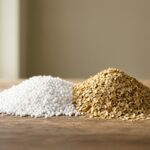
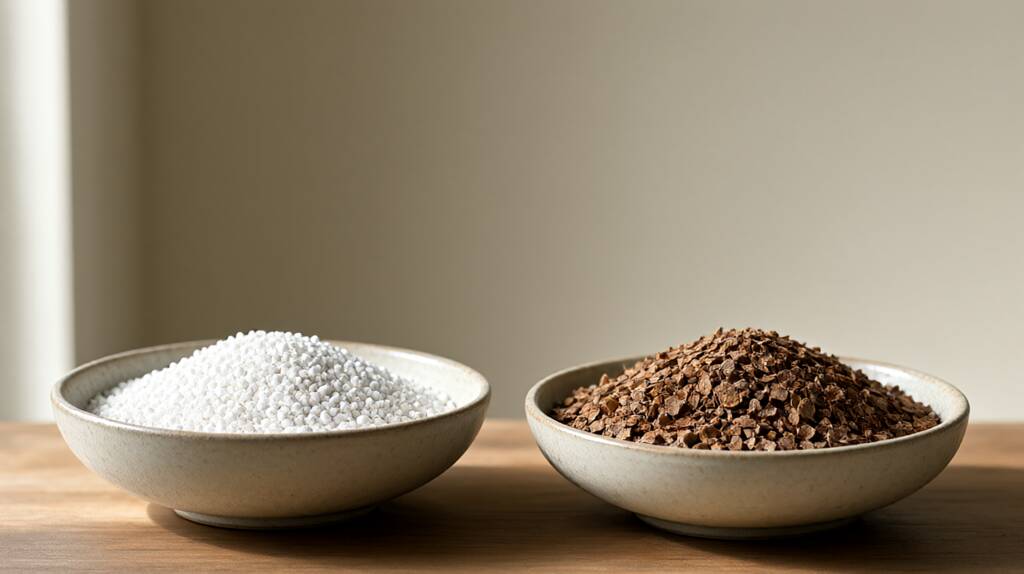
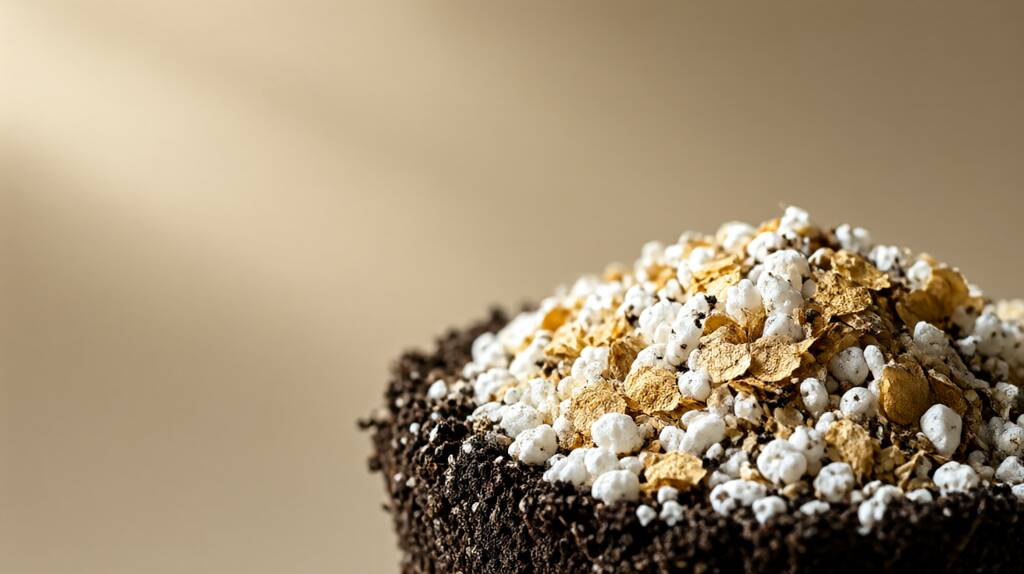
Perlite is expanded volcanic glass. Its particles are rigid, porous, and lightweight. In a mix, perlite creates air-filled pore space and drains fast. It holds a thin water film on its surface but releases most water under gravity.
Vermiculite is heat-expanded mica. Its particles are soft, layered, and accordion-like. In a mix, vermiculite absorbs water into its layers and holds it, releasing it slowly. It also has a higher cation exchange capacity, meaning it holds nutrients as well as water.
The practical difference: perlite acts as an aerator, vermiculite acts as a sponge. A mix with perlite dries faster. A mix with vermiculite stays wet longer.
Water Retention vs Drainage
Vermiculite can absorb several times its own weight in water and release it slowly. A mix with vermiculite stays evenly damp for far longer than the same mix with perlite. This is an advantage for moisture-loving plants and a disadvantage for plants that need dry cycles.
Perlite holds water only on its surface and in open pores. Most water drains through under gravity. A mix with perlite dries faster, which is an advantage for drought-tolerant plants and a disadvantage for plants that wilt quickly.
The two are not interchangeable. Substituting perlite for vermiculite in a moisture-loving plant mix will dry it out. Substituting vermiculite for perlite in a succulent mix will waterlog it.

Nutrient Holding Capacity
Vermiculite has a cation exchange capacity of 100 to 150 meq per 100 grams. Perlite has 1 to 5 meq per 100 grams. This means vermiculite holds nutrients and releases them slowly, while perlite holds almost none.
In a mix heavy in perlite, the plant depends entirely on the nutrient solution or fertilizer schedule. In a mix with vermiculite, the medium itself provides a nutrient buffer. This matters most in seed starting and propagation, where young plants have small root systems and limited nutrient uptake.
Which Plants Prefer Which
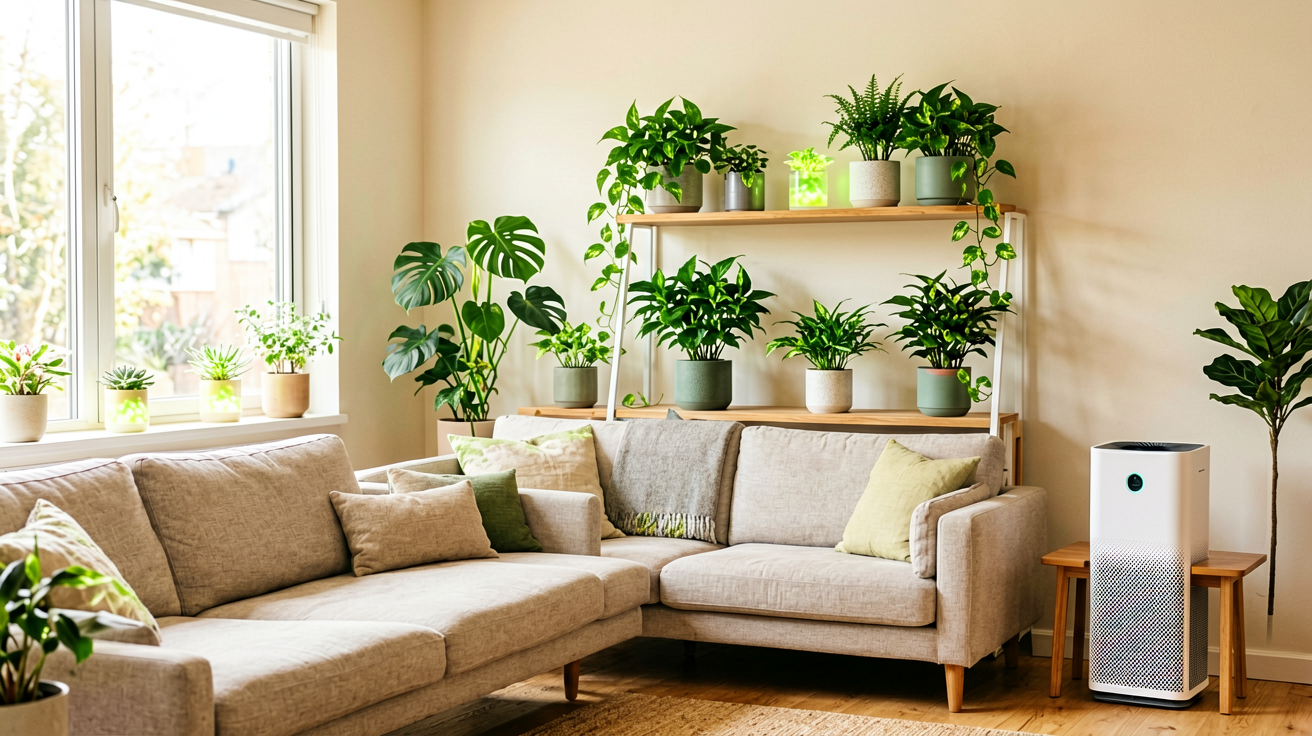
Perlite suits plants that need fast drainage and high root oxygen: succulents, cacti, aroids in chunky mixes, and most houseplants in indoor conditions where pots dry slowly. The general rule is that indoor plants die more often from overwatering than underwatering, so perlite is the safer default for most houseplants.
Vermiculite suits plants that need consistent moisture: ferns, calatheas, fittonia, and most tropicals that wilt when they dry. It also suits seed starting and propagation, where consistent moisture matters more than drainage.
For a detailed guide on perlite in potting mixes, see how to use perlite in potting soil and perlite particle sizes and grades.
Can You Use Both Together
Yes, and many commercial mixes do. A blend of perlite and vermiculite in a peat or coco coir base provides both aeration and moisture retention. The ratio depends on the plant. A common starting blend is equal parts perlite and vermiculite at 20 to 30 percent of the total mix volume.
The risk of blending is that the two effects can cancel each other out if the ratio is not tuned. Too much vermiculite in a succulent mix defeats the drainage. Too much perlite in a moisture-loving mix dries it out. The plant’s water requirement is the deciding factor.
Seed Starting and Propagation Differences
For seed starting, vermiculite is generally preferred because seeds need consistent moisture and have no roots to drown. A vermiculite-heavy mix keeps seeds damp without daily attention. Perlite can be used, but it dries faster and requires more frequent watering.
For propagation, the choice depends on the cutting type. Soft herbaceous cuttings that wilt easily do better in vermiculite. Woody or succulent cuttings that rot easily do better in perlite. For more on perlite in propagation, see how to use perlite for propagation.
Common Mistakes
The most common mistake is treating the two as interchangeable. They are not. The second mistake is using vermiculite for succulents or cacti, which leads to root rot. The third mistake is using perlite for moisture-loving plants without increasing watering frequency, which leads to wilting.
The test is simple. If the plant’s problem is staying too wet, add perlite. If the plant’s problem is drying out too fast, add vermiculite. Do not add both in equal amounts and hope they cancel out to the right balance.
Last reviewed on November 9, 2026
Sources and further reading: The Spruce, vermiculite vs perlite; Martha Stewart, vermiculite and perlite uses; Oklahoma State University Extension, soilless growing media.