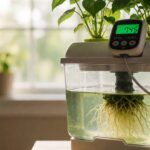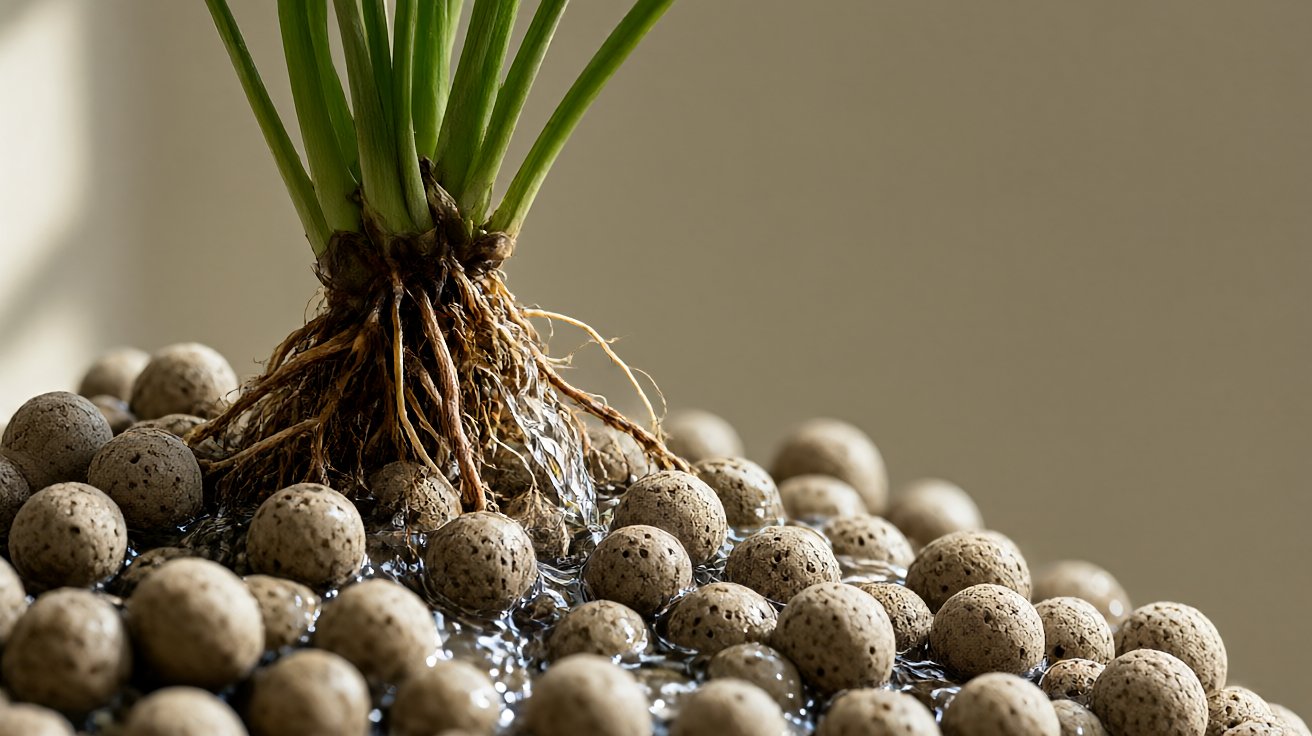

Expanded clay, commonly known as LECA, is the default growing medium for aquaponics because it does two jobs at once: it physically supports plant roots and provides the colonized surface area that biofiltration depends on. Rockwool and coco coir both work in aquaponic systems, but each comes with caveats around pH, debris, and long-term stability, so they are better treated as specialized choices than as defaults.
This guide is written for growers building or tuning a home or small-scale aquaponic system, and it draws on established aquaponics and hydroponics literature rather than anecdote. It covers why aquaponics media must serve both plants and nitrifying bacteria, how the main substrates compare, which materials to avoid, and how to match the medium to your system type.
Why Aquaponics Media Is Different
In conventional hydroponics, the growing medium mainly anchors roots and manages water and air. In aquaponics, the medium is also the biofilter: the place where nitrifying bacteria convert toxic ammonia from fish waste into plant-available nitrate. That dual role means substrate selection affects fish health, plant growth, and system stability simultaneously, and it is the reason aquaponic media cannot simply be borrowed from hydroponics without thought.
Ammonia excreted by fish and produced by decomposing solids is the first nitrogen compound the system must handle. Nitrifying bacteria oxidize ammonia to nitrite, then nitrite to nitrate. Both ammonia and nitrite are harmful to fish at low concentrations, while nitrate is relatively benign and feeds the plants. The speed and reliability of this conversion depend heavily on available surface area, oxygen, and pH, all of which are influenced by the chosen medium and by how water moves through it.
Because the medium is a living biological reactor, properties such as porosity, inertness, and resistance to breakdown matter more in aquaponics than in soil gardening. A substrate that compacts, decomposes, or releases unwanted compounds can destabilize the entire system, sometimes within days. For a broader look at these properties and how they interact, see our guide to growing medium properties.
It is also worth noting that aquaponics is a coupled system: fish feeding rates, plant uptake, and bacterial activity must stay in balance. The medium is the interface where these three processes meet, so choosing it is not merely a horticultural decision but a system-design decision.
Expanded Clay (LECA) as the Default
Expanded clay, or LECA (lightweight expanded clay aggregate), is produced by firing clay at high temperature until it expands into porous, rounded pellets. The result is an inert, pH-neutral substrate with high surface area and excellent drainage. These traits make it the most widely recommended medium for aquaponics media beds across climates and scales.
LECA does not decompose, does not compact easily, and does not release nutrients or toxins. It drains freely between flood cycles, allowing oxygen to reach root zones and bacterial colonies. Its rough, porous surface provides extensive habitat for nitrifying bacteria, supporting robust biofiltration. It is also reusable: spent pellets can be cleaned and returned to service, which lowers long-term cost and reduces waste. For detailed cleaning steps, see our guide on how to clean and reuse clay pebbles.
The main drawbacks are upfront cost and weight when saturated. LECA is more expensive than gravel or sand, and media beds require sturdy support structures. Dust and fines from manufacturing must be rinsed out before use, and occasional rinsing during maintenance prevents channeling and anaerobic pockets. Despite these minor inconveniences, LECA remains the safest default for most aquaponic setups, especially for beginners.
When sourcing LECA, look for aquarium- or hydroponics-grade material with consistent pellet size. Mixed sizes can create uneven flow, with fine particles migrating and clogging lower layers. A uniform 8 to 16 millimeter range is a common and practical choice for media beds.
Rockwool in Aquaponics
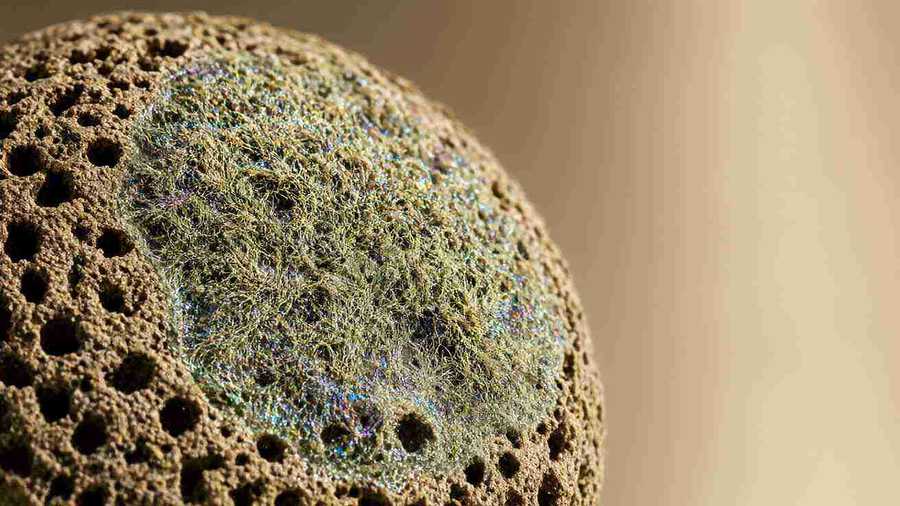
Rockwool is a spun mineral fiber widely used in hydroponics for seed starting and slab culture. It offers excellent water retention and aeration, and it is sterile out of the package. In aquaponics, however, rockwool requires careful handling and is rarely the best bulk choice.
The primary concern is pH. Rockwool is naturally alkaline and can raise system pH if not pre-conditioned, which stresses fish and slows nitrification. It must be soaked and rinsed, and pH should be monitored closely after introduction. Another concern is fiber shedding: loose rockwool fibers can enter pumps, filters, and fish tanks, creating maintenance issues and potential harm to fish gills.
Rockwool also does not provide the same durable biofiltration surface as LECA. It compresses over time and can become waterlogged, reducing oxygen availability. It is better suited to seedling plugs or to systems where it is contained and replaced regularly rather than used as a bulk media bed substrate. Growers who use rockwool in aquaponics should treat it as a plant-support material, not as the primary biofilter.
If rockwool is used, contain it in net pots or sleeves, pre-soak to stabilize pH, and inspect regularly for fiber loss. Many growers find that combining rockwool seedling plugs with a LECA media bed gives the best of both materials.
Coco Coir in Aquaponics
Coco coir is a renewable byproduct of coconut processing and is popular in soilless growing. It has high water retention, good aeration when amended, and a near-neutral pH when properly washed. In aquaponics, coco coir can work, but it introduces specific challenges that make it a secondary option.
Raw coir contains salts, tannins, and sometimes phosphorus that can leach into the water and affect fish and water chemistry. Thorough rinsing and buffering are required before use, and even then some leaching may continue. Coir also decomposes over time, producing fine organic particles that can clog filters, increase biological oxygen demand, and create anaerobic zones. This makes it less stable than LECA for long-term biofiltration.
Because of these issues, coco coir is usually better used in containers or inserts within an aquaponic system rather than as the primary bulk medium. When used, it should be paired with good mechanical filtration and monitored for compaction and breakdown. It can be a good choice for moisture-loving plants in containers sitting within a media bed, but it should not replace the bed itself.
Growers who choose coir should plan for replacement within one to two growing seasons and should watch for color changes in the water, which can indicate tannin release. Rinsing new coir until runoff is nearly clear is a minimum standard.
Media to Avoid or Use With Caution
Some common gardening substrates are poor choices for aquaponics. Soil and compost introduce pathogens, pests, and excessive organic load that can overwhelm biofiltration and harm fish. Peat moss is acidic and decomposes, causing pH swings and clogging. Vermiculite and perlite are lightweight and can float or wash away, though perlite is sometimes used in controlled applications.
Sand and gravel are inexpensive and durable but have lower surface area per volume than LECA and can compact or create anaerobic zones if particle size is wrong. If used, choose coarse, uniform particles and ensure good flow. Limestone-based gravel can raise pH, which may be desirable or problematic depending on source water and target crops.
Avoid any medium that is not inert, that breaks down quickly, or that alters water chemistry unpredictably. The cost savings of cheap substrates are usually outweighed by system instability, fish stress, and maintenance labor. When in doubt, default to LECA.
Surface Area and Nitrification
How Surface Area Drives Nitrification
Surface area is the single most important property for biofiltration. Nitrifying bacteria form biofilms on submerged surfaces, and more colonized surface means faster, more stable conversion of ammonia to nitrate. This is why porous, rough substrates outperform smooth ones of the same volume.
In aquaponics, the medium’s surface area determines nitrification capacity; expanded clay at 200-400 m²/m³ provides enough surface for a fully cycled system, while rockwool’s lower surface area can bottleneck ammonia conversion.
However, surface area must be paired with oxygen. Nitrification is an aerobic process, so water must be well-aerated and flow must prevent stagnant pockets. A high-surface-area medium in a poorly aerated zone can become anaerobic, producing hydrogen sulfide and other harmful compounds. Designing flow paths and aeration together with medium selection is essential for long-term success.
Measuring Surface Area
A mature aquaponics system needs roughly 0.5-1 m² of media surface area per kg of fish feed per day.
pH also modulates nitrification. Nitrifying bacteria perform best near neutral pH, roughly 6.8 to 7.4 in most aquaponic systems. Extreme pH slows bacterial activity and can allow ammonia to accumulate to dangerous levels. Monitoring pH and alkalinity helps maintain both fish health and biofiltration efficiency, and adjustments should be made gradually to avoid shocking the biofilm.
Temperature matters too: nitrification slows below about 15 degrees Celsius and is fastest around 25 to 30 degrees. In cooler climates, expect slower cycling and adjust stocking and feeding accordingly.
System-Specific Considerations
Different aquaponic system types place different demands on the medium. In a media bed system, often operated as flood and drain, the medium supports plants, filters solids, and provides biofiltration all at once. LECA is ideal here because it drains well and holds bacterial colonies. Media beds also benefit from a sump and pump sized to the bed volume, and from a standpipe that sets flood depth.
In deep water culture (DWC), plants float on rafts with roots submerged directly in oxygenated water. No bulk growing medium is used in the root zone, though small plugs may support seedlings. Biofiltration must be handled separately, often with a dedicated biofilter or with media in a separate loop. If you are new to these concepts, our hydroponics for beginners guide provides useful background.
In nutrient film technique (NFT), a thin film of water flows over roots in channels. Like DWC, NFT relies on separate biofiltration, and media is limited to small support plugs. Because NFT channels can clog easily, any medium used must be clean and stable. Choosing the right approach depends on your goals, space, and maintenance capacity, and hybrid systems are common.
Many small-scale growers start with a single media bed because it combines all functions in one simple loop, then add DWC or NFT channels as they gain experience. Matching medium to system type from the start avoids costly retrofits.
Maintenance and Replacement
Cleaning Schedule
Even inert media require maintenance. Over time, solids accumulate, channels form, and bacterial colonies shift. Periodic rinsing, occasional deep cleaning, and inspection for compaction keep systems healthy. LECA can last many years with proper care, while organic media like coir may need replacement within a season or two.
When to Replace
When replacing medium, avoid disrupting the entire biofilter at once. Stagger changes or seed new medium with established bacterial colonies to prevent ammonia spikes. Always monitor water parameters during and after maintenance, and be prepared to adjust feeding and stocking if nitrification temporarily slows.
A well-chosen, well-maintained medium makes aquaponics far more forgiving. Starting with LECA and sound practices gives most growers the stability they need before experimenting with alternatives. For a wider comparison of substrate options across soilless growing, see our article on how to compare hydroponic growing media.
Reviewed: November 2026. Sources: aquaponics and hydroponics extension literature; peer-reviewed studies on nitrification in recirculating aquaculture systems; manufacturer specifications for expanded clay, rockwool, and coco coir substrates.
Last reviewed on 3 November 2026. Updated as new evidence and extension guidance are checked.
Sources and further reading
The claims in this guide come from extension services, plant science references, and aquaculture practice.
University of Arizona Cooperative Extension , Aquaponics basics.
Rutgers Cooperative Extension , Aquaculture and aquaponics.
Oklahoma State University Extension , Soilless growing media.
Turn any PDF statement into a clean sheet
Skip the typos and the hours of copying. Our converter handles any bank statement format and outputs Excel, CSV, or QBO for QuickBooks. No file retention, free to try.
Convert your statement