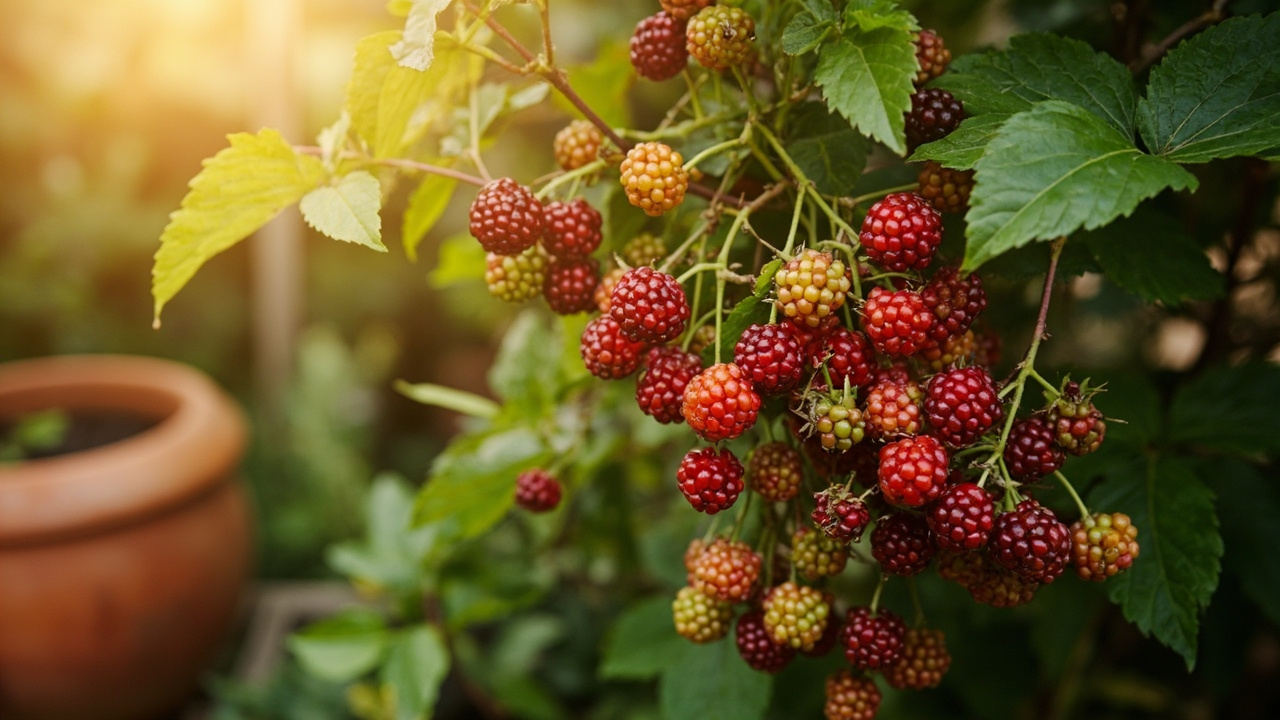
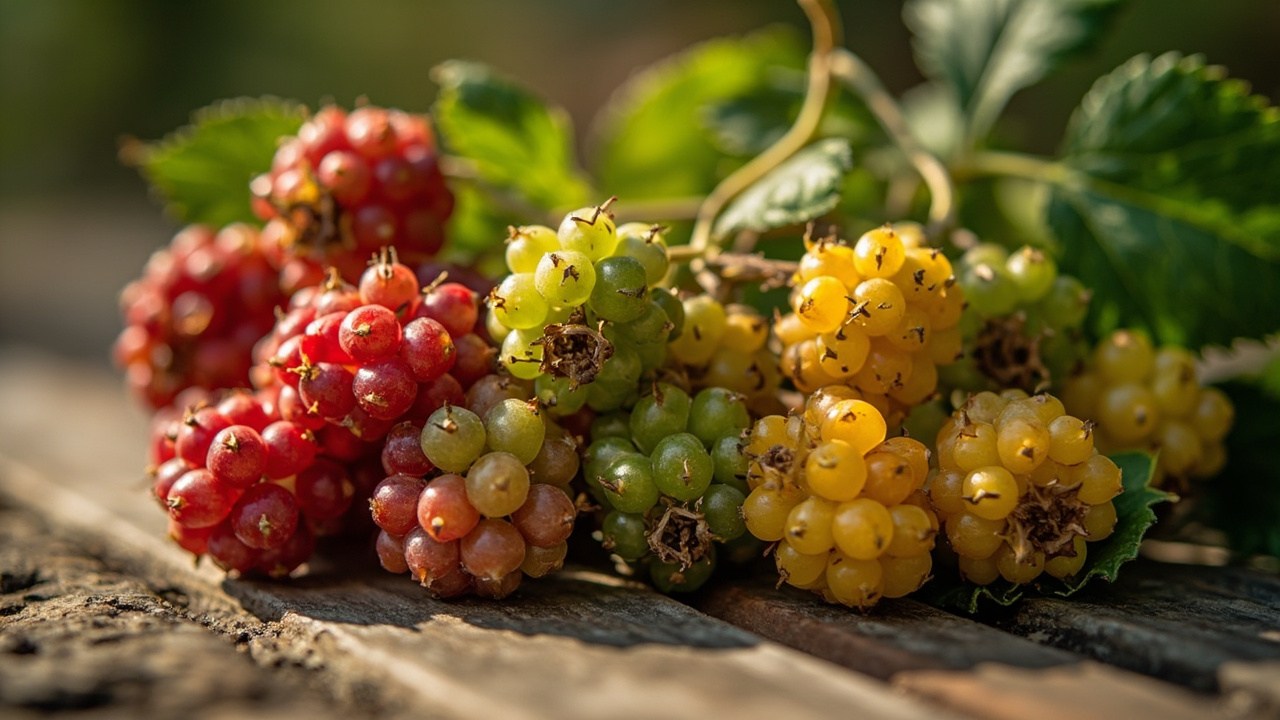
A gooseberry bush that has not been pruned correctly for three years will still grow vigorously — it just will not produce fruit where you can reach it, and every season the problem compounds. The error is almost always the same: treating gooseberries like raspberries.
Gooseberries fruit primarily on two- and three-year-old wood. Raspberry canes fruit once and die; blackcurrants fruit best on one-year-old shoots. Gooseberries sit between these: the main canes persist for years, producing short side shoots called spurs that carry fruit buds. Remove all the old wood and you remove the entire season’s crop. Remove only the new growth and you end up with a dense thicket of juvenile canes that will not fruit for another two years.
The goblet shape resolves this tension. The goal is a permanent framework of 6-10 canes of mixed age radiating outward from the centre, with the middle kept open so light reaches every spur-bearing side shoot. Young replacement canes are kept alongside older fruiting canes, so every year some wood is maturing into fruiting age while older wood is being removed.
Thorn protection is not optional. A mature gooseberry bush carries hundreds of sharp thorns on every cane, and pruning requires reaching deep into the centre of the bush. Thick leather gloves, a long-sleeved jacket, and long-handled loppers turn a miserable two-hour ordeal into a manageable thirty-minute task.
Annual pruning for goblet shape on established bushes
Prune gooseberries during the dormant season — December through February in northern climates, ideally when the bush is fully dormant but the worst cold has passed. Never prune during active growth: sap bleeds from fresh cuts, and the open wounds invite cane blight and fungal infection.
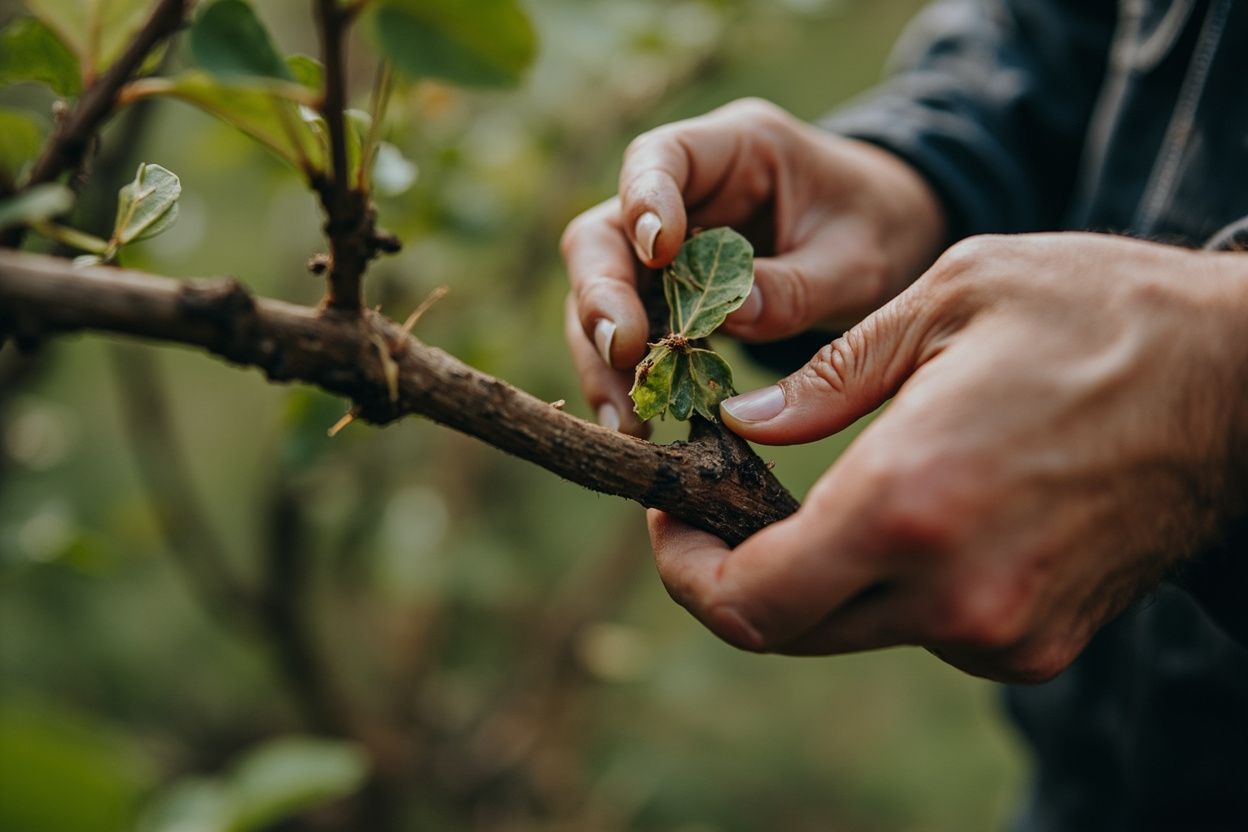
Start by removing all dead, damaged, and diseased canes at ground level. Look for cane blight lesions — sunken purple-brown patches on the bark — and spur blight cankers, which appear as small elliptical dead areas on spurs. Cut well below visible damage into healthy wood, and dispose of pruned material rather than composting it.
Next, remove any canes that cross or rub against others, and cut out all canes growing inward toward the centre of the bush. The target is a goblet profile: canes radiating outward with an open middle that lets air circulate and light penetrate. This open centre is the single most effective defence against powdery mildew, which thrives in dense, humid interior growth.
On the remaining canes, shorten all side shoots (laterals) to 2-3 buds from the main stem. These shortened spurs develop fruit buds at their base by spring. Cutting to a single bud reduces fruit count; leaving laterals unpruned produces a tangle of growth with no usable spur structure.
Finally, thin the remaining basal shoots so the bush holds 5-8 strong canes in total. Remove the weakest canes regardless of age — a thin, spindly two-year-old cane is less productive than a vigorous one-year-old replacement. The goal is quality of framework, not quantity of wood.
Spur pruning and managing fruiting wood
Spurs are the short, knobby clusters of fruit buds that form on two- and three-year-old wood where laterals were previously shortened. Each healthy spur cluster produces 3-5 flowers and then fruits for 4-6 years before declining. A well-managed gooseberry bush carries dozens of spur clusters distributed along its main canes.
To encourage new spur formation, shorten all laterals to 2-3 buds during annual winter pruning. The buds immediately behind the cut swell into fruit buds by spring. This is why lateral length matters: a lateral cut to 2-3 buds produces a compact spur; a lateral left long produces a trailing shoot with fruit only at the tip.
Spur replacement becomes necessary when a cluster stops producing — the buds appear small, shrivelled, or fail to open. Cut the entire lateral back to a young side shoot growing from its base. This regenerates the spur on fresh wood and extends the productive life of the cane by several years.
Overcrowded spurs are as problematic as missing ones. Thin to one spur cluster per 10cm of cane length. Dense spur clusters compete for the cane’s energy and produce small, poorly flavoured fruit even when the bush looks laden with berries.
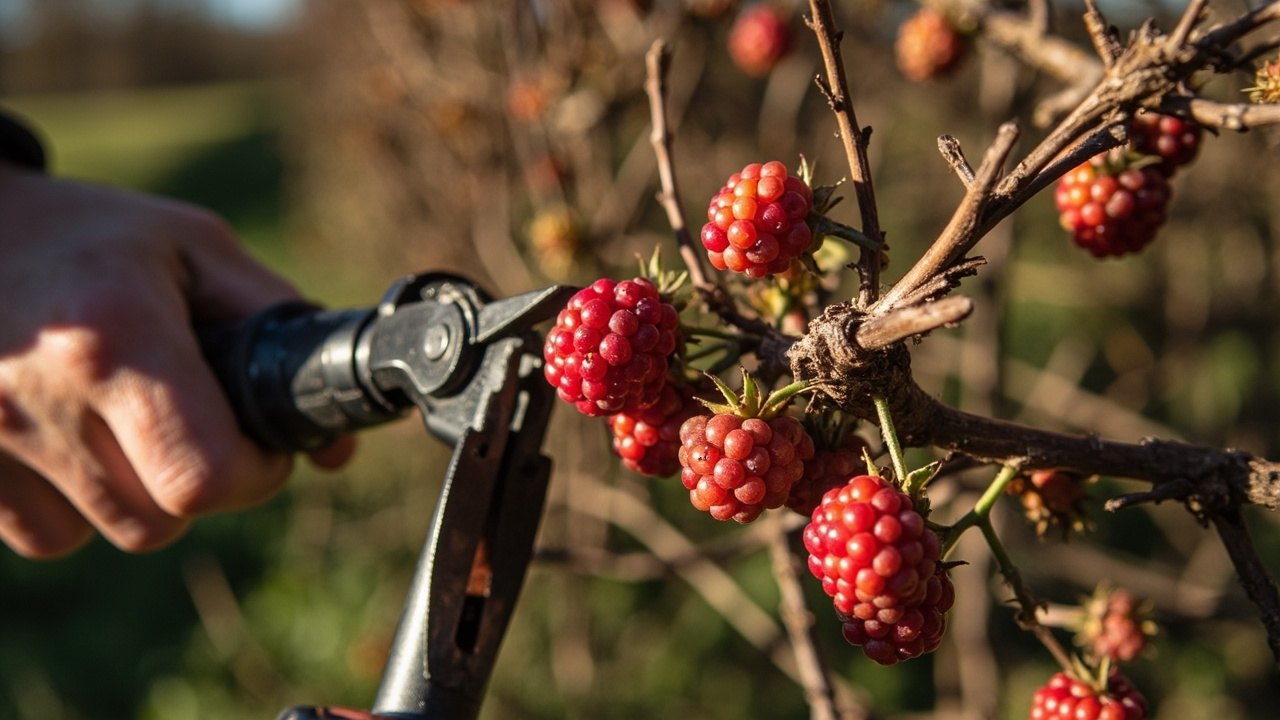
Rejuvenation pruning for overgrown or neglected bushes
A gooseberry bush neglected for five to ten years can be restored to full production within two to three seasons. Gooseberries are among the most forgiving of fruit bushes when it comes to hard pruning — the dormant buds at the base of old canes activate vigorously when the top growth is removed.
Two approaches work. Hard renovation means cutting every cane back to 15cm above ground level in a single winter. This sacrifices the entire current season’s crop but rebuilds the framework fastest. Staged renovation removes one-third of the oldest canes at the base each winter for three years, maintaining partial crops throughout the process but taking longer to achieve full restoration.
After hard renovation, apply 50g of balanced fertiliser around the drip line in early spring and top up the mulch to 7cm. The bush will respond with vigorous new basal shoots — select the strongest 6-8 to form the new goblet framework and remove the rest.
Do not let a rejuvenated bush fruit in its first year after hard pruning. Remove flower buds as they appear to direct all energy into structural cane growth. Fruiting too early on a rebuilt framework produces a heavy crop that bends young canes to the ground and ruins the shape you are trying to establish.
Seasonal pruning calendar and common mistakes
The main pruning window is dormant season: December through February in northern climates, January through March in milder regions. This is when you do structural pruning, spur thinning, and any rejuvenation work. The bush is bare, the framework is visible, and cuts heal quickly when spring growth begins.
Summer pruning is limited to light trimming of overly long new growth in June and July. Removing a few centimetres of soft tip growth improves airflow through the canopy and reduces mildew pressure. Never hard-prune in summer — you remove the wood that would have fruited next year and expose remaining foliage to sunscald.
Five common mistakes account for most pruning failures. Cutting too late in spring when sap is rising causes bleeding and weakens the bush. Leaving the centre closed defeats the goblet structure and invites mildew. Removing all old wood eliminates the fruiting spurs and the current year’s crop. Not wearing thorn protection leads to abandoned pruning sessions. Cutting laterals to a single bud instead of two or three reduces the spur to a single fruit bud.
Disinfect your pruning tools between bushes with methylated spirits or a 10% bleach solution. Cane blight and spur blight spread through contaminated blades, and a single cut on an infected bush transfers the pathogen to every bush you prune next.
For planting and establishment, see the gooseberry planting guide. For the full cultivation lifecycle including variety selection and harvesting, see the complete gooseberry plant care guide. For identifying and treating cane blight, spur blight, and other diseases, see the gooseberry leaves turning brown page.
Read Also on Aqualogi
Related on the site, broken out by topic:
Start here: Gooseberry Varieties guide and Gooseberry Care guide.
For the light and the soil: Gooseberry Light and Soil guide covers how much sun, the soil pH and composition, drainage, the container mix, and mulching the root zone.
For planting the bush: Gooseberry Planting guide covers bare-root planting step by step, spacing and site layout, container planting, and first-month care.
For the browning-leaf symptom: Brown Gooseberry Leaves guide covers leaf spot, sunscald, potassium and magnesium deficiency, and autumn senescence.
For the mildew disease: Gooseberry Mildew guide covers powdery vs. American gooseberry mildew, the infection cycle, removing infected canes, and spray options.
For the gooseberry vs. currant comparison: Gooseberry vs Currant guide covers growth habit, flavor and harvest, chill hours, disease resistance, and pruning complexity.
For rescuing a failing bush: Saving a Dying Gooseberry guide covers the triage test, rejuvenation pruning, root rot and drainage recovery, and when to replace.
From PDF to Excel in one click
Forget retyping line by line. Upload any bank statement, get a spreadsheet you can actually use. Your files are never stored, and you can test the converter with 3 free conversions.
Try it free