
Strelitzia reginae is native to the eastern Cape of South Africa, where it grows in well-drained soil with seasonal rainfall. In cultivation, it is one of the most overwatered houseplants. The large, paddle-shaped leaves and tropical appearance suggest a thirsty plant, but bird of paradise is actually drought-tolerant and suffers more from excess water than from neglect.
Most care guides say “water when the top inch is dry.” This rule works for many houseplants but is incomplete for bird of paradise. The plant’s thick rhizome stores water, and the large leaves transpire heavily in bright light. The watering needs change dramatically with light, temperature, and season. This guide covers the actual watering method, the soil physics, and the diagnostic signs that appear before visible damage.
How Bird of Paradise Roots Handle Water
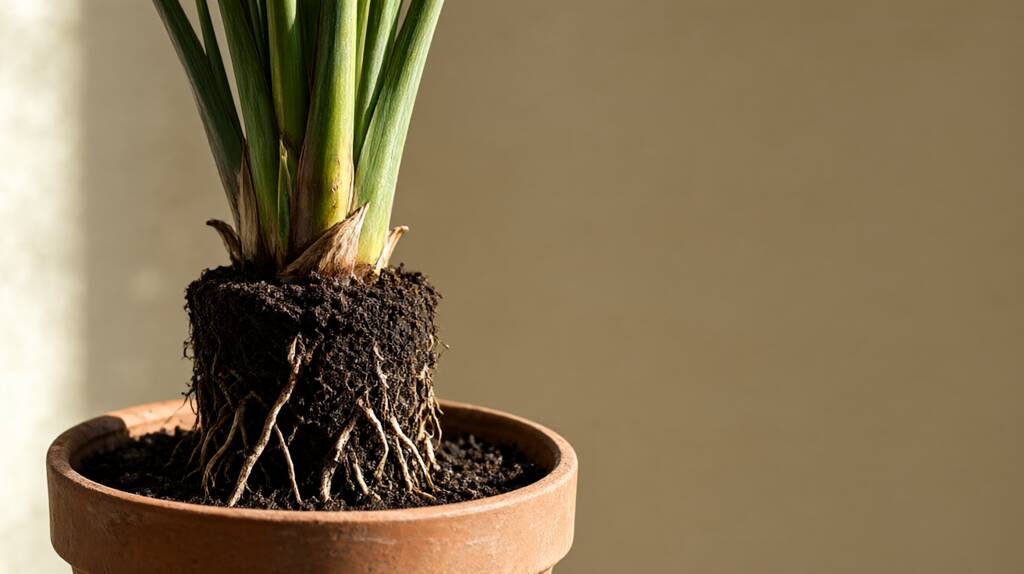
Strelitzia reginae has a thick, fleshy rhizome that stores water and carbohydrates. The roots are fibrous and relatively shallow, spreading horizontally near the soil surface. This means the plant accesses water quickly when the top layer is moistened, but it is also vulnerable to waterlogging at the surface.
The rhizome storage capacity creates a deceptive delay. When soil moisture drops, the rhizome releases stored water to the leaves, and the plant looks healthy for 1-2 weeks after the soil has gone dry. By the time the leaves show stress, the plant has been in drought for weeks.
The combination of shallow roots and water-storing rhizome makes bird of paradise vulnerable to both extremes. Overwatering rots the shallow roots before the rhizome shows any sign. Underwatering stresses the rhizome before the leaves show any sign. The watering sweet spot is narrower than the plant’s reputation suggests.
The Right Way to Water Bird of Paradise
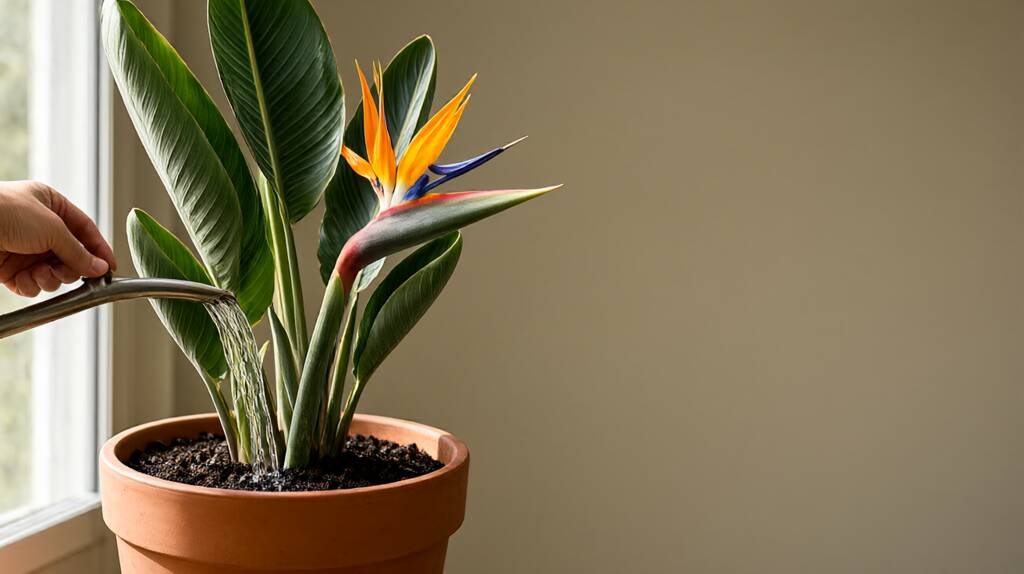
Water thoroughly until water runs freely from the drainage hole. This is essential because partial watering only moistens the top layer, leaving the deeper roots dry. The shallow root system means the plant depends on even moisture distribution throughout the pot.
After watering, let the pot drain completely. Bird of paradise is sensitive to standing water. The shallow roots sit in the bottom 5 cm of soil, and if that layer stays saturated, root rot begins within 7-10 days.
Check soil moisture at 5 cm depth, not at the surface. The top 2-3 cm can be dry while the bottom is saturated. Use a wooden skewer or moisture meter inserted to 5 cm. If it comes out damp, wait. If it comes out dry, water.
Water temperature should be room temperature, 18-22°C. Cold water shocks the root system and slows absorption. If your tap water runs cold, let it sit in an open container for an hour before use.
Light and Watering: The Critical Link
Bird of paradise is a high-light plant. For complete care, see our bird of paradise growing guide. In bright light, the large leaves transpire heavily and the plant uses water faster. In low light, transpiration drops and the plant uses water slowly. The watering schedule must adjust to the light level, not the calendar.
A bird of paradise in a south-facing window may need water every 5-7 days in summer. The same plant in a north-facing room may need water every 14-21 days. The difference is not the plant’s water needs but its water use, which is driven by light and temperature.
If you move a bird of paradise to a brighter location, increase watering frequency immediately. The plant will use water faster and the soil will dry sooner. If you move it to a dimmer location, reduce watering. The soil will stay wet longer and the risk of root rot increases.
Soil and Drainage
Bird of paradise needs fast-draining soil. A standard potting mix retains too much moisture. The ideal mix is 50% standard potting soil, 30% perlite, and 20% orchid bark. This provides enough water retention for the shallow roots while allowing excess water to drain freely.
Pot material matters. Terracotta pots breathe and dry faster, reducing overwatering risk. Plastic and glazed ceramic pots trap moisture. If you use plastic pots, reduce watering volume by 20-30% and increase the interval between waterings.
Drainage holes are mandatory. Bird of paradise will not survive in a pot without drainage. If you use a decorative cachepot, keep the plant in a plastic nursery pot with drainage holes inside the cachepot, and remove it for watering.
Seasonal Watering Adjustment
Bird of paradise grows actively in spring and summer. For seasonal care, see our bird of paradise seasonal care schedule., when light and temperature are highest. During active growth, the plant uses water faster and the soil dries more quickly. Water when the top 5 cm of soil is dry, typically every 7-10 days in a warm, bright room.
In autumn and winter, growth slows. The plant’s water use drops by 50-60%. The same pot that needed water every 7 days in July may need water every 14-21 days in December. Overwatering in winter is the leading cause of bird of paradise death in indoor cultivation.
The seasonal shift tracks the plant’s metabolic rate, not the calendar. When new growth slows or stops, reduce watering. When new leaves emerge in spring, increase it.
Signs of Overwatering
Bird of paradise shows overwatering symptoms late. If you are also dealing with pests and diseases, check watering first. By the time leaves yellow or the plant wilts, root rot is already advanced. The early signs are subtle.
Slower growth: The plant produces fewer new leaves and the existing leaves grow more slowly. This is the earliest sign, appearing 2-3 weeks before visible leaf damage.
Slightly yellow older leaves: The lowest leaves turn pale yellow, not bright yellow. This is different from natural senescence, which produces fully yellow leaves that drop cleanly.
Soil that stays wet: If the soil surface is still damp 5 days after watering, the mix is too dense or the pot is too large.
Soft rhizome: Press the base of the plant gently. A healthy rhizome is firm. A soft or mushy rhizome indicates internal rot.
Signs of Underwatering
Underwatering symptoms appear faster than overwatering symptoms because the rhizome depletes its water reserves visibly.
Drooping leaves: The large leaves hang downward and feel soft rather than firm. This is the first sign and appears when the soil has been dry for 1-2 weeks.
Brown leaf tips: The leaf tips dry and turn brown. This is the second sign, appearing after 2-3 weeks of drought.
Dry, cracked soil: The soil pulls away from the pot edges and becomes hard. This indicates the soil has been dry long enough for the clay particles to contract.
Lightweight pot: The pot feels noticeably lighter when lifted. This is the most reliable indicator of dry soil.
Common Watering Mistakes
Watering on a fixed schedule. Bird of paradise water needs vary dramatically with season, light, and pot size. Check the soil before every watering.
Using a pot that is too large. An oversized pot holds more soil than the roots can access. The excess soil stays wet and creates anaerobic conditions.
Leaving water in the saucer. Standing water re-enters the pot through capillary action, re-saturating the bottom layer. Empty the saucer within 30 minutes.
Misting instead of watering. Misting raises humidity temporarily but does not hydrate the roots. Bird of paradise needs soil moisture, not leaf moisture.
Ignoring the light-water connection. The plant’s water use is driven by light. A plant in bright light needs more water than the same plant in dim light. Adjust watering to match light exposure.
Bird of paradise is moderately sensitive to water quality. Fluoride and chlorine can cause brown leaf tips, though less severely than in spider plants. Salt buildup from hard water or fertilizer can also affect growth.
If your tap water is high in fluoride or hardness, use filtered water or rainwater. Alternatively, flush the soil monthly with 3-4 pot volumes of water to leach accumulated salts. This is especially important in winter when the plant uses less water.
Repotting and Watering
Bird of paradise grows best when slightly root-bound. Repot only every 2-3 years, or when roots emerge from the drainage holes. When repotting, choose a pot only 2-3 cm larger in diameter.
After repotting, water thoroughly to settle the new soil. Then reduce watering for 2-3 weeks while the plant adjusts. The disturbed roots are less efficient at water uptake, and the new soil holds more moisture than the old root ball.
Bird of paradise can be propagated by division. Each division should have at least one growing point and a portion of the rhizome with roots. Watering newly propagated divisions requires different care than established plants.
Plant the division in a pot with well-draining soil. Water thoroughly to settle the soil. Then water lightly, keeping the soil consistently moist but not saturated. Place in bright, indirect light. Do not fertilize for 4-6 weeks.
Once new growth appears, usually after 4-6 weeks, begin normal watering. The new plant will need 2-3 months to develop a sufficient root system.
If watering problems persist despite addressing all likely causes, the plant may have a systemic issue. Root rot that has spread into the rhizome, severe pest infestation, or a combination of factors can produce symptoms that do not respond to standard fixes.
If the rhizome is soft and discolored, the plant may be beyond recovery. In this case, the best option is to take divisions from the healthy upper sections and propagate new plants.
Water Quality and Bird of Paradise
Bird of paradise is moderately sensitive to water quality. Fluoride and chlorine can cause brown leaf tips, though less severely than in spider plants. Salt buildup from hard water or fertilizer can also affect growth.
If your tap water is high in fluoride or hardness, use filtered water or rainwater. Alternatively, flush the soil monthly with 3-4 pot volumes of water to leach accumulated salts. This is especially important in winter when the plant uses less water.
Bird of paradise propagated by division needs careful watering for the first 4-6 weeks. Keep the soil consistently moist but not saturated. Place in bright, indirect light. Do not fertilize until new growth appears.
The Bottom Line
Water bird of paradise thoroughly, let it drain completely, and check the soil at 5 cm depth before every watering. Use fast-draining soil and a pot with drainage holes. Adjust frequency with the seasons and light levels. The rhizome will tell you if you are getting it right: firm and healthy means correct watering.
Sources and further reading
- University of Florida IFAS Extension – strelitzia care.
- Missouri Botanical Garden – bird of paradise profiles.
- Clemson Cooperative Extension – houseplant watering guidelines.
Last reviewed on November 30, 2026. Plant and growing guidance is general; adjust to your specific conditions.