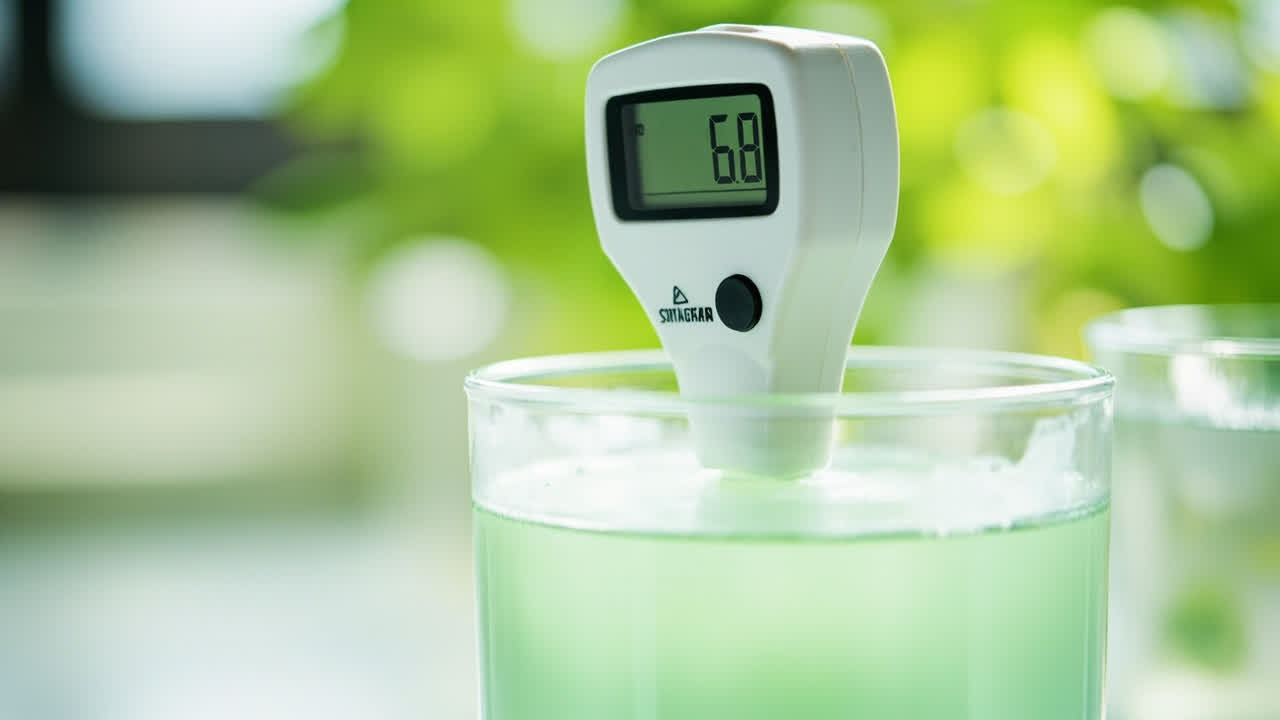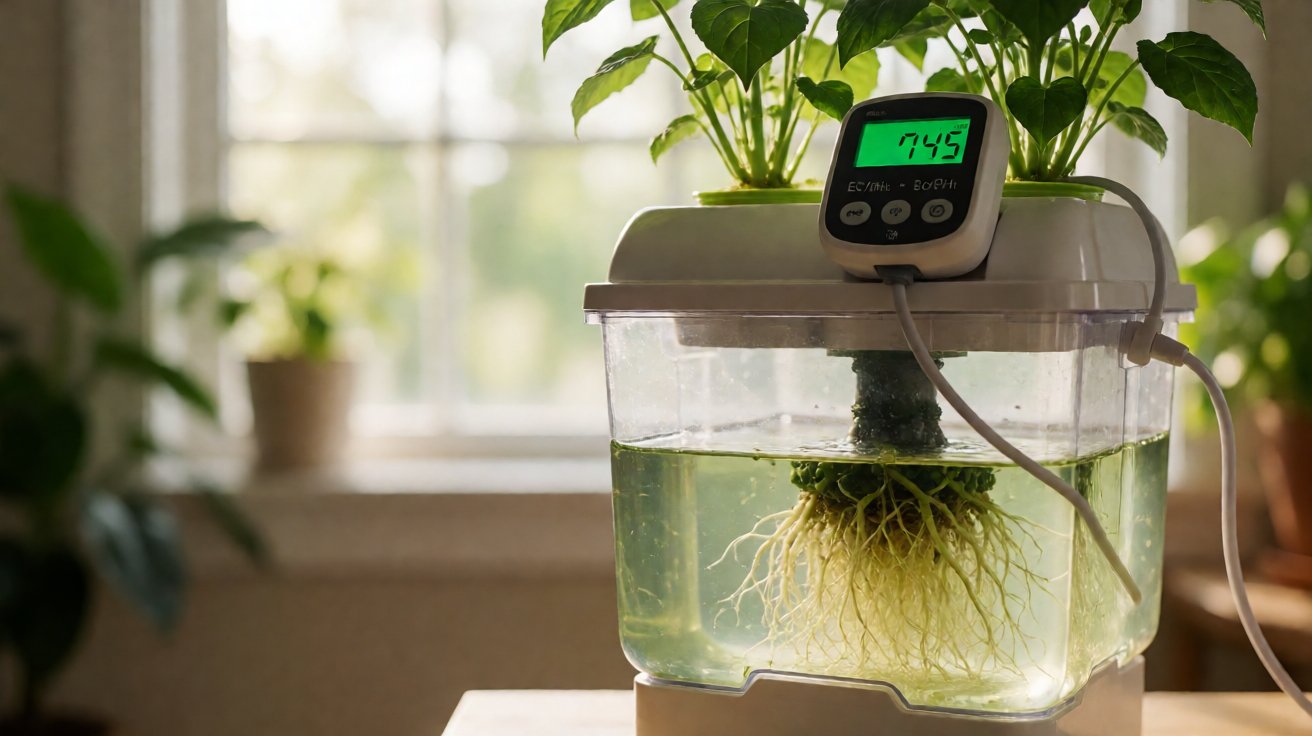

EC and pH are coupled, not independent. Get the coupling wrong and the root sees a different nutrient solution than the meter on the reservoir lid reports. A 0.3 mS/cm drift in EC or a 0.4 pH shift can lock out iron and manganese long before any leaf turns yellow. The failure is invisible until the crop is already stressed, and by then the fix takes days, not the ten-minute calibration you skipped this morning.
The meter is the first link in the chain. If it is off, every decision after it is off. The second link is the reservoir itself: volume, temperature, and evaporation all shift EC and pH between checks. The third link is the root membrane, which absorbs ions selectively and changes the solution chemistry every time it takes up water. Two of those links failing at the same time is the standard beginner setup: an uncalibrated meter monitoring an undersized reservoir that is not topped up on a schedule.
Most growers try to fix drift by adding more nutrient solution. That makes it worse. Adding concentrated nutrient raises EC faster than it corrects pH, pushes the reservoir toward the lockout zone, and masks the underlying problem: the meter was wrong from the start, and the top-off water was never pH-adjusted before going in.
One honest limit up front: a meter cannot fix a reservoir that is too small. If the volume is under 10 litres for a system with three or more active plants, EC and pH swing by 0.3–0.5 between checks simply from plant uptake and evaporation. No amount of calibration fixes that. The reservoir needs to be big enough to buffer the swings before the meter becomes meaningful.
The Problem: Invisible Drift and the Symptom Chain
A hydroponic reservoir at EC 1.8 mS/cm and pH 6.0 is not a static thing. It is a moving target. Plants take up water faster than they take up salts, so EC rises as the day progresses. Evaporation removes pure water, concentrates the remaining ions, and pushes EC up further. Root respiration releases CO₂ into the solution, which forms carbonic acid and drops pH. Within 24 hours of a fresh fill, a 15-litre reservoir with active lettuce and basil can drift from 1.8 to 2.2 mS/cm and from 6.0 to 5.5 without any nutrient being added. The meter on the lid reports the current number. The grower who last checked at 6.0 last night has no idea the reservoir is now 5.5.
The symptom chain follows a strict order. First, iron and manganese become less available at the root surface as pH drops below 5.5. New leaves on lettuce and basil start showing interveinal yellowing: green veins, pale tissue between them. The older leaves look fine. Second, as EC climbs above the crop’s upper limit, osmotic stress pulls water out of the root cells faster than they can absorb it. The plant looks mildly wilted even though the reservoir is full. Third, if both are off simultaneously, calcium and magnesium uptake collapses, leaf edges curl and brown, and the plant shows a deficiency pattern that looks like several deficiencies at once because that is exactly what is happening.
The confusion most growers walk into: they see yellowing leaves and reach for a nitrogen supplement. The real cause is a pH of 5.2 locking out iron. Add nitrogen to a 5.2 reservoir and the EC climbs higher, the pH drops further, and the lockout gets worse. The fix was a 30-second pH up dose, not a nutrient bottle.
The Mechanism: Why EC and pH Move Together
Electrical conductivity is a measure of total dissolved ion concentration. It tells you how strong the solution is, not which ions are present. A reservoir at EC 1.8 mS/cm can be a balanced complete nutrient solution or it can be 80 percent calcium nitrate and 20 percent potassium sulfate with nothing else. The number is the same. The plant sees two completely different solutions. This is why EC alone is a weak control: it measures strength, not composition.
pH is the control variable that determines which ions are bioavailable. The underlying chemistry is simple: most nutrient salts dissociate into their component ions in water. The solubility of each ion depends on the hydrogen-ion concentration of the solution. Iron, in its chelated form (EDTA or DTPA complex), stays soluble down to pH 4.0. Above pH 6.5, the chelate begins to break and iron precipitates as iron hydroxide, which the root membrane cannot absorb. Phosphorus, in the form of soluble phosphate, is most available between pH 5.5 and 6.5. Below 5.0, phosphate binds to calcium and precipitates. Above 6.5, it binds to iron and aluminium in the same way. The 5.5 to 6.5 window exists because it is the narrow band where all 17 essential elements are simultaneously in their most available ionic forms.
The coupling works in both directions. Adding pH up solution (typically potassium hydroxide or calcium hydroxide) increases potassium or calcium concentration, which raises EC. Adding pH down solution (typically phosphoric or nitric acid) increases phosphate or nitrate concentration, which also raises EC. A full top-off with unadjusted tap water: tap water at pH 7.2 and EC 0.4 mS/cm, added to a reservoir at pH 5.8 and EC 2.0, will dilute the nutrients and push pH up. The grower sees the meter read 6.2 and thinks the system is fine. In reality, the nutrient concentration just dropped by 15 percent and the EC meter is showing the new, lower number as if nothing changed.
Temperature compounds every one of these shifts. EC readings are temperature-dependent: most meters auto-compensate to a 25 °C reference, but the actual ion mobility changes with the real temperature of the reservoir. A reservoir at 28 °C with active aeration holds less dissolved oxygen than one at 20 °C. Root respiration is faster at 28 °C, CO₂ release is faster, and pH drops faster. The same reservoir that drifts 0.3 pH in 12 hours at 20 °C can drift 0.5 in the same window at 28 °C. The meter does not tell you this. The grower has to know it.
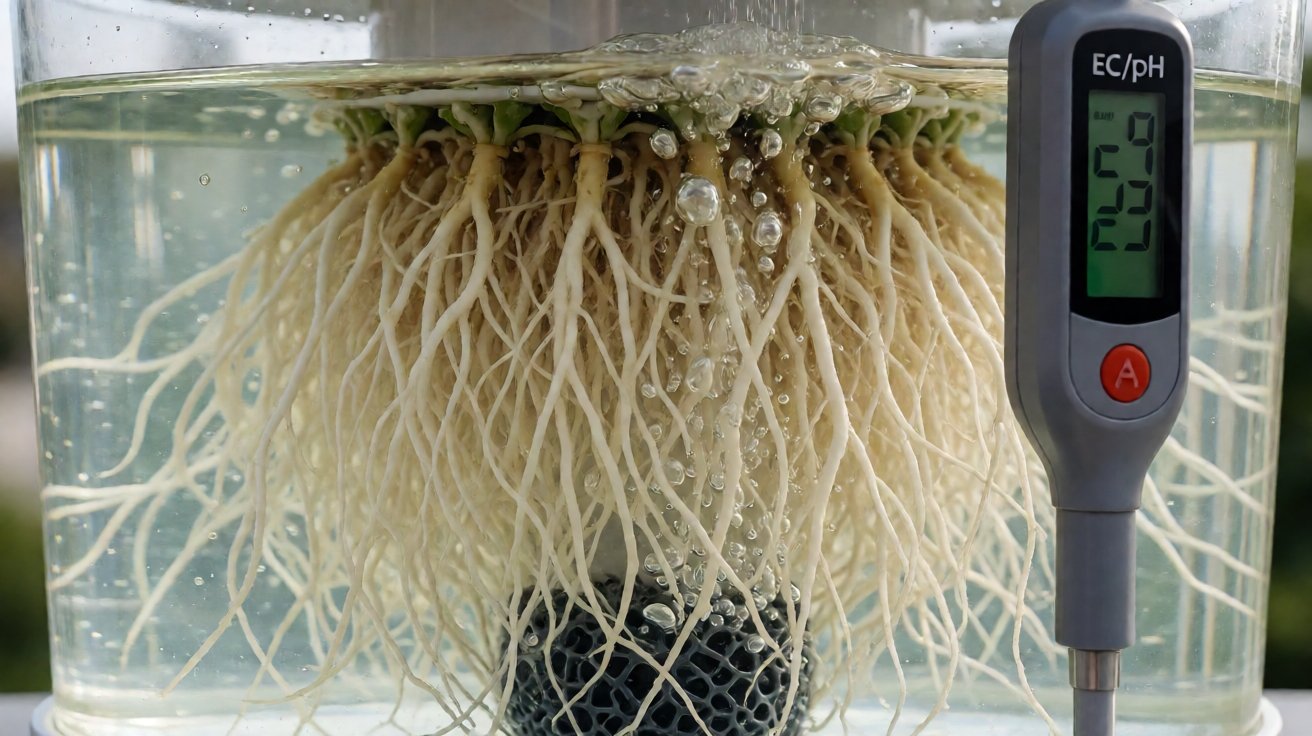
The root membrane is the last link in the chain, and it is the one nobody watches. Roots absorb water by osmosis and ions by active transport. The active transport step requires the ions to be in the correct ionic form at the root surface. If the bulk solution is at pH 5.8 but the root boundary layer is at pH 5.4 because of local CO₂ release from respiration, iron is less available at the actual absorption site than the bulk reading suggests. This is why a meter that reads “perfect” can still have a crop showing iron deficiency: the boundary layer chemistry is different from the bulk reservoir chemistry, and the meter only sees the bulk.
What Actually Works: Calibration and Maintenance Rhythm
Calibrate the pH meter before every use session, not just at the start of the grow cycle. A two-point calibration at pH 4.0 and pH 7.0 buffer takes four minutes and prevents the most common rookie error: chasing a reading that is off by 0.5 units. If the meter reads 6.0 on a known 7.0 buffer, every pH up dose you add is 0.5 units too much, and the reservoir ends up at 6.5 instead of 6.0. The crop does not die at 6.5, but it grows slower, and the effect compounds over weeks.
Calibrate the EC meter with a 1.413 mS/cm or 1280 µS/cm standard solution. Most hobby meters accept one point. Check the reading against a known sample: tap water from your tap, measured once and recorded, is a good weekly reference. If the meter reads 0.4 mS/cm on tap water one week and 0.6 the next, the probe is drifting and the next calibration will not fix it. Replace the probe before it takes the system down with it.
The maintenance rhythm that works for a 15-litre home system:
- Every morning: check EC and pH readings. If EC is above target by more than 0.2 mS/cm, top off with pH-adjusted water. If pH is below 5.5, add pH up in 0.5 ml increments, recheck after 15 minutes, repeat until in range.
- Every 48 hours: test tap water pH and EC. If tap water pH is above 7.0, pre-adjust it with pH down before adding it to the reservoir. Unadjusted tap water is the single biggest source of unexplained pH drift in home systems.
- Every 7 days: full water change. Drain the reservoir, rinse the tank and all tubing with clean water, refill with pH-adjusted water at target EC. This resets the ion balance and removes the dissolved oxygen debt that builds up in a recirculating system.
- Every 30 days: replace the pH probe tip or descale the probe. A probe that has not been descaled in 60 days will read 0.2–0.3 units low, which sends every pH up dose in the wrong direction. Store the probe in the manufacturer’s storage solution, not tap water, when not in use.
For the full EC and pH targets by crop, see the hydroponic nutrient schedule. For mixing the base nutrient solution before the first fill, see the DIY hydroponic nutrient solution guide. For what to do when leaves are already showing symptoms, see the save a dying houseplant guide, which covers the diagnostic sequence for both soil and hydroponic crops.
Common Mistakes That Make Drift Worse
The biggest mistake is treating the meter as a set-and-forget device. A pH meter left in the reservoir 24/7 without cleaning accumulates biofilm on the glass bulb. The biofilm changes the glass’s response time and shifts the reading. A continuous monitor that reads “stable at 6.0” for two weeks can be off by 0.4 units the entire time because the biofilm is buffering the reading. The fix is not a better meter. The fix is a 30-second clean every 48 hours: dip the probe in the manufacturer’s cleaning solution, wipe gently, rinse, and recalibrate against the 7.0 buffer.
The second mistake is adding nutrient solution to fix a low-EC reading without checking what the low EC actually means. Low EC after a water change means the fill was under-dosed. Low EC mid-cycle means the plants consumed the nutrients faster than the solution was topped up. The first fix is to re-dose. The second is to check whether the top-off schedule is running on a timer that is out of sync with the plant’s uptake rate. In a system with fast-growing lettuce in summer, the nutrient depletion rate can be 20 percent higher than in winter, and a top-off schedule set in January will under-feed a June crop by the third week.
The third mistake is ignoring reservoir temperature as a control variable. A reservoir sitting under a south-facing window in summer can reach 32 °C by afternoon. At that temperature, dissolved oxygen drops below the 6 mg/L threshold that most hydroponic crops need for healthy root respiration. The EC reading is still correct, the pH is still in range on the meter, and the crop is still showing mild yellowing. The cause is not the nutrient solution. The cause is the oxygen debt in the root zone, which makes the plants take up less water, which concentrates the remaining ions, which pushes EC up, which makes the grower add more water, which dilutes the pH, which starts the drift cycle again. The fix is a reservoir lid, an air stone running continuously, and a light sensor that dims the grow light when the reservoir hits 28 °C.
The fourth mistake, and the one that takes the longest to diagnose, is a meter that was never calibrated after a probe replacement. A new pH probe reads 0.2–0.5 units different from the old one, even if both are the same model. The grower swaps the probe, does not recalibrate, and then spends three weeks adding pH up to a reservoir that the new probe is reading 0.3 units high. The crop shows calcium deficiency, the grower adds calcium, the EC climbs, the pH drops, and the whole cycle runs in the opposite direction from what the meter is showing. The fix is in the four minutes you skipped after the probe swap.
Troubleshooting the Three Reading Patterns
If the meter reads fine but the crop is showing deficiency symptoms, the problem is almost always the boundary layer. The bulk solution is at target. The root surface is not. The fix is to increase water circulation: run the pump at a higher setting, add a second air stone, or check that the reservoir has no dead zones where stagnant solution sits against the roots. In NFT and DWC systems, the channel or raft should show visible current at the root line. If the water at the root is still when the pump is running, the flow is not reaching the root zone and the boundary layer is not being refreshed.
If the meter reading is unstable, swinging 0.3–0.5 units within an hour with no dose changes, the cause is one of three things: the probe tip is dirty or has air bubbles trapped in it; the reservoir is undersized and the plant is actively shifting the chemistry faster than the top-off schedule can correct; or the probe junction is dry and the electrode is losing its reference potential. Check the air first: a single bubble at the glass bulb will cause the reading to oscillate. Then check the volume: if the reservoir is under 10 litres with more than two active plants, the swings are normal and the fix is a bigger tank, not a better meter.
If the meter reads correctly but the crop is stalling despite being in range, check the EC number against the crop’s actual stage. A lettuce crop in the heading stage needs EC 1.2 to 1.6 mS/cm. A crop in the bolting or flowering stage needs the same range as a vegetative crop. But a tomato plant in fruiting stage needs 2.0 to 3.5 mS/cm. If the meter is set to a “universal” 1.8 mS/cm and the crop is a tomato in fruiting, the plant is in chronic nutrient deficit every single day and will show it in fruit size and shelf life, not in leaf colour. The meter is not wrong. The target number is wrong for the crop.
For the full crop-by-crop EC and pH targets, the hydroponic nutrient schedule has the numbers. For choosing the meter itself, the best hydroponic system for home guide covers which systems ship with which meter types and what to look for in a probe that will last a full grow season.
Reservoir EC and pH: The Rhythm That Holds a System Stable
The difference between a hydroponic system that produces a clean crop and one that stalls in week four is not the grow light. It is not the nutrient brand. It is whether the grower is running the calibration and maintenance rhythm on a schedule, not on a reaction. The meter is a tool. The rhythm is the system. A grower who calibrates every morning, tops up with adjusted water every 48 hours, and does a full water change weekly will almost always beat a grower who runs a “perfect” system and checks the meter once a month, because the second grower is managing drift by memory while the first is managing it by number.
If you do the 30-day probe descale tonight, check the reservoir temperature before you leave the grow area, and add the pH down to your tap water log, the system will hold for the next two weeks. The leaves will not tell you it is working. The EC number will, and it will be lower than you expected, because the crop has been under-feeding itself for longer than you thought. The next harvest will be the proof.
Turn That PDF Into a Spreadsheet in Minutes
You've seen how to do it manually — now let the tool handle the heavy lifting. Upload your bank statement and get Excel, CSV, or QBO in a few clicks.