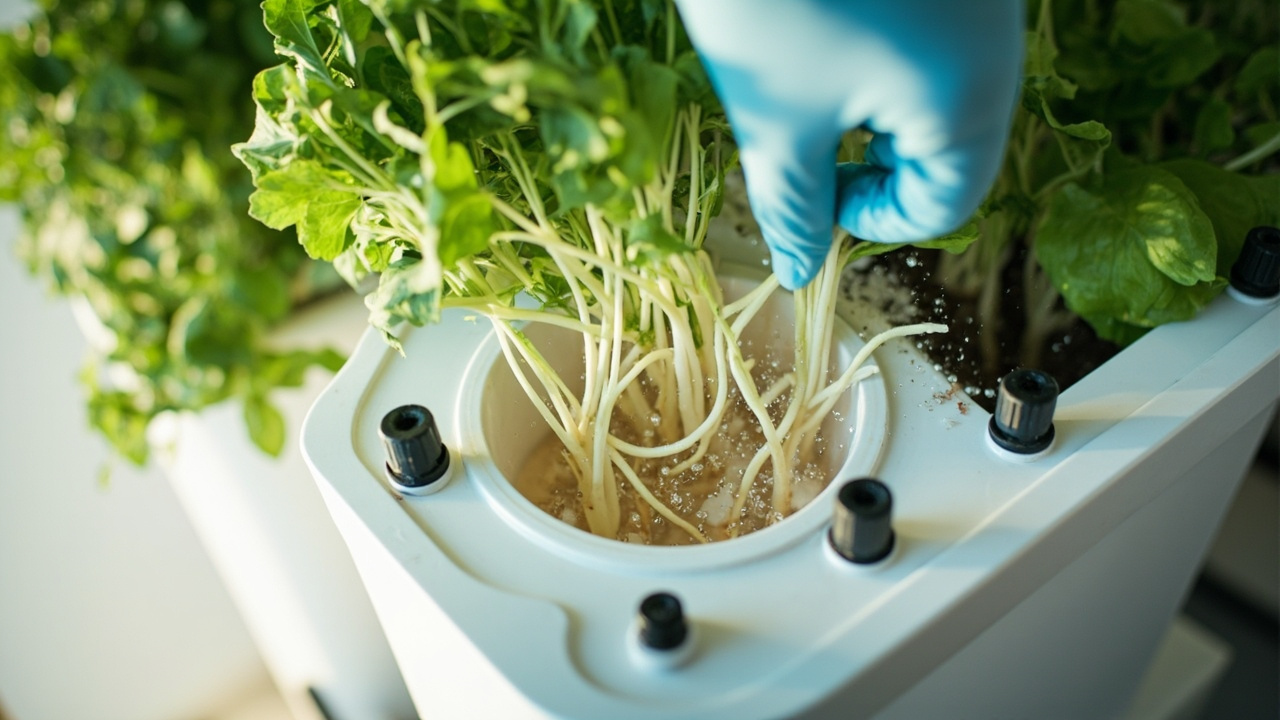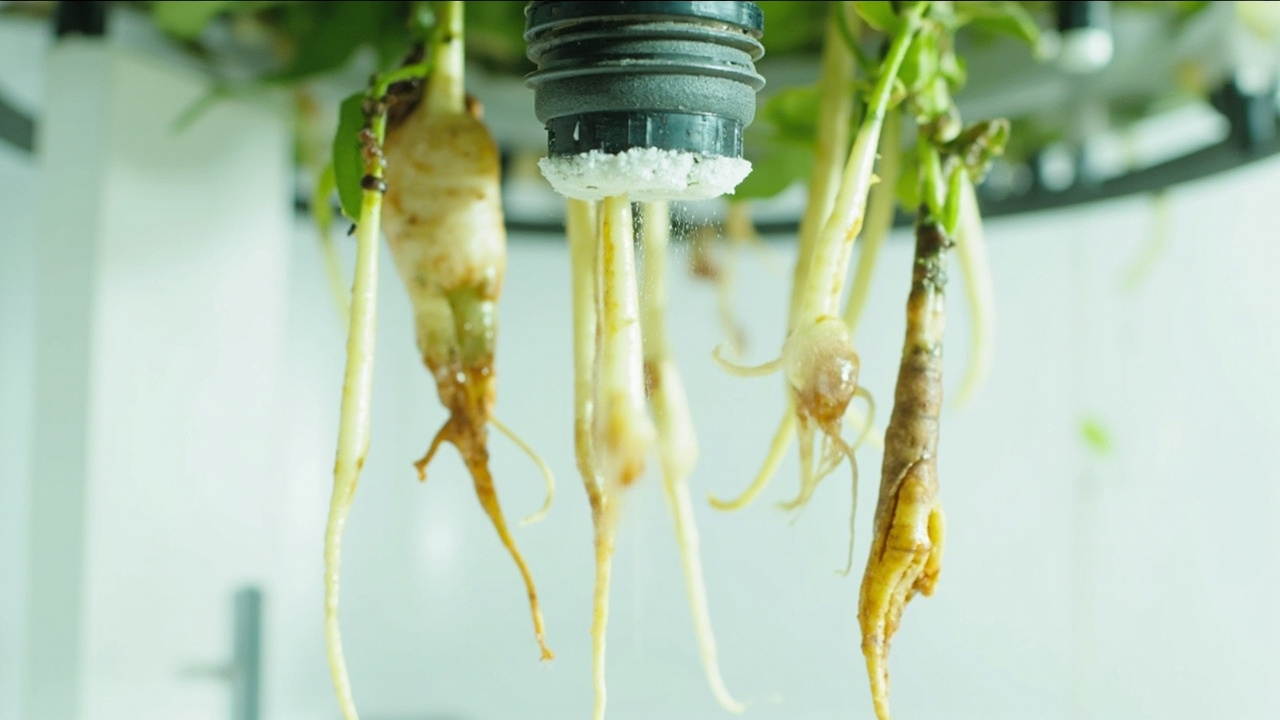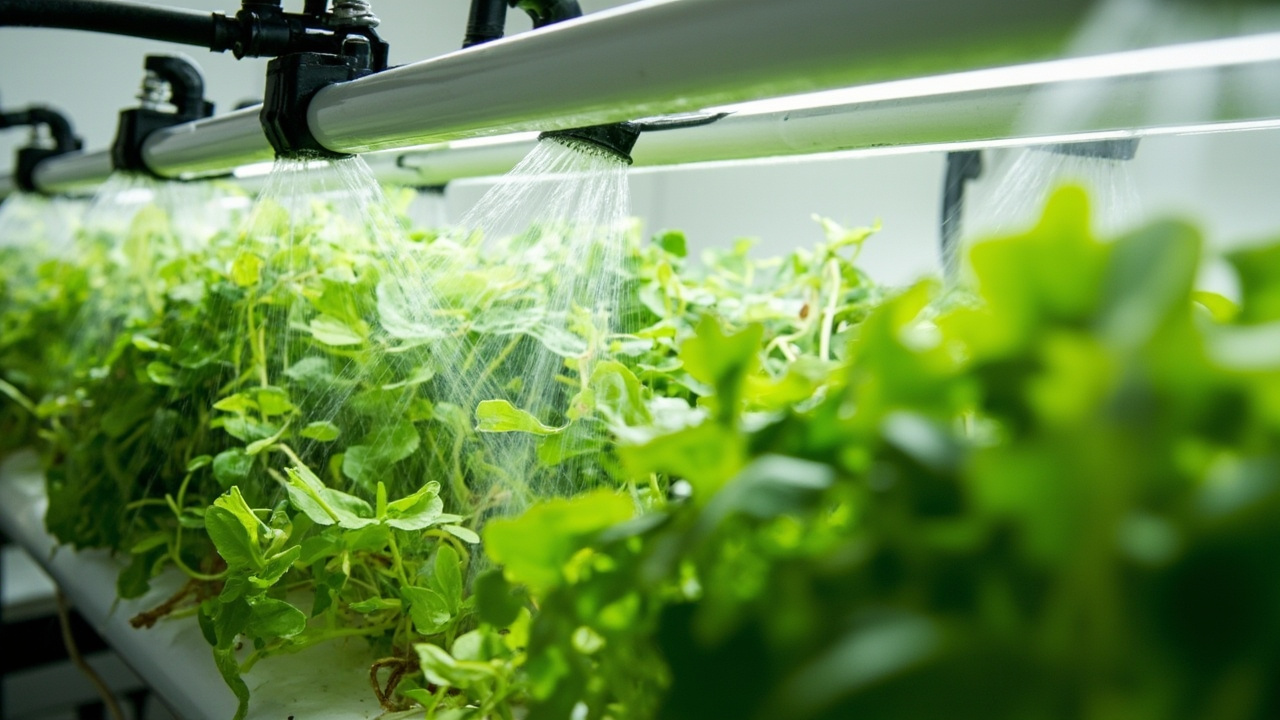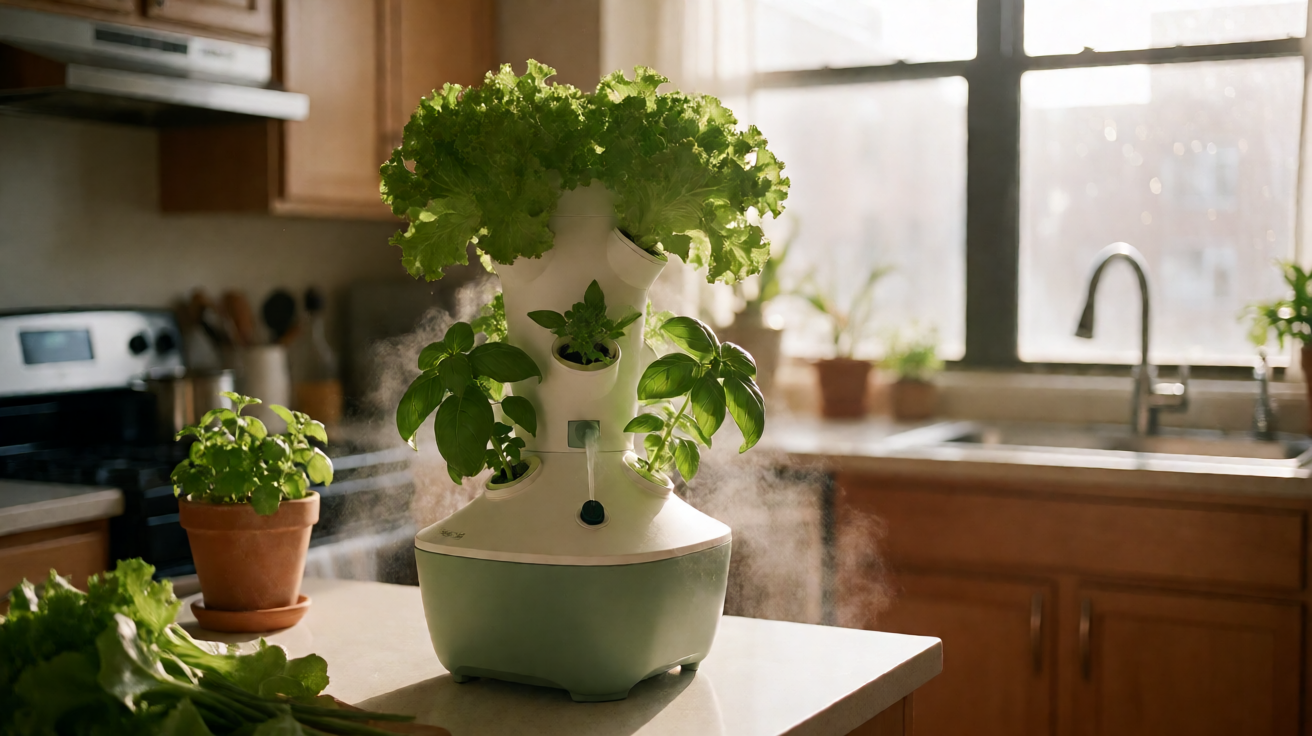

Aeroponics in an apartment is a small-footprint indoor garden that mists plant roots on a timer, runs off one regular outlet, and asks for the same careful placement any countertop appliance would. The core idea is simple: instead of soil or a submerged root bath, plant roots hang in a misting chamber and a pump pushes a fine nutrient mist through a misting nozzle on a misting cycle. The misting chamber stays dark so roots do not algae up, and the mist carries dissolved oxygen along with nutrients, which is why root mass grows faster than in a comparable soil pot or even a deep water culture reservoir. NASA Spinoff documentation from the 1990s describes the same misting nozzle + misting chamber mechanism for space crops, and it scales down to a 30 by 30 centimeter kitchen corner without any greenhouse. What it does not need is a balcony, a grow tent, or a custom room build. What it does need is a small amount of forethought about water, sound, and humidity before the first net pot seedling transplant goes in.
An apartment aeroponic system is, mechanically, the same family as a commercial vertical farming tower, just shrunken. The low pressure diaphragm pump, the misting cycle timer, the reservoir, and the misting nozzle are the same components Tower Garden uses in different sizes, and the root chamber biology is identical. The difference is that in an apartment, the system shares the room with a kitchen, a reading chair, or a home office desk, and that sharing is what the design has to solve. Water savings versus soil gardening are real to the misting cycle recycles the same reservoir contents for a week to but the apartment-specific constraints are the ones that decide whether the system runs cleanly.
The practical decision for an apartment grower is not whether aeroponics works indoors, it does, but which class of system fits the floor plan. A low pressure diaphragm pump tower with a 50 micron droplet misting nozzle runs quietly and tolerates a normal outlet, while a high pressure pump system with an ultrasonic fogger demands more power, more space, and a steeper learning curve. Most apartment growers start with the low pressure diaphragm pump class because the trade offs line up with the size of the room. The comparison to NFT comparison, DWC comparison, and Kratky comparison is real but secondary: the apartment question is whether the root chamber stays sealed and quiet, not which soilless method wins on yield.
What Aeroponics in an Apartment Actually Does
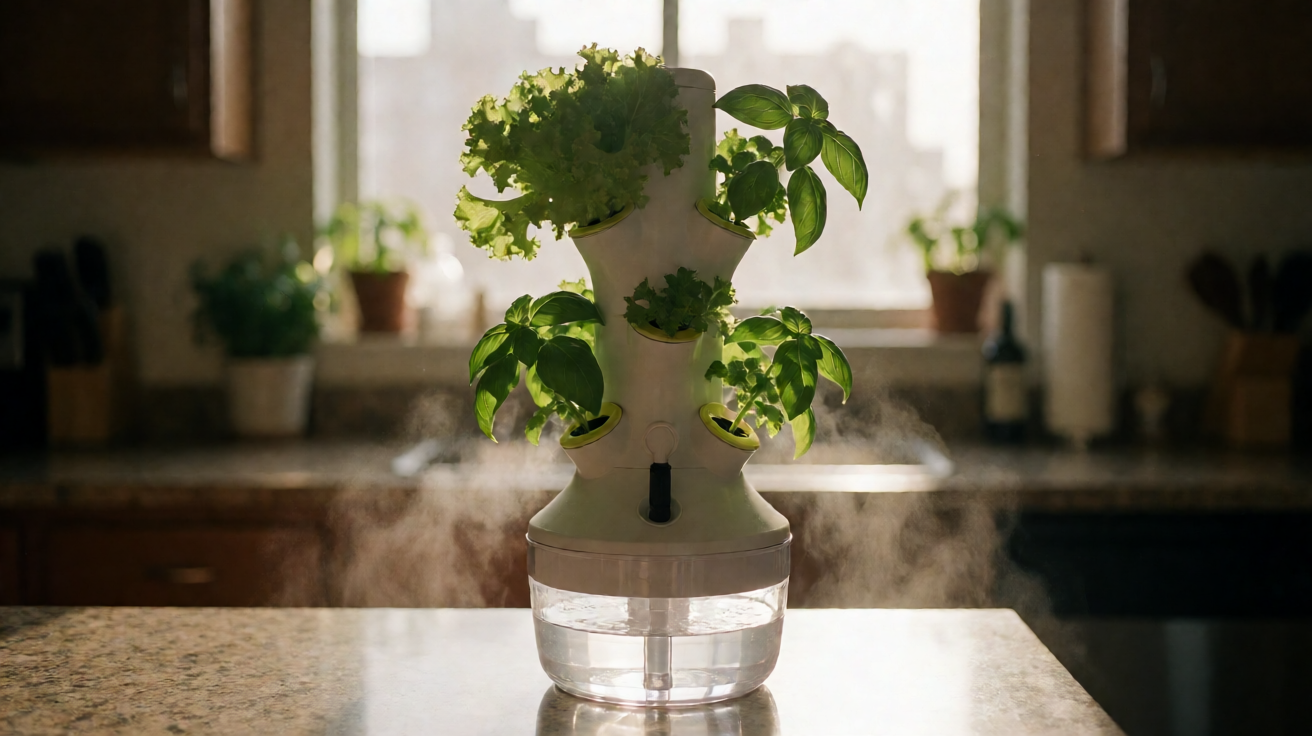
An aeroponic system grows plants without soil or a constant water bath. Seedlings in net pots sit in a lid, roots hang into a sealed misting chamber, and a low pressure diaphragm pump on a misting cycle timer sprays a nutrient mist through a misting nozzle for a few seconds every few minutes. The misting chamber stays dark so roots do not algae up, and the mist carries dissolved oxygen along with nutrients, which is why root mass grows faster than in a comparable soil or reservoir-based system. A typical mist droplet size of 50 microns falls back into the chamber rather than floating, so the mist stays inside the chamber walls and out of the room.
The practical apartment scale is a tower 60 to 180 centimeters tall with 8 to 20 net pot plant sites, or a countertop unit with 3 to 9 sites. Both use a low pressure diaphragm pump on a 120 or 240 volt outlet. The reservoir tops out near 20 liters, far below a Dutch bucket or vertical farming rack, and the misting cycle timer typically runs 30 seconds on and 5 minutes off. Cornell Controlled Environment Agriculture research sets the light integral at 12 to 16 hours of sunlight per day. The root-zone temperature target of 18 to 22 C is what an apartment already provides, keeping the 18 to 22 C root zone inside the misting chamber steady without active heating or cooling.
Noise, Mist and Humidity You Can Plan Around
Noise is the question most apartment growers ask first. A low pressure diaphragm pump is comparable to a small aquarium air pump at 30 to 40 decibels, cycling on for a few seconds via the misting cycle timer. Tower Garden and AeroGarden publish sound ratings because indoor use is built in. A high pressure system is louder at 50 decibels.
Mist drift is the second concern. Low pressure droplets at a 50 micron droplet size fall back into the misting chamber rather than floating. An ultrasonic fogger falls into the fine droplet category and is why most apartment growers avoid it: the fog escapes the chamber unless the lid is sealed. Standard towers with a misting nozzle do not produce visible mist beyond a few centimeters.
Humidity is the third leg. The misting cycle adds measurable humidity only inside the sealed root chamber, not the room. The honest limit is a small enclosed closet without ventilation, climbing above 65 percent and inviting mold on walls. The dissolved oxygen level the mist delivers drops sharply when water warms above 24 C, the ceiling for an apartment tower.
The quiet result is that a well-placed tower runs a few seconds on, a few minutes off, adds nothing measurable to room humidity, and uses the same electricity as a desk lamp. The reader’s job is to give it one well-chosen corner and keep the root-zone temperature inside the 18 to 22 C window the misting cycle already targets.
Picking a System Class: Low-Pressure Tower or Compact Kit
There are two system classes that fit a normal apartment. The first is a low pressure diaphragm pump tower with a misting nozzle and a misting cycle timer, which is what Tower Garden’s home line and most DIY PVC towers use. The second is a compact countertop kit with 3 to 9 net pot sites, often called an indoor garden or a smart garden, which uses the same low pressure diaphragm pump mechanism with a smaller reservoir. Both belong on a kitchen counter, a shelf, or a balcony corner that stays above 16 C. The high pressure pump class, by contrast, is the system used in commercial vertical farming and belongs in a basement or a garage, not a living room.
The high-pressure class, with smaller droplets driven by a dedicated pressure pump or an ultrasonic fogger, is the system used in commercial vertical farming. It grows faster and uses less water per plant, but it costs more, runs louder, and demands a 220 to 240 volt outlet in many markets. In an apartment, the engineering overhead rarely pays for itself in yield, which is why most indoor growers stay in the low-pressure class. The trade-off is honest: lower yields per square meter in exchange for a system that runs quietly on a normal outlet. The misting nozzle at 50 micron droplet size is the heart of the difference, and the apartment-scale low pressure diaphragm pump has been the reliable workhorse of home kits for over a decade.
The choice between a tower and a countertop kit comes down to the number of net pot plant sites. A 9 to 20 site tower fits a household that cooks three or more nights a week with fresh herbs, lettuce, mint, and basil, plus a steady microgreens rotation. A 3 to 6 site countertop kit fits a household that wants fresh basil and a few lettuce leaves for sandwiches without dedicating floor space. The mechanics are the same. The decision is footprint and weekly harvest volume. Both classes benefit from a 50 micron droplet misting nozzle because it stays inside the misting chamber and keeps the dissolved oxygen high at the root surface.
DIY is the third option and the one with the widest range of outcomes. The DIY section of this cluster walks through a tower build under $80 in materials. For an apartment, the constraint is not the price, it is the resulting height and reservoir size. A tower above 180 centimeters leans, a reservoir above 20 liters adds real floor weight when filled, and the noise of a poorly clamped low pressure diaphragm pump is louder than any commercial equivalent. The honest limit is: a tight DIY build at apartment scale is achievable, but it is not easier than buying a tested compact kit. The DIY tower that saves money in parts often loses the savings to misting nozzle clogging, root chamber leaks, and root mass decline from inconsistent misting frequency.
Placement: Floor Drainage, Light and Outlet Strategy
The floor is the single design decision. An aeroponic reservoir sits on a flat surface with a small drip tray and 1 centimeter air gap; the tray catches any leak before it reaches the floor and keeps the misting chamber out of a puddle that would invite root rot at the chamber base. The drainage tray also reduces the transplant shock when a tower is moved between rooms.
Light is the second placement question. Lettuce, basil, mint, and most herbs inside the misting chamber want 12 to 16 hours of sunlight or LED at 200 to 400 micromoles per square meter per second. A south or east-facing window with four hours of sun meets that target for half the year; the rest needs a daylight LED panel drawing 25 to 60 watts. The LED stabilizes the root-zone temperature in winter and reduces the misting duration needed.
The outlet question is the third. A low pressure diaphragm pump draws 8 to 25 watts from a normal outlet. Plug into a GFCI-protected outlet, the same kind used in kitchens and bathrooms. Living rooms and bedrooms often lack GFCI; the fix is a $20 plug-in adapter. The reservoir and misting nozzle are low-voltage devices once the pump converts AC.
Ventilation is the fourth constraint. A small closet with the door closed is the failure mode: humidity climbs above 65 percent, walls mildew, roots algae up. A louvered door or a small USB fan that runs 24 hours a day and draws less than 5 watts solves it and replenishes dissolved oxygen, which keeps the misting cycle absorbing evenly and prevents misting nozzle clogging.
For a starter propagation setup, plan watering every other day once plants are established, a single cutting in a cloning collar with a neoprene collar insert per net pot, and a misting cycle tuned to the season. Lettuce is the recommended starter clone because it roots fast and forgives misting frequency variation.
The order of placement decisions is floor, light, outlet, ventilation. Each is a small choice, none of them is expensive, and the entire placement pass takes about 30 minutes for a one-bedroom apartment. When the placement is right, the misting cycle is steady, root mass grows without transplant shock, and nozzle maintenance drops to a quarterly task instead of a weekly one.
Leaks, Mold and the Honest Limits of Apartment Aeroponics
The first limit is yield: a 20 site tower produces about 0.5 to 1.0 kilograms of leafy greens per week, far below a backyard soil garden. The Frontiers in Plant Science review on home-scale aeroponics lands the same number for most low pressure diaphragm pump systems. Water savings versus soil gardening are real, but calorie output is not.
The second limit is root-zone temperature. The root chamber runs close to room temperature because the low pressure diaphragm pump and reservoir exchange heat with the air. Below 16 C, lettuce growth slows by 20 to 30 percent; above 24 C, dissolved oxygen drops and root rot rises inside the misting chamber (the canonical root rot prevention in aeroponics failure mode). A cold windowsill pushes the system below the 18 to 22 C window, a hot attic pushes it above.
The third limit is mold and mildew. A sealed misting chamber gives roots a sterile environment compared with soil, but a tray or wall can grow mildew above 65 percent humidity for a week. The fix is air movement, weekly wall wipes, and one meter from paper documents. A small USB fan eliminates the risk and protects the dissolved oxygen level the misting nozzle delivers.
Leaks are the failure mode most growers fix before they happen. The most common leak is at the pump-to-chamber fitting; the second, a cracked reservoir from being moved while full; the third, a misaligned misting nozzle dripping past the lid. A drip tray, a 5 second daily check, and tightening fittings once per season eliminates the risk. Root pruning inside the misting chamber also helps: a root mass that fills the chamber restricts mist flow and absorbs dissolved oxygen.
The boundary this page owns is that a small low pressure diaphragm pump tower fits a normal apartment when the four placement constraints are met, and it does not fit an apartment that misses any of them. The honest limit is yield, not mechanism: the system works in a kitchen, a bedroom, or an office, but the harvest volume is one household’s greens per week, not a market farm. Mint and microgreens are the crops that recover fastest from a placement mistake; fruiting crops above 1 meter tall are the crops that fail first.
The Honest Boundary
Aeroponics in an apartment is a working indoor setup, not a marketing promise. A low pressure diaphragm pump tower with a 50 micron droplet misting nozzle fits a kitchen or living-room corner when the four constraints are met, and it does not fit a closet or an unventilated room above 24 C. The boundary: an apartment tower runs cleanly when placement is right, and placement is the reader’s decision, not the system’s. Choose the corner that meets the four constraints, expect leaf-crop yields, budget 20 minutes per week.
For next steps, see the maintenance guide and the DIY tower build guide.
Turn PDF Bank Statements Into Workable Spreadsheets
Your bank statement is a mess of numbers, but your books shouldn't be. Use our converter to get Excel, CSV, or QBO files — ready for QuickBooks.
Try It Free Now