If you see a white powdery coating on your gooseberry leaves or shoot tips, you are dealing with one of two mildew species — and choosing the wrong one wastes an entire growing season. Sphaerotheca mors-uvae (powdery mildew) and Podosphaera clandestina (American gooseberry mildew) look similar in early stages but require fundamentally different responses. One lives on the surface and yields to spray. The other moves inside the cane and will not stop until you cut it out.
Most growers misidentify the infection in spring, spray a generic fungicide at the wrong growth stage, and watch the mildew return within two weeks. The reason is simple: powdery mildew produces spores on the leaf surface every 7 to 10 days and responds to topical treatment. American mildew overwinters as fungal hyphae inside the cane tissue. No surface spray reaches it. You can identify which species you have, remove the right wood at the right time, and protect next season’s growth with a spray schedule that matches the infection window. This page shows you how.
Below: a visual diagnostic key for both species, the seasonal infection cycle with the two high-leverage treatment windows, step-by-step cane removal for systemic infections, a ranked list of spray options with cultivar safety warnings, and the resistant varieties that reduce your long-term workload.
How to Tell Powdery Mildew from American Gooseberry Mildew
The distinction that matters is surface versus systemic. Powdery mildew (Sphaerotheca mors-uvae) colonises the outer leaf surface and can be managed with well-timed sprays. American gooseberry mildew (Podosphaera clandestina) sends fungal hyphae into the cane itself — spraying alone will not stop it. Misidentifying one for the other is the single most common reason for treatment failure in home gooseberry growing.
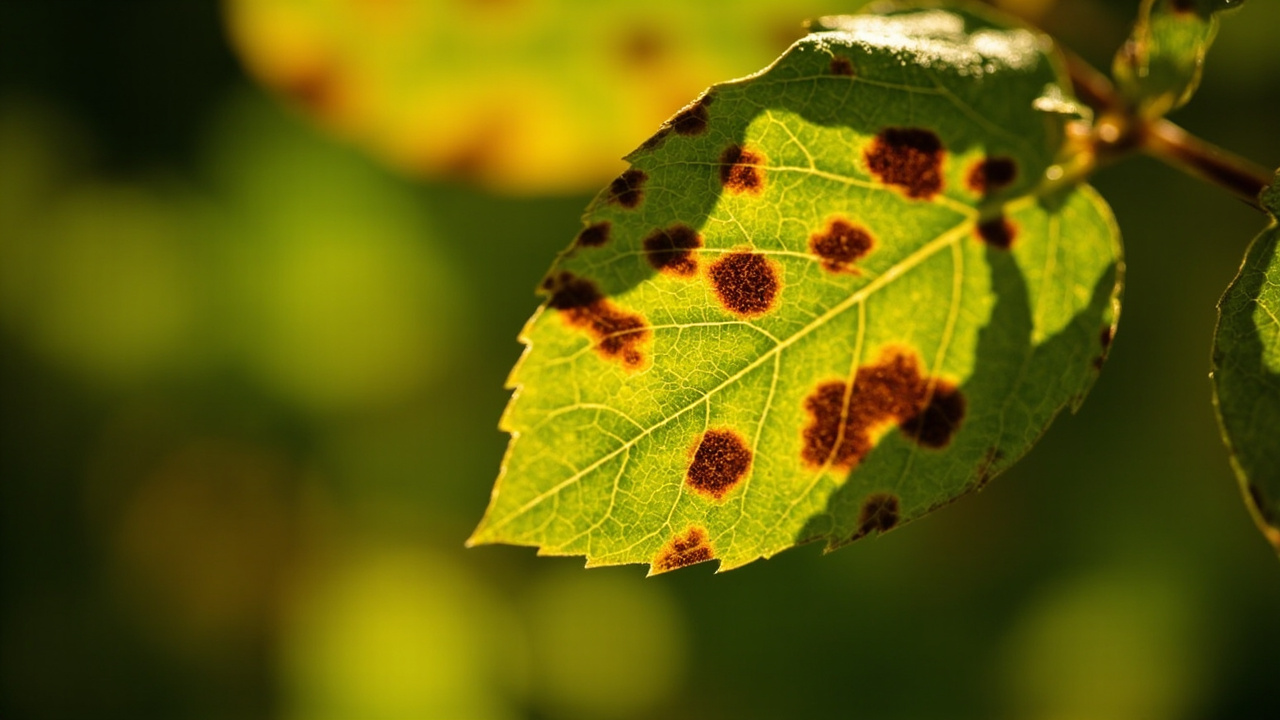
Powdery mildew announces itself as a white or greyish powder on the upper surfaces of leaves, starting on the newest growth in late spring. Leaves may curl inward or develop a puckered texture. The coating wipes off easily with a finger. In severe cases, leaf edges brown and dry, but the cane itself stays structurally intact. This species thrives in conditions where the canopy is dry but the surrounding air is humid — typical of crowded plantings with poor airflow.
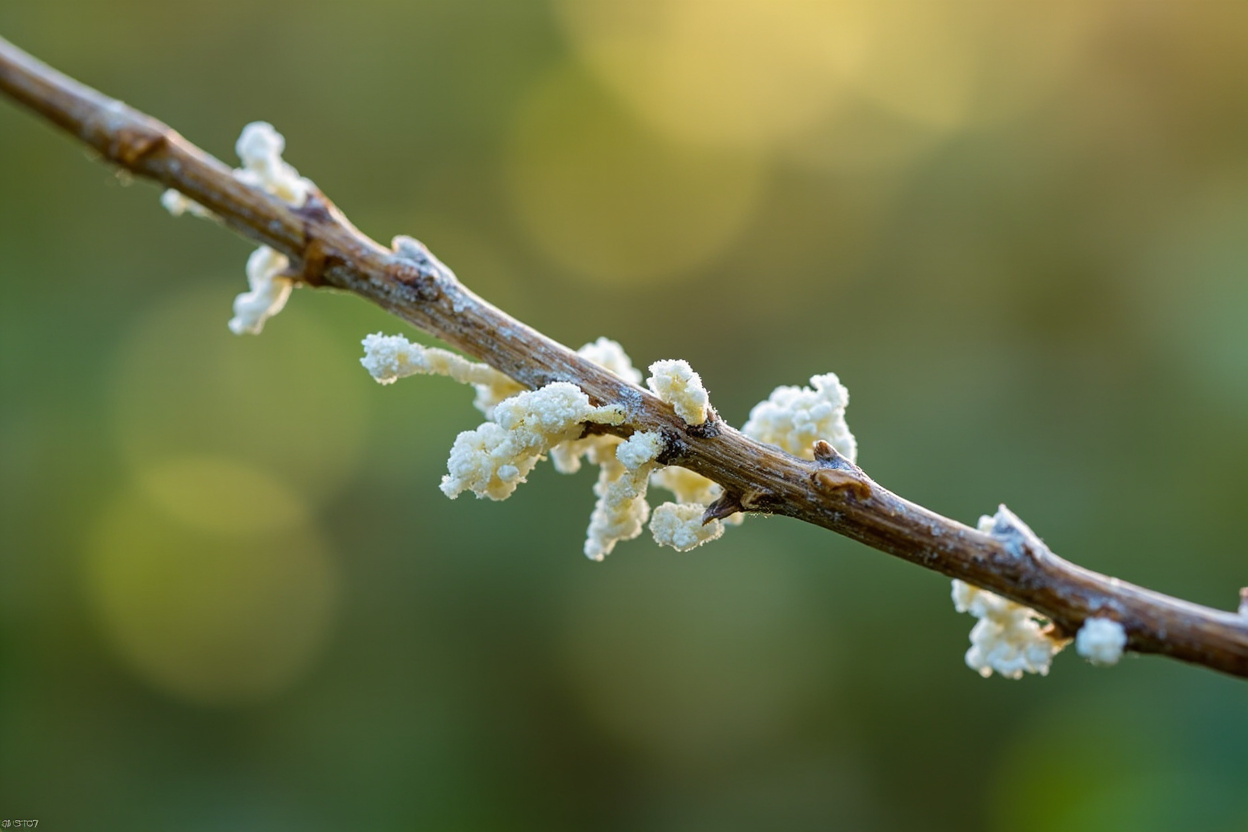
American gooseberry mildew targets young shoots and the undersides of new leaves first. The white mycelium is finer and more felt-like than powdery mildew. As the season progresses, infected canes develop a cracked or scaly bark texture, buds at infected nodes fail to open, and the cane tip dies back. The critical difference: if you split an infected cane lengthwise in dormancy, you will see the fungal hyphae embedded in the tissue. This is why spraying the surface does nothing — the pathogen is already inside.
The practical consequence is straightforward. Powdery mildew is a spray problem. American mildew is a pruning problem that spray alone cannot solve. If you treat American mildew with sulfur and skip cane removal, you will lose 30 to 50 percent of your fruiting wood by the following season. The RHS recommends removing every visibly infected cane before bud break, then spraying as a preventive on the remaining healthy wood.
Quick diagnostic: white powder on upper leaf surfaces in late spring with no cane dieback — powdery mildew, spray-responsive. White felt-like mycelium on shoot tips and leaf undersides, cane cracking, tip dieback — American mildew, requires cane removal plus spray.
The Infection Cycle: When Mildew Strikes and Why It Returns
Understanding the seasonal timeline turns mildew from a recurring mystery into a predictable event with two intervention windows. Both species follow the same broad calendar, but their overwintering strategies differ — and that difference dictates when you act.
At bud break in spring, when temperatures reach 15 to 20 degrees Celsius and humidity rises, fungal spores that overwintered on cane surfaces release conidia. Powdery mildew spores land on new leaf tissue and begin colonising within 48 hours. American mildew hyphae, already living inside last year’s infected canes, push outward into the emerging shoots. The primary infection window — the first three to four weeks after bud break — determines how much of the season’s new growth will carry the pathogen.
From May through July, powdery mildew produces a new generation of secondary spores every 7 to 10 days. Each cycle expands the infected area of the canopy. American mildew moves more slowly but more destructively: the hyphae grow systemically through the cane, weakening the vascular tissue and reducing the cane’s ability to transport water and nutrients. By midsummer, infected canes may look healthy above while dying below the infection point.
In autumn, as the bush enters dormancy, American mildew hyphae retreat into the cane cortex and bud scales. They will survive winter temperatures well below freezing, ready to restart the cycle at the next bud break. Powdery mildew overwinters as cleistothecia — tiny fungal fruiting bodies — on the bark surface and in fallen leaf debris. Both species are waiting for the same signal: warm, humid spring conditions.
There are exactly two moments when intervention changes the outcome. First, the dormant season (late winter): inspect and remove canes carrying American mildew before buds swell. Second, the green-tip stage just before bud break: apply sulfur or potassium bicarbonate to kill overwintering spores on the surface. Miss both windows and you are fighting an established infection all summer.
From PDF to Excel in one click
Forget retyping line by line. Upload any bank statement, get a spreadsheet you can actually use. Your files are never stored, and you can test the converter with 3 free conversions.
Try it freeHow to Remove Infected Canes (The Step Spraying Cannot Replace)
If you have confirmed American gooseberry mildew on your bush, spraying is the secondary treatment. Cane removal is primary. The fungus lives inside the wood, and no topical application reaches systemic hyphae at a lethal concentration. Every infected cane you leave in the bush is a spore source for next spring.
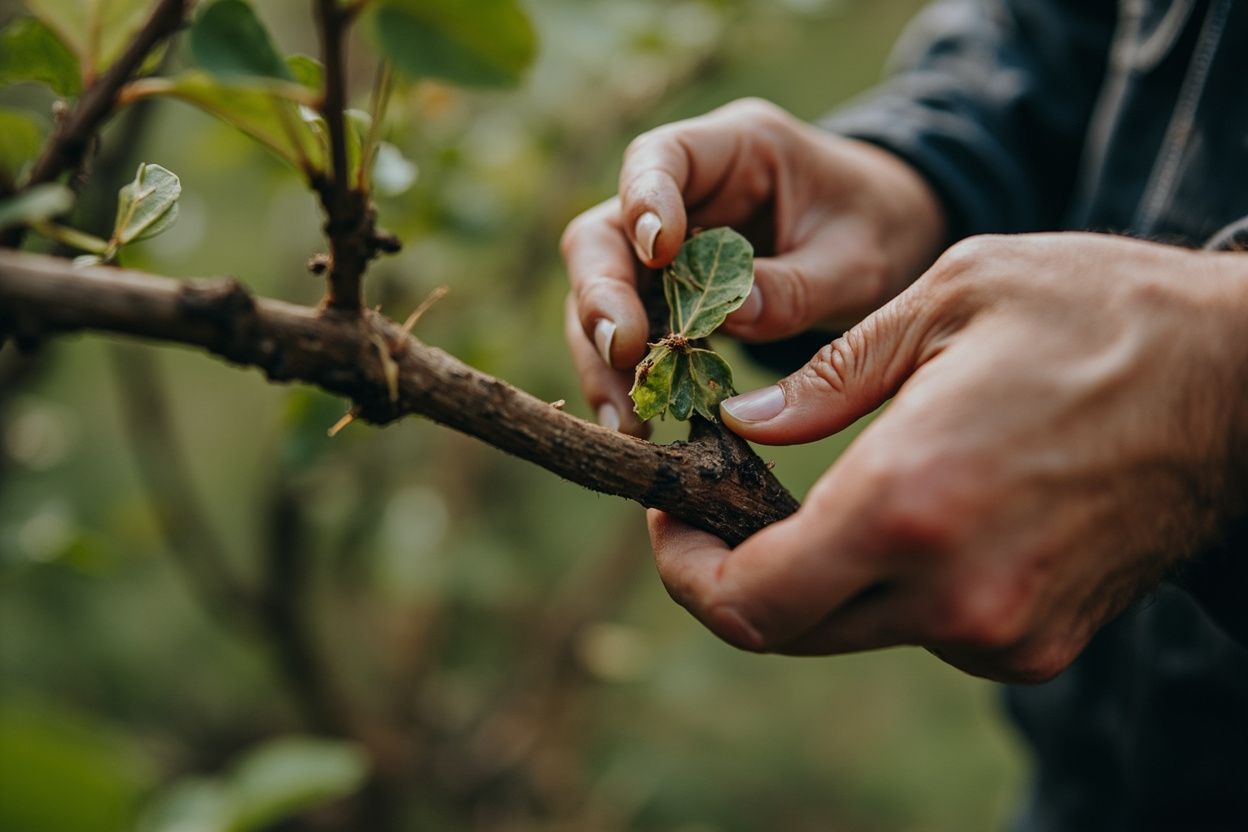
Inspect canes during dormancy — January through early March in temperate zones, when the bush is bare and you can see the wood structure. Look for canes with white or grey residue clustered at the nodes, buds that are stunted or fail to swell compared to healthy neighbours, bark that cracks or flakes abnormally, and canes with a noticeably thinner diameter than the previous year’s growth. Any cane showing two or more of these signs should come out.
Make the cut at the crown — right where the cane emerges from the base of the bush — or back to healthy wood at least 10 centimetres below the last visible sign of infection. Do not leave stubs. A cut mid-cane leaves infected tissue in the bush and guarantees reinfection of the new growth emerging from below the cut. Use sharp bypass secateurs for clean cuts that heal quickly.
Disinfect your pruners between every single cut. American mildew spreads on contaminated tools just as effectively as it spreads on wind-borne spores. A quick dip in 70 percent isopropyl alcohol or a 10 percent bleach solution, wiped dry before the next cut, eliminates tool transfer. This step takes seconds and prevents you from inoculating every healthy cane you touch.
Bag infected canes and dispose of them in household waste. Do not compost. Cleistothecia and dormant hyphae survive typical composting temperatures and will recontaminate your soil when you spread the compost. Burn where local regulations permit, or seal in bags and bin.
Sulfur, Fungicide, and Organic Spray Options That Actually Work
With infected canes removed, spraying protects the remaining healthy wood and new spring growth from the spores that survived. Not all spray options are equal, and the wrong choice for your cultivar can damage the bush as much as the mildew would.
Wettable sulfur (microfine sulfur) is the gold standard for gooseberry mildew prevention, recommended by the RHS and Oregon State University Extension for both species. Apply at the green-tip stage — when buds are swelling but before leaves emerge — and repeat every 10 to 14 days through fruit set. Sulfur works by preventing spore germination on the leaf surface. It does not cure established infections, which is why timing matters more than concentration.
Cultivar warning: Captivator, Hinnonmaki Red, and several European gooseberry types show sulfur phytotoxicity — leaf scorch, margin burn, and in severe cases defoliation — when temperatures exceed 27 degrees Celsius within 48 hours of application. If a warm spell is forecast, switch to potassium bicarbonate at 5 grams per litre with a non-ionic surfactant. Potassium bicarbonate is less persistent than sulfur but safe on sensitive cultivars at any temperature.
Systemic fungicides (myclobutanil, tebuconazole) are effective against both mildew species and work as both preventive and early-curative treatments. They are restricted or banned for home gardener use in some jurisdictions — check your local regulations before purchase. Where permitted, one application at green-tip and one at petal-fall provides season-long protection. Overuse selects for resistant fungal strains, so rotate active ingredients annually.
Potassium bicarbonate with a surfactant (0.5 percent solution) is the most effective organic option. It works by disrupting the fungal cell wall on contact. Efficacy is moderate — roughly 60 to 70 percent reduction in new infection compared to 85 to 90 percent for sulfur. It requires weekly application and works best as prevention, not cure. Cornell Cooperative Extension notes it performs well in combination with good canopy airflow.
Neem oil has limited efficacy against established mildew. It suppresses spore germination at high concentrations (2 percent) but does not kill hyphae inside leaf tissue. Useful as a companion spray in an integrated program, but relying on neem alone against a confirmed infection is the most common reason growers lose a full season’s fruit set to mildew.
Resistant Cultivars and Long-Term Prevention
Chemical and physical treatment manages existing infection. Resistant cultivars reduce the problem before it starts — and if you are replacing a severely infected bush, choosing resistant stock is the highest-leverage decision you can make.
Invicta offers the strongest resistance to both powdery mildew and American gooseberry mildew among widely available cultivars. It produces heavy crops of green fruit, tolerates partial shade, and requires fewer spray applications than susceptible types. Captivator is resistant to powdery mildew but sulfur-sensitive — pair it with potassium bicarbonate instead. Careless shows moderate resistance and heavy yields of white dessert fruit. Jubilee performs well in humid climates where mildew pressure is highest, with fair resistance and reliable cropping on own roots.
Cultural practices amplify genetic resistance. The open goblet shape — the standard pruning form for gooseberries — is not just for fruit access. A wide-centred bush dries faster after rain and dew, and powdery mildew needs four to six hours of leaf wetness for spore germination. Prune to maintain that open centre every dormant season and you remove the humid microclimate mildew depends on.
Space bushes at least 1.2 metres apart. Morning sun on the canopy dries dew within an hour of sunrise. Avoid overhead irrigation — drip or base-watering keeps the canopy dry and cuts splash-borne spore transfer from soil to lower leaves. Annual wood-chip mulch, refreshed to 5 to 8 centimetres in spring, creates a physical barrier between overwintering spores in the soil and the emerging shoots above.
The long-term strategy is three-part: resistant stock reduces the baseline infection pressure, dormant cane inspection removes the systemic reservoir, and pre-bud-break sulfur protects the new growth. Together these three measures deliver an 80 to 90 percent reduction in mildew pressure within two seasons. No single treatment achieves that alone — the combination is what works.