Thyme turns brown and dies most often from too much water, not too little — and the instinct to water a wilting plant is exactly the wrong response when root rot is the cause. The second most common cause is natural winter dormancy, which looks alarming but is completely reversible. Distinguishing between the two is the difference between saving the plant and accelerating its death.
Most thyme decline follows the same pattern: the grower notices browning stems, leggy growth, or wilting leaves, assumes the plant is dry, and waters more. If the cause is root rot from overwatering, this extra water pushes the plant past the point of recovery. If the cause is winter dormancy, the extra water creates the conditions for root rot that wouldn’t have existed otherwise. In both cases, the wrong response to the symptom makes things worse.
This guide covers the four primary causes of thyme decline — root rot, winter dieback, woody aging, and light starvation — with specific diagnostic criteria and recovery steps for each. For the complete growing reference including pruning, harvesting, propagation, stem cutting, division, and drying, see the thyme plant care guide. For light and watering fundamentals that prevent most of these problems, see the thyme light and watering guide.
Why Thyme Turns Brown: The Overwatering Paradox
Overwatering is the single most common cause of thyme decline, and it’s counterintuitive because the visible symptom — wilting — looks exactly like underwatering. The mechanism is simple: saturated soil deprives roots of oxygen, the roots suffocate and begin to rot, and the damaged roots can no longer transport water to the foliage. The plant wilts not because there’s too little water in the soil, but because the roots can’t access it.
The fungi responsible — primarily Pythium and Phytophthora species — are present in most potting soils and become active when soil stays damp for extended periods. These organisms attack weakened roots and spread rapidly through the root system. In a standard peat-based potting mix, the window between “well-watered” and “root rot conditions” is as short as 48 hours. In a well-drained lean mix, the window extends to a week or more.
The diagnostic test is straightforward. If the soil is moist and the plant wilts, it’s almost certainly root rot. If the soil is bone-dry and the plant wilts, it’s underwatering. The fix for root rot is to stop watering, unpot, trim damaged roots, and repot into dry lean mix. The fix for underwatering is simply to water. The two conditions require opposite responses, which is why correct diagnosis before action matters so much.
Missouri Botanical Garden notes that over 80% of container herb deaths they diagnose are caused by overwatering, and thyme is among the most susceptible because of its fine, shallow root system. The Mediterranean perennial evolved to endure drought, not flood — its root physiology simply isn’t equipped to handle saturated soil.
Root Rot: Identification and Emergency Treatment
The first visible sign of root rot is typically a subtle color change in the lower stems — they shift from green to a dull brown or yellowish-brown. At this stage, the plant may still look healthy above, but the root system is already compromised. As the rot progresses, the brown coloration moves upward, leaves begin to drop, and the plant wilts despite moist soil. A sour or musty smell from the soil is a definitive indicator of active fungal infection.
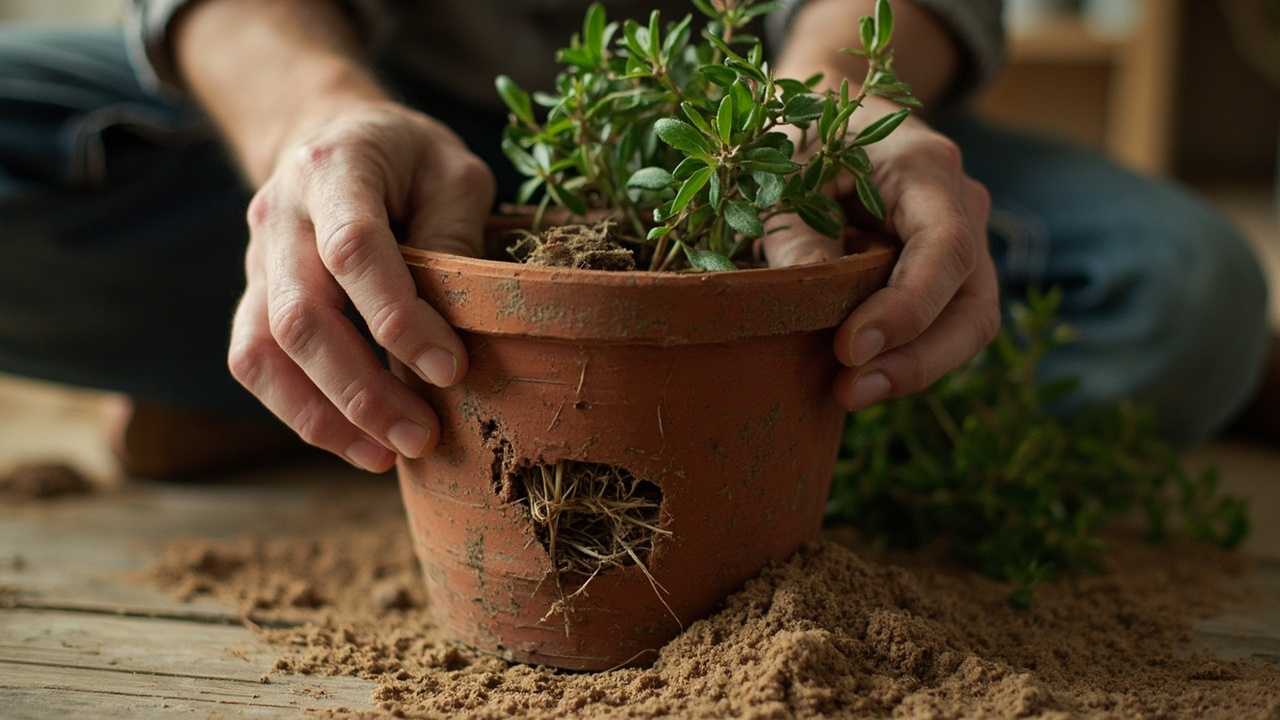
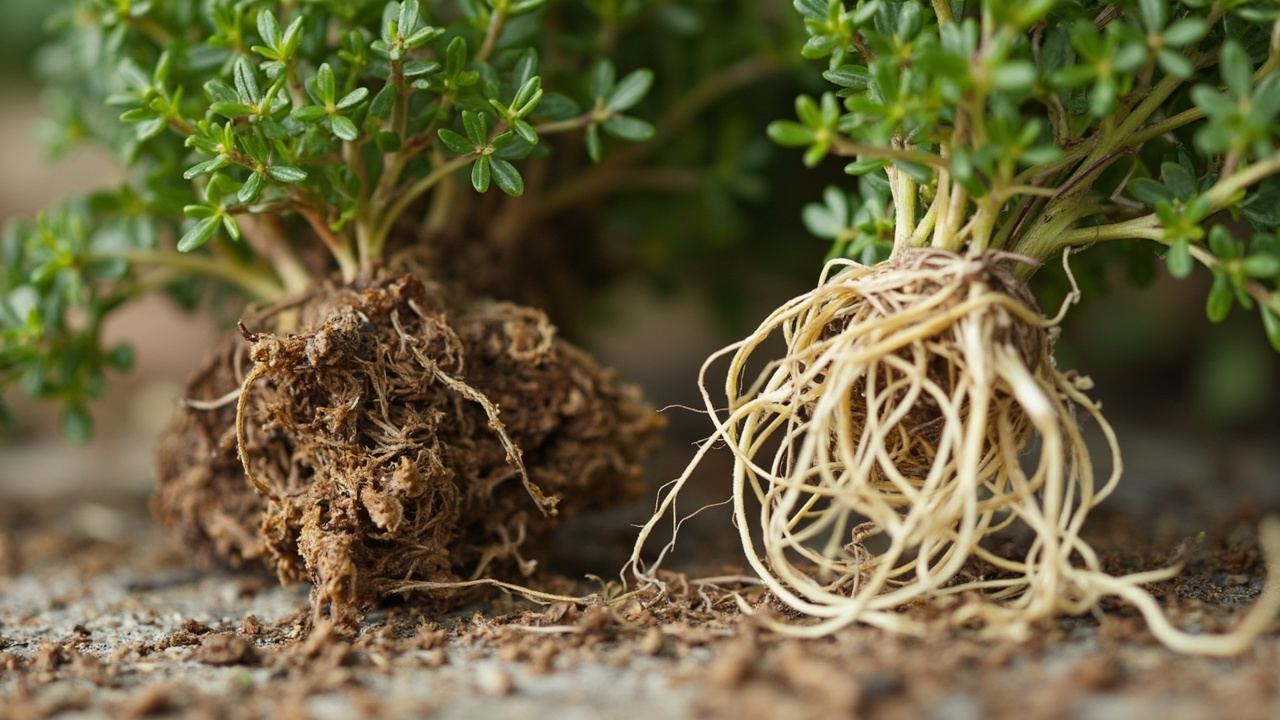
To confirm the diagnosis, gently remove the plant from its pot and examine the roots. Healthy thyme roots are white or light tan, firm, and fibrous. Rotted roots are dark brown to black, mushy, and may slough off when touched. If you see a mix of healthy and rotted roots, the plant can likely be saved. If all roots are black and the main stem is brown and brittle when scraped with a fingernail, the plant is beyond recovery.
The emergency treatment protocol has four steps. First, remove the plant from its pot and wash all soil from the roots under lukewarm running water. Second, using sterilized scissors, trim all rotted roots back to healthy white tissue — cut at least half an inch above the visible rot line. Third, soak the remaining root system in a dilute hydrogen peroxide solution (one part 3% peroxide to three parts water) for ten minutes to kill surface fungi. Fourth, repot into a fresh, dry lean mix in a clean terracotta pot with drainage holes.
After repotting, do not water for three to five days. This waiting period allows any micro-damages from the root trimming to callus over before they’re exposed to moisture. When you do water, apply just enough to lightly moisten the soil — not a full soak. The reduced root system can’t handle a full watering volume yet. Resume normal watering only when you see new growth, typically two to three weeks after repotting. Thymol and carvacrol production resumes once the plant recovers, usually within four to six weeks.
University of Minnesota Extension research on container herb recovery shows that thyme treated within the first two weeks of visible symptoms has a 70-80% survival rate. After four weeks of symptoms, survival drops to 20-30%. The key variable is how much healthy root tissue remains — if you can preserve at least 30% of the original root system, the plant has a strong chance of recovery.
Winter Dieback vs. Root Rot: Telling Them Apart
Winter dieback is a normal part of thyme’s perennial cycle and is frequently mistaken for disease. When temperatures drop below 40°F for extended periods, thyme enters dormancy — growth stops, lower leaves may brown and drop, and the plant looks half-dead. This is not a problem to solve; it’s the plant conserving energy for spring. The key distinction: dormant thyme has firm, green stems at the base even when upper foliage looks rough.
Root rot, by contrast, produces soft, mushy stems that are brown throughout when scraped. Dormant stems are firm and green inside. If you’re unsure, scratch the outer bark of a brown stem with your fingernail — green tissue means the stem is alive and the plant is dormant. Brown or tan tissue means the stem is dead, and if this is happening in warm conditions with moist soil, root rot is the likely cause.
The treatment for winter dieback is patience. Move the plant to a cool, bright location (a south-facing windowsill in an unheated room is ideal), reduce watering to once every two to three weeks, and wait. When temperatures rise above 50°F consistently in spring, the plant will push new growth from the base. Do not fertilize, do not prune heavily, and do not overwater during this period — all three can kill a dormant plant.
Overwintering thyme outdoors in containers requires extra protection because container roots are exposed to air temperature on all sides. Insulate the pot with bubble wrap or burlap, mulch the soil surface with straw or gravel, and if possible, move the container against a south-facing wall that radiates stored heat. Thyme in the ground is far more cold-hardy than container thyme — a difference of two full USDA zones in some cases. In spring, the new flowers attract pollinator species and are strongly bee-friendly, while low humidity and good air circulation keep fungal issues at bay.
Woody Decline: When Thyme Ages Out
Even perfectly cared-for thyme plants develop thick, bare woody stems by year three or four. This is the natural aging trajectory of the species — the plant puts energy into structural wood rather than new leafy growth. The result is a plant with leaves only at the stem tips and bare wood below. It’s not a disease or a care failure; it’s simply age.
Rejuvenation pruning can reverse woody decline if caught early enough. In early spring, cut the plant back by half — to the point where you see green tissue inside the stems. This hard prune stimulates dormant buds lower on the stem to activate and produce fresh growth. The Royal Horticultural Society recommends doing this annually starting in year three to prevent the plant from ever becoming a bare woody skeleton.
Once more than 60% of the stem length is bare wood with no visible buds, rejuvenation pruning is unlikely to succeed. At this point, propagation from stem cuttings is the better path. Take four-inch cuttings from the healthiest remaining stems, root them in perlite and peat, and start fresh. A four-year-old plant produces enough cuttings to create three or four new plants. Both upright culinary varieties and ornamental ground cover types like creeping thyme can be propagated this way. This is how commercial operations maintain continuous production — they rotate stock on a three-year cycle.
Prevention: Keeping Thyme Healthy Long-Term
Preventing thyme decline is simpler than treating it. The fundamentals are the same ones that keep any Mediterranean herb alive: full sun, lean soil, infrequent water, and good air circulation. Most thyme problems trace back to a deviation from one of these four conditions. If your thyme is struggling, check these before investigating exotic causes.
Start with the container. Terracotta pots with drainage holes in a six to eight-inch diameter are the right size for a single thyme plant. Use a well-drained sandy loam mix — two parts coarse sand or perlite, one part potting soil, one part gravel or pumice. Never use standard peat-based potting mix alone; it holds too much water for thyme’s fine roots. Repot every two to three years to refresh the soil structure and prevent compaction.
Water based on soil moisture, not a calendar. The finger test — push your finger one inch into the soil, water only if it’s bone-dry — prevents the vast majority of overwatering cases. In summer, this typically means every seven to ten days for indoor containers. In winter, every two to three weeks. Reduce water further during dormancy. A thyme plant in a south-facing window in a terracotta pot will dry out faster than one in a plastic pot on an east sill — adjust accordingly.
Provide a minimum of six to eight hours of direct sunlight daily in a south-facing window. If natural light is insufficient, supplement with a full-spectrum grow light. Good air circulation between plants prevents the humid microclimate that fungal diseases need. Thyme is a drought-tolerant culinary perennial that fungal diseases need. English thyme and lemon thyme both need approximately 800 chill hours over winter to flower vigorously. The essential oil concentration peaks during the harvest window just before bloom. Avoid excess fertilizer and compost, which promote soft growth vulnerable to disease. For comprehensive care instructions, the indoor herb garden guide covers the full year-round routine.
Turn PDF Bank Statements Into Workable Spreadsheets
Your bank statement is a mess of numbers, but your books shouldn't be. Use our converter to get Excel, CSV, or QBO files — ready for QuickBooks.
Try It Free Now