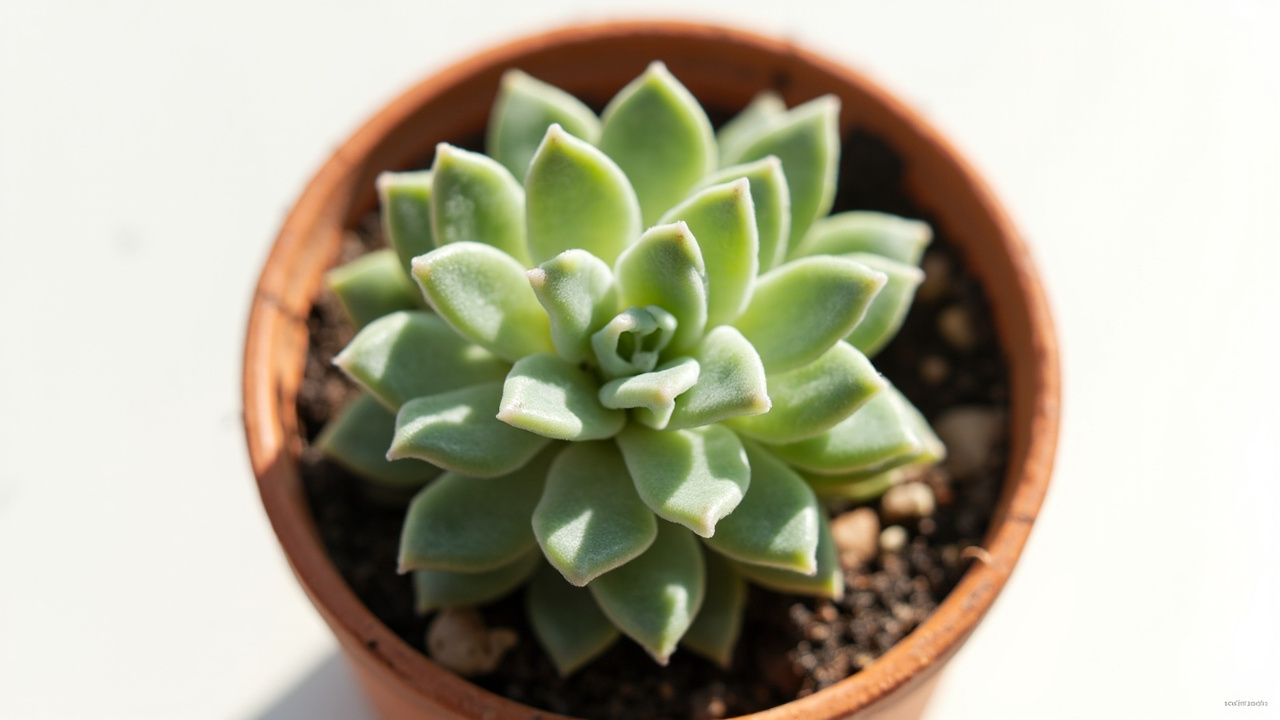
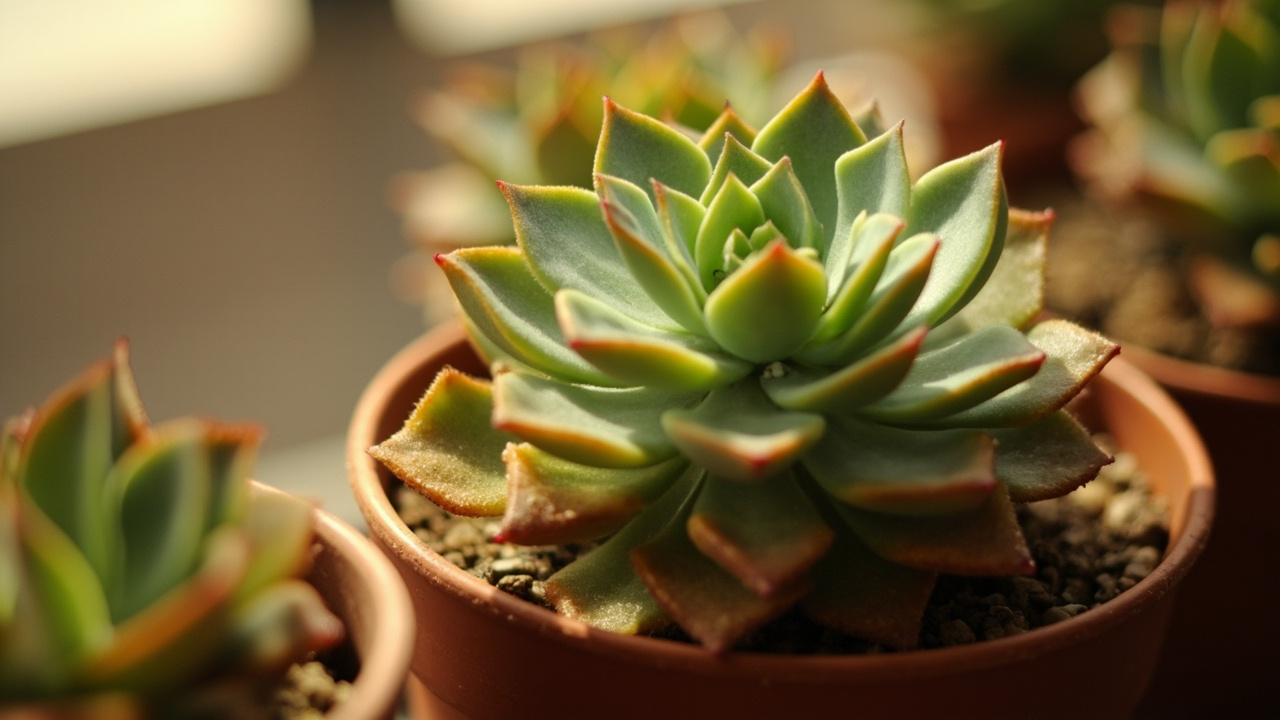
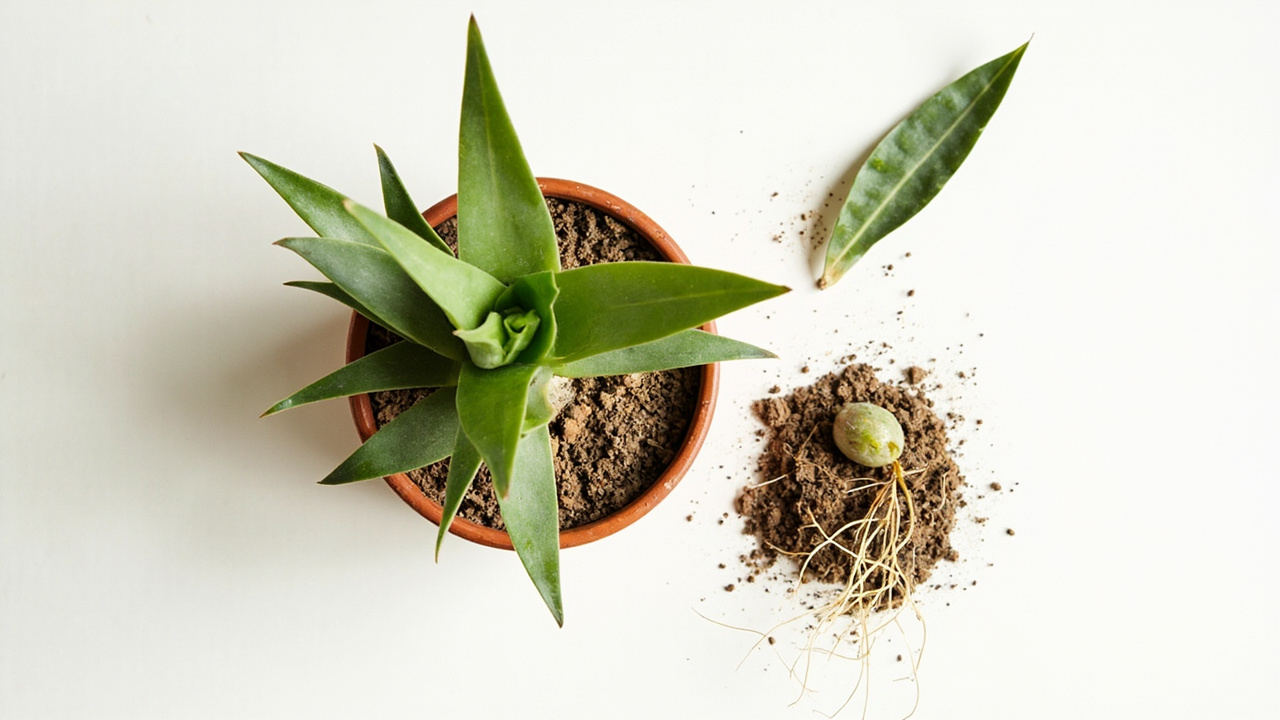
Most succulent advice says “give it as much sun as possible.” For Haworthia, that advice is wrong. The plant evolved under grasses in semi-arid South Africa, where direct overhead light is filtered by taller plants for most of the day. The leaf windows at the leaf tips exist precisely because Haworthia captures filtered light, not full sun.
Put a Haworthia on a south-facing windowsill with 6 hours of direct afternoon light and you will see leaf scorch within a week. Put it on a north-facing wall 3 metres from any window and you will see etiolation (stretching) within a month. The plant wants a middle path: bright, indirect light that measures 2,000 to 3,000 lux at the leaf surface for 4 to 6 hours daily.
This guide covers what that lux range looks like in a real room, the four variables that change whether your window produces enough light, the four signs of too little light, the three signs of too much light, and the practical grow light guide. For the full care routine, see the Haworthia care guide.
What Haworthia Means by “Bright Indirect Light”: The 2,000 to 3,000 Lux Range
Bright indirect light is the most common phrase in houseplant care, and it is also the most vague. For Haworthia, the operational definition is 2,000 to 3,000 lux at the leaf surface for 4 to 6 hours daily, with the rest of the day at lower ambient light.
The lower threshold matters because below 1,500 lux Haworthia stops producing compact rosettes. The University of Florida IFAS Extension notes that succulents grown below this threshold develop thinner, longer leaves with reduced window translucency because the plant is stretching to capture more light, not compacting to protect tissue.
The upper threshold matters because above 4,000 lux for more than 3 hours, especially through glass, the leaves can scorch. Haworthia is not a full-sun succulent despite being sold next to cacti. The leaf windows are designed for filtered light, and direct overhead sun bleaches the green pigment.
In practice, an east-facing window with 3 to 4 hours of direct morning sun plus bright ambient light for the rest of the day produces 2,500 to 3,500 lux at the leaf surface in summer — the ideal range. A south-facing window with sheer curtain, or a west-facing window without direct afternoon sun, also works. A north-facing window typically produces 500 to 1,200 lux, which is below threshold and leads to etiolation within 6 weeks.
Four Light Variables That Change the Routine: Direction, Season, Window Type, Glass Tint
The same window produces different light at different times. Four variables shift the lux range by 500 to 2,000 over the year.
Broken down by component, the four are window direction, season, window type, and glass tint. Each can be measured, and each shifts whether your spot meets the Haworthia threshold.
Window direction. East-facing windows produce 2,500 to 4,000 lux for 3 to 4 hours in summer and 1,500 to 2,500 lux in winter. South-facing windows produce 4,000 to 8,000 lux for 4 to 6 hours in summer — too much without a sheer curtain — and 2,500 to 4,000 lux in winter.
West-facing windows are similar to south in summer but the afternoon heat adds leaf scorch risk.
Season. The sun’s path is lower in winter, so light enters windows at a steeper angle and reaches further into the room. A spot that gets bright indirect light in summer may be too dim in winter.
Window type. Single-pane glass blocks about 10 percent of light; double-pane blocks 20 to 30 percent; low-E coated glass blocks 40 to 60 percent. A Haworthia that thrived on a single-pane windowsill may etiolate after window replacement.
Glass tint. Tinted or reflective glass reduces incoming lux significantly. Bronze-tinted glass can cut lux by 50 percent or more.
There is a real trade-off in window selection: the window that gives you the best view often gives your Haworthia the worst light. For the full care routine that responds to these variables, see the Haworthia care guide.
The Four Signs Your Haworthia Is Getting Too Little Light (Etiolation Pattern)
Haworthia signals light deficiency clearly once you know the pattern. Four signs appear in sequence over weeks.
For example, a grower’s bench of plants in five different light conditions showed that the same rosette shape diverged within 6 weeks based on lux alone. The four signs below cover what you will see at home.
Sign 1: Rosette opens up. The normally compact rosette flattens and the leaves angle outward instead of staying upright. This is the first visible sign, appearing within 14 days of moving the plant below threshold.
Sign 2: Gaps between leaves. New leaves emerge with visible stem between them instead of stacking tightly. The gaps grow wider each week.
This is the defining etiolation pattern.
Sign 3: Pale leaf colour. The vivid green or reddish-brown colour fades to pale yellow-green. The leaf windows also lose translucency and look cloudy.
This appears around week 3 to 4.
Sign 4: Reaching posture. The leaves bend toward the brightest light source, even if that means bending downward toward a side window. The plant is no longer growing in its natural rosette shape.
Recovery requires moving to a brighter position within 7 days of noticing sign 1. New compact growth appears within 6 to 8 weeks. Severely etiolated plants need beheading — the full recovery walk-through is in the Haworthia stretching guide.
The Three Signs Your Haworthia Is Getting Too Much Light (Sun Scorch Pattern)
The opposite failure mode also signals clearly. Three signs appear when light exceeds the threshold.
Sign 1: Yellow leaf tips. The leaf windows bleach to pale yellow first because they are the most light-sensitive tissue. This appears within 48 hours of sudden exposure to direct sun.
Sign 2: Brown patches. Brown scorched patches develop on the upper leaf surface where light intensity is highest. These patches are permanent and do not recover.
Sign 3: Dry, papery texture. The leaves lose their plump, water-filled feel and develop a thin, papery texture. The plant is shedding damaged tissue.
Unlike etiolation, sun damage is not reversible. The browned patches will not green up again. Move the plant to filtered light immediately, withhold water for 7 days, and accept that the damaged leaves will eventually be replaced by new growth from the centre.
The Royal Horticultural Society recommends moving any sun-stressed Haworthia to a shaded position for 5 to 7 days before reintroducing bright light gradually. A sudden move from shade to sun is what triggers scorch in the first place.
Grow Lights for Haworthia: When You Need Them and What to Buy
If your home does not produce 2,000 lux naturally, a grow light fills the gap. The minimum useful light for Haworthia is a full-spectrum LED panel producing 2,000 to 3,000 lux at the leaf surface, on for 10 to 12 hours daily.
Light type. Full-spectrum LED panels in the 4,000 to 6,500 Kelvin range work best. They produce the blue and red wavelengths Haworthia uses for compact growth.
Avoid cheap purple “blurple” lights — they emit only red and blue wavelengths and the rosettes develop odd colour patterns.
Distance. Mount the panel 20 to 30 cm (8 to 12 in) above the rosette. At 15 cm (6 in), the light may bleach the leaves; at 40 cm (16 in), it drops below threshold.
Duration. Run the light for 10 to 12 hours daily. Use a mechanical timer; humans forget to turn lights on and off and Haworthia responds to inconsistent schedules by stopping active growth.
Cost. A 20-watt full-spectrum LED panel costs $25 to $40 and lasts 25,000 to 50,000 hours. For one Haworthia on a north-facing windowsill, this is the cheapest fix.
Match the grow light to your watering rhythm — more light means more water uptake. See the Haworthia watering guide for the light-coupled watering schedule.
Reading the Routine: How Light and Watering Interact
Light and watering are coupled. A Haworthia in 3,000 lux uses about 40 percent more water than the same plant in 1,500 lux because photosynthesis drives transpiration.
If you move a plant from a north window to an east window, expect to increase watering frequency by 5 to 7 days over the next 2 to 3 weeks as the plant adjusts. If you add a grow light, increase watering frequency by 3 to 5 days.
The full watering schedule by season, pot size, and light condition is in the Haworthia watering guide.
Turn That PDF Into a Spreadsheet in Minutes
You've seen how to do it manually — now let the tool handle the heavy lifting. Upload your bank statement and get Excel, CSV, or QBO in a few clicks.
Try It Free