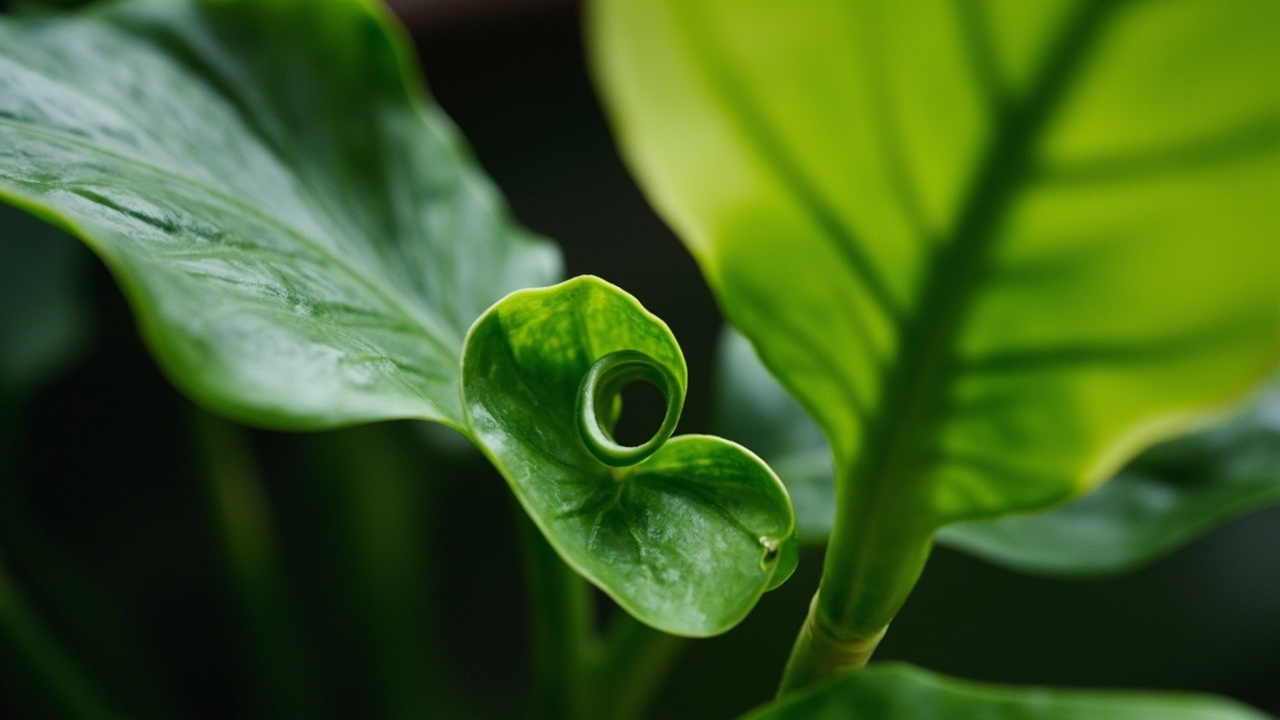
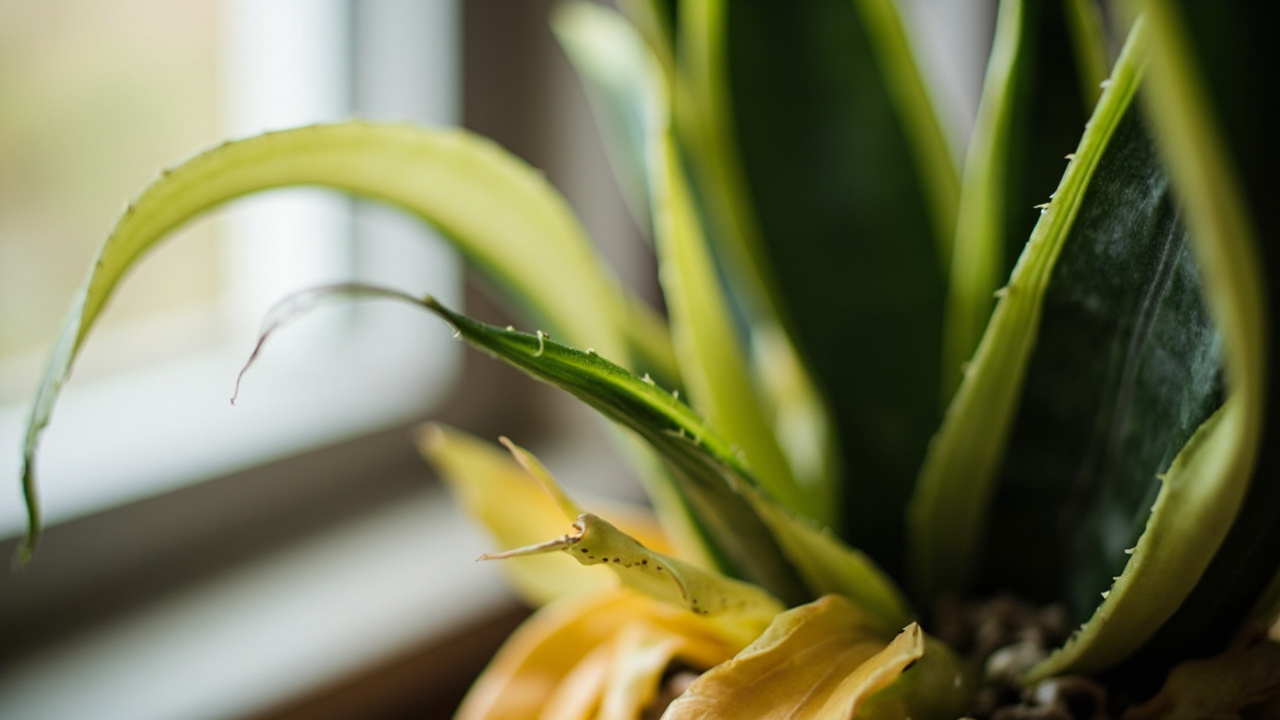
The Hoya vine on your shelf has grown leggy. One long bare stem arcs out from the pot, carrying only a waxy cluster of leaves at the tip.
Hoya propagation succeeds — if the cutting has what it needs. That one thing is a node: the small brown ring on the stem where a leaf or aerial root attaches. Cut a bare internode segment with no node, submerge it in water for eight weeks, and the result is a slimy stem and nothing else.
Three methods work reliably: water propagation, soil propagation, and air layering. Water lets you watch the roots appear. Soil avoids the fragile transfer step — air layering roots the cutting while it still feeds from the mother plant. Choose water over soil when the cutting is short and you want to verify root emergence before potting — the outcome depends on the variety.
The Hoya Node: Why Every Cutting Starts Here
Look at any Hoya vine and you will see nodes as slightly swollen rings where a leaf petiole meets the stem. Each node carries dormant meristem cells that differentiate into root initials when exposed to consistent moisture — these cells remain viable for up to 72 hours after cutting if kept above 60°F (16°C). The Hoya plant care complete guide maps the full anatomy of a mature Hoya vine.
The distance between nodes varies by variety. Hoya carnosa produces nodes every 2–4 inches (5–10 cm). Hoya pubicalyx can stretch 6+ inches (15 cm) between nodes under low light.
Locate the nearest node below the leaf cluster you want to propagate. Make a clean cut ¼ inch (6 mm) below the node with sterilized scissors or a razor blade. Remove the lowest leaf if it would sit below the waterline — a submerged leaf rots within 48 hours.
One caution: identify the peduncle spurs before you cut. Hoya peduncles emerge from nodes and can look like bare aerial roots. Leave peduncle spurs exposed above the waterline.
Water Propagation: The Transparent Root-Watching Method
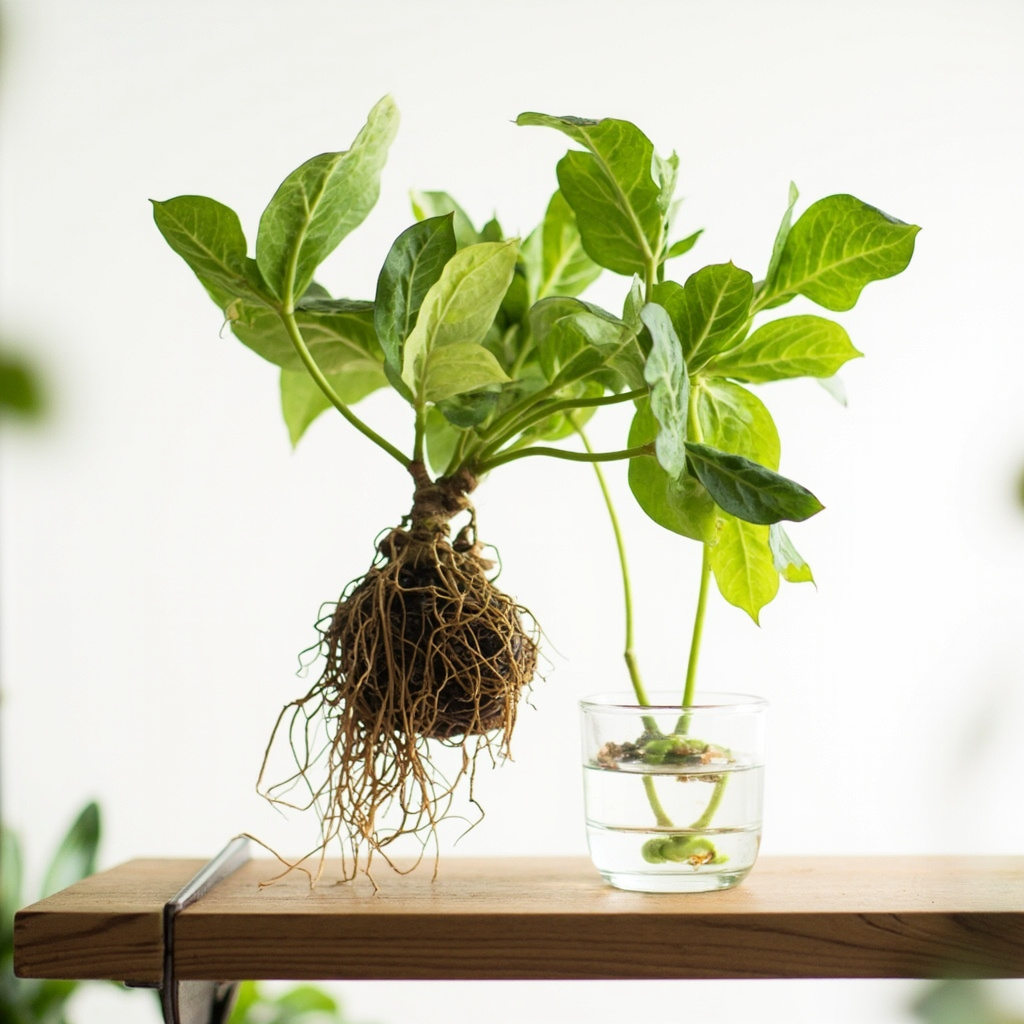
Place the prepared cutting in a clear glass jar filled with room-temperature water so the node sits ½ inch (1 cm) below the surface. A clear jar lets you monitor root development without disturbing the cutting.
Change the water every 5–7 days. Stale water below 60°F (16°C) allows bacterial colonization that softens the cut stem within 10 days. Root initials typically emerge from the node within 14–21 days when the jar sits at 70–75°F (21–24°C) — if the water stays above 64°F (18°C) and you change it weekly, expect roots by day 21.
The first roots appear as white pinpricks; they elongate to transplantable length within 4–6 weeks. Wait until the primary roots are at least 1 inch (2.5 cm) long before moving the cutting to mix.
The advantage of water propagation is visibility — you see whether the node is producing roots or quietly rotting. The disadvantage is the transfer step: water-grown roots are thinner and structurally different from roots that develop in a solid medium. Hoya varieties guide notes that Hoya kerrii and Hoya obovata have thicker stems that tolerate the transfer better than the slender Hoya wayetii.
Soil Propagation: Skip the Transplant Shock
Soil propagation roots the cutting in its final medium from day one, removing the fragile transfer step. The trade-off is invisibility: you cannot see whether roots have formed without gently tugging the cutting.
After taking the cutting and removing the lowest leaf, let the cut end callus for 3–5 days in open air. A callused cut resists fungal entry when inserted into moist mix. Dip the callused end in rooting hormone powder containing 0.1–0.3% indole-3-butyric acid.
Insert the cutting into the 50% perlite, 50% fine orchid bark blend from the Hoya soil mix guide and water once at planting. Place a clear humidity dome over the pot for 3 weeks, removing it for 10 minutes every third day. Roots form in 3–5 weeks at 72–78°F (22–26°C) — the University of Florida IFAS Extension confirms this blend provides the optimal balance of moisture retention and aeration for semi-succulent stem cuttings.
Heat, Light, and Humidity: The Three Environmental Levers
Three variables control the Hoya rooting timeline: heat, light, and humidity. Bottom heat is the fastest accelerator — a seedling heat mat at 72–78°F (22–26°C) cuts the rooting timeline by 30–40% compared to ambient room temperature.
The second variable is light intensity: 2000 to 4000 lux from an east or north window, or 12–14 inches (30–35 cm) beneath a full-spectrum LED. Direct sun on a water jar raises the water temperature above 85°F (29°C) within an hour and cooks the node. The Hoya light requirements page maps window orientations that deliver this range without thermal damage.
The third variable is humidity. Above 70% prevents the cutting from losing stored moisture through the stripped leaf node before roots can take over. A humidity dome handles this for soil propagation; for water propagation, ambient humidity above 50% keeps the aerial leaves from desiccating.
Transplanting Water-Rooted Hoya Cuttings: The Fragile Transfer
Water roots differ from soil roots: they lack root hairs, have thinner cell walls, and collapse when exposed to air for more than a few minutes. During the transfer, keep the roots submerged in a bowl of water while you prepare the pot, and work in a room above 68°F (20°C) to prevent thermal shock.
Pot the rooted cutting in a 3-inch (7.5 cm) container with the same perlite-and-bark blend used for soil propagation. Water thoroughly at planting, then keep the mix consistently moist for the first 2 weeks — if it dries out, the cutting loses 20–30% of its root mass and stalls for 3–4 weeks. The Hoya humidity and temperature range (70–78°F) applies during establishment.
The honest limit of water propagation is transfer loss: 20–30% of water-rooted cuttings fail to re-establish. This number drops below 10% with soil propagation, which roots a sturdier root system from the start.
Air Layering: Root While Still Attached
Air layering bypasses the cutting stage entirely. Select a healthy node midway along a long vine. Wrap a handful of moist sphagnum moss around the node, then cover the moss with clear plastic wrap secured at both ends with twist ties.
Roots emerge from the node into the moss within 4–6 weeks at 72–78°F (22–26°C). Once roots fill the moss ball and are visible through the plastic, cut the vine below the moss and pot the rooted section directly.
Air layering is the preferred method for varieties that root poorly as detached cuttings — Hoya lacunosa and Hoya multiflora both root more reliably with air layering than in water. When a leggy mother plant needs rescue, the Hoya watering guide helps you assess drought stress before air layering the long vines to create a backup plant.
When a propagated cutting arrives with white cottony residue or webbing, the three-pest ID at Aqualogi walks through mealybugs, scale, and spider mites with the right treatment for each. See the Hoya pest identification guide.
Turn That PDF Into a Spreadsheet in Minutes
You've seen how to do it manually — now let the tool handle the heavy lifting. Upload your bank statement and get Excel, CSV, or QBO in a few clicks.
Try It Free