Begonia root rot moves fast, but it also gives you a window. The first two weeks of symptoms — wilting despite wet soil, yellowing that spreads, a sour smell from the pot — are your chance to intervene. After that, the fungal damage to the root system becomes irreversible. This guide walks through the signs, the rescue process, and what recovery actually looks like.
This is a hands-on rescue guide. You will need to remove the plant from its pot, trim roots, and repot. The process takes about 20 minutes. If you are reading this because you want to prevent root rot rather than treat it, skip to the prevention section at the end. Before you start, review the when to water begonias so you understand what went wrong.
The First Signs of Begonia Root Rot
Wilting despite wet soil: This is the single most reliable early sign. A begonia with root rot cannot absorb water even though the soil is saturated. The leaves droop, the stems go soft, and the plant looks thirsty — but the soil is wet. If you have been watering on schedule and the plant wilts anyway, suspect root rot.
Yellow leaves that spread fast: Root rot causes yellowing that moves through the plant in days rather than weeks. Multiple leaves yellow at once, including middle and upper leaves that would not normally senesce. This pattern is distinct from the slow, lower-leaf-only yellowing of natural aging.
Mushy stem base or foul smell: If the base of the stem feels soft when you gently squeeze it, or if the soil smells sour, musty, or like decay, root rot is already advanced. At this point, the rescue protocol needs to happen within 24 to 48 hours.
How to Check the Roots: The Pull-Test
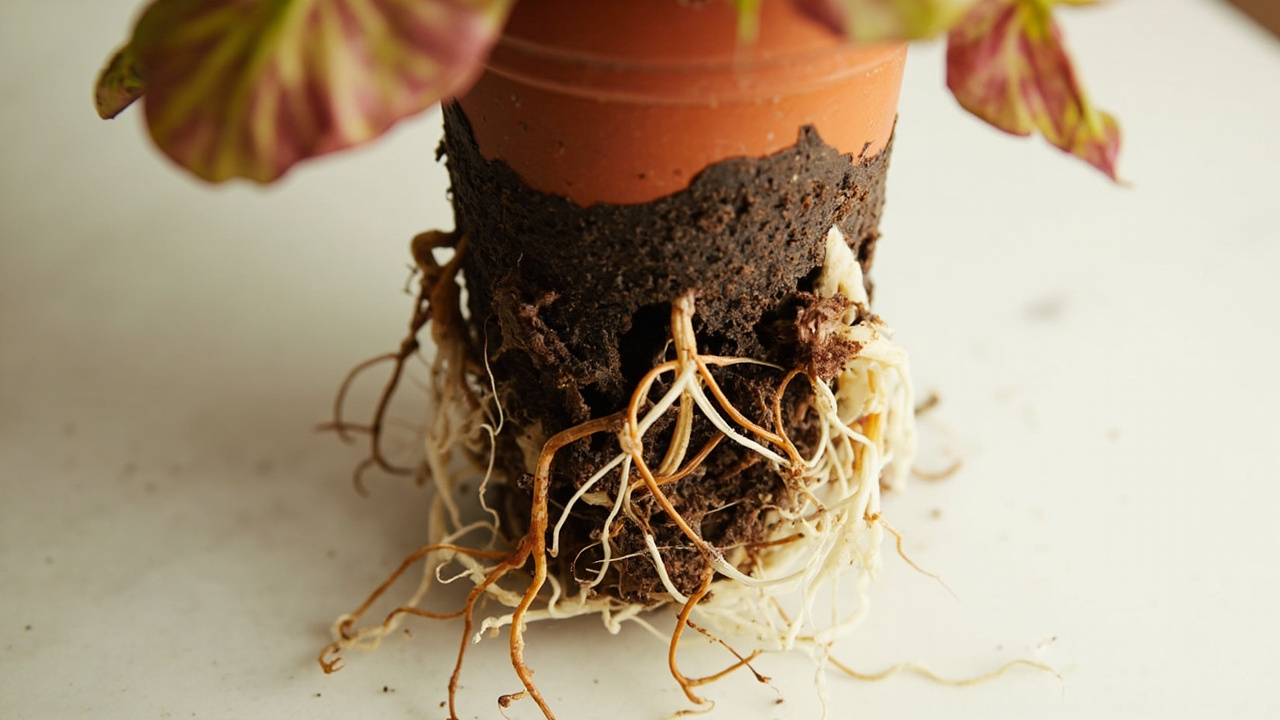
Gently remove the plant from its pot and shake off the excess soil. Healthy begonia roots are white or pale cream, firm to the touch, and snap cleanly when bent. Rotting roots are brown, dark orange, or black, feel mushy, and often fall apart when touched. A sour or earthy smell confirms the diagnosis.
Some root loss is normal — a few dark or brittle old roots are not a crisis. The concern is when more than a third of the root system is discolored and soft. At that level, the plant cannot support its foliage and needs immediate intervention. If you are unsure whether your plant has root rot or just yellow leaves from another cause, see begonia care fundamentals for context.
The Rescue Protocol: Trim, Treat, Repot
Step 1: Remove and rinse. Take the plant out of its pot and gently rinse all soil from the roots under lukewarm water. This lets you see the full extent of the damage and removes fungal spores from the remaining healthy roots.
Step 2: Trim dead roots. Using clean, sharp scissors or pruning shears, cut away every root that is brown, mushy, or dark. Cut back to healthy white tissue. If a stem has no healthy roots left, trim the stem back to 2 to 3 nodes above the last healthy root — the plant may re-root from those nodes.
Step 3: Apply fungicide or cinnamon. Dust the cut root ends with ground cinnamon (a natural fungicide) or dip the root system in a copper-based fungicide solution. Let the cuts air-dry for 30 minutes before repotting. This step is not optional — fungal spores on cut surfaces will reinfect in wet soil. The fresh well-draining soil matters here because old soil holds the fungal spores that caused the rot.
Step 4: Repot in fresh mix. Use a new pot or one sanitized with a 10 percent bleach solution. Fill with fresh, dry, well-draining begonia mix (60 percent peat or coco coir, 40 percent perlite). Plant at the same depth as before. Do not pack the soil — loose soil lets oxygen reach the damaged roots.
Step 5: Water lightly and wait. Give the plant a small amount of water — just enough to moisten the soil, not saturate it. Place in bright indirect light and do not water again until the top inch of soil is dry. The plant may wilt for one to two weeks while it regenerates roots. This is normal.
Recovery Timeline: What to Expect
Week one after rescue: The plant may look worse before it looks better. Some existing leaves may yellow or drop as the plant redirects energy to root regeneration. Do not fertilize, do not overwater, and do not move the plant around. Stable conditions matter more than intervention.
Week two to three: If the stem base is still firm and you see tiny white root tips emerging from the soil surface, the rescue worked. New growth may appear from the stem nodes. Resume light watering when the top inch of soil dries.
Week four to six: A fully recovered plant pushes out new leaves. The first post-rescue leaves may be smaller than usual — that is normal. By week eight, new growth should match the plant’s pre-rot size. If no new growth appears by week six, the root system was too damaged to recover. For the ongoing care routine once the plant recovers, return to humidity and care guidelines.
Not every rescue succeeds. If the stem base has gone completely soft or more than 70 percent of the root system was lost, the plant may not survive. The honest math: early intervention (within the first week of symptoms) has a success rate above 70 percent. Late intervention (after three or more weeks of symptoms) drops below 30 percent.
When the Plant Is Too Far Gone
If the entire root system is mushy and black, or the main stem is soft all the way up to the lowest leaf node, the plant cannot be saved. At that point, check whether any upper stem sections still have firm, healthy tissue. If so, you can cut a 4 to 6 inch stem section with two or three nodes and attempt to root it in moist perlite. This is a long shot, but it is better than throwing the whole plant away.
Do not compost a plant that died of root rot. Fungal spores survive composting and can infect other plants. Dispose of the infected soil and plant material in the trash, and wash the pot with bleach before reusing it.
Preventing Begonia Root Rot Next Time
Soil that drains fast: The single most important prevention factor. Heavy potting soil or garden soil compacts in containers and holds water against the roots for days. A mix with 40 percent perlite or coarse bark drains in hours, not days. This is the difference between a plant that thrives and one that rots.
Watering only when the top inch dries: Stick your finger into the soil. If it feels moist at the 1-inch depth, wait. Most begonia root rot cases come from watering on a schedule rather than checking the soil. The top inch can dry in two days in summer or stay moist for two weeks in winter — a fixed schedule cannot account for that.
Pot with drainage holes: This sounds obvious, but decorative pots without drainage are the number one killer of indoor begonias. If you must use a decorative outer pot, keep the plant in a plastic nursery pot inside it, and remove it when watering to let it drain fully.
Turn That PDF Into a Spreadsheet in Minutes
You've seen how to do it manually — now let the tool handle the heavy lifting. Upload your bank statement and get Excel, CSV, or QBO in a few clicks.