Rosenary (Salvia rosmarinus) is one of the easiest herbs to grow badly and one of the hardest to keep alive for long. It looks drought-proof on a Mediterranean hillside, then browns at the base the moment you put it in a cheerful kitchen window. Most indoor losses are not disease. They are overwatering, low light, or a pot that holds moisture a few days longer than the roots can stand.
Rosemary plant care is mostly a matter of matching the plant to your conditions, not forcing it to perform. A pot of rosemary on a sunny, slightly cool porch behaves like rosemary. A pot of rosemary in a dim, warm kitchen behaves like a stressed transplant. The list below is built around the things that actually go wrong at home, with realistic numbers and honest trade-offs for both indoor and outdoor growers.
If you have already lost one, the underlying pattern is usually identifiable. The same plant that thrived on a south-facing patio in April can fail indoors by November for reasons that have nothing to do with the plant and everything to do with the change in light, air movement, and watering rhythm.
Light requirements for a healthy rosemary plant
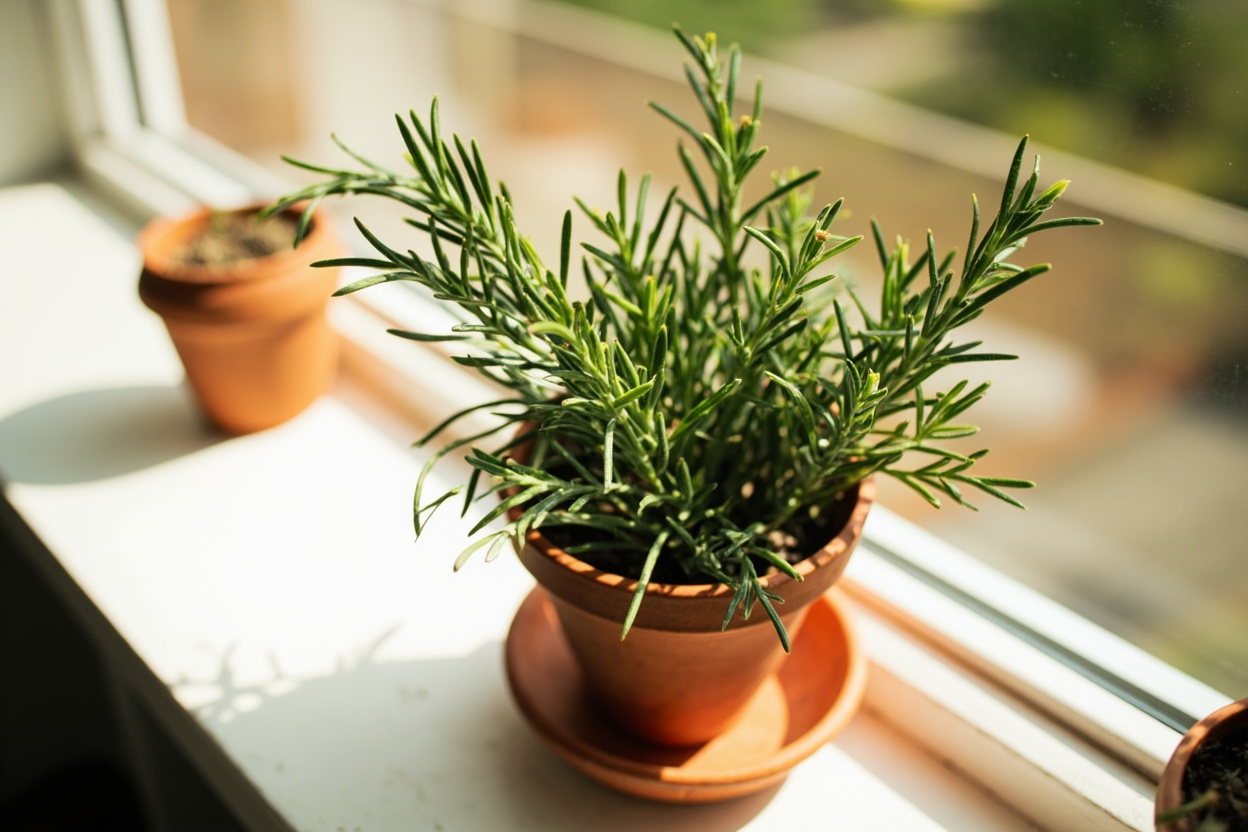
Rosemary is a full-sun herb. Outdoors it wants six to eight hours of direct sun, the kind that warms the soil and dries the surface between waterings. A south- or west-facing bed, a rooftop, or an open patio all work. Anything shadier than four hours of direct light produces leggy, pale growth that never carries the oils rosemary is grown for in the first place.
Indoors the math is harder. A bright south-facing window in winter in the northern half of the U.S. delivers only a fraction of summer’s intensity, and rosemary is essentially a Mediterranean shrub trying to live as a houseplant. Most healthy indoor rosemary sits directly on a south-facing windowsill in winter, with a grow light set 6 to 12 inches above the canopy for 12 to 14 hours a day if the window is shaded or the plant starts stretching.
Stretching is the most reliable indoor warning sign. New growth that opens with long gaps between needle pairs, leaning toward the glass, is telling you it wants more light. A compact, dense plant with short internodes is what healthy indoor light looks like. If your plant cannot be placed where it gets enough natural light, plan on supplementing. A simple full-spectrum LED on a basic timer is more useful than any other upgrade you can make.
Watering rosemary the way it actually wants
Rosemary wants its soil to dry out between waterings, then a deep soak. The mistake most people make is watering on a schedule instead of by feel. In a 6-inch terracotta pot in a sunny window, that can mean watering every 4 to 5 days in summer and every 10 to 14 days in winter. In a glazed ceramic pot in a cooler room, the same plant might only need water every 2 to 3 weeks. The pot, the soil, and the room change the answer.
Stick a finger an inch into the soil. If it feels cool and slightly damp, wait. If it feels dry and the pot is noticeably lighter, water thoroughly until it drains from the bottom, then let it dry again. Rosemary roots sitting in cold, wet soil turn brown and rot from the inside out, and the plant above ground looks thirsty at the same time, which leads to more watering, which finishes the job.
Two habits make a real difference. Water in the morning so the foliage and surface dry before nightfall, and never let the pot sit in a saucer of standing water for more than 15 minutes. If the leaves start dropping from the bottom of the plant, or the lower stems go soft and dark, you are probably overwatering. If the needle tips crisp and the whole plant looks dusty and tired, you are underwatering. The honest version is that overwatering is the more common killer, especially indoors in winter.
Soil, drainage, and pot choice
Rosemary hates wet feet. The soil should be lean, gritty, and fast-draining, similar to what you would use for lavender or sage. A cactus and succulent mix works straight out of the bag. A standard potting mix is too moisture-retentive on its own and usually needs to be cut with coarse sand, perlite, or fine pumice at roughly two parts mix to one part drainage amendment.
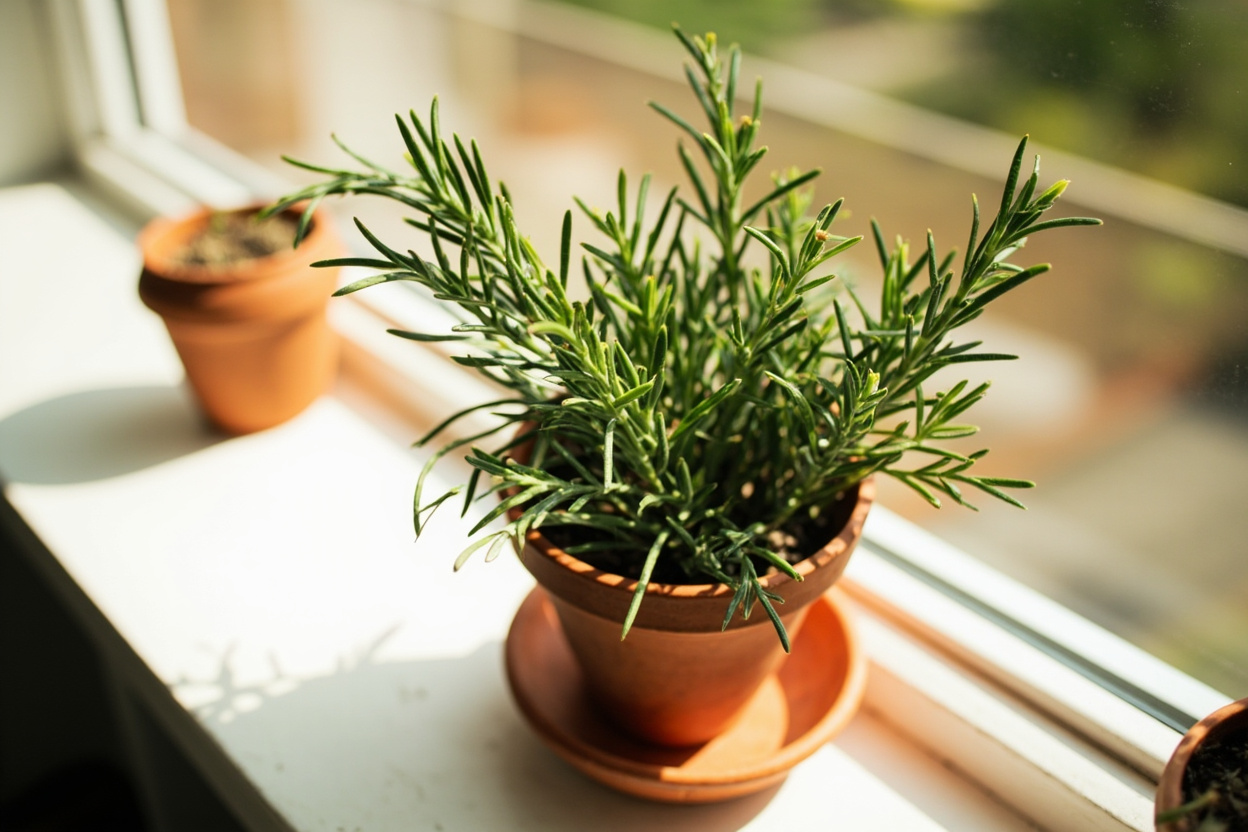
Terracotta is the right default. The porous walls pull moisture out of the root zone and let air in, which is closer to rosemary’s native soil than any plastic pot can deliver. Glazed ceramic and decorative pots hold water longer and work, but only if you are willing to water less often and accept the risk of slow root suffocation in winter. A pot that is too large is more dangerous than one that is slightly small. A 6- to 8-inch pot is plenty for a typical grocery-store rosemary, and you only need to step up two inches at a time when roots fill the container.
Repot every two to three years, or sooner if water runs straight through without penetrating, which is a sign the root ball has become so dense the soil cannot rewet. When you repot, tease apart the outer roots and replace the exhausted soil. Do not move up more than one pot size at a time, and hold off on fertilizing for about a month while the roots recover.
Temperature, humidity, and air movement
Rosemary prefers the same temperature range people do, with a cooler winter. Indoors, daytime temperatures of 65 to 75°F (18 to 24°C) and nighttime temperatures around 55 to 65°F (13 to 18°C) keep growth firm and compact. It tolerates short drops to about 20°F (-7°C) outdoors, and established plants in the ground handle down to roughly 10 to 15°F (-12 to -9°C) with good drainage and a sheltered position. Anything below that, and you are growing it as an annual or overwintering it inside.
Humidity is rarely the problem indoors. Rosemary actually prefers dry air and good air movement, which is one reason it struggles in still, humid bathrooms and crowded greenhouse corners. A spot near an open window or with a small fan nearby reduces fungal issues and helps the foliage dry quickly after watering. Misting is unnecessary and can encourage powdery mildew on dense plants.
For outdoor growers in zones 7 and colder, the goal in winter is to keep the plant cold but dormant, not warm and confused. The full climate and planting decision guide covers zone selection, soil prep, and whether in-ground or container growing is the right choice for your situation — see our growing rosemary outdoors guide. A cold frame, an unheated garage with a window, or a sheltered spot against a south wall works better than bringing the plant into a heated living room, where the combination of warm air, low light, and dry indoor heating often finishes off an otherwise healthy plant before spring.
Fertilizer: less is more
Rosemary evolved in poor, stony soil and does not need much feeding. A single light application of a balanced, slow-release fertilizer in early spring, or a half-strength liquid feed once a month during the active growing season, is plenty. Overfed rosemary grows fast and soft, with diluted flavor and weaker stems that flop under their own weight.
Stop fertilizing in late summer. New growth pushed on fertilizer in fall is the growth that gets damaged by the first hard frost and the low indoor light of November. The plant will look like it is doing nothing through the cold months, and that is exactly what you want. Resume feeding only when you see clear new growth and daylight is strong again.
If your rosemary is in a container and has been in the same pot for more than a year, a small dose of fertilizer in spring is a reasonable insurance policy, but treat it as a supplement, not a plan. The combination of fresh soil every couple of years, full sun, and correct watering does more for the plant than any fertilizer schedule can.
Common problems and quick diagnosis
Most rosemary problems show up as one of four patterns, and each has a clear cause once you know what to look for. Brown, dry, needle-tip dieback usually means underwatering, low humidity indoors in winter, or root damage that prevents water uptake. Yellowing lower leaves with soft stems is almost always overwatering and slow drainage. A white, dusty coating on the needles is powdery mildew, which is a humidity and air movement problem rather than a feeding problem. Sudden branch dieback in summer, with one side of the plant collapsing, often points to a fungal issue called rosemary branch dieback that shows up in humid, still air.
Root rot is the silent killer. By the time the top of the plant looks tired, the roots are usually already compromised. If you suspect it, slide the plant out of the pot, smell the roots, and look at them. Healthy rosemary roots are pale and firm. Rotted roots are dark, soft, and smell sour. At that point, recovery is possible but not guaranteed, and the steps involved in giving the plant another chance are different from general care. If you are already past general care and into triage, the dried-out recovery approach covers underwatering cases, and a more detailed walkthrough lives in our dying rosemary revival guide.
Pests indoors are usually limited to spider mites in warm, dry winter air and the occasional aphid on new growth. A strong spray of water, insecticidal soap, or neem oil handles both, and the underlying fix is usually more light and slightly cooler nights rather than a stronger spray schedule.
What good rosemary care actually looks like
Care that works for a rosemary plant is mostly about restraint: full sun, a gritty soil that dries between waterings, a pot only slightly larger than the root ball, a light hand with fertilizer, and cooler winter conditions than most people expect. When those conditions are met, the plant rewards you with dense, fragrant growth that holds its shape and survives the kind of neglect that kills fussier herbs.
Pick the spot first, then the pot. If the only place you have is a low-light kitchen shelf, rosemary is the wrong plant, and no amount of perfect watering will save it. If you have a sunny, slightly cool spot where the soil can dry on its own schedule, rosemary is one of the most rewarding plants you can grow, and the same routine will keep it going for years.
Turn any PDF statement into a clean sheet
Skip the typos and the hours of copying. Our converter handles any bank statement format and outputs Excel, CSV, or QBO for QuickBooks. No file retention, free to try.
Convert your statement