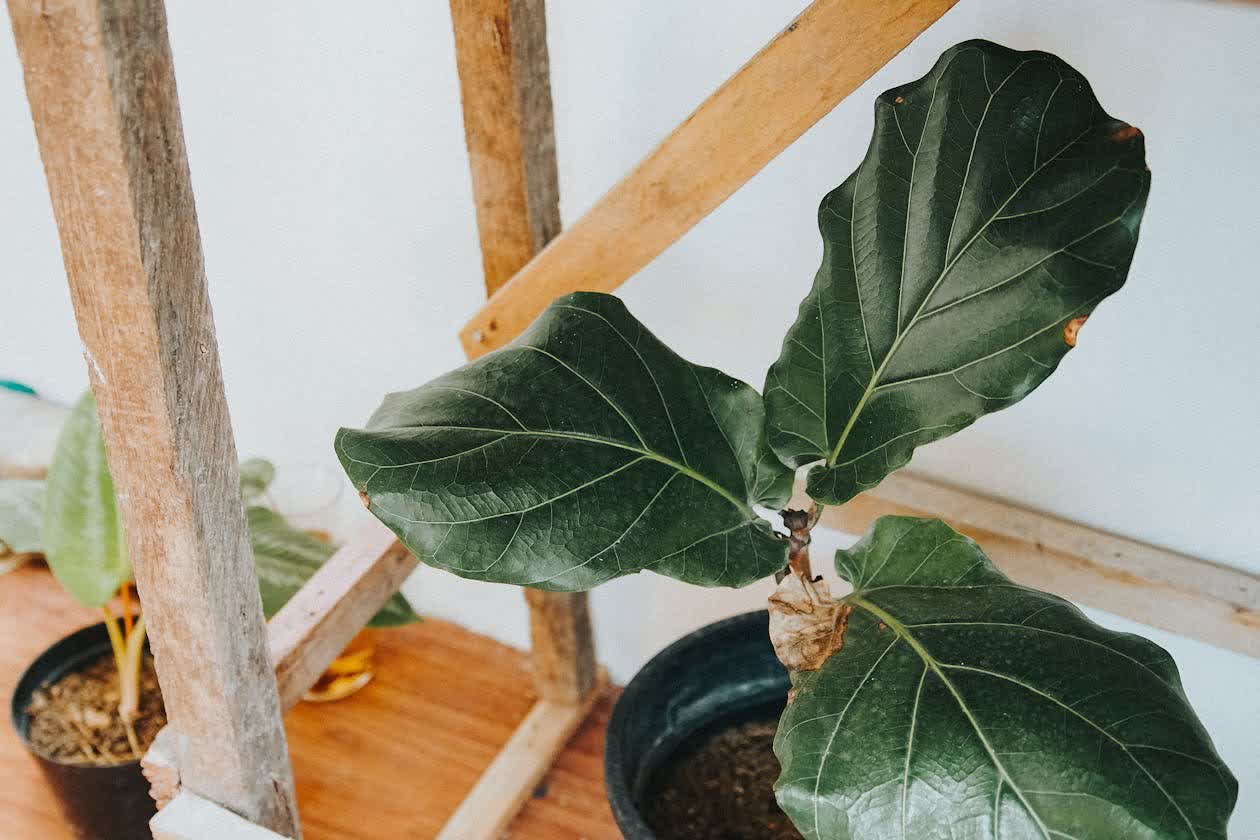
Few plants dominate interior design photos quite like the Ficus lyrata. Its broad, violin-shaped leaves make an immediate statement in any room.
But that beauty comes with a reputation: fiddle leaf figs are notoriously finicky.
If you have spent weeks watching your plant develop brown spots, drop leaves, or simply refuse to grow, you are not alone. The good news is that every common fiddle leaf fig problem has a specific cause—and a specific fix.
Most growers focus on watering frequency when the real bottleneck is environment.
A fiddle leaf fig is not difficult because it is demanding; it is difficult because it is native to the tropical rainforest understory, where conditions are consistent and light is filtered. Replicate that at home, and the problems stop.
Why Is My Fiddle Leaf Fig Dropping Leaves?
Leaf drop is the most distressing fiddle leaf fig problem because it happens fast and seems random. The plant looks healthy one day and bare the next.
The most common cause is a sudden change in environment—moving the plant from the nursery to your home, shifting it from one room to another, or even rotating it 90 degrees. Fiddle leaf figs are acutely sensitive to disruption. They stabilise their position once they find a spot they like, and any change triggers a stress response.
The second major cause is overwatering or underwatering. Both create the same symptom—leaf drop—because both damage roots.
Overwatering fills air pockets in the soil, suffocating roots and leading to root rot. Underwatering causes the plant to shed leaves to conserve moisture.
The fix is different, but the detection method is the same: check the soil before watering. Insert your finger 5 cm deep. If it feels dry, water thoroughly until it drains from the bottom. If it feels moist, wait.
Low humidity is a third contributor. Indoors, humidity often sits between 30–40%, while fiddle leaf figs prefer 50–60%. Running a humidifier near the plant, or placing it on a pebble tray with water, consistently raises the local microclimate.
For a broader guide to managing indoor humidity for all your houseplants, see our snake plant humidity guide—the principles apply directly.
Brown Spots on Fiddle Leaf Fig Leaves
Brown spots fall into three categories, and treating them correctly depends on identifying which one you have.
Root rot spots appear as large, irregular brown patches, often starting at the edge of the leaf and spreading inward. The affected area may feel soft and wet. This is almost always caused by overwatering or soil that drains poorly. Repot into a well-draining mix—roughly 80% potting soil and 20% perlite—and trim any black, mushy roots with sterile scissors. Our guide to root rot covers diagnosis and treatment in detail.
Bacterial infection spots are smaller, more contained, and sometimes have a yellow halo. These spread slowly and may appear on multiple leaves simultaneously. Bacterial issues are harder to treat. Remove affected leaves immediately, improve air circulation around the plant, and avoid wetting the foliage when watering.
Edema looks like tiny rust-coloured blisters on the underside of leaves. It is a physiological response to irregular watering—the plant absorbs water faster than it can transpire, causing cells to burst. The fix is simply more consistent watering on a regular schedule.
Fiddle Leaf Fig Brown Edges
If the edges of your leaves are browning and crisping, the plant is telling you something specific: the air is too dry, or the roots are stressed from fertiliser buildup.
Dry air is the primary cause in climate-controlled homes, especially those with air conditioning or heating running regularly. A digital hygrometer near the plant will tell you the actual humidity. If it reads below 45%, humidify. Grouping plants together creates a shared humid microclimate that benefits all of them.
Fertiliser salt buildup shows as crusty white deposits on the soil surface and causes root burn that manifests as leaf edge browning. Flush the soil thoroughly with plain water—two to three times the pot’s volume—once per month during the growing season to prevent this. Consistent feeding also matters: our philodendron care guide walks through a balanced feeding schedule that works equally well for Ficus lyrata.
Yellow Leaves on a Fiddle Leaf Fig
Yellow leaves typically indicate one of two things: overwatering or a nutrient deficiency. The key is location. If lower, older leaves turn yellow first, the plant is likely shedding older growth—a normal process if it is happening one or two leaves at a time. If multiple leaves are yellowing simultaneously, or if new growth is yellowing, check the roots for rot and reduce watering frequency.
If the roots look healthy but the plant still shows yellowing, especially on newer leaves, a magnesium or iron deficiency may be the cause. Use a balanced liquid fertiliser at half strength once per month during spring and summer to correct this.
Sticky Fiddle Leaf Fig Leaves
Sticky leaves are not a disease—they are a secretion. The most common cause is scale insects, small oval pests that attach themselves to stems and leaf undersides and feed on plant sap. They excrete a sugary substance called honeydew, which coats the leaves and makes them sticky.
Scale is treatable. Wipe the leaves with a cotton ball dipped in isopropyl alcohol diluted to 50% with water. For severe infestations, apply neem oil spray every 7–10 days for three weeks. Inspect new leaves monthly—scale spreads slowly and is easiest to eliminate when caught early. Our snake plant problems guide covers common house plant pest patterns and treatment timing that apply here too.
Why Is My Fiddle Leaf Fig Not Growing?
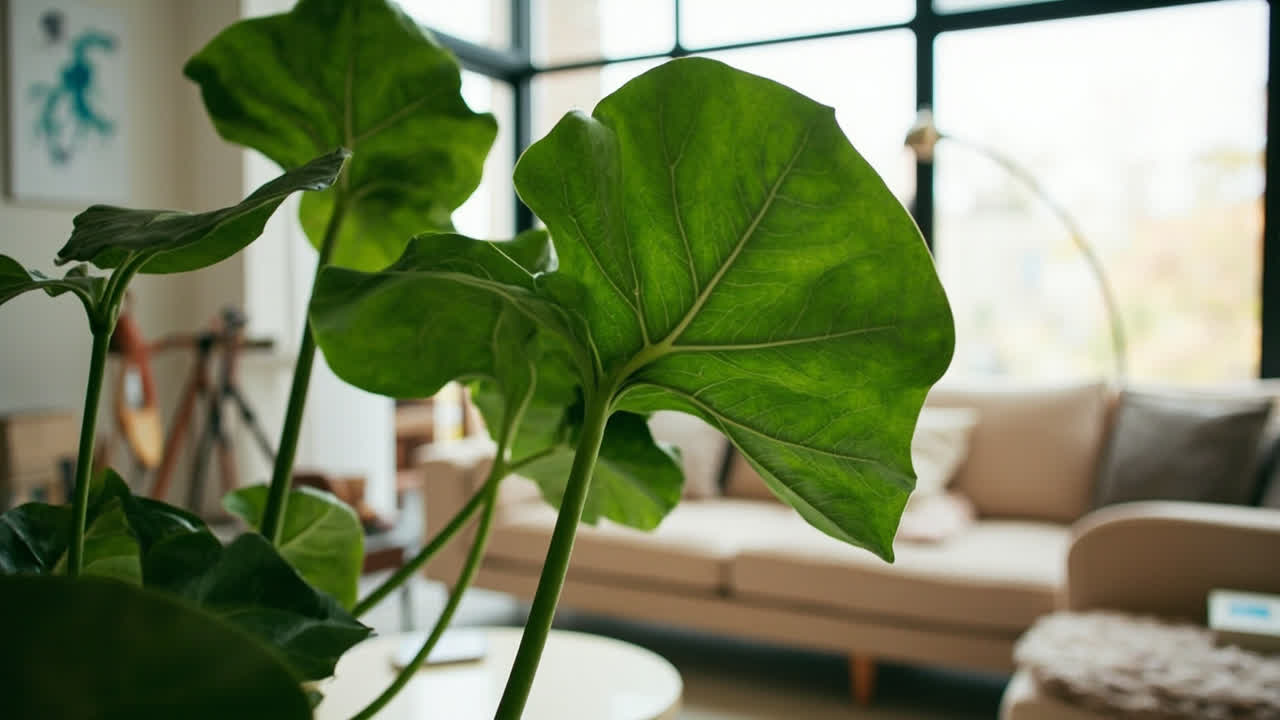
A healthy fiddle leaf fig in the growing season (spring through summer) should produce a new leaf every four to six weeks. If yours is stagnant, the usual suspects are insufficient light, being root-bound, or incorrect feeding.
Fiddle leaf figs need bright, indirect light for at least 6 hours per day. A spot near an east or west-facing window, filtered through a sheer curtain, is ideal. Direct afternoon sun scorches leaves; too little light stops growth entirely. If your plant is in a dark corner, move it closer to a light source and watch for new growth within two to three weeks.
Root-bound plants stop growing because they have no room to expand. Signs include roots growing out of drainage holes, water running straight through the pot, or the plant looking disproportionately large for its container. Size up the pot by 2–3 cm in diameter and refresh the soil.
Leggy or Leaning Fiddle Leaf Fig
Fiddle leaf figs naturally grow toward light. If yours is leaning or has long gaps between leaves (a condition called etiolation), the plant is reaching for more light than it currently receives.
Rotate the pot a quarter turn every two weeks to encourage even growth. If the plant is genuinely leggy—stretched stems with small, widely-spaced leaves—prune it back. Cut just above a node (the bump where a leaf meets the stem). This stimulates branching and produces a fuller, more compact plant. Spring is the best time to prune, when the plant is actively growing.
How to Keep a Fiddle Leaf Fig Healthy Long-Term
The summary of fiddle leaf fig care is this: find one good spot and leave the plant there. Consistent indirect light, watering when the top 5 cm of soil are dry, humidity above 50%, and monthly feeding during the growing season cover 95% of what this plant needs to thrive.
The biggest mistake most owners make is overcare—watering too frequently, moving the plant, or fertilising too often. Fiddle leaf figs are more resilient than their reputation suggests. Give them stability, and they reward you with large, healthy leaves that genuinely transform a room.
Read also: Houseplant Leaf Drop: How to Read the Leaf That Fell if the leaves on the floor are your problem, not the leaf still attached.
From PDF to Excel in one click
Forget retyping line by line. Upload any bank statement, get a spreadsheet you can actually use. Your files are never stored, and you can test the converter with 3 free conversions.
Try it free