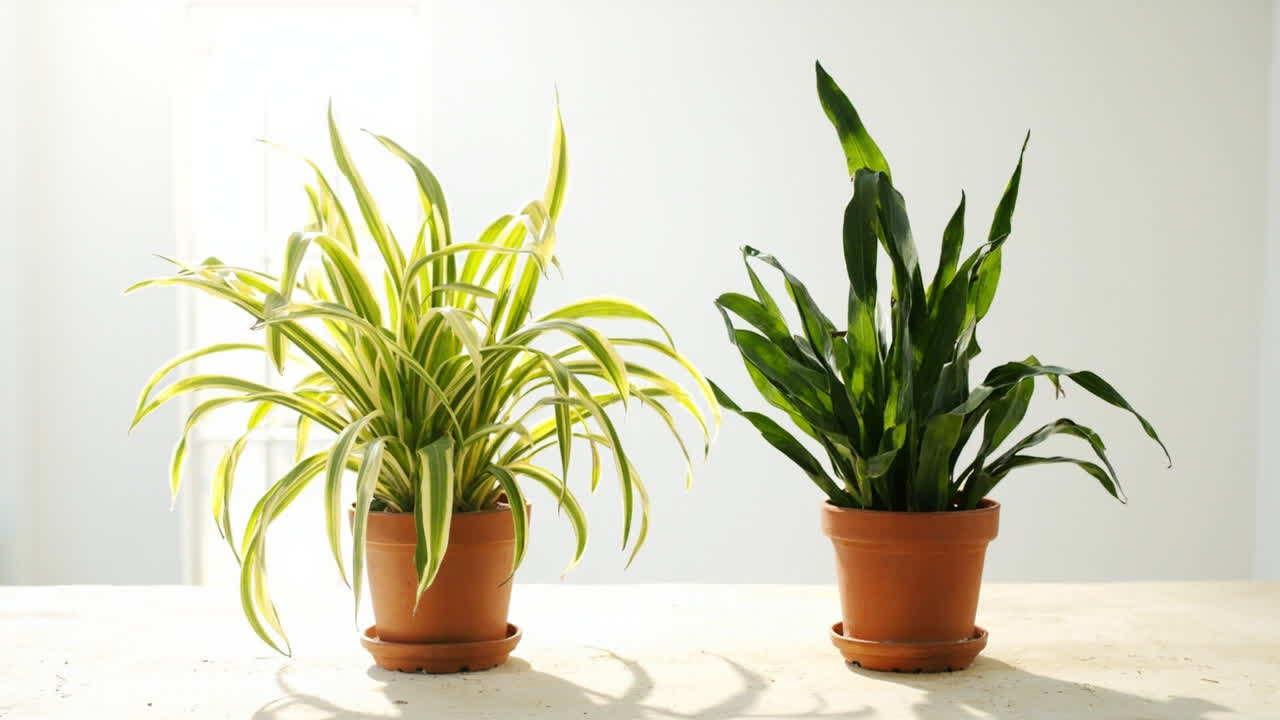
Your Dracaena Massangeana has been sitting in the same pot for a year or two, growing taller but looking increasingly sparse — a few leaves at the top, long bare cane between the leaf rosettes, nothing filling out the sides. It is not sick. It is not dying. It is just growing in the way that dracaenas naturally grow — upward, not outward. Here is how to change that.
Why Mass Cane Plants Grow Bare and Leggy
The natural growth pattern of a Dracaena Massangeana is apical dominance — the growing tip at the top of each cane produces new leaves, and the lower leaves age and drop as the cane extends. This is not a problem; it is how the plant is designed to grow. A two-year-old Mass Cane Plant that was bought as a 60 cm specimen may now be 120 cm tall with leaves only at the top 40 cm and bare cane below. The plant is healthy. It has just grown in a way that does not look full.
Fullness in a Mass Cane Plant is achieved through two mechanisms: branching from cuts, and new basal shoots from the root crown. You can influence both, and that is the whole basis of making your plant bushier.
Method 1 : Cutting Back the Cane to Encourage Branching
This is the most reliable way to make a Mass Cane Plant bushy, but it requires cutting, and cutting means you need to be prepared for the recovery period.
Step 1 — Choose your cutting point. Look at the cane and decide where you want it to branch. A cut made 20 cm to 30 cm below the lowest remaining leaf usually produces two to three new growth points from the cut surface within six to eight weeks. The higher you cut, the sooner you see regrowth, but the regrowth will also be higher on the plant — which matters if you want the new branches to emerge at a specific height.
Step 2 — Make the cut. Use a clean, sharp saw or secateurs to cut completely through the cane at your chosen point. The cut should be flat and clean — not jagged. If the cane is thick (more than 3 cm diameter), a fine-tooth saw will give the cleanest cut and cause the least damage to the cambium tissue.
Step 3 — Let the cut surface dry. Leave the cut cane in place for one to two days before treating it. The exposed tissue will callous naturally, which reduces the risk of fungal entry. Do not seal the cut with anything — an open, dried cut is better than a sealed one for Dracaena.
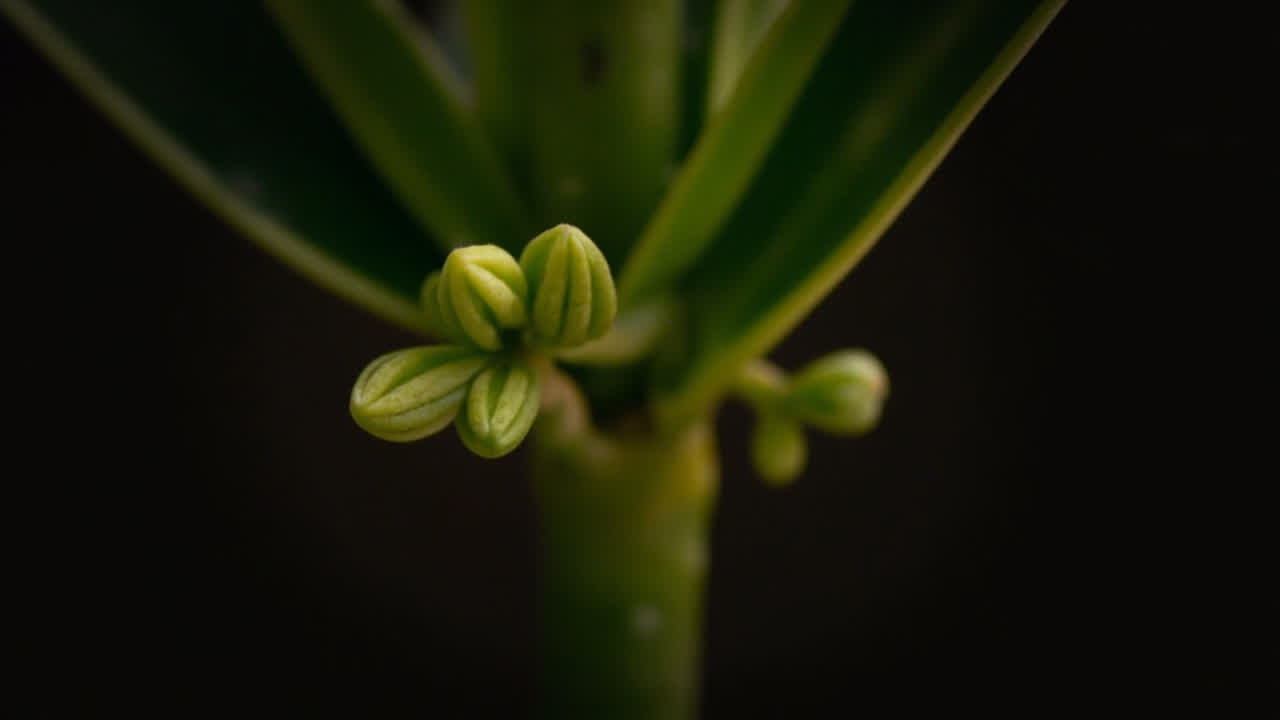
Step 4 — New growth emerges. After four to eight weeks, you will see small, tightly clustered growth points emerging from the cut surface and from the nodes just below it. These are your new branches. Within three to four months, the plant will have two to four new growing tips where there was one before. Each new tip will produce leaves that fill the sides of the plant as they extend.
You can cut multiple canes at different heights to create a tiered, multi-level fullness. But do not cut more than half the plant’s cane structure at once — it needs retained foliage to generate the energy for regrowth.
Method 2 : Encouraging Basal Shoots from the Root Crown
If you do not want to cut the main canes, the alternative is to encourage the plant to produce new basal shoots — fresh growth emerging from the soil line at the base of the plant. This produces a fuller, multi-stem clump rather than a single branching cane.
How to trigger basal shoots:
Reduce the plant’s height slightly by cutting just the top 10 cm of each growing tip. This removes the apical dominance signal — the plant’s growing tip produces hormones that suppress basal bud growth. Removing the tip allows those suppressed buds to activate. This is a lighter intervention than a full cane cut and may produce basal shoots without significantly reducing the plant’s height.
Use a root stimulant. Applying a dilute rooting hormone solution to the soil around the base of the plant once a month during the growing season (March to September in Singapore) can encourage dormant buds to activate. Use a product containingIBA (indole-3-butyric acid) at the concentration recommended for woody cuttings.
Repot and divide. If the plant is severely root-bound, the root system’s energy is going to maintaining an unhappy root mass rather than producing new growth. Removing the plant from its pot, trimming the outer roots, and repotting in fresh soil with a slightly larger container often triggers a burst of new basal growth within four to six weeks. See the repotting guide for Mass Cane Plant for the full process.
Proper Aftercare Following Pruning
After any pruning or cutting back, your Dracaena Massangeana needs specific care to support regrowth:
Light. Move the plant to the brightest position you have — bright indirect light is ideal. New growth requires energy, and energy requires light. If the plant is in a dark corner, the new buds will emerge but grow slowly and produce weak, thin leaves.
Water. Reduce watering slightly for the first two to three weeks after cutting — the plant has less foliage and therefore less water demand. Water when the top 5 cm of soil is dry, not on a fixed schedule. Do not saturate the soil.
Fertiliser. Start a monthly liquid fertilising routine four weeks after cutting. Use a balanced houseplant fertiliser at half the recommended strength. The plant needs extra nitrogen to produce new leaf tissue — look for an NPK ratio where the nitrogen number is the highest (for example, 10-5-5 or 8-4-6).
Do not fertilise immediately after cutting. The plant has no roots actively growing for the first three to four weeks after pruning — fertilising during this window just salts the soil and delays recovery.
What to Expect in Timeline
Making a Mass Cane Plant bushy is not an instant process. Here is the realistic timeline:
Week 0 — Cutting. You cut back the cane. The plant looks shorter and bare at the cut point. This is normal.
Weeks 4 to 8 — Bud activation. New growth points emerge from the cut surface and from nodes below the cut. Small, tightly furled leaf clusters appear at each point.
Weeks 8 to 16 — Active growth. The new branches extend, producing two to four new growing tips. Each tip produces full-sized leaves that begin to fill the silhouette of the plant.
Months 4 to 6 — Full recovery. The plant’s overall structure is visibly fuller and more balanced. You have a different-looking plant than the one you started with — but only if you are willing to wait the full four to six months for the effect to materialise.
For propagation of the cut cane sections, see the propagating Mass Cane Plant guide — you can root the cut sections to create new plants to fill other spaces in your home.
Turn That PDF Into a Spreadsheet in Minutes
You've seen how to do it manually — now let the tool handle the heavy lifting. Upload your bank statement and get Excel, CSV, or QBO in a few clicks.
Try It Free