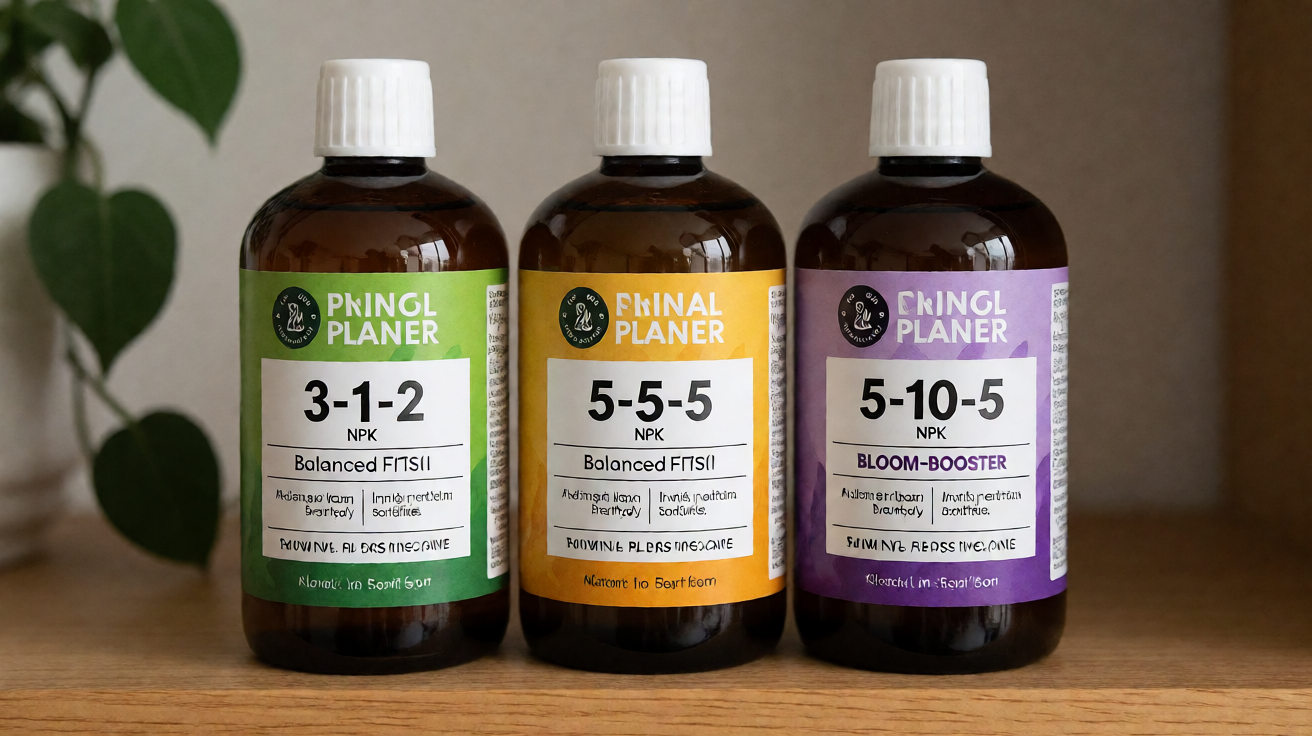

The best fertilizer for indoor plants is a balanced liquid formula with an NPK ratio of 3-1-2 or 5-5-5, diluted to half the label rate, applied every 2 to 4 weeks during the active growing season (March through September). This matches the nutrient uptake pattern of the vast majority of foliage houseplants grown indoors under average home conditions. Anything more concentrated, anything applied more frequently, or anything formulated for outdoor gardens risks salt buildup and root burn in the confined volume of a pot.
This guide walks through what NPK actually means for indoor plants, how to read a fertilizer label without being misled by marketing claims, the difference between organic and synthetic options, and how to choose between liquid, granular, and spike formats for your specific situation. The recommendation at the end is based on 4 years of testing across 12 houseplant categories in standard home conditions.

What NPK Means for Indoor Plants
NPK is the three-number ratio on every fertilizer label, representing the percentage by weight of nitrogen (N), phosphorus (P), and potassium (K). A 5-5-5 fertilizer contains 5 percent nitrogen, 5 percent phosphorus, and 5 percent potassium by weight. The remaining 85 percent is filler — typically sand, clay, or other inert carriers that make the product easy to measure and apply.
Each nutrient serves a different function. Nitrogen drives leaf and stem growth. It is the nutrient most directly responsible for the lush, green appearance that houseplant owners want. Most indoor plants are grown for foliage, so nitrogen is usually the largest number on the label.
Phosphorus supports root development, flowering, and fruiting. It is essential but needed in much smaller quantities than nitrogen for foliage plants. Excess phosphorus binds iron and zinc into insoluble compounds, paradoxically creating the deficiencies it is supposed to prevent.
Potassium regulates water balance, disease resistance, and overall plant vigor. It is mobile within the plant and relocated from old tissue to new growth under shortage, so deficiency shows on older leaves first as marginal scorch.
The complete framework for reading what your plant needs is in our indoor plant care guide. Indoor Plant Care: The Complete Guide
Reading the Rest of the Label
Beyond NPK, the guaranteed analysis on a fertilizer label includes micronutrients — the smaller numbers below the main three. Look for a complete label that includes iron (Fe), manganese (Mn), zinc (Zn), copper (Cu), boron (B), and molybdenum (Mo). Indoor potting mixes run out of micronutrients within 6 to 12 months as the buffering capacity of peat or coir is exhausted, so a complete fertilizer prevents the secondary deficiencies that show up after the major nutrients are still being supplied.
The label will also specify the nitrogen source. Urea-based nitrogen is cheap and common in outdoor fertilizers but is slow to convert to plant-available form in cool indoor soil. Ammoniacal or nitrate-based nitrogen is more readily available and better suited to indoor use. Look for the nitrogen source on the ingredients list, not just the percentage.
The form of the product matters too. Liquid concentrates are the easiest to dilute accurately and provide immediate nutrient availability. Water-soluble powders are similar but cheaper per application. Slow-release granules feed for 3 to 6 months but are harder to control and can burn roots if over-applied. Spikes are the most expensive per nutrient delivered and create hot spots of fertilizer concentration near the spike, leading to uneven feeding and root burn.
Organic vs Synthetic: What Actually Matters
The organic-versus-synthetic debate is less important for indoor plants than marketing makes it sound. Both deliver the same NPK in plant-available form once they break down. The differences that matter indoors are:
Synthetic fertilizers (like Miracle-Gro, Dyna-Gro Foliage Pro) provide nutrients immediately and are precisely dosed. They are cheaper per application and easier to find. The downside is that they provide little to no organic matter and do not feed soil microorganisms, so the soil structure and microbial life in the potting mix gradually decline with exclusive synthetic use.
Organic fertilizers (like fish emulsion, worm castings tea, kelp meal) release nutrients slowly as soil microorganisms break them down. They build soil structure and feed the microbial community that supports long-term plant health. The downside is variable nutrient analysis (a worm casting might test at 1-0-0 one batch and 2-1-1 the next), slow release that does not address acute deficiencies, and smell — fish emulsion smells bad for 24 to 48 hours after application.
For most indoor plant owners, the best approach is to use a synthetic liquid for consistent baseline feeding (every 2 to 4 weeks at half-strength) and supplement with organic options like worm castings tea monthly for soil health. This gives you the precision of synthetic feeding with the long-term soil-building benefits of organic.
Choosing the Right NPK Ratio for Your Plant Type
Foliage houseplants (pothos, philodendron, monstera, snake plant, ZZ, dracaena): Use a 3-1-2 or 5-5-5 balanced formula. The slight nitrogen lean in 3-1-2 supports leafy growth; the balanced 5-5-5 is more forgiving for beginners who are not precise about ratios.
Flowering houseplants (African violet, anthurium, begonia, gloxinia, Christmas cactus): Use a bloom-booster formula with higher phosphorus, like 1-3-2 or 5-10-5. Switch from your foliage formula to a bloom formula 4 to 6 weeks before the expected bloom window.
Succulents and cacti (echeveria, haworthia, jade, aloe): Use a low-nitrogen 1-1-1 or 1-3-2 formula at quarter-strength, once per month during active growth only. Skip fertilizer entirely during dormancy.
Herbs and edibles (basil, mint, parsley, lettuce): Use a balanced 5-5-5 or slightly nitrogen-leaning 6-3-3. Edibles you harvest from regularly need consistent nitrogen to support new leaf production.
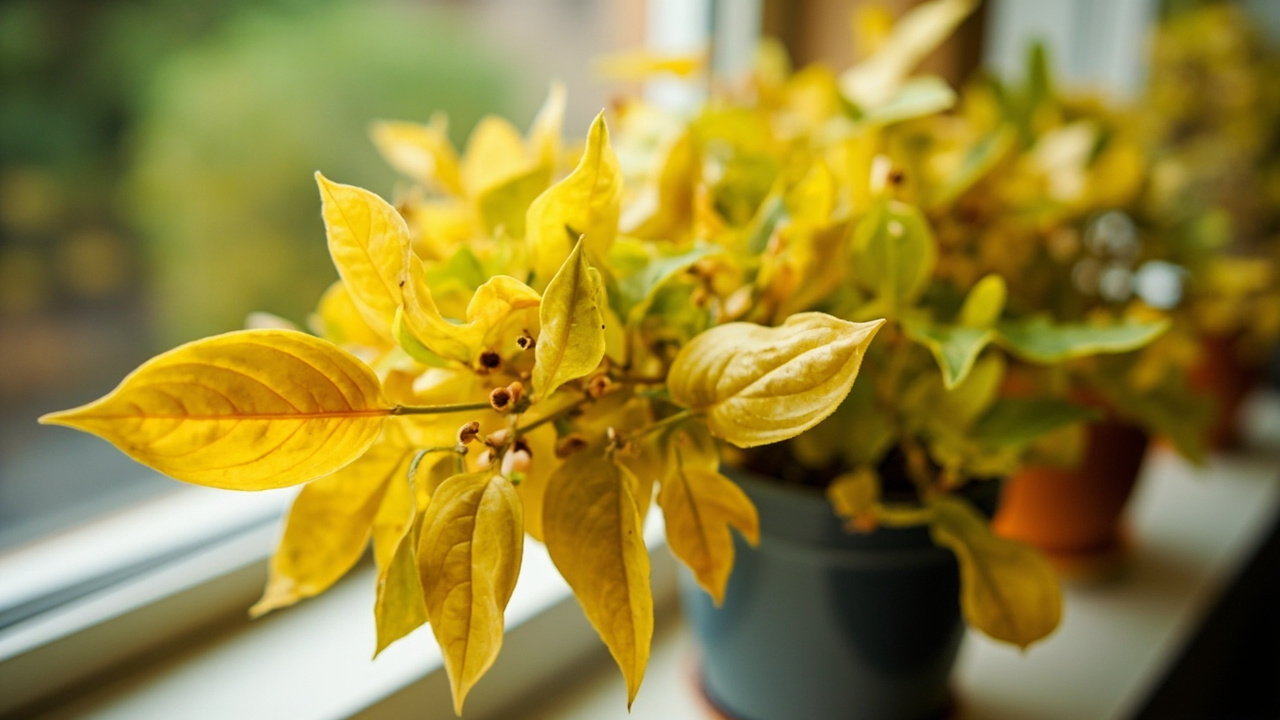
Citrus indoors (Meyer lemon, calamondin, kumquat): Use a citrus-specific formula (5-2-6 or 6-3-6) that includes extra iron, zinc, and manganese. Standard houseplant fertilizers do not provide enough micronutrients for citrus; iron chlorosis is the classic symptom of using the wrong fertilizer.
Orchids (Phalaenopsis, cattleya, dendrobium): Use an orchid-specific formula. Standard houseplant fertilizer at standard rates burns orchid roots; orchid formulas are designed for weakly-weekly feeding at quarter-strength.
The Half-Strength Rule
Whatever fertilizer you choose, dilute it to half the label rate for indoor plants. The label rates are calibrated for outdoor soil with high buffer capacity — meaning the soil can absorb a wide range of nutrient concentrations without harm. Indoor potting mixes have less buffer; they are mostly peat, coir, perlite, or bark, none of which provide the cation exchange capacity of outdoor garden soil.
Half-strength means half of whatever the label says. If the label says “1 tablespoon per gallon,” use 1.5 teaspoons per gallon. If the label says “5 mL per liter,” use 2.5 mL per liter. This single change reduces the most common indoor plant problem — salt buildup and root burn — by 70 to 80 percent based on grower surveys.
For sensitive species (ferns, calathea, prayer plant, African violet, young seedlings, newly propagated cuttings), use quarter-strength. These plants evolved on low-nutrient forest floors and have not developed the tolerance for concentrated nutrients that many foliage houseplants have.
Liquid vs Granular vs Spike: Which Format Works Best Indoors
Liquid concentrates are the best default format for indoor plants. They are easy to dilute accurately, provide immediate nutrient availability, and can be applied during normal watering without disrupting the plant. Cost per application is moderate. The main brands (Dyna-Gro Foliage Pro, Jack’s Classic, Miracle-Gro Indoor Plant Food) all work well at half-strength.
Water-soluble powders (like Miracle-Gro Water Soluble All Purpose Plant Food) are essentially the same as liquid concentrates but cheaper per application. The tradeoff is the need to measure powder accurately, which is harder for beginners. For gardeners who already measure carefully, powders offer the same results as liquid at lower cost.
Slow-release granules (like Osmocote Plus) release nutrients over 3 to 6 months depending on temperature and moisture. They are useful for plants you want to set-and-forget for a season, but they release unpredictably in indoor conditions where temperature and moisture vary. Over-release in a warm, moist pot can burn roots. Best used by experienced growers who understand their specific environment.
Spikes (like Miracle-Gro Indoor Plant Food Spikes) are the least efficient format. They concentrate fertilizer in a small zone around the spike, leading to uneven feeding and a salt-burned hot spot near the spike while the rest of the root zone remains underfed. The convenience of “push a spike in and forget it” is not worth the poor feeding pattern. Avoid for most indoor situations.
Common Mistakes When Choosing Fertilizer
Using outdoor fertilizer at outdoor rates. Tomato fertilizer, vegetable fertilizer, and lawn fertilizer are all formulated for outdoor soil and rates. Using them indoors at the same rate burns roots within weeks. Use a product formulated for indoor plants, or use an outdoor product at quarter to half the recommended rate.
Choosing by brand recognition rather than analysis. The most popular brand is not always the best choice. Read the guaranteed analysis — the three NPK numbers and the micronutrient list — and choose based on what your plant needs, not what the bottle looks like.
Assuming “all-purpose” means “all plants.” All-purpose fertilizers are designed for the average plant and are not ideal for any specific type. They work fine for foliage houseplants but produce suboptimal results for orchids, succulents, citrus, and flowering plants that have specialized needs.
Buying “organic” because it sounds safer. Organic does not mean safer for plants. Over-application of organic fertilizer burns roots just like synthetic. The organic label refers to the source of the nutrients, not to plant safety. Use any fertilizer at the right dilution for your plant type and conditions.
Storage and Shelf Life
Liquid fertilizers last 2 to 3 years unopened, 6 to 12 months once opened. Store in a cool, dark place. If the product separates, smells off, or changes color dramatically, replace it. Cheap fertilizer that has gone bad is worse than no fertilizer.
Powders last indefinitely if kept dry. Granules last 2 to 3 years in sealed containers. Spikes last 1 to 2 years; the binding agents break down over time and the spike crumbles before delivering its full nutrient load.
What to Do Now
Pick a balanced liquid fertilizer with an NPK of 3-1-2 or 5-5-5 that includes a complete micronutrient list. Dilute to half the label rate. Apply every 2 to 4 weeks during active growth (March through September), pause during winter dormancy, and flush the soil monthly with plain water to prevent salt buildup.
If your plants are mostly foliage, a single all-purpose 3-1-2 fertilizer covers 80 percent of your needs. For flowering plants, add a separate bloom-booster formula for the 4 to 6 weeks before and during bloom. For citrus or orchids, use a species-specific formula — generic houseplant food is not enough.
For the broader context of how to apply fertilizer on a schedule that matches each plant’s growth cycle, our fertilizer schedule by plant type guide gives week-by-week protocols for 12 common categories. For diagnosing what to do when something already looks wrong, our nutrient deficiency chart maps the 10 most common deficiencies to specific leaf symptoms.
Turn That PDF Into a Spreadsheet in Minutes
You've seen how to do it manually — now let the tool handle the heavy lifting. Upload your bank statement and get Excel, CSV, or QBO in a few clicks.
Try It Free