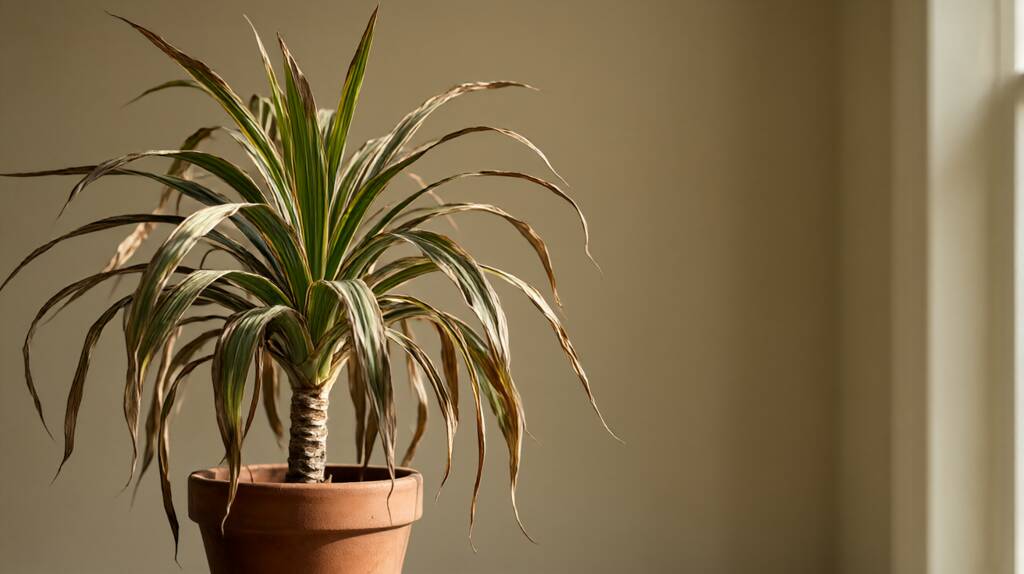

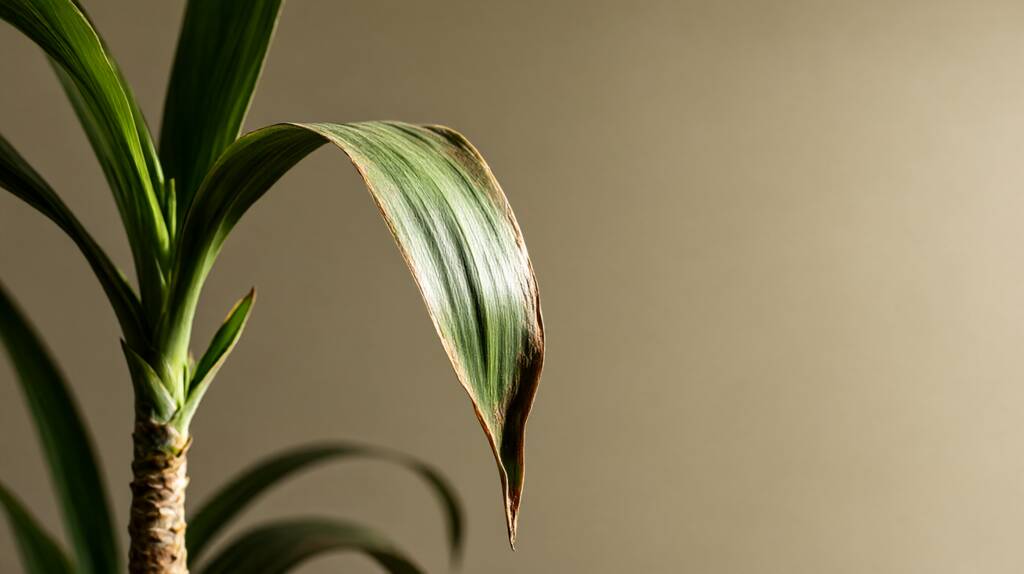
Dracaena fragrans ‘Massangeana’ is known for its resilience, but drooping leaves are a signal that something is wrong. Unlike yellowing or browning, which develop over weeks, drooping is immediate and visible. The leaves lose turgor pressure and hang downward, giving the plant a wilted, unhealthy appearance. The good news is that drooping is usually reversible if you identify the cause quickly.
Most care guides list “overwatering or underwatering” as the cause and leave it at that. This is technically true but practically useless because the fixes are opposite. Watering more when the plant is overwatered makes it worse. Watering less when it is underwatered extends the damage. This guide covers the specific diagnostic signs that distinguish each cause and the correct response for each.
Cause 1: Underwatering
Underwatering is the most common cause of mass cane drooping. For watering technique, see our mass cane watering guide. The plant stores water in its thick canes, which allows it to survive drought. But when the soil dries completely, the canes deplete their reserves and can no longer supply enough water to maintain leaf turgor. The leaves droop as they lose rigidity.
The diagnostic pattern is clear. The soil is dry and may have pulled away from the pot edges. The pot feels light when lifted. The canes may feel slightly wrinkled or lighter than usual. The leaves droop uniformly across the plant, not just on one side.
The fix is simple: water thoroughly. The plant should recover within 24-48 hours if the drought was not severe. For severe drought, where the soil has been dry for more than 2 weeks, water in stages. Water lightly, wait an hour for the soil to absorb, then water again. This prevents water from running straight through the dry, hydrophobic soil.
After recovery, adjust the watering schedule. Water when the top 5 cm of soil is dry, not when the plant shows stress. Consistent, moderate watering prevents the drought cycles that produce drooping.
Cause 2: Overwatering and Root Rot
Overwatering produces drooping through a different mechanism. If you are also seeing yellow leaves, check root health first. When the soil stays saturated, the roots suffocate and begin to rot. The damaged roots cannot absorb water, and the plant wilts even though the soil is wet. This is the paradox of overwatering: the plant looks like it needs water, but adding more makes it worse.
The diagnostic pattern is distinct. The soil is wet or damp, not dry. The pot feels heavy. The cane bases may feel soft or mushy. The leaves droop but do not feel dry or papery. They may feel soft and slightly yellowed at the base.
The fix is immediate. Remove the plant from the pot and inspect the roots. Healthy roots are white or light tan and firm. Rotted roots are brown or black, mushy, and may smell foul. Trim all rotted roots with clean scissors. Repot in fresh, well-draining soil. Reduce watering and increase light to help recovery.
If the cane bases are soft, the rot has spread into the cane. Cut the cane above the soft area with a clean, sharp knife. The remaining cane can be propagated if it has at least one node.
Cause 3: Temperature Shock
Dracaena fragrans is sensitive to sudden temperature changes. For complete care, see our mass cane care guide. A plant moved from a warm room to a cold draft, or from an air-conditioned space to a hot car, can droop within hours. The leaves lose turgor as the plant’s metabolic processes slow or accelerate abruptly.
The diagnostic pattern is sudden onset. The plant was fine yesterday and drooping today. The soil moisture is correct. There is no visible damage to the leaves or canes. The plant was recently moved or exposed to a temperature change.
The fix is to return the plant to a stable environment. Move it away from drafts, heating vents, and air conditioners. Maintain a consistent temperature between 18-24°C. The plant should recover within 24-48 hours if the temperature shock was not severe.
Prevention is more effective than treatment. Avoid placing mass cane near doors, windows, or HVAC vents. When moving the plant, do so gradually, allowing it to acclimate to the new conditions over several days.
Cause 4: Transplant Shock
Repotting stresses the root system and can cause temporary drooping. The disturbed roots are less efficient at water uptake, and the plant may lose turgor for 1-2 weeks while new roots form. This is normal and usually resolves without intervention.
The diagnostic pattern is timing. The plant was repotted within the last 1-2 weeks. The soil moisture is correct. The canes are firm and healthy. The drooping is uniform and not accompanied by yellowing or browning.
The fix is patience. Water lightly and consistently. Do not overwater, as the disturbed roots are vulnerable to rot. Place in bright, indirect light. Avoid fertilizing for 4-6 weeks. The plant should recover as new roots establish.
Cause 5: Root-Bound Conditions
A mass cane that has outgrown its pot becomes root-bound. The roots circle the pot bottom and displace soil volume. Less soil means less water storage, and the plant dries faster. The canes cannot store enough water to maintain leaf turgor, and the leaves droop.
The diagnostic pattern is chronic. The plant droops regularly between waterings, even when the soil is moist. The roots may be visible at the drainage holes. The plant has not been repotted in 2-3 years. Growth has slowed.
The fix is repotting. Choose a pot 2-3 cm larger in diameter. Use fresh, well-draining soil. Water thoroughly after repotting and reduce watering for 2-3 weeks while the plant adjusts.
Cause 6: Pest Infestation
Pests that feed on roots or sap can cause drooping by reducing the plant’s ability to absorb and transport water. Spider mites, mealybugs, and scale insects all produce drooping as a secondary symptom.
The diagnostic pattern includes visible pests or their signs. Spider mites produce fine webbing and stippled leaves. Mealybugs appear as white cottony masses at leaf bases. Scale insects appear as brown bumps on stems and leaves. The drooping is accompanied by other symptoms, not isolated.
The fix is pest treatment. For spider mites, increase humidity and wipe leaves with a damp cloth. For mealybugs and scale, use isopropyl alcohol on a cotton swab to remove individual pests. For severe infestations, use insecticidal soap or neem oil.
Diagnostic Checklist
Use this checklist to identify the cause of drooping on your mass cane:
- Dry soil, light pot, wrinkled canes: Underwatering. Water thoroughly.
- Wet soil, heavy pot, soft canes: Overwatering/root rot. Check roots, repot.
- Sudden onset after temperature change: Temperature shock. Move to stable environment.
- Recent repotting, firm canes, correct moisture: Transplant shock. Wait and water lightly.
- Chronic drooping, root-bound, slow growth: Root-bound. Repot.
- Visible pests, webbing, or cottony masses: Pest infestation. Treat pests.
If multiple causes are present, address them in order of likelihood: water problems first, then temperature, then transplant shock, then root-bound conditions, then pests.
Preventing drooping is more effective than treating it. The most important prevention strategies address the most common causes.
Watering discipline: Check soil moisture at 5 cm depth before every watering. Water only when the top 5 cm is dry. Empty the saucer within 30 minutes. This prevents both overwatering and underwatering.
Environment: Keep the plant away from drafts, heating vents, and air conditioners. Maintain a stable temperature between 18-24°C. Avoid moving the plant frequently.
Pot and soil: Use a pot with drainage holes and fast-draining soil. Repot every 2-3 years. Avoid oversized pots that hold excess moisture.
Monitoring: Check the canes weekly for firmness and color. Soft or wrinkled canes indicate watering problems before the leaves show symptoms. Catching problems early makes recovery faster.
Not all drooping indicates a problem. Mass cane leaves naturally droop slightly at the end of the day, especially in warm conditions. The leaves recover overnight as the plant rehydrates. This is normal and does not require intervention.
Leaves also droop slightly when the plant is producing new growth. The plant redirects water and nutrients to the growing tip, and older leaves may temporarily lose turgor. This resolves as the new growth matures.
If the plant recovers overnight and the soil moisture is correct, the drooping is likely normal. If the drooping persists and the plant does not recover, the cause is one of the six listed above.
Recovery Timeline
Recovery time depends on the cause. Underwatering recovery is fastest: 24-48 hours after thorough watering. Temperature shock recovery is similar: 24-48 hours in a stable environment. Transplant shock recovery takes 1-2 weeks. Root rot recovery takes 2-4 weeks with proper treatment. Root-bound recovery takes 2-3 weeks after repotting. Pest recovery takes 2-4 weeks after treatment.
If the plant does not show improvement within the expected timeline, re-evaluate the diagnosis. The most common misdiagnosis is confusing overwatering with underwatering, which leads to the wrong treatment and worsening symptoms.
Watering and Drooping: The Connection
Watering is the most common factor in mass cane drooping, either directly or indirectly. Both overwatering and underwatering cause drooping, but through different mechanisms and with different recovery timelines.
Underwatering drooping is caused by insufficient water reaching the leaves. The plant recovers quickly when watered because the root system is still functional. The canes rehydrate and leaf turgor returns within 24-48 hours.
Overwatering drooping is caused by root damage from saturated soil. The roots cannot absorb water even though it is present. Recovery requires root healing, which takes 2-4 weeks. The plant may need repotting and root pruning before recovery begins.
The key distinction is soil moisture. Dry soil means underwatering. Wet soil means overwatering. This single check resolves the majority of drooping cases.
When to Seek Professional Help
If drooping persists despite addressing all likely causes, the plant may have a systemic issue. Root rot that has spread into the cane, severe pest infestation, or a combination of factors can produce drooping that does not respond to standard fixes.
A plant with soft, discolored canes and extensive drooping may be beyond recovery. In this case, the best option is to take cane cuttings from the healthy upper sections and propagate new plants. Mass cane propagates readily from cane sections.
If the plant is valuable or sentimental, consult a local nursery or extension service. They can diagnose issues that are difficult to identify from symptoms alone.

The Bottom Line
Check the soil first. Dry means underwatering. Wet means overwatering. If soil moisture is correct, check temperature, then repotting history, then root condition, then pests. Drooping is a rapid response to stress, and the plant recovers quickly once the cause is addressed.
Sources and further reading
- University of Florida IFAS Extension – dracaena care.
- Missouri Botanical Garden – Dracaena fragrans profiles.
- Clemson Cooperative Extension – houseplant watering guidelines.
Last reviewed on November 30, 2026. Plant and growing guidance is general; adjust to your specific conditions.