
Strawberry leaves that curl and feel soft are sending a distress signal, but the signal means something completely different depending on whether the leaf is limp and cold versus firm and dry, and mistaking one for the other is the fastest way to kill the plant.
The 60-Second Squeeze Test That Tells You Almost Everything
Before reaching for fertilizer, fungicide, or a watering can, perform a single diagnostic move that separates eight different causes into two groups. For related leaf problems, see our strawberry leaf problems guide. Proper propagation and runner management help prevent many stress conditions. Pick the most curl-affected leaf near the crown, gently squeeze the petiole and blade between your thumb and forefinger, and note two things: does the leaf feel cold and limp, or dry and stiff? Does it spring back when released, or stay folded?
A cold, limp leaf that stays folded indicates loss of turgor pressure from waterlogged roots. This is especially common in full sun conditions where plants transpire rapidly. This is especially common in full sun conditions where plants transpire rapidly. The cells have lost structural integrity because oxygen-deprived roots cannot uptake water effectively, even though the soil is saturated. This is the hallmark of crown rot or Phytophthora infection, and it means the plant is drowning, not dehydrated.
A dry, stiff leaf that springs back partially indicates water deficit or transpiration stress. The cells are still turgid but shriveled because the plant is losing water faster than roots can replace it. Wind, intense sun, or shallow roots in dry soil all produce this pattern. The leaf curls inward to reduce surface area and slow water loss.
When the leaf feels neither cold nor dry but shows stippling, webbing, or a silvery sheen on the underside, the cause is almost certainly pest-related. Spider mites and thrips feed by puncturing individual cells, creating localized collapse that manifests as curling without general wilt. These pests are invisible to the naked eye, so you need a magnifying lens or the white-paper test to confirm their presence.
Overwatering and Crown Rot: The Most Common Cause of Soft Curling
Crown rot begins invisibly. Waterlogged soil deprives roots of oxygen, and within 24 to 48 hours, root cells begin to die from anaerobic conditions. The pathogens Phytophthora cactorum and Pythium spp. colonize the dying tissue, producing enzymes that dissolve cell walls and turn the crown from firm white tissue to soft brown mush. The plant cannot pump water upward, so leaves lose turgor and curl inward.
The diagnostic signature is unmistakable once you know it. Lift the plant gently from the soil and inspect the crown, the thickened stem section where roots emerge and leaves attach. A healthy crown is firm, creamy white to light tan, and slightly tapered. A rotting crown is soft, dark brown to black, and may separate from the roots with gentle pressure. Any foul odor confirms active decay.
Early-stage crown rot, where the crown is still firm but the outer root layer is softened, can sometimes be saved. Remove the plant from soil, trim away all brown and mushy roots with sterile shears, and repot in fresh, dry, well-drained medium. Stop watering for three days to let any wounds callus, then resume light watering only when new root growth becomes visible, typically within 7 to 10 days.
Advanced crown rot, where the crown itself is soft and mushy, is not salvageable. Remove the entire plant, dispose of it in the trash, not the compost pile, and do not replant strawberries in the same soil for at least one full growing season. Phytophthora spores survive in soil for years, and replanting into infested soil guarantees repeat failure.
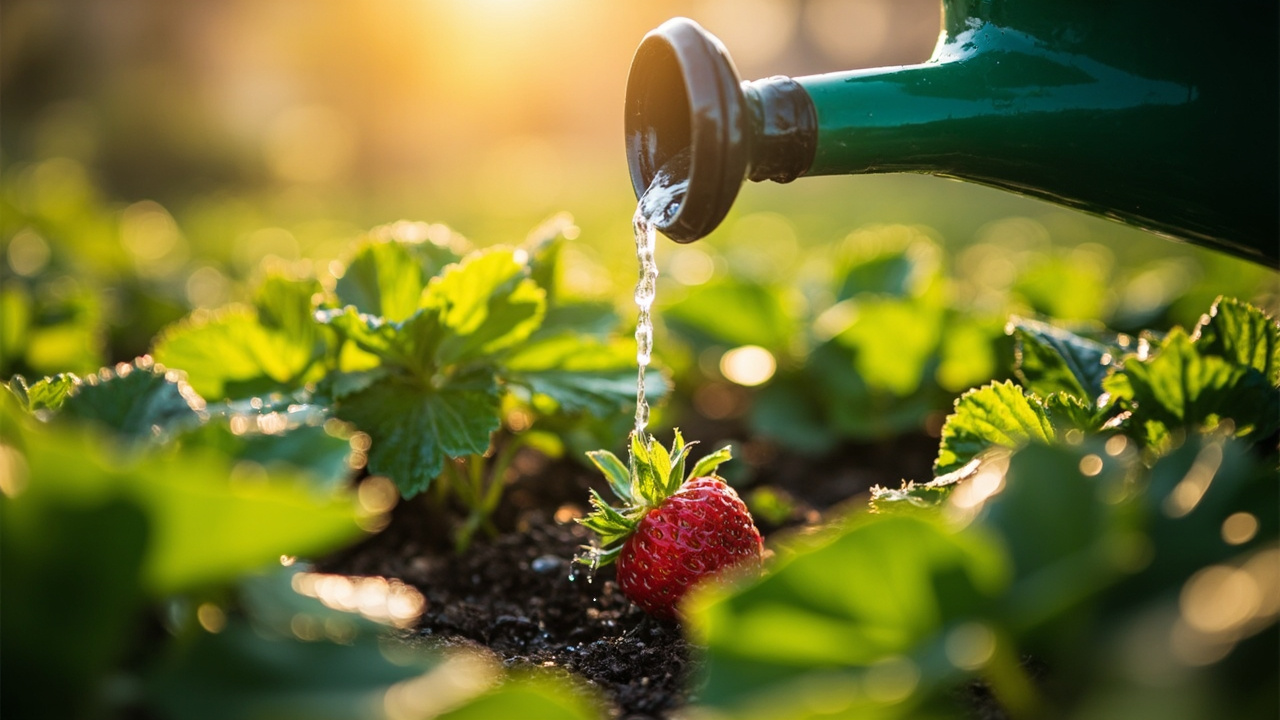
Prevention is entirely about drainage and watering discipline. Strawberries need soil that drains freely and dries slightly between waterings. Raised beds, container growing, and coarse soil amendments all improve drainage. Water deeply but infrequently, allowing the top inch of soil to dry between sessions, and never let containers sit in standing water.
Underwatering and Drought Stress: When Leaves Curl but Feel Firm
Underwatered strawberry leaves curl because the plant is conserving water. As soil moisture drops below the wilting point, root cells cannot maintain the osmotic pressure needed to keep leaf cells rigid. The leaf responds by curling its margins inward, reducing exposed surface area and slowing transpiration. This is a survival mechanism, not a disease, and it is reversible if caught early.
The key distinction from overwatering is leaf texture. An underwatered leaf feels dry and leathery, not cold and limp. When you squeeze it, it resists compression and may make a faint crisp sound. The curling pattern is also different: underwatering typically affects the youngest, most exposed leaves first, while overwatering causes uniform wilting across the entire canopy.
Recovery from underwatering is fast. Water the plant thoroughly until water drains freely from the container or soaks six inches into the ground, then monitor over the next 24 to 48 hours. New leaves should uncurl and regain rigidity within that window. If they do not, the plant may have suffered irreversible cell damage, and the issue is likely not simple dehydration.
Consistent underwatering, where the soil dries out completely between waterings on a regular schedule, produces a different long-term symptom: small leaves, pale green color, and reduced flower production. The plant prioritizes survival over reproduction, shutting down fruit set to conserve resources. This is the most common pattern in container strawberries left on sunny windowsills during summer.
Spider Mites and Thrips: The Tiny Pests That Cause Curling
Spider mites are microscopic arachnids, often less than 0.5 millimeters long, that feed by piercing individual leaf cells and sucking out the contents. The damage is invisible at first, but as the population grows, affected leaves develop a stippled appearance, tiny yellow or white dots where cells have been emptied. The leaf then curls and distorts as damaged cells lose structural support.
The white-paper test is the fastest way to confirm spider mites. Hold a white piece of paper beneath the affected leaf, tap the leaf sharply, and examine the paper with a magnifying lens. Moving red, brown, or yellow dots that scurry when disturbed are spider mites. Fine silk webbing between leaves or along stems is definitive proof of an established infestation.
Thrips are even smaller, elongated insects that rasp leaf surfaces rather than piercing cells. Their damage appears as silvery or bronze streaks on the leaf surface, often accompanied by tiny black fecal specks. Leaves curl and distort as thrips feed along the margins and veins, causing asymmetric growth that produces the characteristic curling pattern.
Both pests thrive in hot, dry conditions, which is why they peak in midsummer when strawberries are already under water stress. The combination of pest damage and drought accelerates leaf curling beyond what either cause would produce alone. Controlling one without addressing the other leaves the plant vulnerable to rapid deterioration.
Treatment for light infestations begins with strong water sprays that dislodge mites and thrips from the leaf underside. Apply the spray in the late afternoon to avoid leaf burn, targeting the undersides where these pests congregate. For heavier infestations, neem oil or insecticidal soap applied every five to seven days for three consecutive treatments disrupts the pest life cycle without harming beneficial insects.
Powdery Mildew and Fungal Diseases That Distort Leaves
Powdery mildew on strawberries is caused by the fungus Podosphaera macularis, which produces white, talcum-powder-like growth on the upper leaf surface. Infected leaves curl downward at the margins, becoming cup-shaped as the fungal hyphae penetrate the epidermal cells and extract nutrients. The curling is firm, not limp, and the white fungal growth is visible without magnification.
The conditions that promote powdery mildew are specific: moderate temperatures between 68 and 77 degrees Fahrenheit, high humidity above 80 percent, and poor air circulation. Crowded plantings, overhead watering that leaves foliage wet overnight, and shade from nearby structures all create the microclimate this fungus requires. It is most damaging during late spring and early summer flower development.
Unlike spider mites, powdery mildew does not spread through direct contact between leaves. Wind carries the spores, which land on susceptible tissue and germinate within 24 hours under favorable humidity. Once a leaf is infected, it produces thousands of new spores within a week, each capable of infecting a new leaf under the right conditions.
Prevention focuses on airflow and humidity management. Space plants 12 to 18 inches apart to allow air movement between canopy layers. Water at the soil level, not overhead, to keep foliage dry. Remove and destroy heavily infected leaves immediately, and avoid composting them, because the fungus survives in dead leaf tissue.
Fungicide options include sulfur-based sprays, which are effective against powdery mildew but must be applied before infection establishes. Once white growth is visible, cultural control plus removal of infected tissue is more effective than spraying, because the fungus has already penetrated the leaf surface and systemic fungicides are required for control.
Viral Leaf Curl: The Untreatable Condition You Must Remove Immediately
Strawberry latent ring spot virus produces a distinctive leaf curling pattern that no other cause mimics. Affected leaves show a mottled yellow-green pattern, often with rings or lines, combined with downward curling that gives the leaf a distorted, crinkled appearance. The curling is firm and persistent, not responsive to watering or temperature changes.
Viral infection enters through aphid vectors or infected planting stock. Bare-root transplants purchased from unreliable sources are the most common introduction route, because infected rhizomes show no visible symptoms at sale but produce symptomatic leaves within weeks of planting. Aphids transmit the virus between plants throughout the growing season, so one infected plant can infect an entire bed.
There is no cure for viral infection in strawberries. No fungicide, bactericide, or horticultural oil eliminates the virus once it is established in the plant tissue. The only responsible action is immediate removal and destruction of the infected plant, followed by inspection of all neighboring plants for symptoms over the next 14 days.
If neighbors remain symptom-free after two weeks, they were not infected. If they develop curling, mottling, or ring patterns, remove them as well before the virus spreads further through the planting. This is not a dramatic overreaction, it is the standard protocol recommended by every extension service in North America and Europe.
How Variety, Light, and Growing Conditions Affect Leaf Curl
Different strawberry varieties respond to environmental stress in distinct ways. June-bearing varieties tend to show leaf curl as a sign of transplant shock or water stress during their spring establishment phase. Everbearing and day-neutral varieties, which produce fruit continuously throughout the growing season, often display curling leaves when light conditions change or when nitrogen levels fluctuate. Understanding your variety’s growth pattern helps you distinguish between normal seasonal behavior and genuine distress.
Sunlight exposure directly influences leaf shape and texture. Plants receiving fewer than six hours of direct sun daily may develop curled, soft leaves as they stretch toward available light. This etiolation response is especially common in indoor setups with grow lights positioned too far above the canopy. Photosynthesis efficiency drops when leaves cannot fully expand, reducing the plant’s ability to produce the sugars needed for strong fruit development.
Spacing between plants affects airflow and light penetration. Overcrowded strawberries trap moisture at the leaf surface, creating conditions that promote fungal curling. Proper spacing of 12 to 14 inches allows each plant to receive adequate sunlight and air circulation, reducing the environmental triggers that cause leaves to curl inward.
Overwintering preparation can also influence spring leaf behavior. Plants that enter dormancy without proper mulch protection may emerge with distorted leaves in early spring. A four-inch layer of straw mulch applied after the first hard freeze protects dormant crowns and ensures that emerging leaves unfold normally when temperatures warm.
How Variety, Light, and Soil Affect Leaf Curl
Different strawberry varieties respond to environmental stress in distinct ways. June-bearing varieties tend to show leaf curl as a sign of transplant shock or water stress during their spring establishment phase. Everbearing and day-neutral varieties, which produce fruit continuously throughout the growing season, often display curling leaves when light conditions change or when nitrogen levels fluctuate. Understanding your variety’s growth pattern helps you distinguish between normal seasonal behavior and genuine distress.
Sunlight exposure directly influences leaf shape and texture. Plants receiving fewer than six hours of direct sun daily may develop curled, soft leaves as they stretch toward available light. This etiolation response is especially common in indoor setups with grow lights positioned too far above the canopy. Photosynthesis efficiency drops when leaves cannot fully expand, reducing the plant’s ability to produce the sugars needed for strong fruit development.
Soil conditions also play a role. Strawberries prefer slightly acidic soil with a pH between 5.5 and 6.5. Alkaline soil can cause nutrient lockout that manifests as distorted leaf growth. Sandy soil drains too quickly and may leave plants dehydrated, while clay soil retains too much moisture. The ideal soil texture is loam with added perlite or peat moss to improve drainage. When growing in containers, ensure drainage holes are present and use a soilless mix with organic matter to maintain proper moisture balance.
Action Plan: What to Do After You Diagnose the Cause
Once you have identified the cause of leaf curling through the diagnostic steps above, match your response to the specific problem. For overwatering and crown rot, improve drainage immediately, remove affected tissue, and adjust your watering schedule to let the soil surface dry between sessions. For underwatering, water thoroughly and mulch to retain moisture. For pests, begin the water-spray and neem-oil protocol. For powdery mildew, improve airflow and remove infected leaves. For suspected virus, remove and destroy the plant.
The single most important rule is to diagnose before you act. Applying fertilizer to an overwatered plant wastes money and accelerates root rot. Spraying fungicide on pest damage does nothing. Watering a plant that is already waterlogged kills it faster. Each cause demands a specific response, and the wrong response is almost always more harmful than doing nothing at all.
When in doubt about the cause, start with the squeeze test and work through the diagnostic tree systematically. Check leaf texture first, then inspect the crown and roots, then examine the leaf underside for pests, then look for fungal growth, and finally consider viral symptoms if all else is negative. This sequence eliminates the most common causes first and saves time by avoiding unnecessary treatments. For container growing, ensure drainage holes are present and use a mix with organic matter to maintain proper moisture balance. For container growing, ensure drainage holes are present and use a mix with organic matter to maintain proper moisture balance. Remember that soil pH, nutrient availability, and root zone conditions all affect leaf health, so address these underlying factors along with the visible symptoms.
Most cases of strawberry leaf curling resolve within 7 to 14 days of the correct intervention. If your plant is beyond saving, see our save dying strawberry plant guide for emergency recovery steps. Underwatered plants recover within 48 hours. Pest-damaged plants show new clean growth within two weeks of consistent treatment. Crown rot victims, if caught early enough, regenerate roots within 10 days. The key is speed and accuracy, because every day of wrong treatment extends the recovery window and increases the risk of permanent damage.
From PDF to Excel in one click
Forget retyping line by line. Upload any bank statement, get a spreadsheet you can actually use. Your files are never stored, and you can test the converter with 3 free conversions.
Try it free