Strawberry pests cause distinct damage patterns that reveal their identity before you ever see the insect itself, and matching that pattern to the right pest is the difference between targeted treatment and wasted effort. Most gardeners waste time and money spraying broad-spectrum pesticides when the real problem is a specific pest that requires a completely different approach. Learning to read the damage is the first step toward effective pest management.
Each pest has a characteristic feeding signature that serves as a diagnostic tool. Aphids cause leaves to curl into tight tubes. Spider mites create fine stippling that looks like dust. Japanese beetles skeletonize leaves, leaving only the veins. Strawberry weevils make precise circular cuts in flower buds. Slugs leave irregular holes and silver slime trails. Nematodes stunt roots. Thrips scar fruit surfaces. These patterns are consistent and predictable, making identification possible even when the pest itself is too small to see.
This guide covers the seven most common strawberry pests in order of how frequently home gardeners encounter them. For each pest, you will learn the damage pattern, how to confirm the identification, and what treatment options work best. The goal is to get you from symptom to solution in a single visit rather than multiple rounds of trial and error.
The Damage-Pattern Approach to Pest Identification
The most reliable pest identification starts with the damage, not the insect. Most strawberry pests are too small to see during routine inspection, especially in the early stages of infestation. Aphids cluster on the undersides of curled leaves. Spider mites live protected beneath the leaf surface. Thrips hide inside flower buds. Trying to spot these pests directly is like searching for a needle in a haystack.
Instead, learn to read the damage pattern. Each pest type produces a distinctive signature that reveals its identity. Sucking pests like aphids and spider mites cause discoloration and distortion. Chewing pests like beetles and slugs leave physical holes and missing tissue. Boring pests like weevils create precise cuts and internal damage. Ring-spot viruses produce circular patterns that mimic insect feeding.
The diagnostic process follows three simple steps to identify transplant shock versus disease in bare root stock to identify transplant shock versus disease. First, observe the overall pattern , is it curling, stippling, skeletonization, holes, or something else? Second, check the location , are the symptoms on new growth, old leaves, fruit, or roots? Third, look for the pest or its signs , colony, webbing, frass, slime trails, or the insect itself. This systematic approach narrows the diagnosis quickly and accurately.
Aphids , Curling Leaves and Sticky Residue
Aphids are the most common strawberry pest, feeding on runners and new growth, feeding on new growth and runners and the easiest to identify by damage pattern alone. These soft-bodied insects feed on plant sap using piercing-sucking mouthparts, which causes leaves to curl downward and inward around the feeding site. The curling is not random damage , it follows the vein structure and creates a tight protective tube that shelters the aphid colony inside from predators and environmental stress.
The secondary sign of aphid infestation is honeydew, a sticky residue that promotes sooty mold growth, clear to slightly yellow liquid excreted by the insects. Honeydew coats leaves and fruit below the colony and promotes the growth of black sooty mold. The mold does not directly harm the plant but reduces photosynthesis by blocking sunlight from reaching leaf surfaces. Affected leaves may appear shiny and sticky to the touch, with black fungal growth developing over time.
To confirm an aphid identification, gently lift the curled leaves and inspect the undersides. Aphids cluster on soft new growth, leaf buds, and stems just below flower spikes. They are pear-shaped, soft-bodied, and range from pale green to dark brown depending on the species and host plant. A gentle tap over white paper will dislodge the colony, making the pests obvious against the contrasting background.
Light aphid infestations often resolve on their own through natural predator activity. Lady beetles, lacewings, and hoverfly larvae are constant visitors to healthy strawberry patches and will consume large numbers of aphids if given the opportunity. For heavier infestations, a strong spray of water from the hose can knock colonies off plants. Insecticidal soap applied directly to the undersides of leaves provides contact kill without harming most beneficial insects when used according to label directions. For broader care guidance, see our strawberry care guide.
Spider Mites , Stippling and Webbing
Spider mite damage is easily confused with drought stress or direct sun exposure causing etiolation with drought stress or direct sun exposure with drought stress, nutrient deficiency, or chemical injury because the initial symptoms are subtle. The first visible sign is fine stippling , tiny yellow or white dots scattered across the leaf surface where individual cells have been emptied of chlorophyll. Each dot represents a single feeding puncture, and as the infestation grows, these dots merge into a general bronzing or yellowing that covers entire leaves.
The distinguishing feature is the presence of fine webbing, especially under direct sun that separates spider mite damage from other causes of leaf discoloration is the presence of fine webbing. This webbing appears on the undersides of leaves, between leaf stems and petioles, and around flower spikes. The webbing is barely visible in early infestations but becomes obvious when the colony is established. Unlike fungal diseases, which produce powdery or fuzzy growth, spider mite webbing is silky and threadlike, resembling spider silk.
Spider mites thrive in hot, dry conditions with low humidity and reproduce with alarming speed. Populations can double every three to four days during peak summer heat. Plants under stress from drought, poor soil fertility, or excessive nitrogen fertilization are especially vulnerable. Damage that appears to develop overnight is typically the result of a weeks-long buildup that went unnoticed because the pests remain hidden on the undersides of leaves.
Water sprays are less effective against spider mites than against aphids because the mites live protected underneath leaves where water droplets do not reach. Miticides containing abamectin, spiromesifen, or horticultural oil are the most reliable treatment options. Preventive strategies include maintaining adequate soil moisture, avoiding excessive nitrogen fertilizer, and encouraging predatory mite populations through diverse plantings that provide habitat for beneficial insects. For disease identification, see our strawberry leaf problems page.
Japanese Beetles , Skeletonized Leaves and Chewed Fruit
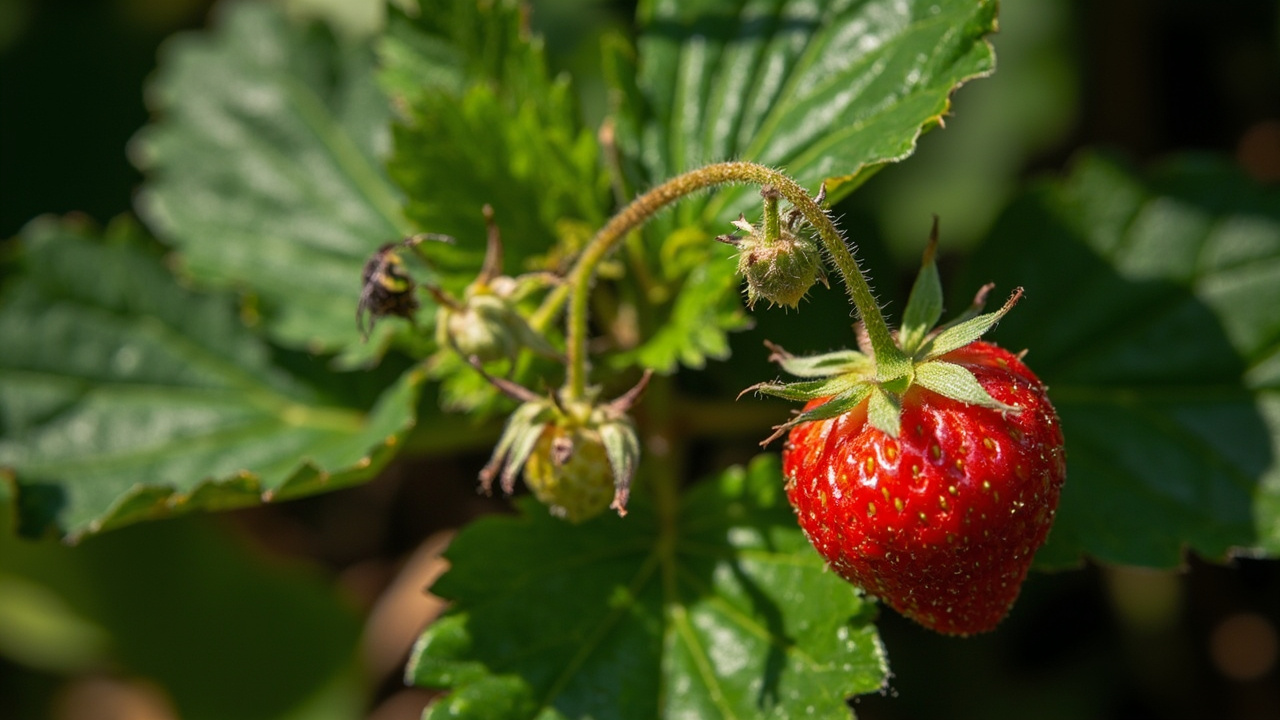
Japanese beetles produce the most visually dramatic damage of any strawberry pest, creating a feeding signature that is unmistakable once seen. Adults chew the leaf tissue between veins, leaving a lace-like or skeletonized appearance that can defoliate entire plants if the colony is large enough. The damage pattern is distinct from other chewing insects because Japanese beetles feed on the upper leaf surface, creating a characteristic open-work pattern where only the veins remain.
Adult beetles are metallic green with copper-brown wing covers, about half an inch long, and they feed continuously for six to eight weeks during early to mid-summer. Females lay eggs in the soil near feeding sites, and the resulting grubs feed on grass roots, causing additional damage to turf areas nearby. This two-stage lifecycle means that an active beetle infestation often indicates a future grubby problem in adjacent lawn areas.
Japanese beetles are generalist feeders that consume leaves from more than 300 plant species, not just strawberries. When beetle populations are high, they can strip entire strawberry beds bare within hours. The damage is most severe on young, tender leaves and expanding foliage. Mature leaves tolerate some feeding damage without significant yield impact, but repeated defoliation weakens plants and reduces fruit production.
Physical removal is the most effective control for light infestations. Shake beetles into a container of soapy water early in the morning when they are sluggish and less likely to fly away. For heavier infestations, neem oil or spinosad applications provide contact kill when applied directly to the insects. Floating row covers installed before beetle emergence prevent access entirely but must be removed during flowering to allow pollination by bees and other pollinators.
Strawberry Weevils , Ring Spots and Cropped Flowers
Strawberry weevils, also known as strawberry bud weevils, damage flower buds and affect fruit set, damage flower buds and fruit set or clipers, produce the most distinctive damage pattern of any strawberry pest. Female weevils cut a circular or semi-circular notch around the base of flower buds, removing the bud from its water supply. The damaged bud gradually wilts, turns brown, and hangs from the stem by a thin thread of remaining tissue. This ring spot or clipped bud symptom is the hallmark of strawberry weevil damage and is recognizable even when the tiny beetle itself cannot be seen.
The adult weevil is a small, dark beetle about one-eighth inch long with an elongated snout characteristic of true weevils. Adults are active in early spring when strawberry buds are forming, typically from April through May in most growing regions. The timing coincides with the critical bud development stage, making damage especially destructive to summer-bearing varieties that set flower buds in late summer for the following year crop.
Beyond the obvious clipped buds, weevil damage can be identified by examining the base of damaged flower stems. Small, circular feeding notches are visible where the female created the entry point for her egg-laying channel. Inside the damaged bud, you may find tiny, legless, cream-colored larvae that developed from eggs deposited by the female. These larvae feed on the developing seeds inside the bud before dropping to the soil to pupate.
Monitoring for weevil damage should begin in early spring when buds are forming. Inspect flower spikes daily for clipped buds, and count the percentage of damaged buds to determine whether treatment is necessary. Economic threshold levels vary by variety and growing conditions, but treatments are generally recommended when more than 10 to 15 percent of buds show clipping damage. Beneficial nematodes applied to the soil in spring target the overwintering larvae, and insecticidal sprays applied at bud break control adult weevils before they can lay eggs. Proper planting timing and spacing also help reduce weevil damage, as covered in our strawberry planting guide.
Slugs and Snails , Irregular Holes and Silver Trails
Slug and snail damage is easily distinguished from insect feeding by the irregular holes and silver trails from insect feeding patterns from insect feeding by the irregular shape of feeding holes and the presence of characteristic slime trails. Slugs consume leaf tissue in irregular patches, leaving ragged edges that follow the contour of the soft body. Unlike insect chewing, which produces clean cuts or skeletonization, slug feeding creates a distinctive eroded appearance with no consistent pattern.
The telltale sign of slug activity is the silvery slime trail left behind on leaves, stems, and fruit. This mucus trail glistens in moist conditions and is visible even after the slugs have moved to hiding places during daylight hours. Slugs are nocturnal feeders that emerge at dusk to consume foliage, making daytime inspection of slime trails the most reliable detection method. Snails produce similar feeding damage but leave visible shells and are active during both day and night.
Slug populations thrive in cool, moist conditions with dense ground cover that provides hiding places during the day. Strawberries grown in heavy shade, close to fences or structures, or in areas with poor air circulation are especially vulnerable. Mulch materials like straw and pine needles provide ideal slug habitat when they remain damp against the soil surface.
Control strategies focus on habitat modification and physical barriers. Remove hiding places such as boards, stones, and dense weed growth from around strawberry beds. Copper tape barriers around containers and raised beds create an electric shock that repels slugs. Diatomaceous earth applied around plant bases provides physical abrasion that deters soft-bodied pests but must be reapplied after rain. Beer traps buried at soil level attract and drown slugs but are more effective as monitoring tools than as population control methods.
Nematodes and Thrips , Root Damage and Fruit Stippling
Strawberry nematodes and thrips are among the most difficult pests to detect without propagation of suspicion pests to detect without propagation of suspicion pests to detect because they operate hidden from view. Root-knot nematodes infect the underground root system, causing characteristic galls and knots that disrupt water and nutrient uptake. Above-ground symptoms include stunted growth, yellowing leaves, and poor fruit production that mimics nutrient deficiency or drought stress. Unlike other pests, nematode damage cannot be diagnosed by examining leaves alone , soil sampling and microscopic analysis are required for confirmation.
Thrips damage appears primarily on fruit surfaces rather than leaves. Tiny thrips feed on developing berries, causing the fruit skin to become scarred, discolored, and misshapen. Affected berries may show bronze or silver stippling patterns, corky patches, or distorted growth that renders them unmarketable. The damage is most severe during warm, dry conditions when thrips populations explode. Leaf damage from thrips is less obvious and may appear as silvering or curling of young leaves.
Nematode infestations persist in soil for many years and are extremely difficult to eradicate once established. The most effective management strategy is prevention through the use of nematode-resistant varieties and certified disease-free planting stock. Solarization of infested beds during summer months can reduce nematode populations, and rotation to non-host crops for two to three years helps manage infestations in ground beds.
Thrips control relies on monitoring and cultural practices. Blue sticky traps placed near the soil surface detect adult thrips activity. Removing weed hosts around strawberry beds reduces thrips reservoirs. Insecticidal soaps and spinosad provide contact control but must be applied during evening hours when thrips are most active on flower surfaces. Row covers prevent thrips access but require careful timing to avoid trapping pests inside.
Scouting and Monitoring Strategies
Effective pest management begins with regular scouting, proper planting spacing, and container gardening practices and planting in well-drained soil that catches problems before they reach economic threshold levels. Weekly inspections during the growing season allow you to track pest populations and adjust management strategies based on current conditions rather than calendar-based spray schedules. Early detection gives you more treatment options and reduces the likelihood of crop damage.
Scouting should follow a systematic pattern that covers all areas of the planting. Start at the field edges where pests often enter, then work inward through the planting. Inspect both upper and lower leaf surfaces, flower buds, developing fruit, and the crown area. Use a hand lens or magnifying glass to examine small pests and early damage symptoms that are invisible to the naked eye.
Record your scouting observations in a simple log that tracks pest presence, damage severity, and environmental conditions. This record helps you identify patterns over time and make better decisions in future growing seasons. Note weather conditions, irrigation practices, and any treatments applied, as these factors influence pest population dynamics and treatment effectiveness.
Set action thresholds based on your growing goals and pest pressure levels. Commercial growers use economic thresholds that balance treatment costs against expected yield losses. Home gardeners may choose to treat at lower thresholds since aesthetic damage is often unacceptable. Knowing your threshold levels prevents unnecessary treatments while ensuring that serious infestations receive timely attention.
When to Treat and What Works
Not every pest sighting requires treatment. Many strawberry patches maintain acceptable pest levels through natural predator activity and favorable growing conditions. Treatment decisions should be based on damage severity, pest population trends, and the economic or aesthetic threshold you have established for your growing situation.
When treatment is necessary, consider compost amendments and soil pH adjustment, start with the least disruptive option and escalate only if control proves inadequate. Cultural controls such as row covers, sanitation, and habitat modification should always be tried first because they prevent problems rather than reacting to them. Physical controls like hand-picking, water sprays, and barriers provide immediate results with minimal ecosystem impact.
Biological controls offer sustainable pest management through natural enemies. Lady beetles, lacewings, predatory mites, and parasitic wasps consume large numbers of strawberry pests when provided with habitat and alternative food sources. Maintaining diverse plantings, minimizing broad-spectrum pesticide use, and providing water sources supports beneficial insect populations that provide ongoing pest suppression.
Chemical controls should be used as a last resort, especially during harvest season as a last resort and applied with precision to minimize harm to beneficial insects and the environment. Select products that target the specific pest identified through your scouting and damage assessment. Read and follow all label directions carefully, observing pre-harvest intervals and re-entry restrictions. Rotate between different chemical classes to prevent resistance development and maintain long-term treatment effectiveness.
Successful pest identification requires understanding dormancy patterns and overwintering pest stages and management requires patience, observation, and a willingness to learn from each growing season. By mastering the damage-pattern approach and following systematic scouting protocols, you can protect your strawberry plants from the most common pests while maintaining a healthy, productive garden ecosystem.