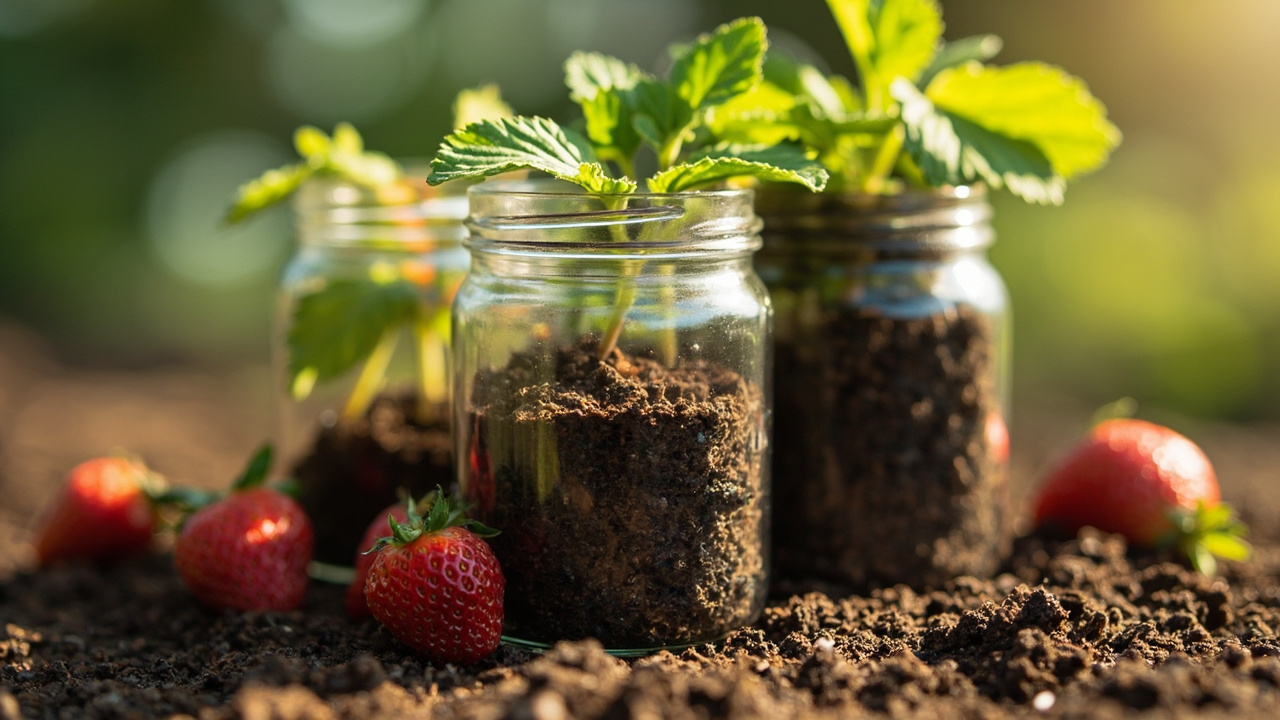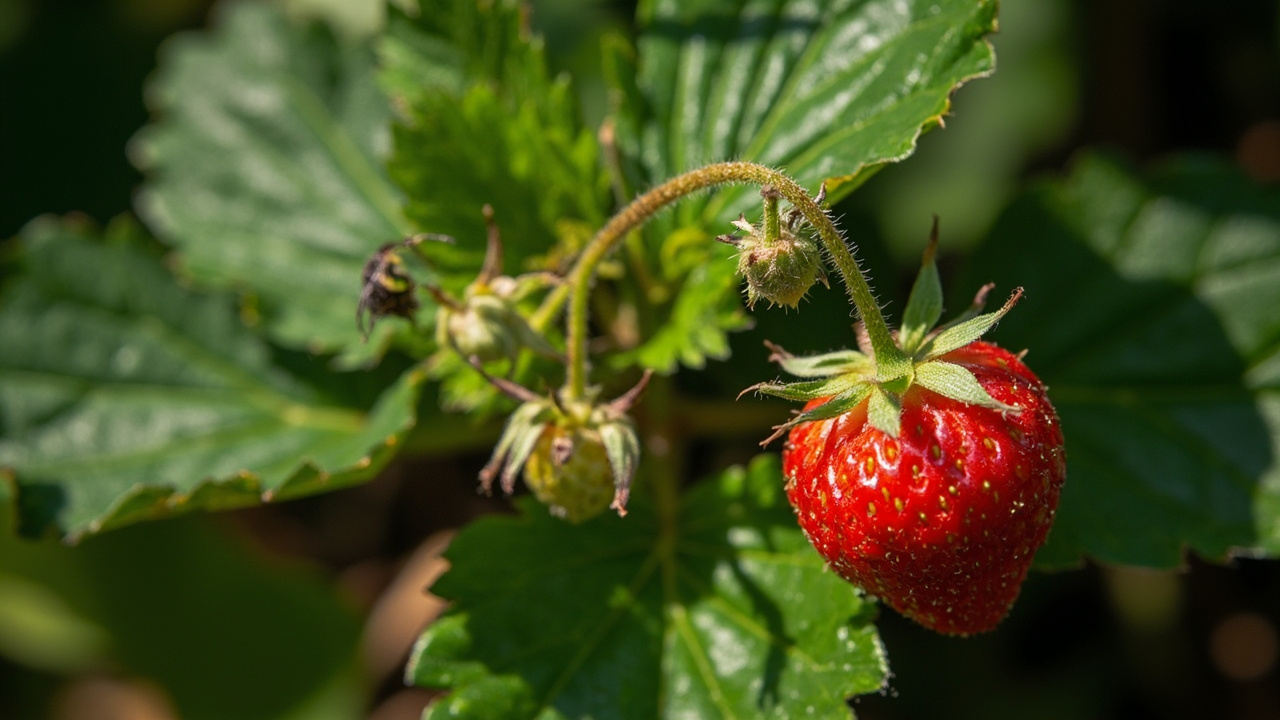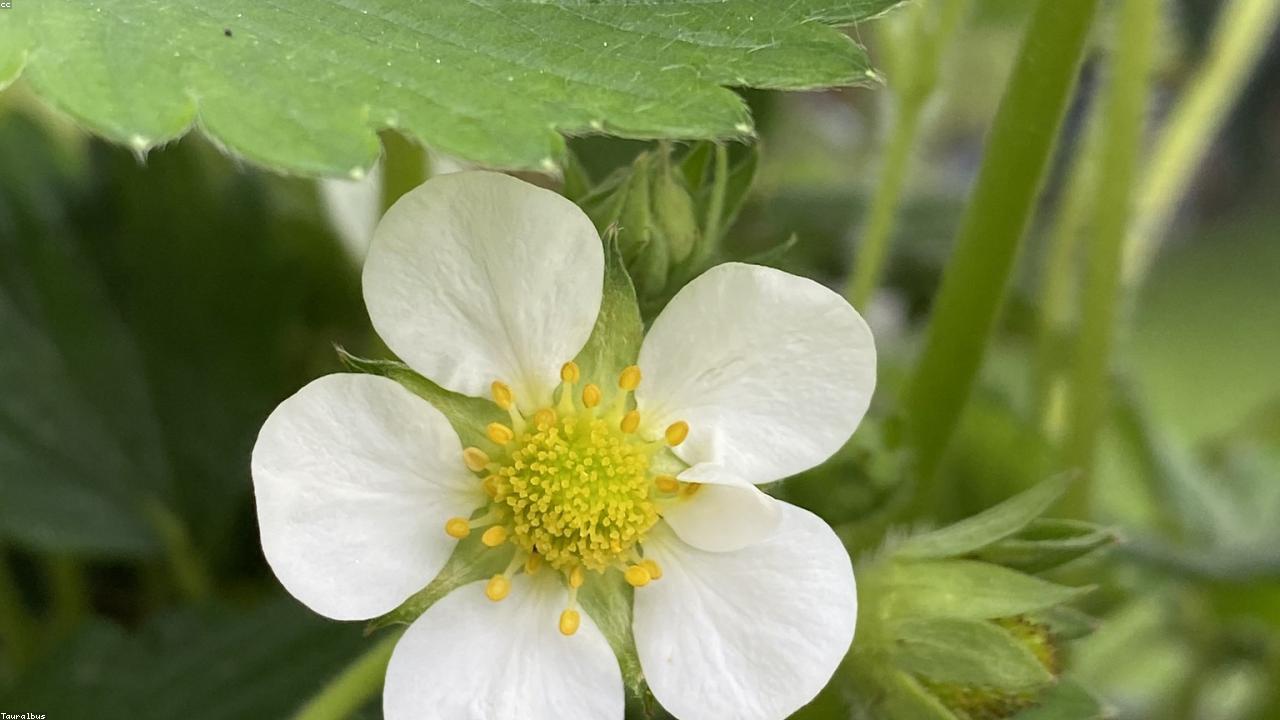

Strawberries have shallow roots that dry out fast and rot easily, which means the right watering rhythm changes with every growth stage and a fixed schedule almost always fails. The root mass sits almost entirely in the top 6 inches of soil. That shallow zone heats up quickly, dries out first, and waterlogs just as fast when drainage is poor. The plant is caught between drought stress at the surface and root rot just below it — a margin narrower than for almost any other fruit crop.
The trade-off at the heart of strawberry watering is size versus flavor. More water during fruit set produces larger berries with higher water content, which dilutes sugar concentration and yields fruit that looks impressive but tastes watery. Less water concentrates sugars but reduces yield. The skill is adjusting volume and frequency to match each stage, from establishment through fruiting and into winter dormancy. Sunlight drives the sugar production that watering then dilutes — the two are inseparable. For the full growing cycle including light and soil, see our strawberry care guide. For the companion piece on light, see our strawberry light requirements page.
Why Shallow Roots Make Watering Unforgiving
Strawberry roots are concentrated in the top 6 inches of soil, with the densest network in the upper 3 inches. This architecture evolved for life in forest margins where moisture from recent rain sits near the surface. In a garden, it means the root zone dries out in hours on a hot summer day rather than the days that deeper-rooted crops tolerate. The shallow zone is also the first to waterlog: when the top few inches stay saturated, oxygen is displaced and root function declines within 24 hours. Within 10 to 14 days, the characteristic symptoms appear — leaves that wilt despite wet soil, a soft crown, and a sour smell from anaerobic bacterial activity.
The wilting paradox confuses many growers. A plant with root rot wilts in full sun just like an underwatered plant because damaged roots cannot transport enough water to match transpiration. The difference is that the soil is wet, not dry. If leaves droop in afternoon shade but perk up in full sun, that is normal heat response. If they stay wilted in the morning and the soil feels damp an inch below the surface, you are looking at root rot, not drought. Adding more water accelerates the damage.
Strawberries need frequent, shallow watering rather than deep soakings. In peak summer this means daily for containers and every 2 to 3 days for well-mulched ground beds. The goal is keeping the top 3 to 4 inches consistently moist. Mulch with straw or pine needles to reduce evaporation by 30 to 50%.
Watering by Growth Stage
During establishment (first 2 to 3 weeks after planting bare-root crowns or transplants), keep the root zone evenly moist without drowning new roots. Water lightly every 1 to 2 days, targeting the soil around the crown. Expect visible new root growth within 5 to 7 days if the moisture balance is right. If the crown sits in a depression that collects water, redirect the flow or raise the planting spot.
During vegetative growth (late spring before flowering), the plant builds leaf area and sends out runners. Water needs increase as the canopy expands. Check soil every 2 days by pressing a finger 1 inch deep; water when the top inch feels dry but the layer below is still damp. This is where mulch pays for itself. For June-bearing, everbearing, and day-neutral varieties, the watering rhythm during this stage is similar — the differences emerge at fruit set.
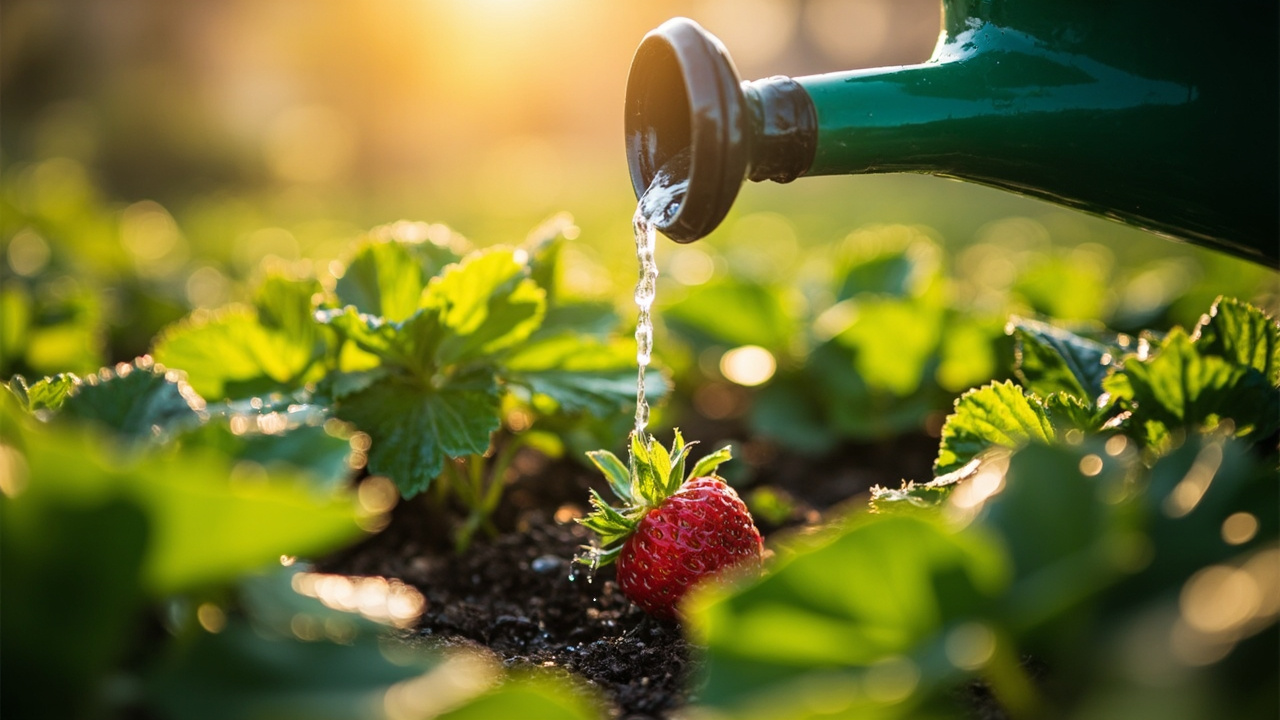
During fruit set and ripening under full sun, water demand peaks. Consistent moisture produces larger berries, but letting the top inch of soil dry slightly between waterings concentrates sugars without significantly reducing yield. Aim for 1 to 1.5 inches of water per week in split applications. Drip irrigation on a timer is ideal because it keeps foliage dry and reduces fungal disease. For day-neutral varieties that fruit continuously, maintain steady moisture throughout the extended harvest rather than pulsing between wet and dry. Adding compost to the soil before planting improves water retention during these peak-demand weeks.
After harvest, water needs drop sharply. Reduce watering to every 3 to 4 days, allowing the soil to dry slightly more between applications. For June-bearing varieties, this post-harvest window is when the plant initiates next year’s flower buds, and moderate water stress supports bud formation better than abundant moisture. Overwatering after harvest pushes vegetative growth at the expense of the following year’s crop. For container plants, continue light watering to prevent the root zone from drying completely during hot spells.
The Size-Flavor Trade-Off
During fruit development, the strawberry absorbs water through its roots and transports dissolved sugars from the leaves into the berry. If water uptake is high relative to sugar production (which depends on light and photosynthesis), the berry grows larger but sugar concentration drops. This is exactly what commercial growers optimize for — size and shipping durability — which is why grocery strawberries often taste watery despite their size.
Home growers have the opposite goal: maximum flavor in a berry eaten within hours of picking. The practical lever is controlled water stress during the 2 weeks before harvest. Let the top inch of soil dry to the point where leaves just begin to lose morning turgidity, then water lightly. The berries will be 10 to 15% smaller but noticeably sweeter. Severe stress, however, causes the plant to abort fruit entirely — the target is the narrow band between abundant moisture and moderate stress.
This trade-off is most visible in container growing, where limited soil volume makes moisture control both easier and more critical. A container strawberry given abundant water throughout fruiting produces berries 20 to 30% larger than the same variety grown with moderate stress, but the sugar content can be 2 to 3 Brix points lower. For preserving, baking, or eating fresh within hours, the stressed plant’s fruit is the better product. For more on how light interacts with this trade-off, see our strawberry light requirements page.
Container vs Ground Watering
Container strawberries need more frequent watering because the limited soil volume holds less water and heats up faster. A 12-inch pot in full sun can lose enough moisture to stress the plant in a single hot afternoon. In peak summer, container strawberries often need daily watering, and in extreme heat twice daily. Water at the soil surface, not over the foliage, and ensure the pot has adequate drain holes. Use a potting mix amended with 30% perlite for drainage and check that soil pH stays between 5.5 and 6.5 — heavy garden soil compacts, waterlogs, and often runs too alkaline in containers.
Ground beds hold more moisture and buffer temperature swings, extending the interval to every 2 to 3 days. Drip irrigation on a timer delivers water slowly over 20 to 30 minutes, penetrating 4 to 6 inches without pooling. Overhead sprinklers waste water and wet the foliage, inviting fungal disease. If sprinklers are your only option, run them early in the morning so foliage dries quickly in the direct sun.
Mulch changes the equation for both setups. A 2-inch layer of straw or pine needles reduces surface evaporation by roughly half and keeps fruit clean by preventing soil splash. In containers, even a 1-inch layer makes a measurable difference. Avoid fresh wood chips around strawberries: as they decompose, they tie up nitrogen and can starve the plant during the critical fruit set window. For spacing guidelines and variety-specific watering notes, see our strawberry varieties guide.
Root Rot Diagnosis and Rescue
Root rot is the most common killer of home-grown strawberries, caused by overwatering or poor drainage. Phytophthora and Pythium are present in most soils at low levels but only become destructive when saturated soil gives them the oxygen-free environment they need to multiply. Fix the drainage, and the pathogen stays harmless.
The early symptoms are easy to miss. The oldest leaves yellow and curl, which many interpret as nitrogen deficiency and respond to with more fertilizer. A few days later, younger leaves wilt in afternoon heat even though the soil is damp. By the time the crown turns reddish-brown, more than half the root system is usually dead. The diagnostic: gently dig around the base and examine the roots. Healthy roots are white or pale tan and firm. Rotted roots are dark brown or black, soft, and slip apart easily. If more than 30% are dark, the plant is in active decline.
The rescue protocol: stop watering immediately. For containers, remove from the pot, shake off saturated soil, trim dark roots with clean scissors, and repot in fresh, well-draining mix. For in-ground plants, mound soil around the bed edges to redirect surface water. Do not fertilize — wait until healthy white roots reappear, typically 10 to 14 days later. For help diagnosing other causes of yellowing including chlorosis and etiolation, see our strawberry leaf problems page.
Winter Watering and Dormancy
Dormant strawberries need far less water than active plants, but they need some. The crown and roots remain alive through winter, respiring at a low rate. In regions with regular winter rain, supplemental watering is unnecessary. In dry winter climates or for containers sheltered from rain, monthly light watering prevents the roots from desiccating completely.
The winter rule: water only when the top 2 inches of soil are completely dry, and then water lightly — just enough to dampen the root zone, not saturate it. Cold, wet soil is more dangerous than cold, dry soil because low temperature plus high moisture creates ideal conditions for fungal crown rot. If your strawberries are mulched for winter protection, check under the mulch before watering.
Container strawberries are the exception. Because their roots are exposed to air on all sides, they dry out faster and are more vulnerable to freeze-thaw damage. In regions where winter temperatures drop below 20°F (-7°C), move containers against a sheltered wall and check soil moisture every 2 to 3 weeks. Water only on days above freezing, at midday so moisture absorbs before nightfall. For overwintering guidance, propagation methods, and spring wake-up timing, see our strawberry care guide and our strawberry varieties guide. For indoor growing under a grow light, the same winter watering rules apply — check soil monthly and water lightly when dry.
From PDF to Excel in one click
Forget retyping line by line. Upload any bank statement, get a spreadsheet you can actually use. Your files are never stored, and you can test the converter with 3 free conversions.