Brown leaves on a gooseberry bush in July mean something very different from brown leaves in October, and the treatment for each is completely different. Identify the pattern before you reach for the spray bottle.
How to read the browning pattern — a four-cause diagnostic
Four causes produce browning on gooseberry leaves, and each has a signature pattern. Leaf spot starts as small dark spots on the lowest leaves and spreads upward through the summer. Sunscald appears as pale, papery patches on outer leaves exposed to direct afternoon sun. Nutrient deficiency shows as marginal browning on older leaves, working upward from the base. Autumn senescence colours the entire bush evenly from October onward.
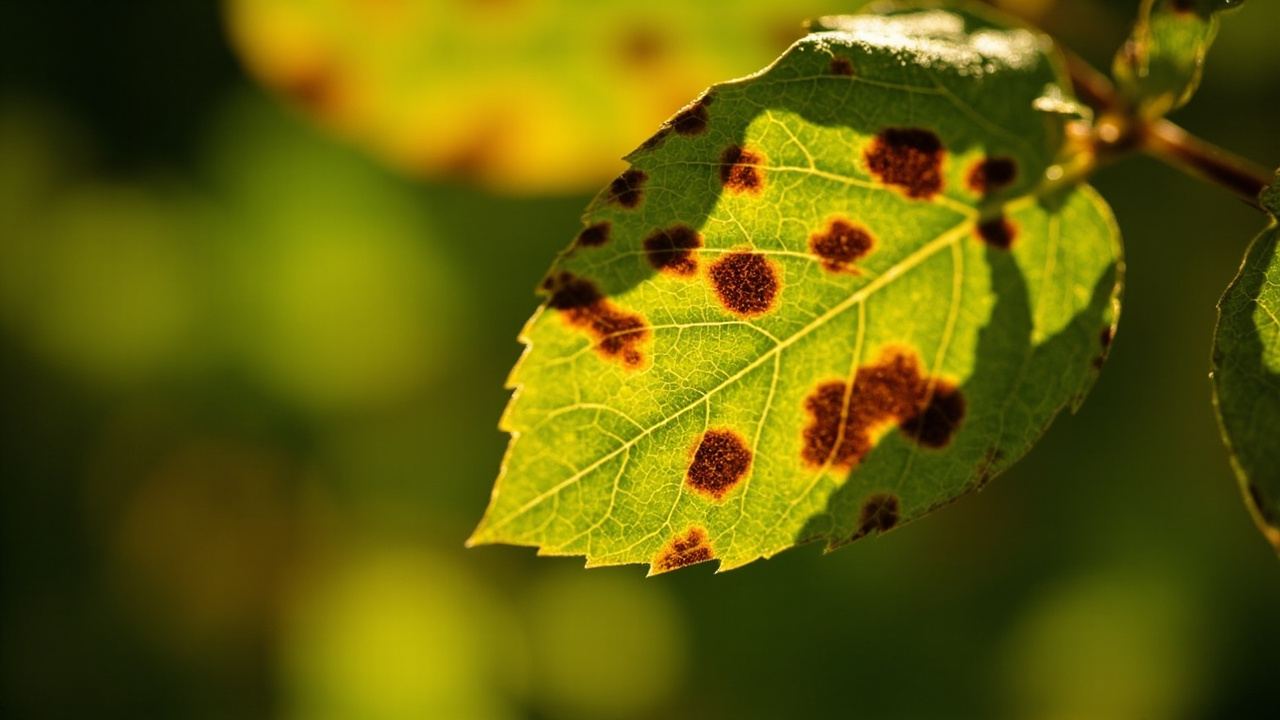
The first diagnostic question is which leaves are affected. Lower interior foliage points to leaf spot. Outer exposed leaves point to sunscald. Older basal leaves point to nutrient deficiency. The whole bush simultaneously points to seasonal change. The second question is whether the browning is spreading week by week — progressive spread indicates leaf spot or nutrient deficiency; stable or predictable patterns indicate sunscald or senescence. A hand lens or magnifying glass helps: leaf spot shows raised fungal fruiting bodies in the centre of each spot, while sunscald shows no surface structure at all. If you see tiny green caterpillars along with the browning, you may be dealing with gooseberry sawfly defoliation rather than any of the four causes here — check leaf undersides for eggs or larvae before treating.
Leaf spot (Diplocarpon) — the most common cause
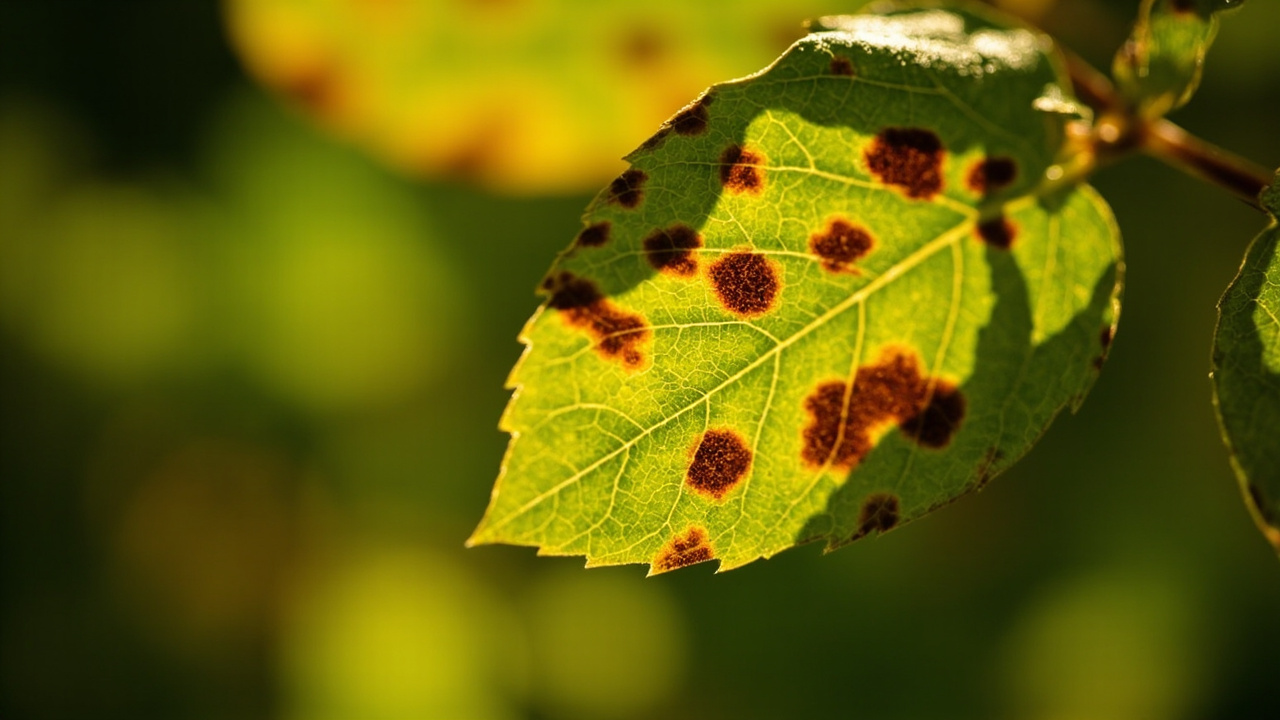
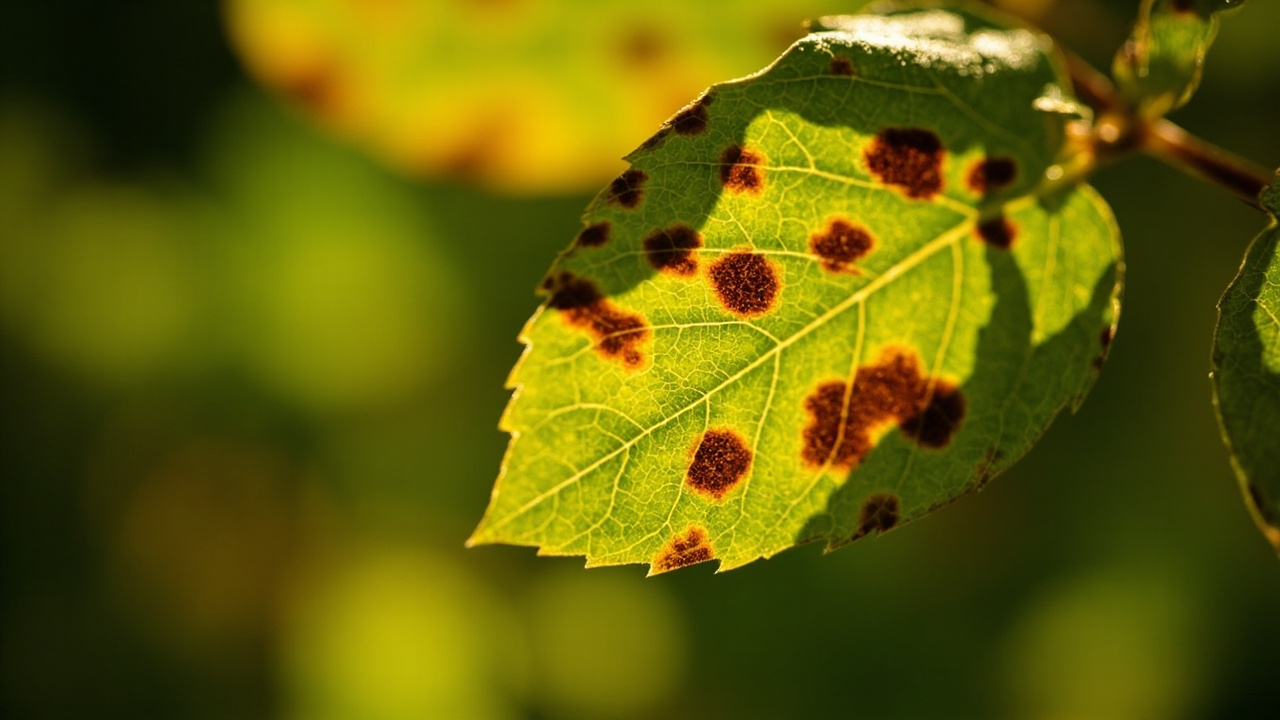
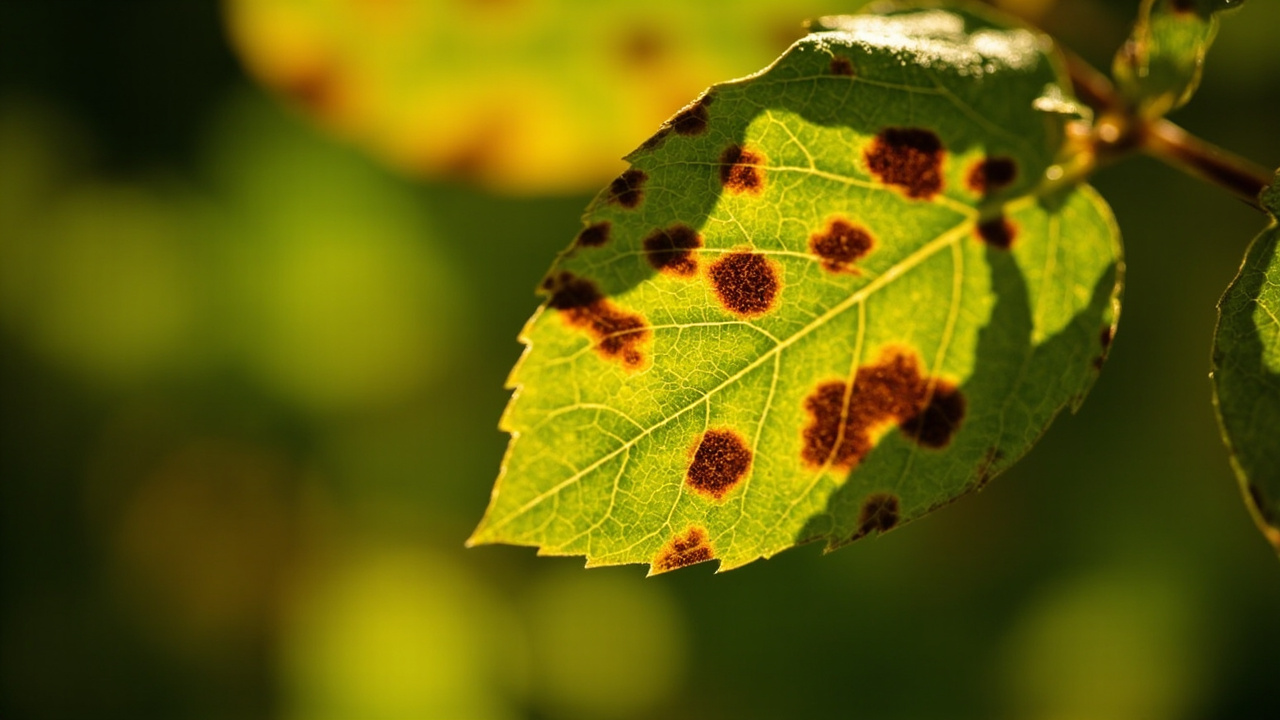
Leaf spot is the disease most likely to cause significant defoliation on gooseberry bushes. It appears as dark brown to black spots 2-5mm across, often surrounded by a pale yellow halo. The infection starts on the lowest leaves in early summer and spreads upward as rain splash carries fungal spores from fallen leaves on the soil surface onto new foliage.
By August, a heavily affected bush can lose 50-70% of its leaves. This level of defoliation weakens the bush significantly — the plant cannot photosynthesise enough to build fruit buds for the following year, and the open canopy invites secondary fungal infections through the stressed tissue. A bush defoliated two or three years in a row enters a visible decline: canes become spindly, fruit set drops, and the bush becomes increasingly vulnerable to cane blight and root rot. Recovery is possible but requires two to three seasons of improved management.
Treatment focuses on breaking the spore cycle. Remove and destroy all fallen leaves immediately — do not compost them, as the fungus survives in leaf debris through winter. Improve airflow through the bush by pruning the centre open, which reduces the humid microclimate the fungus needs to germinate. Apply a copper-based fungicide at bud break the following spring to protect new growth before spores activate.
Harvest timing affects the bush’s ability to resist leaf spot the following year. A bush stripped of fruit early in the season retains healthy foliage longer and enters dormancy with greater energy reserves. Late-harvested fruit that stays on the cane into August diverts resources away from bud formation and weakens the bush’s overall disease resistance.
Prevention starts with autumn hygiene. Mulch heavily around the bush after leaf drop to bury overwintering spores and reduce rain splash the following spring. A 7-10cm layer of wood chip or composted bark across the root zone is far more effective than leaving bare soil, where spores sit ready to launch onto new growth at the first spring rain. Cultivars vary in resistance — Invicta and Captivator both show notably lower infection rates than susceptible varieties like Careless and Leveller. If you are replacing a badly affected bush, choosing a resistant cultivar is the single most effective long-term decision. Powdery mildew often follows leaf spot defoliation as a secondary infection, so managing one disease helps prevent the other. American gooseberry mildew is a distinct disease that causes white powdery patches on young cane tips and leaves, thriving in the same humid conditions that favour leaf spot. Pruning for an open goblet shape with good airflow is the primary defence against both fungal infections. European cultivars are more susceptible, so choosing Invicta or Captivator gives genetic resistance that no spray can match.
Sunscald — heat damage on exposed foliage
Sunscald is environmental damage, not disease, and it requires a completely different response. The affected leaves develop pale, papery, tan-coloured patches — usually on the south and west sides of the bush where afternoon sun is most intense. The damaged tissue becomes thin and brittle, eventually cracking or dropping, but the damage does not spread to shaded leaves.
European gooseberry cultivars (Ribes uva-crispum) are more susceptible than American varieties because their thinner leaf cuticle provides less natural protection against UV radiation and heat. If you are growing Hinnonmaki Red, Careless, or Leveller in a site with full afternoon sun, sunscald is almost inevitable by midsummer without intervention.
The fix is environmental, not chemical. Provide afternoon shade using 30% shade cloth on a simple frame, reposition container bushes to an east-facing location, or plant a companion shrub to the west that casts natural shade during the hottest part of the day. These measures stop new damage immediately, though already-scorched leaves will not recover.
New growth produced after shade is provided will be healthy and full-coloured. The bush redirects energy to protected foliage, and fruit production on shaded canes is often higher than on sunscald-damaged canes because the leaves are functioning at full capacity. Water-stressed bushes are more susceptible to sunscald, so maintaining consistent soil moisture through the drip line during hot spells provides a secondary layer of protection against both heat damage and the cane blight that follows it.
Nutrient deficiency — potassium and magnesium shortages
Potassium deficiency announces itself through marginal browning on older leaves. The leaf edges turn brown and crispy while the centre stays green, and the pattern progresses from the bottom of the bush upward as the plant redirects limited potassium to new growth. By midsummer, the lower half of the bush can look scorched even though the cause is entirely nutritional.
Magnesium deficiency produces a different signature: interveinal browning where the tissue between leaf veins turns brown while the veins themselves remain green. This creates a distinctive herringbone pattern on older leaves that is easy to distinguish from leaf spot once you know to look for it.
Both deficiencies are common in sandy soils and container growing, where nutrients leach out with every watering. Soil pH above 7.0 compounds the problem by chemically locking potassium in forms the roots cannot absorb, even when adequate potassium is present in the soil. Testing pH before feeding saves weeks of misdiagnosis.
Treatment is straightforward once identified. Apply sulphate of potash at 30g per square metre around the drip line in early spring for potassium deficiency. For magnesium, dissolve 20g of Epsom salts (magnesium sulphate) in 10 litres of water and apply as a foliar spray every 2 weeks until new growth shows healthy colour. Correct the underlying soil pH to 6.0-6.5 to prevent recurrence. A soil test before feeding removes the guesswork — applying potassium to soil that already has adequate levels wastes money and can lock out other nutrients. Annual mulching with compost or well-rotted manure maintains the organic matter that supports healthy root zone function and reduces the leaching that drives deficiency in the first place.
Autumn senescence — natural leaf drop is not a problem
Gooseberries are fully deciduous bushes, and browning leaf drop in October through November is normal senescence, not a disease or deficiency. The pattern is distinctive: the entire bush colours evenly from green through yellow to brown, leaves drop cleanly at the petiole, and the process completes within 2-3 weeks.
No treatment is needed for autumn senescence. Collect and dispose of fallen leaves to reduce the fungal spore load that carries over to the following spring — this single practice reduces leaf spot pressure significantly without any chemical input. This is also the ideal time to apply a thick mulch of compost or wood chip around the drip line, which protects the root zone through winter and provides the organic matter that supports healthy bud break in spring.
European gooseberries (Ribes uva-crispum) and American gooseberries (Ribes hirtellum) differ in their susceptibility to browning disorders. European cultivars with their thinner leaf cuticle are more vulnerable to sunscald and powdery mildew, while American varieties like Captivator and Pixwell show stronger resistance to both leaf spot and cane blight. If your garden has a history of Ribes disease problems, starting with an American cultivar reduces the browning pressure significantly from the first growing season.
Browning before September is never normal on a gooseberry bush. If you see progressive browning in June, July, or August, use the diagnostic framework above to identify the cause and treat accordingly. The earlier you intervene, the less structural damage the bush sustains and the faster it recovers for the following season. Keep a simple log of when browning first appeared, which leaves were affected, and what treatment you applied — this record makes diagnosis faster in subsequent years and helps distinguish a recurring problem from a one-off event.
Soil structure around the root zone also influences disease susceptibility. Heavy clay soils that retain moisture create humid conditions at the soil surface that favour fungal spore germination, while sandy soils that drain freely reduce the risk. Incorporating organic matter such as well-rotted compost or wood chip into the planting area improves both drainage and soil structure, creating an environment where the root zone stays healthy and the cane bases stay dry.
For pruning to improve airflow and reduce disease pressure, see the gooseberry pruning guide. For soil pH testing, fertilisation, and light requirements, see the gooseberry light and soil requirements page. For the full cultivation lifecycle including planting and harvesting, see the complete gooseberry plant care guide.