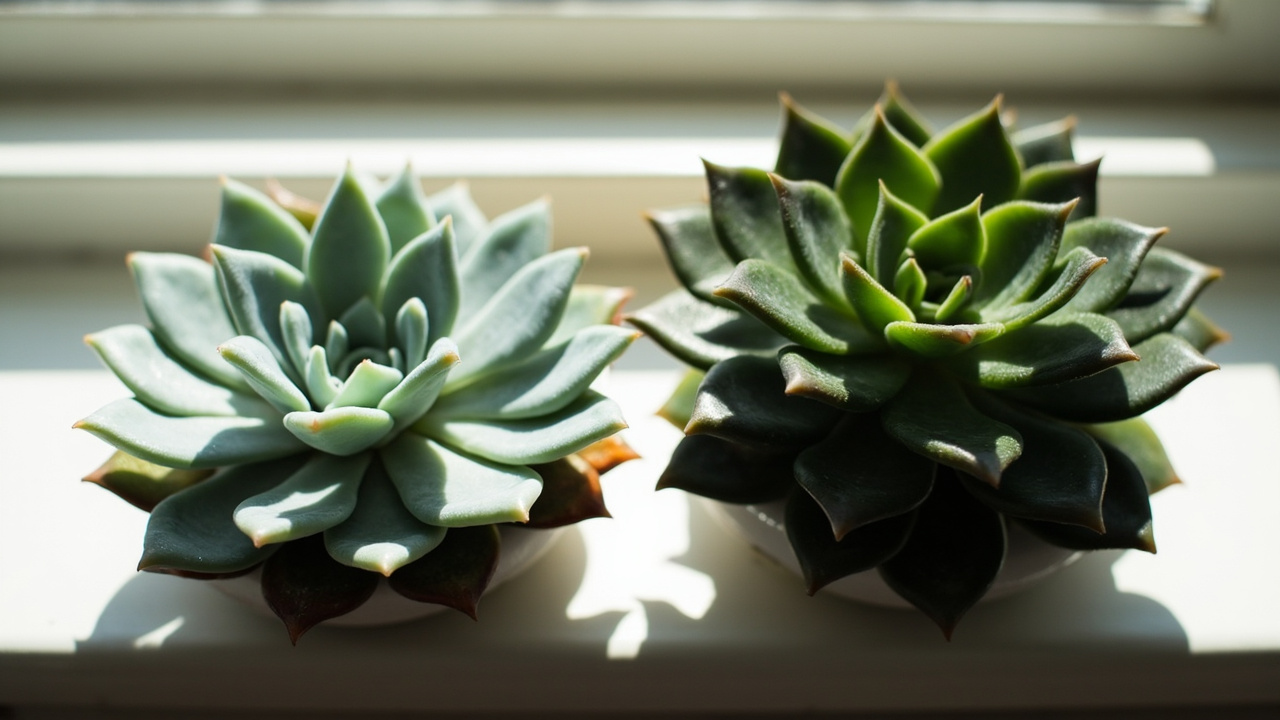

Echeveria and Haworthia are the two rosette succulents every collector confuses at a nursery, and the confusion costs plants because the care that saves one genus kills the other.
The shared silhouette — a flat, stemless rosette of fleshy leaves arranged in a tight spiral — is the trap. Both plants look like a sculpted stone flower, both fit on a windowsill, both ask for “bright indirect light.” Buy one labeled as the other and the care you read online is not just wrong, it is the inverse of what the plant needs.
This is the article to read before the next garden-center trip. The two genera look similar at a glance, fail in opposite directions under bad care, and reward different handling. Three diagnostic tests separate them in seconds, and the care that follows each diagnosis is not interchangeable. By the end you will know which one you are buying, why it matters, and what to do when you bring it home.
Why the Confusion Costs Plants: Two Genera, One Shape, Different Failure Modes
Two rosette succulents can look alike and still fail in opposite directions because their water-storage strategies evolved differently. Echeveria is a New World genus (Mexico and central America) that stores water in plump, waxy leaves with a thick outer cuticle; it tolerates bright sun and dry air, and it punishes the grower who keeps the soil moist. The rosette itself follows a tight decussation pattern — each leaf pair sits at right angles to the one below — which is what gives the Echeveria its sculpted symmetry. Haworthia is a South African genus that evolved under scrub brush and rocky shade; it stores water in leaves that are partly translucent at the tips, and it punishes the grower who keeps the soil dry.
That is the inversion. The care that saves a struggling Echeveria — less water, more sun, a gritty mineral mix — is the care that kills a struggling Haworthia. The care that saves a Haworthia — a touch more moisture during the summer growing season, protection from harsh afternoon sun — is the care that rots an Echeveria.
So mistaking the two at a garden center is not a cosmetic error. The plant you bring home will read your care as the wrong care, and the failure mode it lands in depends on which genus it actually is. You will not see this from the rosette silhouette. You will see it from the leaf surface, the leaf tip, and (eventually) the flower stalk.
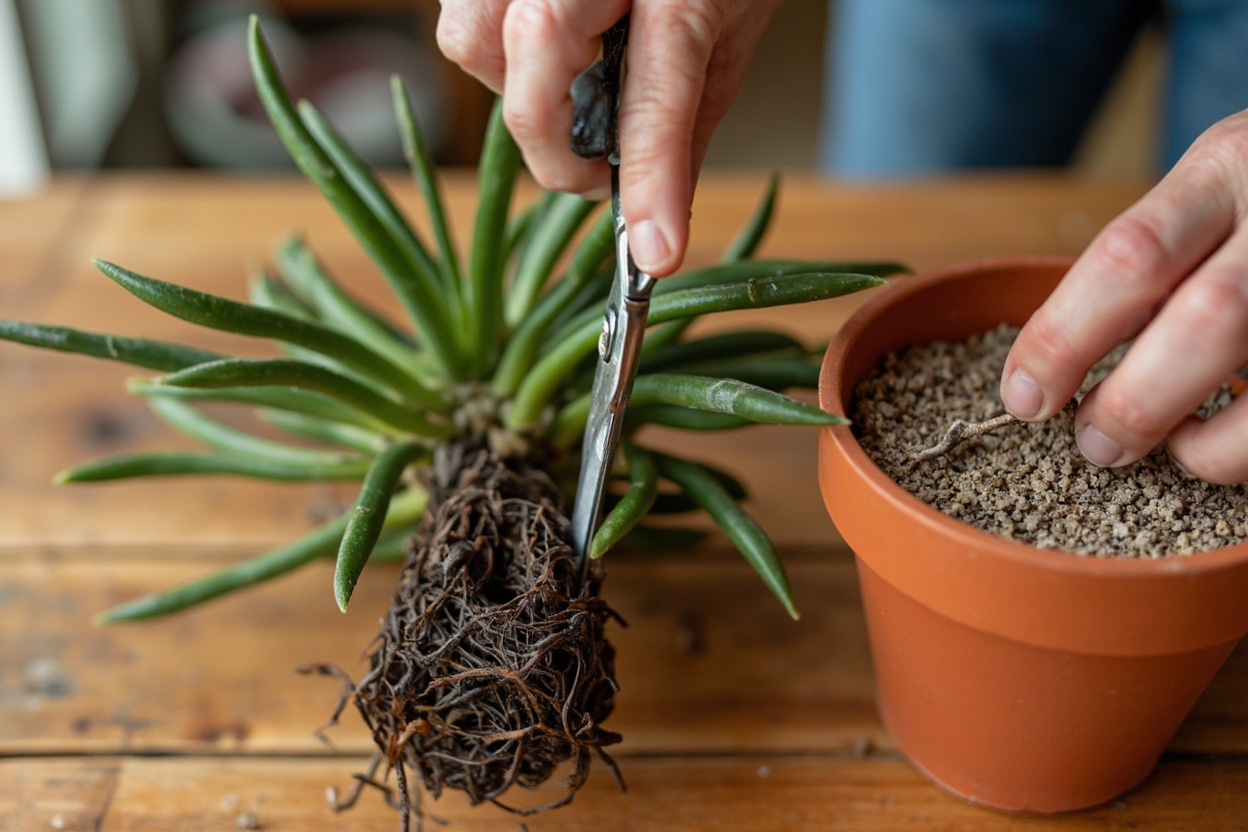
Both genera are also vulnerable to the same set of common failure modes that come from treating them like ordinary tropical houseplants. The fibrous root system of an Echeveria will rot in a peat-rich mix within a single winter if the soil stays damp, and the same is true for Haworthia once temperatures drop below 50°F and the plant enters dormancy. Dormancy is the silent killer here: the plant is alive but not transpiring, so water sitting in the rootball goes nowhere, and the lower leaves turn to mush before the grower notices. Repotting into a fresh gritty mix every two to three years is the cleanest way to reset the soil before this compounds, and it is also the right moment to inspect the roots for early signs of root rot — blackened, soft tips rather than the firm white they should be. Water stress shows up differently in each genus but for the same reason: the soil dried past the point where the fibrous roots could rehydrate before the next watering, leaving the plant in suspended animation. The remedy in both cases is a deep soak in a free-draining mix, followed by a return to the soak-and-dry rhythm the original care card assumed you were running.
Three Tests That Separate Them at a Glance: Leaf Surface, Leaf Tip, Flower Stalk
Before learning the diagnostic tests, set the right expectation. None of the three tests requires a magnifier, a grow light, or a botanical key. All three are visible in a hand-held plant in a nursery aisle. Run them in order — surface first, tip second, flower third — and the question is answered before you reach the register.
Each test maps to a different part of the plant, which is why the order matters. The leaf surface test is the most decisive and the easiest to run on a small plant. The leaf-tip test resolves the cases where two plants have similar leaves. The flower stalk is the backstop for mature plants where the other two tests are inconclusive, because the inflorescence is unambiguous even when the rosette is not.
What you are looking for across all three tests is one of two patterns: a powdery, opaque coating (Echeveria) or a glossy, sometimes translucent surface (Haworthia). That is the through-line that ties the tests together and the reason the care diverges.
The Leaf Surface Test: Farina Powder vs Translucent Windows
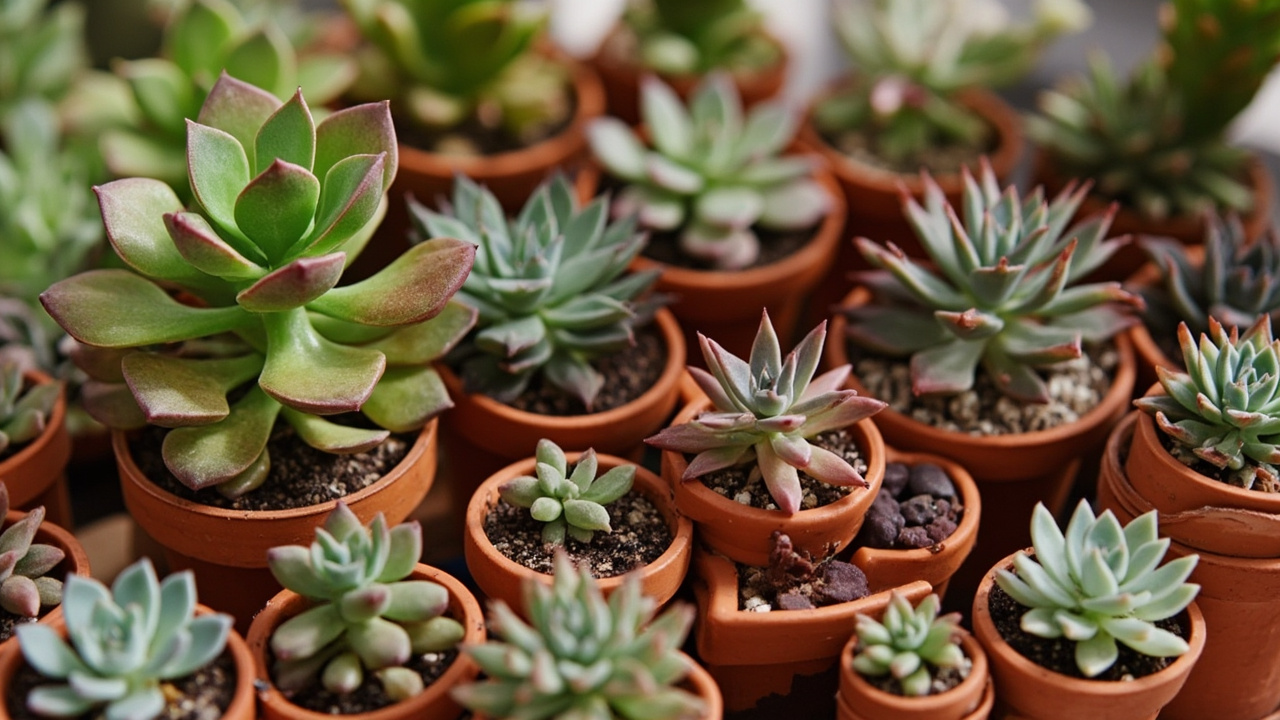
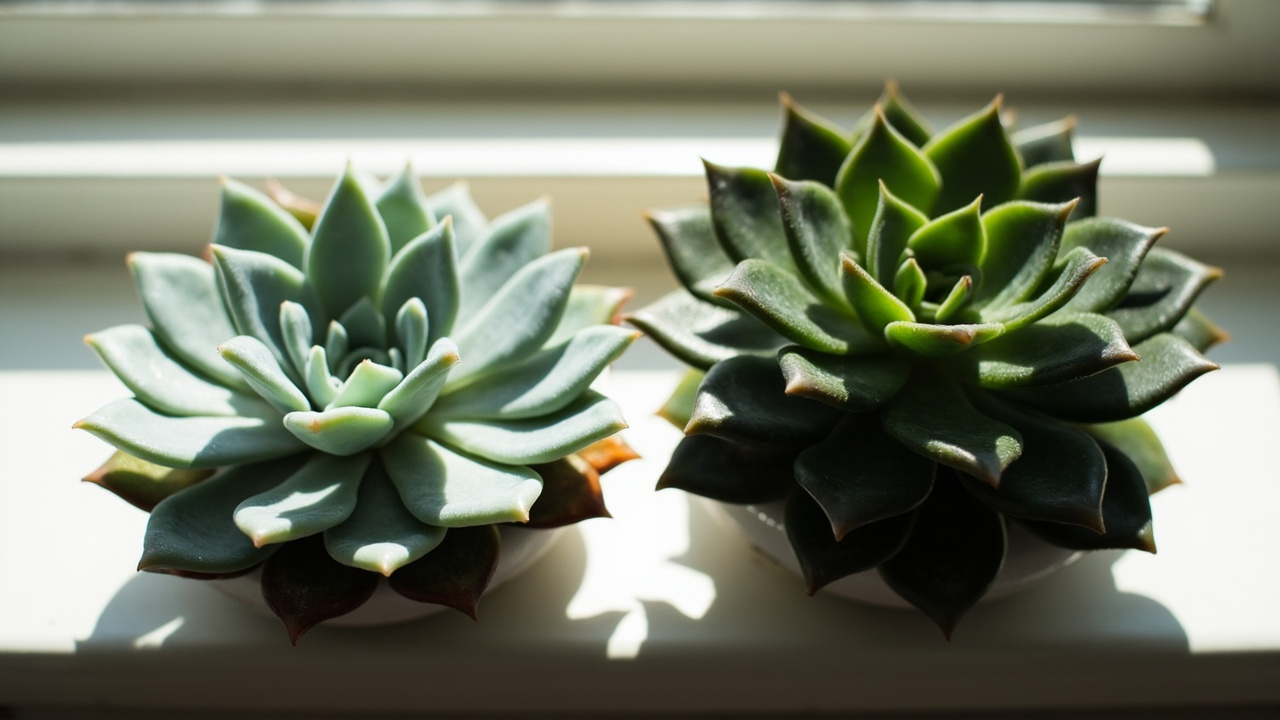
Echeveria leaves are coated in farina — a powdery, waxy, water-repellent layer that looks like the bloom on a grape or a dusty fingerprint on a dark car. Farina protects the leaf from intense sun by reflecting a fraction of the light and from fungal infection by shedding water before it pools on the surface. It is also fragile: a thumbprint on the leaf does not polish off, it scars the plant for the rest of that leaf’s life, and the farina takes six to twelve months to regenerate from the next leaf out.
Haworthia leaves have no farina. Their surface is glossy, often with a window — a translucent area at the leaf tip, sometimes extending most of the way down the leaf, that lets sunlight penetrate into the interior tissue where the chloroplasts are arranged to make the most of low light. The window is the diagnostic feature you are looking for, and you can see it by holding the leaf up to a light source or angling it toward a window: the tip will glow slightly, like a small frosted panel.
The functional difference is what makes the care diverge. Farina is a sunscreen — the Echeveria wants direct sun, and the farina is what keeps the leaf from burning. The translucent window is a light-gathering adaptation — the Haworthia evolved to live under rocks and scrub, where direct sun would scorch the leaf but a wide-angled window catches the dappled light filtering through. So when the Echeveria goes pale and bleached, it usually means too little sun; when the Haworthia goes brown and crispy at the tip, it usually means too much.
Two rules follow from the surface test. Do not touch an Echeveria leaf with bare hands if you can avoid it — pick it up by the pot or the rootball, not the rosette. And do not “clean” a Haworthia with a damp cloth — the window is the feature, not the dust.
The Leaf Tip Test: Pointed Echeveria vs Rounded Haworthia with Teeth
The second test reads the leaf tip, which differs in shape between the two genera and points to a different cold-tolerance story. Echeveria leaves taper to a soft point — sometimes a fine, almost translucent mucro (a small extension at the apex), but usually a gently tapered tip with no teeth, no spikes, and no marginal roughness. The whole leaf reads as smooth-edged and uniformly colored.
Haworthia leaves are different in two ways. First, the tip is often truncated or rounded rather than pointed — the leaf looks chopped off at the end, not tapered. Second, many Haworthia species carry teeth, tubercles, or small spines along the leaf margins and keel, which are absent on a smooth Echeveria. Haworthia cooperi has almost no teeth; Haworthia limifolia carries raised ridges; Haworthia truncata has the squared-off leaf tips that give the genus its name. The teeth are a stress response to grazing in the wild, but in cultivation they are a stable identification feature.
The cold-tolerance story is the practical payoff of the leaf-tip test. Both genera tolerate cool nights down to about 50°F (10°C), but the soft-tipped Echeveria is more sensitive to frost — a hard freeze ruptures the leaf cells and the plant collapses into mush within hours. The Haworthia, especially the South African high-altitude species, can ride out brief frosts near 32°F (0°C) by withdrawing water from the leaves and going semi-dormant. If your windowsill gets a winter draft or your nights drop below 45°F (7°C), Haworthia is the safer bet.
So when two plants in front of you both have pointed tips and no teeth, the leaf-tip test has not given you a verdict. Move to the third test, or re-check the leaf surface — the surface test is more decisive than the tip test in the smooth-leaved overlap zone.
The Flower Stalk Test: Arching Inflorescence vs Tubular Lateral Flower
Mature Echeveria and Haworthia flower once a year, and the inflorescence is the unambiguous backstop when the rosette tests are inconclusive. Echeveria sends up a single tall, arching flower stalk from the center of the rosette — sometimes called a “hen’s neck” because of the curve — with bell-shaped or tubular flowers hanging along the upper half. The flowers are usually orange, pink, red, or yellow, and they appear from late spring into summer. After flowering, the rosette that produced the stalk usually dies (Echeveria is monocarpic — a once-flowering rosette), but the plant survives through its offsets.
Haworthia flowers are smaller and structurally different. They emerge laterally, from between the leaves rather than from the rosette center, and the inflorescence is a thin wiry stalk with small, tubular, two-lipped flowers arranged along its length. The flowers are usually white or pale green, with brown or green stripes, and they appear in late summer or fall. Haworthia is not monocarpic — the rosette that flowers keeps living, and offsets continue to grow around it.
The functional difference matters for the patient reader who waits for a flower. If you see an arching, central, orange-pink bell-flower stalk in summer, you have an Echeveria. If you see a thin, lateral, white tubular flower in fall, you have a Haworthia. There are no exceptions in the commonly cultivated species.
Most readers will not wait for a flower before buying, which is why the surface test is the highest-leverage test and the tip test is the second. The flower test is for the collector who bought a plant unlabeled or who is propagating offsets whose parent they cannot remember.
Side-by-Side Care: Four Axes That Change When You Switch Genus
Once you know which genus you have, the care that follows is not interchangeable along four axes. Light, water, soil, and propagation each shift when you move from Echeveria to Haworthia, and the shifts are large enough that the same care routine will lose one or the other plant within a season.
Light is the first axis. Echeveria wants the brightest window in your house — south- or west-facing in the northern hemisphere, with three to five hours of direct sun if you can give it. Under low light, an Echeveria etiolates: the rosette flattens, the leaves stretch apart, and the plant reaches for a sun source it cannot find. Etiolation takes two to three weeks to show and several months to reverse under a grow light. Haworthia wants bright light too, but indirect — east-facing is ideal, or a south-facing window with a sheer curtain. Direct afternoon sun burns the leaf windows and turns the tip brown.
Water is the second axis. Echeveria follows the soak-and-dry method strictly: water thoroughly until it runs from the drain holes, then let the soil dry completely before the next watering. In winter, withhold water almost entirely — the plant is dormant and a waterlogged, cold soil will rot the roots within weeks, and the lower leaves will wilt and fold before the grower notices. Haworthia also wants the soil to dry between waterings, but it tolerates (and during summer actively prefers) a touch more moisture — the leaf windows visibly plump up within 24 to 48 hours of a deep soak, and the plant will forgive a missed watering much more readily than an Echeveria will. Both genera show sun stress differently: Echeveria blushes pink or red at the leaf margins, which is the desired response; Haworthia browns at the leaf tip, which is a sign to pull it back from the window. The growing medium matters as much as the watering rhythm — a fast-draining mineral substrate is what makes the dry-down possible, and a peat-based potting mix will undo every other care decision you make.
Soil is the third axis. Both genera want a gritty, well-draining mix, but the ratio differs. Echeveria thrives in a high-mineral mix — roughly five parts pumice or scoria, one part pine bark fines, one part coarse sand. The mix should drain in seconds and never hold standing water; a thin top dressing of scoria over the surface keeps the lower leaves off damp substrate and lets the rosette sit compact and symmetrical. Haworthia is comfortable in a similar mix but tolerates a touch more organic matter — roughly four parts mineral, two parts pine bark. The difference is small but real: a Haworthia in pure-mineral soil will survive but grow slowly; an Echeveria in a peat-rich mix will rot.
Propagation is the fourth axis, and this is where the two genera diverge most. Echeveria leaf cuttings root reliably: a healthy leaf pulled cleanly from the mother plant will callus over and produce a tiny new rosette from the cut end within four to six weeks. Haworthia leaf cuttings are slower and less reliable — most leaves will callus but fail to root, because the Haworthia leaf’s water storage makes it harder to strike a balance between drying and rotting. For Haworthia, offset division is the more reliable method.
Across all four axes, the through-line is the same: Echeveria evolved for sun and dry, Haworthia evolved for filtered light and damp-but-draining. Match the care to the genus, not to “succulents in general,” and both plants will thrive.
A few practical notes tie the four axes together. Plant both genera in terracotta rather than plastic whenever you can; the porous wall pulls moisture out of the rootball and speeds the dry-down that Echeveria needs, while still giving Haworthia the airflow it wants around the crown. Top dress the soil with a thin layer of pumice or scoria after watering to keep the leaves off damp substrate, which is the most common trigger for stem rot and the leaf rot you see at the base of the rosette. Skip fertilizer entirely during the winter dormancy period — both genera slow their growth below 50°F, and a moist cold soil with nutrients still dissolving into it will burn the roots faster than underwatering ever will. If you see signs of water stress during a heatwave (wrinkled leaf tips on Haworthia, soft and folded leaves on Echeveria), give a deep soak in the early morning rather than a light daily misting; misting raises humidity around the leaves without rehydrating the roots and often invites fungal problems. Repot every two to three years into fresh gritty mix rather than feeding the old soil; fresh mineral substrate with good drainage is the single biggest lever for both genera, and a 5:1:1 ratio of pumice to pine bark to coarse sand is a reliable starting point for Echeveria while Haworthia prefers a touch more organic matter at roughly 4:2:1.
Picking the Right One for Your Light, Your Watering Habit, and Your Aesthetic
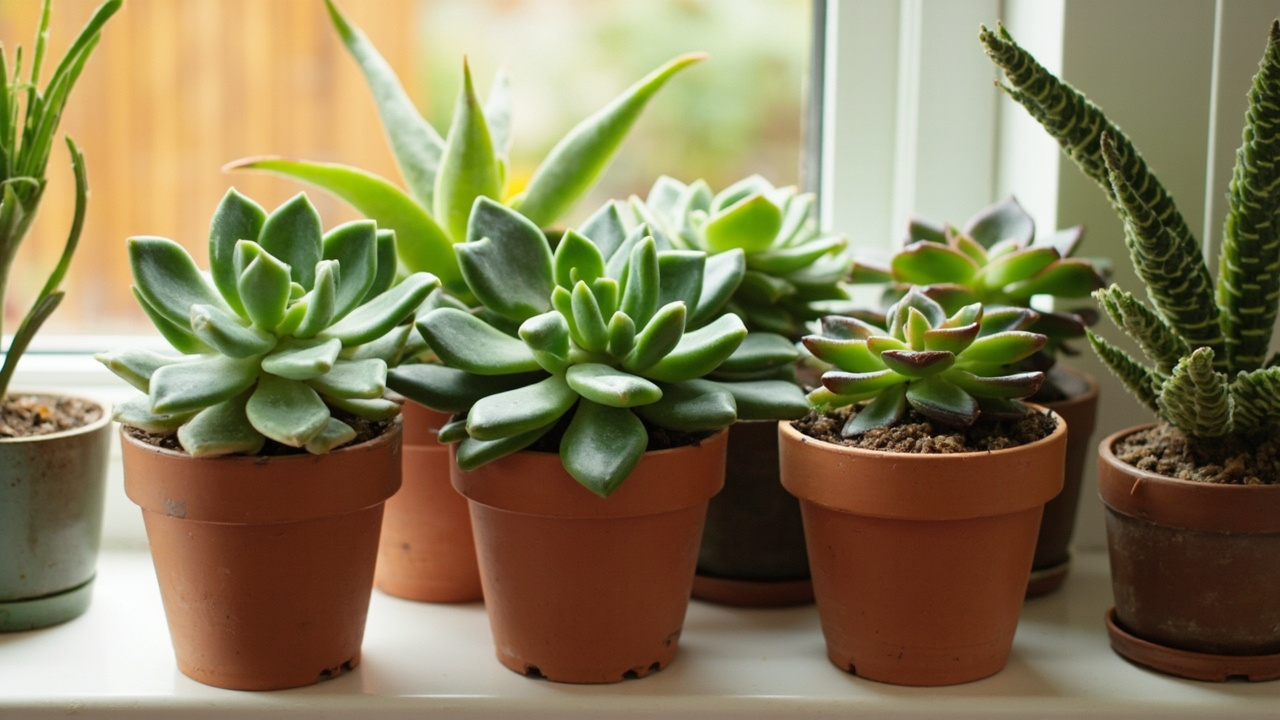
If you have decided between the two genera, the choice usually comes down to your light and your watering habit. A south-facing window with three to five hours of direct sun and a tendency to forget to water for a week at a time is an Echeveria environment. An east-facing window with bright indirect light and a habit of checking the soil every few days is a Haworthia environment.
If you have low light, pick Haworthia. Haworthia cooperi, Haworthia truncata, and Haworthia retusa are the classic low-light-tolerant species — the leaf windows make the most of whatever light you have. An Echeveria in low light will survive but will not look like the rosette you bought.
If you travel or forget to water, pick Echeveria. The plump, farina-coated leaves hold water for weeks. Echeveria elegans, Echeveria pulidonis, and Echeveria perle von nurnberg are forgiving of the occasional missed watering. A Haworthia will wrinkle its leaf tips within a week of drought, and the wrinkled tip does not always recover.
If you want to propagate and share, pick Echeveria. The leaf-cutting method is reliable enough that you can produce a steady supply of offsets to give away or trade. Haworthia propagation requires offset division, which is slower and produces fewer plants per year.
If you want color variation, pick Echeveria. The Echeveria genus includes reds, purples, blues, pinks, and near-blacks, often in the same plant depending on light stress and season. Haworthia is mostly green — narrower color range.
If you want the leaf-window feature itself — that translucent tip that glows when backlit — pick Haworthia. It is the only common genus where the window is the headline feature, and it rewards the patient grower who learns to read it.
Frequently Confused Cousins: xSedeveria, xGasterworthia, and the Intergeneric Hybrids
Before you close the tab, one caveat about hybrids you will see at every nursery. Intergeneric hybrids exist for both genera, and they can confuse the diagnostic tests above because the leaf surface, tip, and flower are intermediate between the parents.
xSedeveria is a hybrid of Sedum and Echeveria. It looks like an Echeveria with thinner, more elongated leaves, often with a slightly translucent margin. The farina is present but thinner, and the leaf tip is more pointed than a pure Echeveria. It is widely grown and usually labeled correctly, but the surface test can fail because the farina is not as obvious.
xGasterworthia (Gasteria x Haworthia) combines the rough, tubercled leaves of a Gasteria with the leaf windows of a Haworthia. The result looks like a Haworthia with warty skin, and the surface test reads as “Haworthia with anomalies.” The care is closer to Haworthia: bright indirect light, slightly more water than an Echeveria would tolerate.
If your plant fails the surface test, fails the tip test, and does not look like either genus clearly, suspect a hybrid before assuming you have misidentified the genus. The hybrid will not die from care aimed at the dominant parent, but it will not thrive either. When in doubt, target the more delicate of the two suspected parents — for Echeveria-leaning hybrids, treat as Haworthia (less sun, more moisture); for Haworthia-leaning hybrids, treat as Echeveria (more sun, less moisture).
For the full care rundown on each genus separately, see the Echeveria care guide or the Haworthia care guide. For diagnosis of common problems, see echeveria yellow leaves and the echeveria watering guide for the soak-and-dry method that anchors the Echeveria side of the comparison.
Turn any PDF statement into a clean sheet
Skip the typos and the hours of copying. Our converter handles any bank statement format and outputs Excel, CSV, or QBO for QuickBooks. No file retention, free to try.
Convert your statement