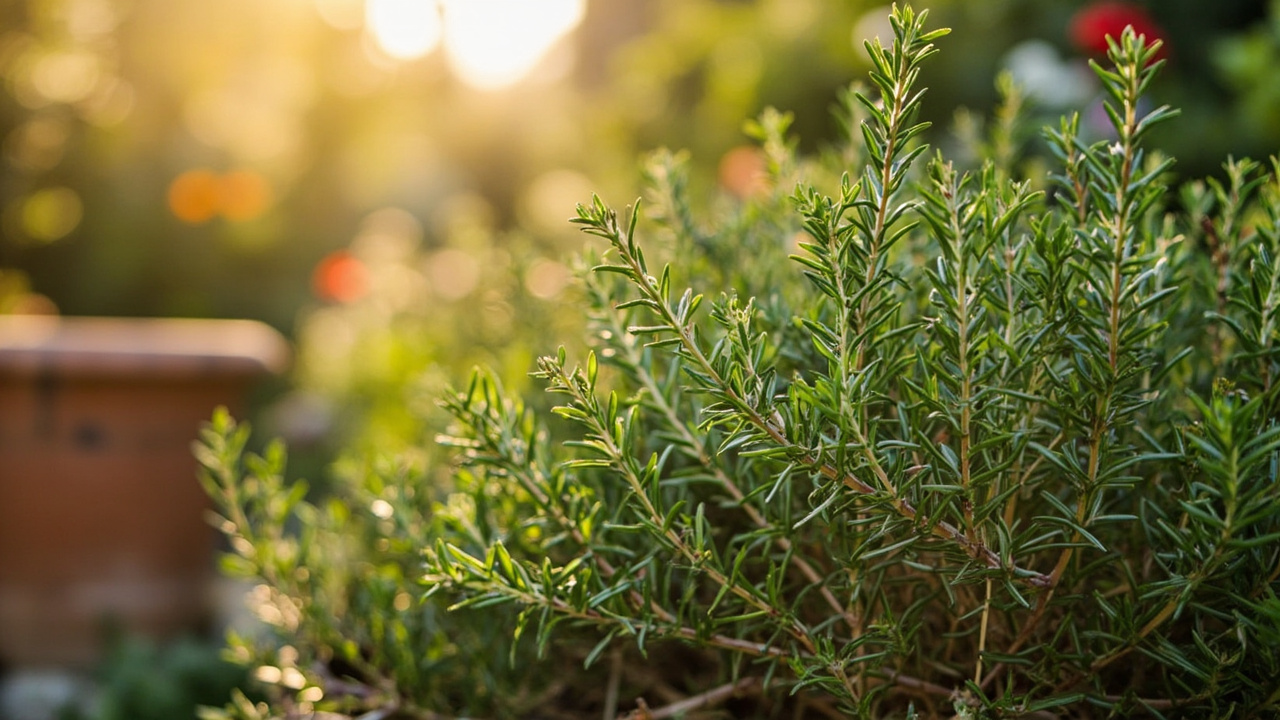
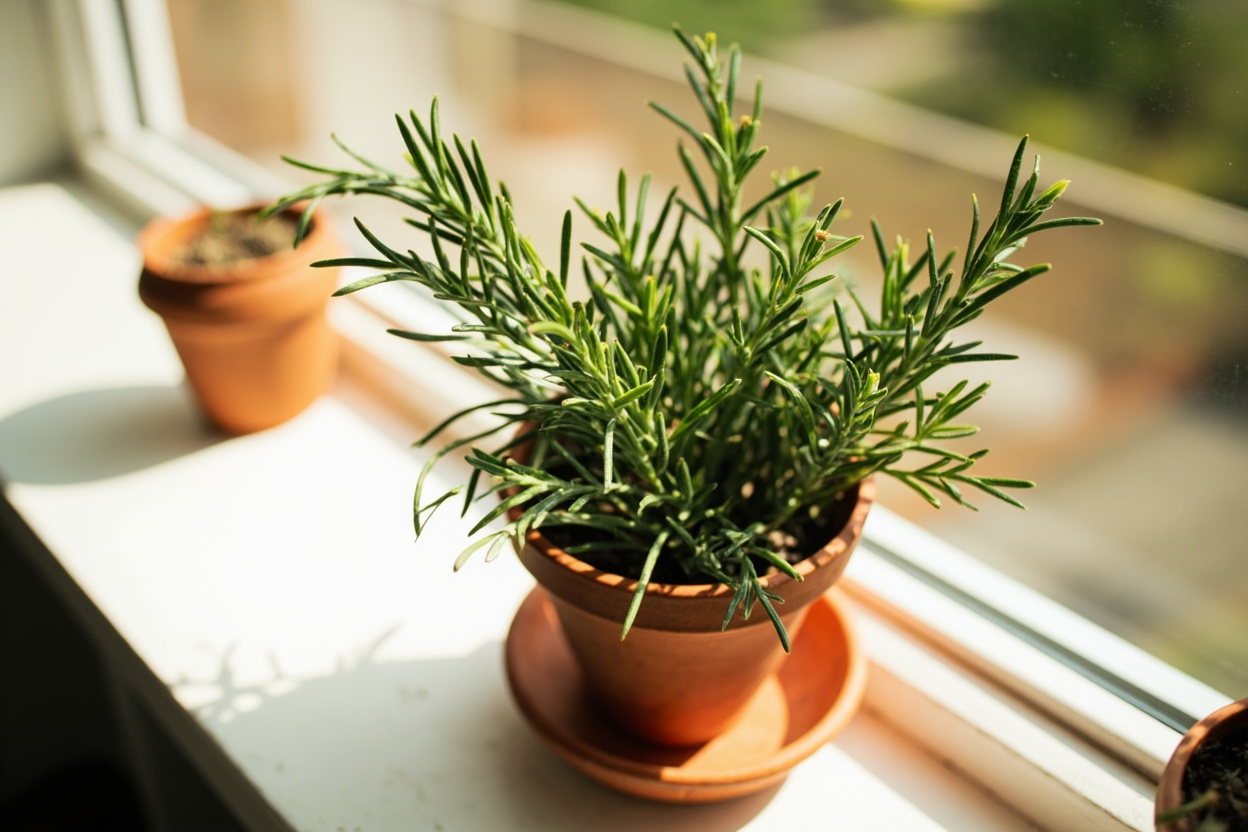
Rosemary watering works when the pot dries down between thorough soaks. In a bright indoor window, that often means checking every 5 to 7 days in summer and every 10 to 21 days in winter, but the real trigger is pot weight and soil dryness, not the calendar.
Rosemary fails indoors when it is treated like basil, mint, or parsley. It is a woody Mediterranean herb with roots that want oxygen around them. Constantly damp potting mix causes root rot; letting the whole root ball become hard and hydrophobic causes dry collapse. The useful rhythm sits between those two mistakes.
This guide shows how to read the pot, how to water when rosemary is actually ready, how winter changes the schedule, and how to tell overwatering from underwatering before the plant turns brown.
The Rosemary Watering Rule
The rosemary watering rule is: let the top half of the pot dry down, then water thoroughly and let the pot drain completely. A small young rosemary in terracotta may be ready sooner; a large rosemary in plastic or a cool room may need much longer.
The mechanism is simple. Rosemary roots are adapted to fast-draining, airy soil, not a wet sponge. When the mix stays damp for too long, air leaves the root zone, fine roots die back, and the needles start browning from the inside of the plant outward. When the mix gets too dry for too long, the root ball shrinks, water runs around the edge of the pot, and the plant wilts even after you water.
For the full setup around light, soil, and placement, the rosemary plant care guide gives the broader care framework. Watering only works if the plant also has enough direct light and a potting mix that drains quickly.
The Pot-Weight Test
The best rosemary watering check uses touch and weight together:
- Push a finger 2 inches into the mix. If it feels cool or damp, wait.
- Lift the pot. A rosemary that still feels heavy has water lower in the root ball.
- Look at the surface. A pale dry surface is not enough by itself; check below it.
- Check the drainage hole. If the bottom of the pot feels damp, the roots are not ready for more water.
This matters because rosemary pots dry unevenly indoors. The surface may look dry after a sunny afternoon while the lower half of the pot is still damp. The opposite can also happen in old peat-heavy mix: the edges look damp, but the inner root ball has become dry and tight.
How To Water Rosemary When It Is Ready
When the pot is ready, water slowly over the whole soil surface until water drains from the bottom. Let it drain for 10 to 15 minutes, then empty the saucer. The goal is a full soak followed by a real dry-down, not a daily splash.
Light splashes are especially risky with rosemary. They wet the top layer, leave the inner root ball dry, and make the grower think the plant has been watered. A full soak reaches the deeper roots and also tells you whether the potting mix is still accepting water. If water runs straight down the sides and out the bottom in seconds, the root ball may be too dry and needs a slower rehydration soak.
Use room-temperature water. Cold water from the tap is not usually fatal, but a cold root ball in winter dries slowly and can compound the wet-root problem.
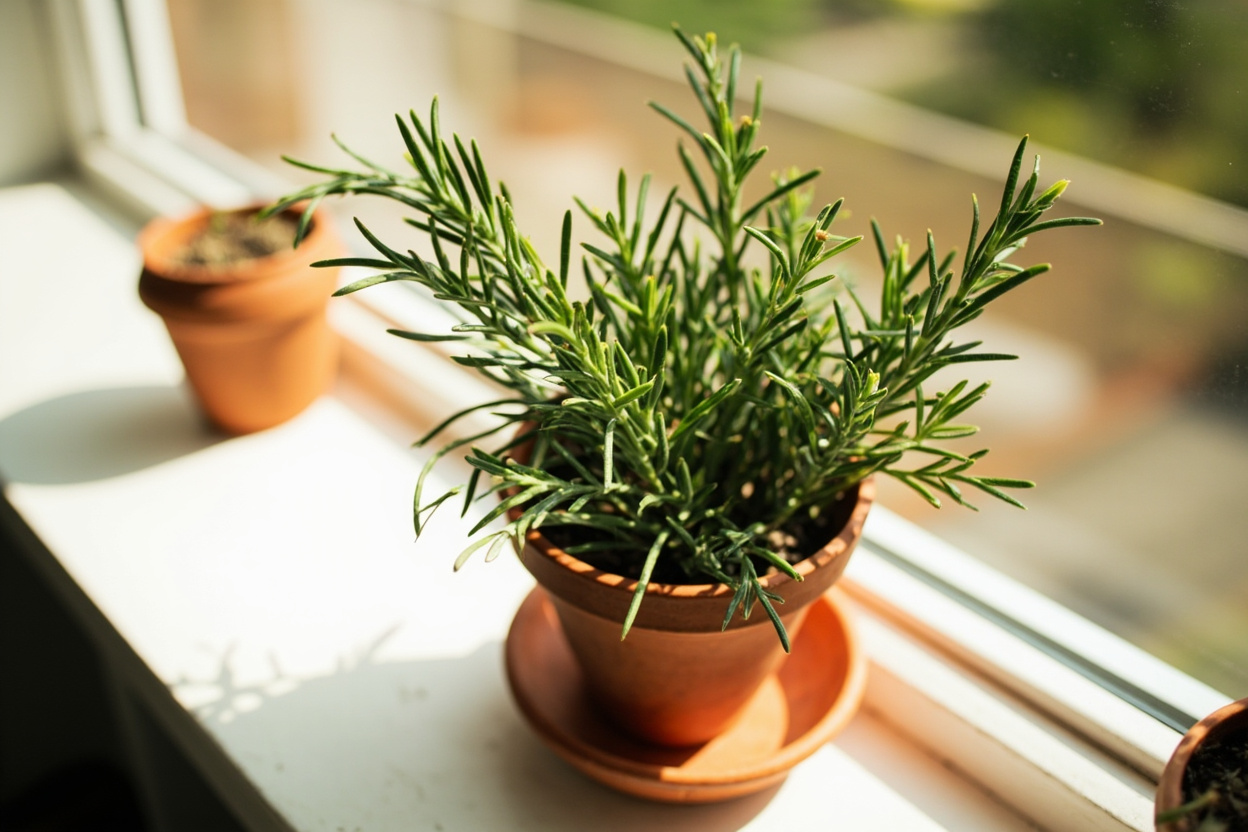
Indoor Rosemary Watering By Season
The season changes the watering rhythm because rosemary uses more water in long, bright days and much less in short, cool days.
| Condition | Typical check interval | What to watch |
|---|---|---|
| Bright summer window or patio | Every 3 to 7 days | Small pots and terracotta dry quickly in direct sun. |
| Average indoor room | Every 7 to 10 days | Water only after the pot feels lighter. |
| Winter indoors | Every 10 to 21 days | Short days slow growth, so wet mix lingers longer. |
| Cool room below 60°F / 16°C | Check, but water sparingly | Cold damp roots are the highest rot risk. |
The honest trade-off is that rosemary indoors often needs more light before it needs more water. If the plant sits in a north window through winter, watering less helps, but the plant may still thin out because it is not receiving enough energy to support dense growth.
Overwatered Rosemary vs Underwatered Rosemary
Overwatered rosemary and underwatered rosemary can both turn brown, but the texture tells the story. Overwatered rosemary often has dull brown or blackening needles, soft stems near the soil line, and a sour smell from the potting mix. Underwatered rosemary has crisp needles, brittle tips, a very light pot, and soil that pulls away from the sides.
- Overwatering pattern: damp pot, soft lower stems, brown needles that do not feel crisp, and slow collapse after repeated watering.
- Underwatering pattern: very dry pot, crispy needles, drooping tips, and water running around the root ball instead of soaking in.
- Mixed pattern: dry top layer with wet lower soil, often caused by a deep pot or dense old mix.
If browning is spreading quickly and the stems are losing flexibility, move from watering adjustment to diagnosis. The dying rosemary plant guide is the better next step when the plant may already have root damage.
Pot And Soil Choices That Change Watering
Terracotta dries faster than plastic, which is usually good for rosemary. A small terracotta pot in full sun may need frequent checks, while a large plastic pot in a cool kitchen may stay damp long enough to rot roots. Pot material changes the rhythm as much as plant size does.
The mix matters too. Rosemary wants a gritty, fast-draining mix with enough mineral structure that water moves through and air returns quickly. A peat-heavy houseplant mix can work for a while, but it often holds too much water when fresh and becomes hard to rewet when fully dry.
The limitation is that watering cannot fix the wrong container. If the pot has no drainage hole or the mix stays wet for more than a week after watering, the setup needs changing. Better timing will not overcome a pot that traps water around rosemary roots.
The Weekly Rosemary Watering Routine
Once a week, check the pot weight, feel 2 inches into the mix, look at the drainage hole, and rotate the plant toward the light. Water only when the pot has clearly dried down. After watering, empty the saucer and check again two days later to make sure the surface is no longer wet.
Within two to four weeks, the right rhythm should stop new browning and keep the newest tips firm and green. Old brown needles will not recover, but fresh growth should look tighter and more aromatic when the root zone is stable.
The best rosemary watering habit is restraint with evidence: wait for the dry-down, water fully, drain completely, and let bright light do the rest.
Turn any PDF statement into a clean sheet
Skip the typos and the hours of copying. Our converter handles any bank statement format and outputs Excel, CSV, or QBO for QuickBooks. No file retention, free to try.