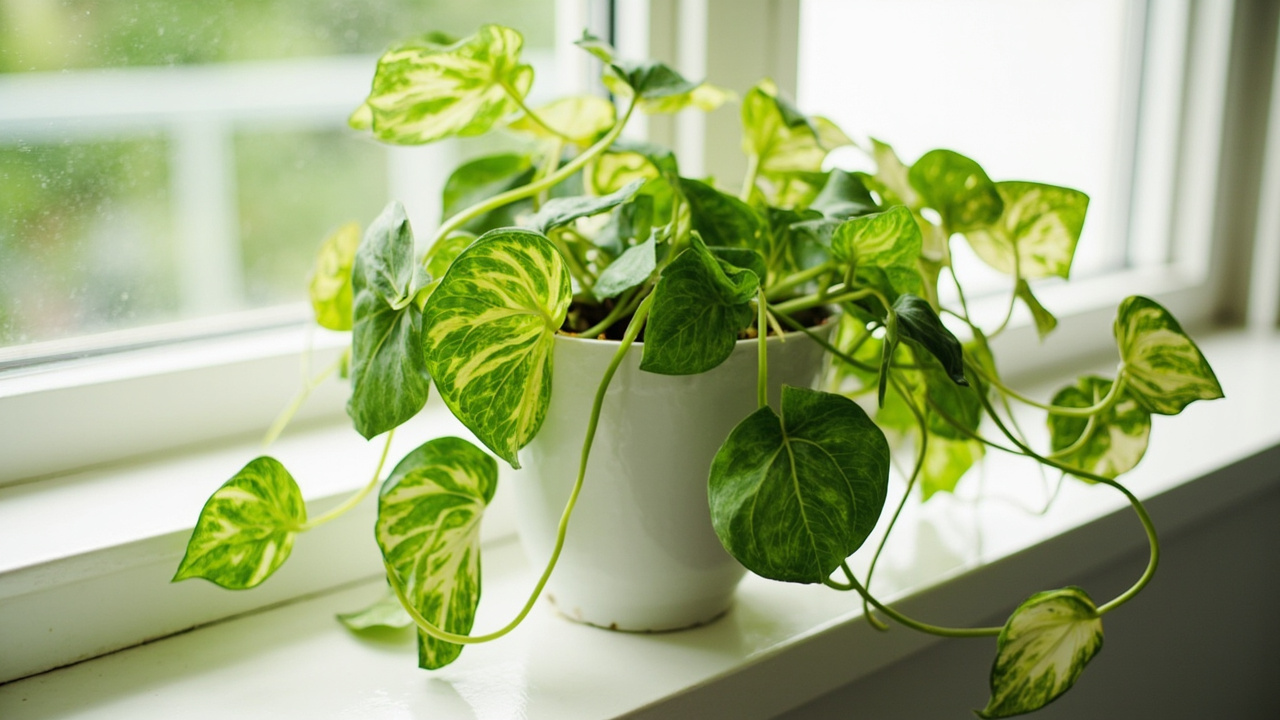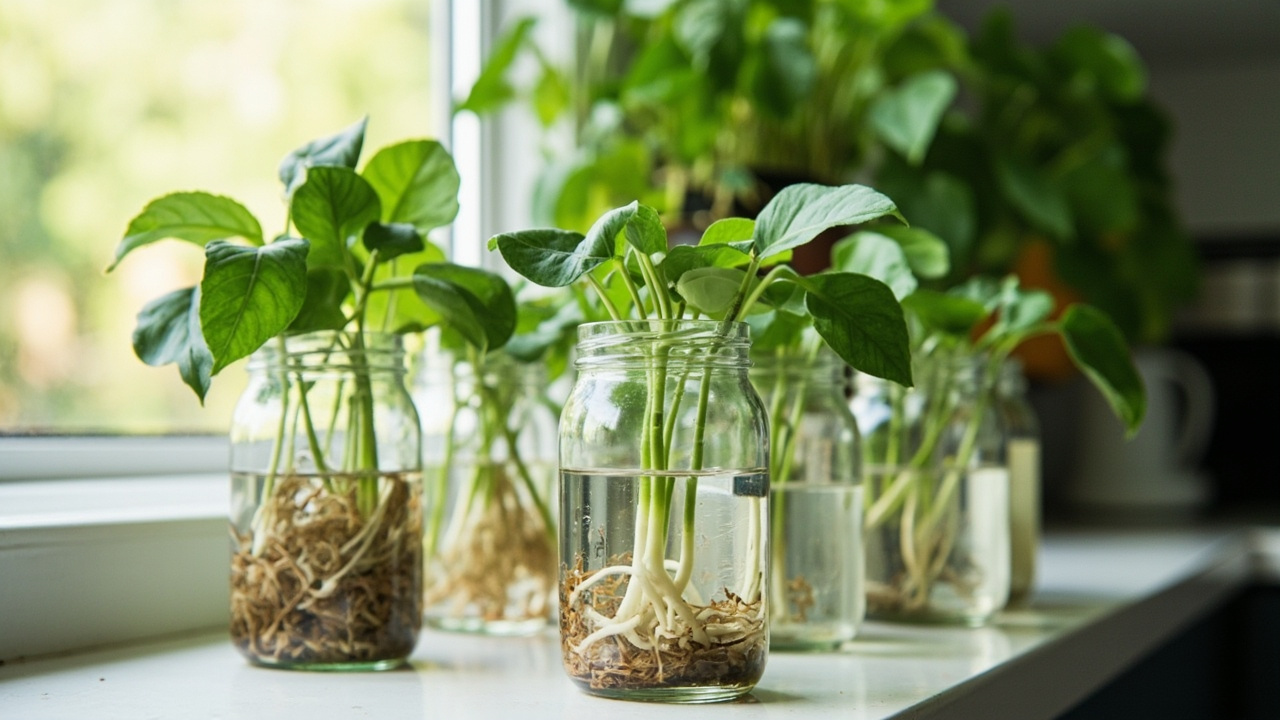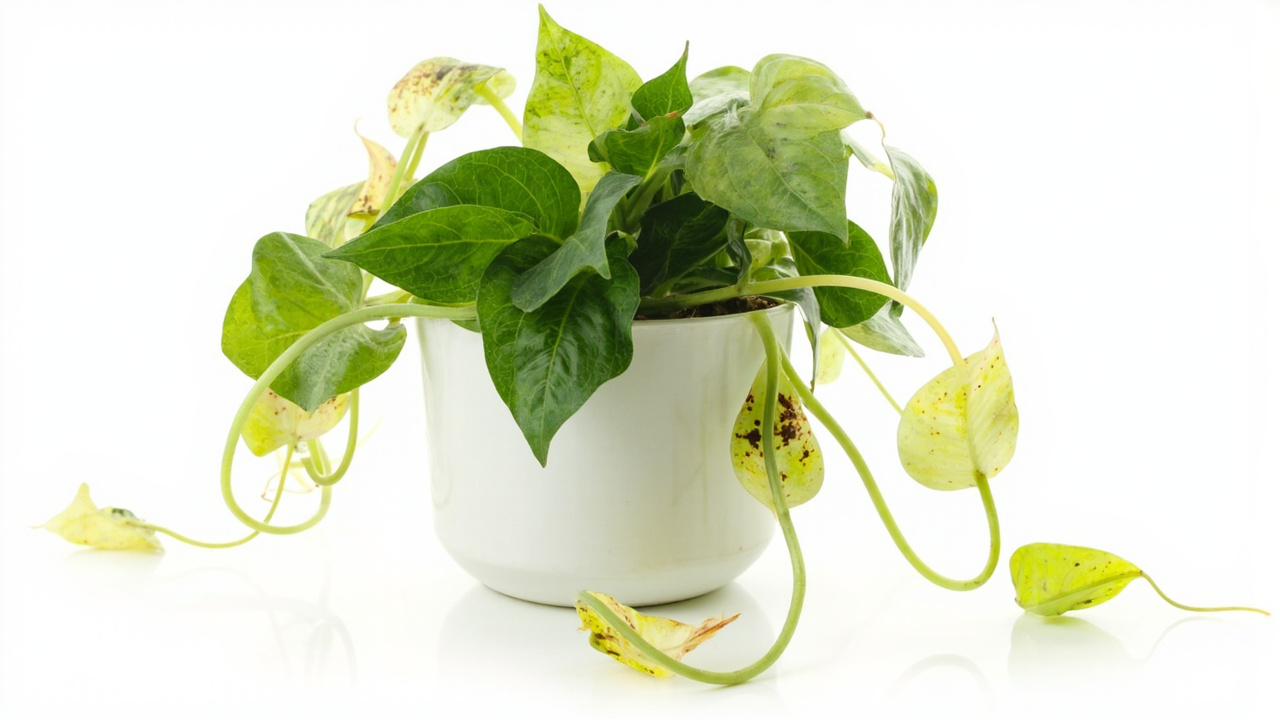

Yellow leaves on a money plant are the most common signal that something in the care routine needs attention. They’re also the most misunderstood — yellow can mean too much water, too little light, natural aging, or something more serious. Reading the pattern tells you which it is.
The problems guide covers other symptoms alongside yellowing. The care guide has the watering baseline that prevents most yellow leaf causes.
Reading the Yellow Pattern
Where the yellow appears matters more than the yellow itself. A single yellow leaf at the bottom of a vine that’s otherwise healthy is normal — the plant is shedding an old leaf. Widespread yellowing across the entire plant, especially at the base of multiple vines, is a different problem and needs faster action.
Lower Leaves Yellowing
Multiple lower leaves turning yellow simultaneously is almost always overwatering. The root system is sitting in water longer than it should, oxygen is displaced from the soil, and the roots begin to function poorly. When roots can’t do their job, the plant pulls resources from the oldest leaves — the lower ones — to sustain newer growth. The result is a cascade of yellow leaves from the bottom up.
The fix: stop watering immediately. Check the soil with your finger — if it’s damp 2 inches down, the problem is saturation. Tip the pot to let excess water drain. If the soil is genuinely saturated and has been for more than a week, repot into fresh fast-draining mix with more perlite. Inspect the roots when you repot — if they’re brown and mushy, treat for root rot.
Upper Leaves Yellowing
Yellowing at the tips and edges of upper leaves, especially on new growth, usually indicates a nutrient deficiency — specifically nitrogen or iron. Money plants that haven’t been fertilised for months or that have been in the same soil for a long time begin to run out of the nutrients that support new leaf development. New leaves need more resources than older ones, so they show the deficiency first.
The fix: apply a balanced liquid fertiliser at half strength. This is the most reliable way to address nutrient-related yellowing. Results show in the next round of new growth — the new leaves will come in green instead of yellow. It takes 3-5 weeks to see improvement.
Whole Leaf Yellowing vs. Spotty Yellowing
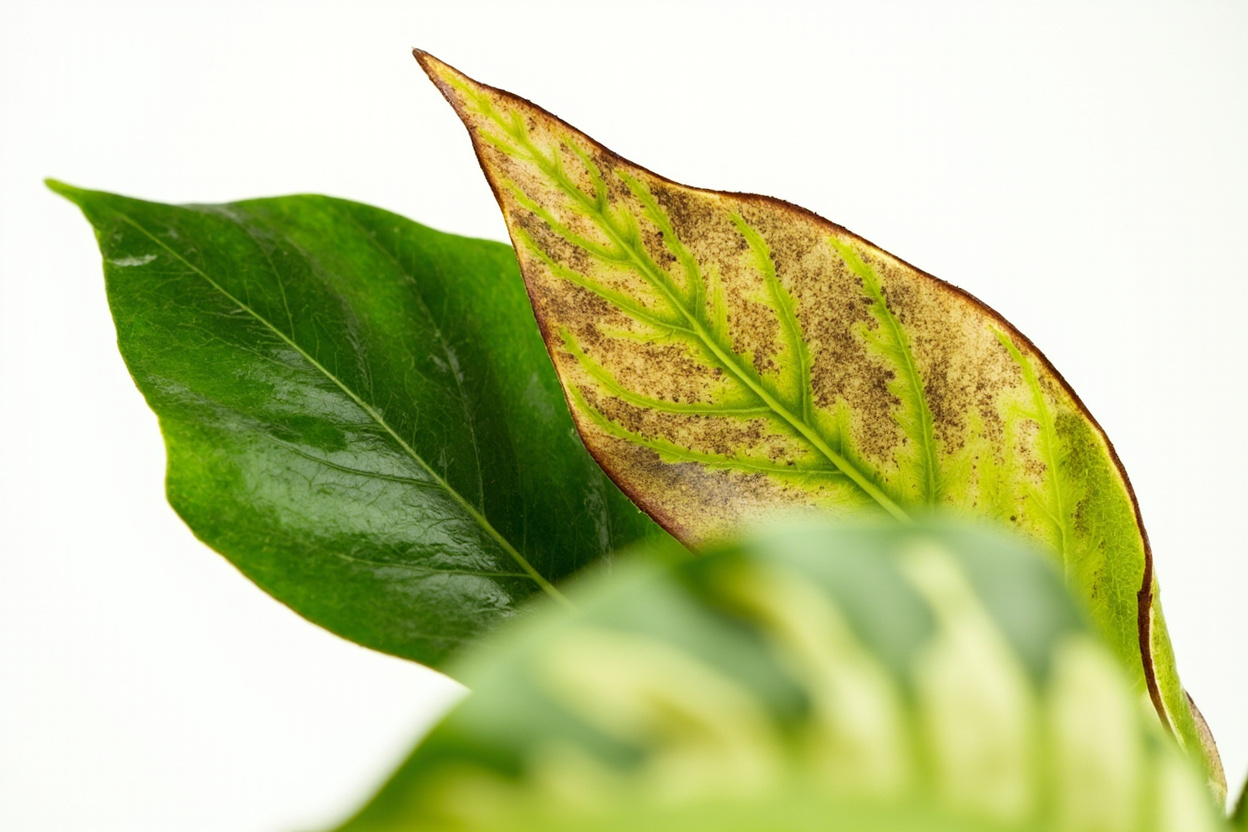
A leaf that turns entirely yellow is usually being shed or indicating a serious systemic problem — overwatering, root rot, or severe nutrient depletion. A leaf with yellow spots or irregular yellow patches is more likely a pest issue, a localised fungal problem, or inconsistent watering where some roots are getting water and others aren’t.
Irregular yellowing across the leaf surface with dark spots or browning alongside the yellow suggests a fungal infection, particularly if the pattern started on one leaf and spread to others. Remove affected leaves, improve air circulation around the plant, and avoid overhead watering.
The Overwatering Mistake
The most common error when seeing yellow leaves is to assume the plant needs more water. This is the opposite of what the plant usually needs. Yellow lower leaves + damp soil = too much water. Adding more water accelerates root rot and the yellowing spreads. The soil stays wet, the roots continue drowning, and within a few weeks the plant is significantly worse.
The test when in doubt: insert your finger 2 inches into the soil. If it feels dry at that depth, water. If it’s damp, don’t. This single check resolves most yellow leaf scenarios without complicated diagnosis.
When Yellow Leaves Are Normal
One yellow leaf every 4-6 weeks on a healthy, fast-growing money plant is not a problem. The plant is producing new growth and shedding old leaves as part of normal metabolism. If the new leaves are large, green, and growing vigorously, the plant is healthy. The yellow leaf is not a symptom — it’s maintenance.
The distinction matters: healthy plant dropping old leaves has one yellow leaf, firm vines, and consistent new growth. Struggling plant with a problem has multiple yellow leaves, soft vines, and slowing or stalling new growth.
What to Do About Yellow Leaves
Remove them. A yellow leaf that is fully yellow is no longer photosynthesising and is a net drain on the plant’s energy. Pinch or cut it off at the stem. This redirects the plant’s resources to new growth and healthy leaves. Don’t leave yellow leaves on the plant hoping they will turn green again — they won’t.
After removing yellow leaves, address the cause. Check the soil moisture. Check the watering schedule. Consider whether the plant has been fed recently. Adjust accordingly. Then monitor new growth — if new leaves come in green, the problem is resolved. If new growth continues to be yellow or the yellowing spreads, dig deeper into root health and pest issues.
Preventing Yellow Leaves
Most yellow leaf issues are preventable with consistent watering habits and seasonal feeding. Water only when the top inch of soil is dry — not on a schedule, based on the actual moisture level. Fertilise monthly during active growth from March through September. Use the half-strength rule to avoid over-fertilising, which causes its own leaf yellowing (crispy brown edges alongside the yellow).
These two habits together — right watering and seasonal feeding — prevent the majority of yellow leaf problems in money plants. The plant grows more vigorously, the leaves stay green, and the yellow leaves that do appear are genuinely just old ones being retired.
From Bank Statement to QuickBooks-Ready File
That manual cleanup you just read about? This tool skips it. Turn your PDF into QBO for QuickBooks without storing your data anywhere.
Start Converting