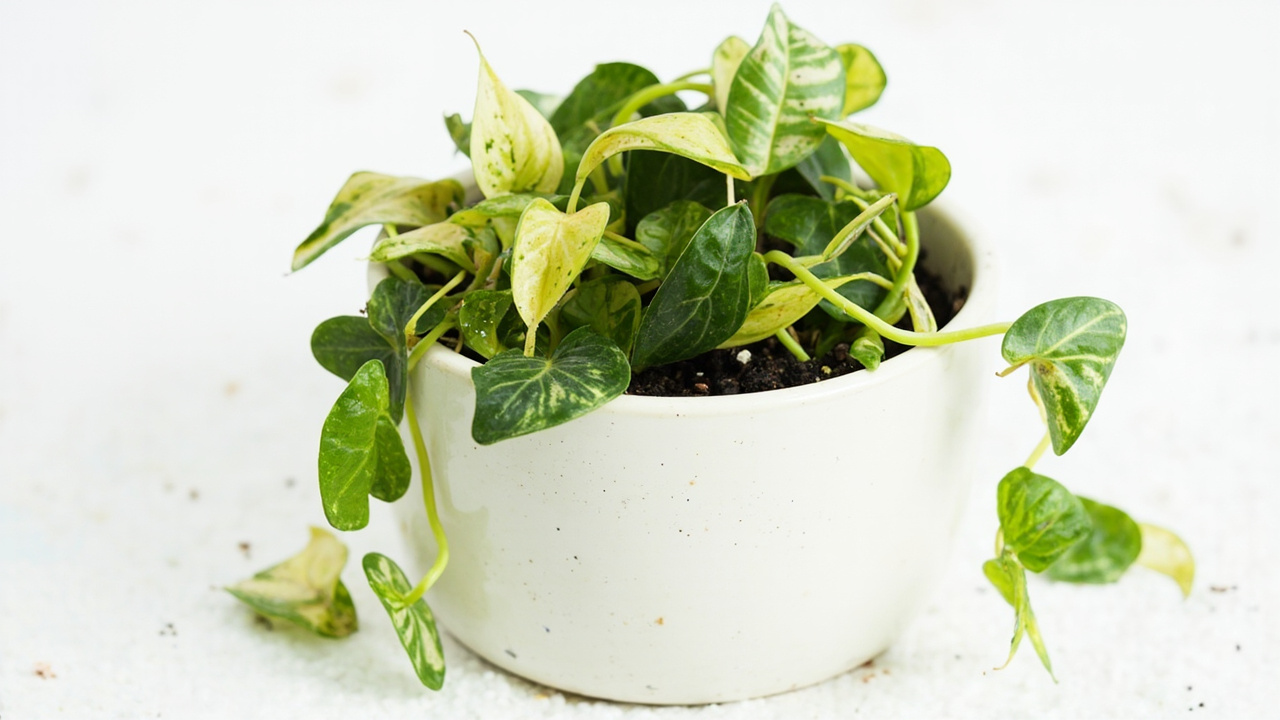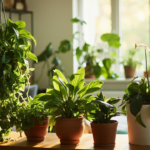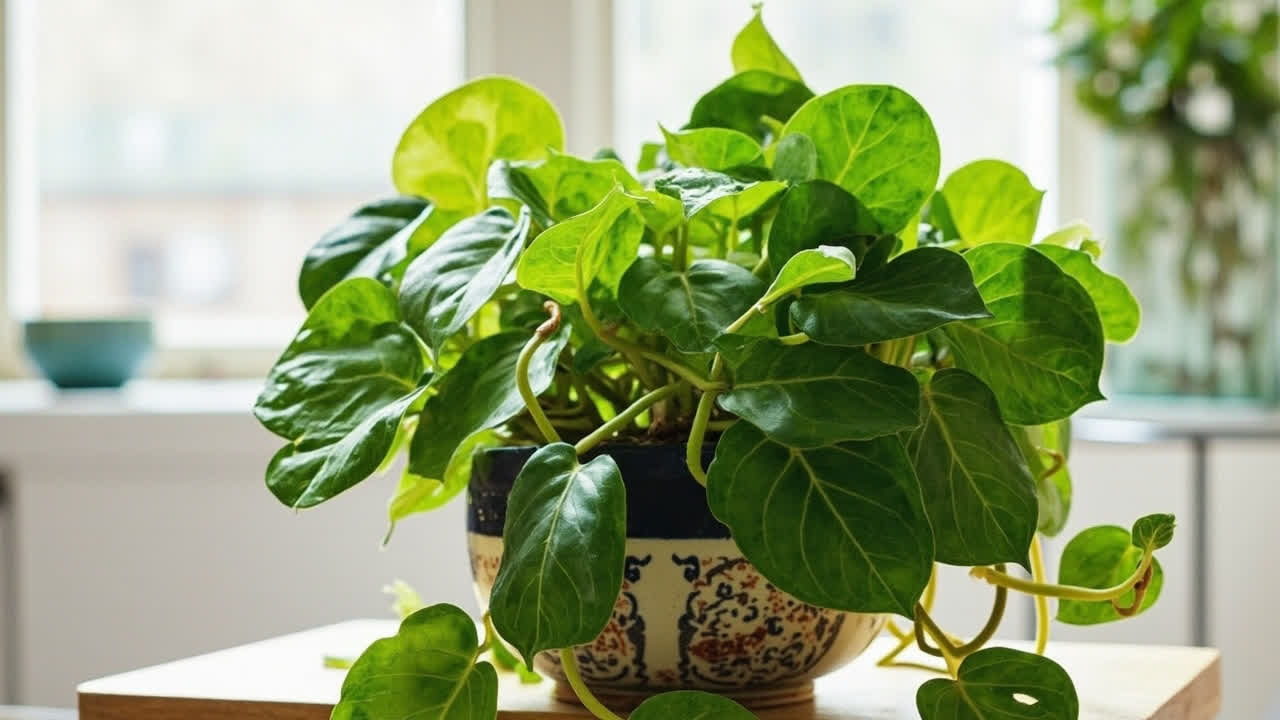

A money plant’s natural habit is to trail — and trail indefinitely if given the space. But it will also climb if given something to hold onto. What you choose to do with this says everything about how the plant looks in your home, and the difference between a money plant that looks like a feature and one that looks like an afterthought comes down to how you present it. The care guide covers the plant’s underlying growth patterns.
The Two Growth Habits
Trailing
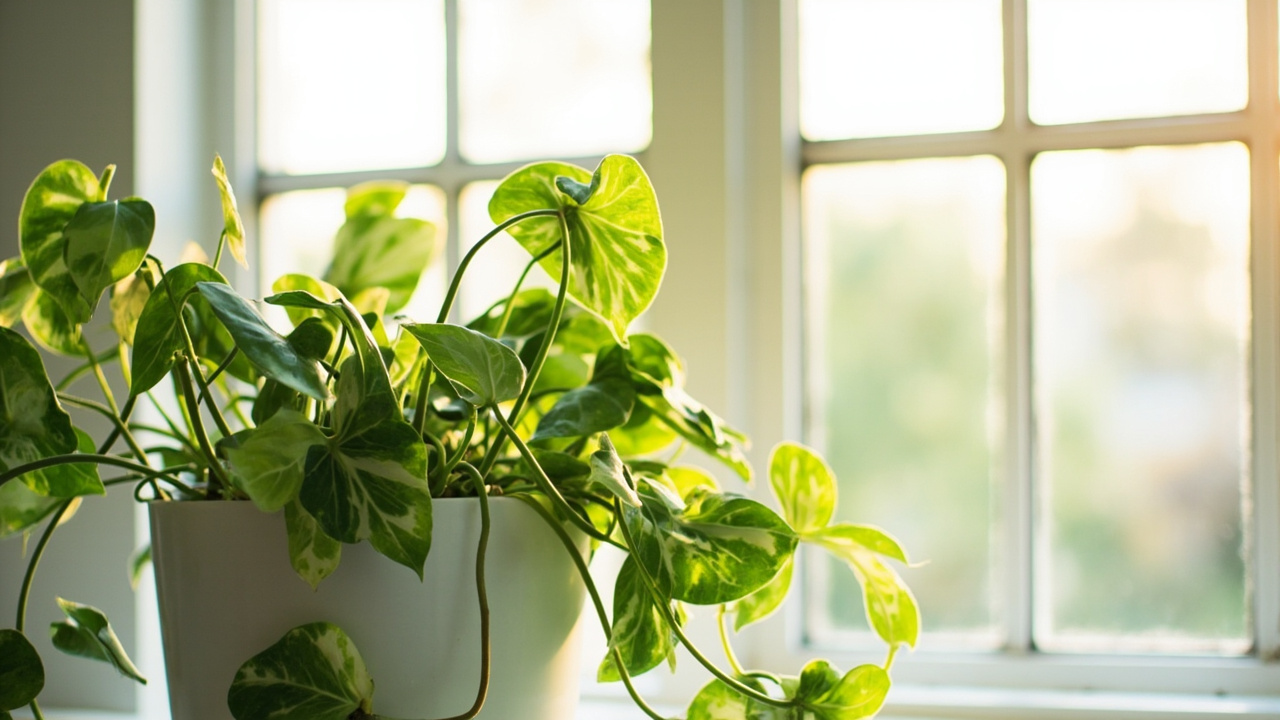
Without support, a money plant trails. The vines grow downward from a shelf or hanging point, eventually reaching the floor if left long enough. Trailing is the default and the most common presentation. It’s easy, requires no equipment, and works in any hanging planter or elevated position.
The trailing look works best when the vines are allowed to grow long — 3 feet or more — and when the pot is high enough that the vines are visible from below. A money plant trailing from a high shelf or hung near a window where the light catches the leaves is one of the most effective long-term décor elements you can have with a houseplant. It’s low maintenance, it improves with age, and it costs almost nothing to maintain.
The downside: trailing vines that reach the floor tend to get kicked, tangled, or walked on in busy households. If the plant is in a location with lots of passage, trailing may mean constant interference with growth.
Climbing
Give a money plant a moss pole, bamboo stakes, a wooden board, or any vertical surface and it will climb. The vines send out aerial roots that attach to rough surfaces and the plant grows upward rather than outward. This changes the visual completely — instead of a cascading plant you get a vertical, almost tree-like presence.
Climbing is how money plants look in their natural tropical forest habitat, where they grow up tree trunks toward the canopy. Indoors, a moss pole-reared money plant develops larger leaves than its trailing counterpart — sometimes significantly larger, with leaves that reach 12-18 inches on a mature plant versus the 4-6 inch leaves you’d see on trailing vines of the same age.
How to Train a Money Plant to Climb
Moss Pole
The standard support for climbing houseplants. A moss pole is a cylindrical pole wrapped in sphagnum moss or coco coir that you insert into the pot beside the plant. The aerial roots attach to the moist moss and the vine follows the pole upward.
To train: insert the moss pole when you first pot the plant or when the vines are young. As the vines grow, loosely tie them to the pole with plant tie tape or soft twine — don’t bind tightly, just enough to hold the vine against the pole. New aerial roots will find the moss within weeks. Once roots are established, ties can be removed.
Moss poles need misting every few days to stay moist — the aerial roots are looking for moisture and the pole needs to provide it. A dry moss pole won’t attract roots. Some people install a simple drip system or misting bottle for this; others just check the pole when they water the plant and spritz it if it feels dry.
Bamboo Stakes or Trellis
For a cleaner, more structured look: bamboo stakes pushed into the pot in a fan or grid pattern give the vines something to weave through. This works well for a fuller, more compact climbing display. The plant doesn’t attach to bamboo the way it does to moss, so you’ll need to keep tying the vines to the stakes as they grow.
A wooden trellis panel leaned against a wall behind the pot achieves a similar effect with less ongoing maintenance than a moss pole.
Display Positions That Work
High Shelf or Hanging Planter
Elevated positions are where trailing money plants look best. A pot hung from a ceiling hook in a bright corner — dining room, living room with large windows — gives the plant enough height to trail beautifully without interference. The vines should be allowed to grow long; cutting them back to keep them compact defeats the purpose of trailing.
One tip: rotate the pot every few waterings so the back vines get light too, otherwise the plant becomes one-sided.
Corner of a Bright Room
Money plants in floor pots in corners with good indirect light develop into substantial specimens over 2-3 years. A 6-inch pot can produce 4-5 foot trails within two years in good conditions. Floor-positioned climbing plants with moss poles in corners make a more architectural statement than trailing plants and take up less floor space.
Bathroom
Bathrooms with windows are one of the best spots for money plants. Humidity is consistently higher than the rest of the home — often 50-70% in a showering household versus 30-40% in most rooms — and money plants appreciate that. The filtered light from a frosted bathroom window is also well-suited to most varieties.
The practical consideration: toiletries and bathroom cleaning products on shelves above the plant can drip onto the leaves. Some products are harmful to plants. If the plant is going in a bathroom, keep it on a shelf above head height but out of the direct splash zone.
Bedroom
Money plants are fine in bedrooms — no credible evidence supports claims that they cause sleep problems. The bedroom advantages are: lower light at night doesn’t bother them, they improve the room visually without requiring much attention, and they contribute to air quality in ways that are hard to quantify but real. The care guide has the full baseline.
The one bedroom consideration: very cold rooms in winter. Bedrooms tend to be at the temperature people sleep at — 65-68°F / 18-20°C — which money plants tolerate fine. Drafty old houses with cold nights are less suitable.
Office
Offices with fluorescent lighting are well-suited to the solid-colour varieties — neon pothos and golden pothos especially handle artificial light without losing variegation. The consistent temperature of most offices (65-75°F / 18-24°C) is ideal for money plants year-round. The main office limitation is usually watering consistency — someone needs to be on a regular schedule to check the soil.
The Hanging vs. Shelf Question
Hanging: best for trailing displays in bright spaces where you want the vines to cascade. The plant needs to be high enough that the pot isn’t at eye level when you’re standing — if it is, you’re looking at the bottom of the pot rather than the plant. High enough that the vines fall below eye level when you stand nearby is the right height.
Shelf: works for both trailing and climbing. A trailing plant on a high shelf with nothing below it to catch the vines wastes the trailing effect. A climbing plant with a moss pole on a mid-height shelf makes a strong visual impact in any room.
Both work — the deciding factor is what look you want, how much space you have, and whether you’re willing to drill hooks or accept a shelf as a permanent fixture.
What to Avoid
Low shelves where the plant is at eye level and the vines hang forward into the room rather than down from above — this looks awkward and the vines get in the way. The problems guide covers what else can go wrong in non-ideal positions.
Direct sun on a shelf near a window that receives afternoon sun — the leaves will burn. Check any shelf position for whether it gets direct sun before placing the plant.
Dusty environments without maintenance. Money plants in kitchens, on open shelves near cooktops, or in workshops collect dust on their leaves which reduces their photosynthetic efficiency and makes them look dull. Occasional leaf cleaning — a quick wipe with a damp cloth — keeps them looking good. This is not optional for display plants, it’s part of the maintenance.
Turn PDF Bank Statements Into Workable Spreadsheets
Your bank statement is a mess of numbers, but your books shouldn't be. Use our converter to get Excel, CSV, or QBO files — ready for QuickBooks.
Try It Free Now