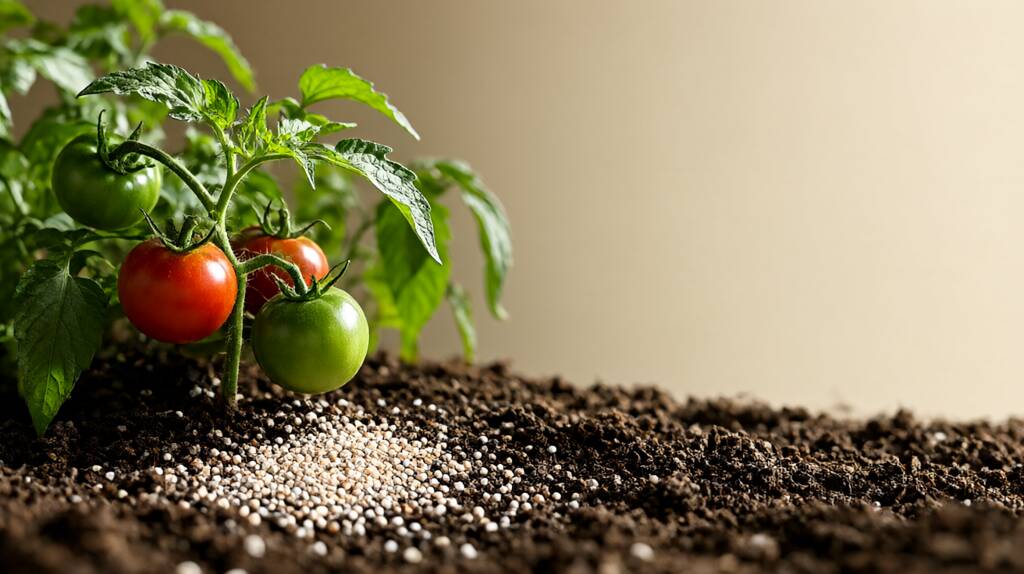

NPK fertilizer is the most common soil amendment in vegetable gardening, yet most gardeners apply it without understanding what the three numbers mean or how they affect plant growth. N, P, and K stand for nitrogen, phosphorus, and potassium, the three macronutrients that plants need in the largest quantities. The numbers on the bag, like 10-10-10 or 5-10-5, indicate the percentage by weight of each nutrient. A 10-10-10 fertilizer contains 10% nitrogen, 10% phosphorus, and 10% potassium.
The mistake most vegetable gardeners make is applying the same NPK ratio throughout the growing season. For soil preparation, see our best soil for vegetable gardens guide. A Solanum lycopersicum plant needs different nutrients at different stages of growth. Leafy greens need more nitrogen. Fruiting plants need more phosphorus and potassium. Understanding these shifts is the difference between a mediocre harvest and an exceptional one.
What Each Nutrient Does
Nitrogen (N) drives vegetative growth. It is the building block of chlorophyll, proteins, and enzymes. High nitrogen produces lush, green foliage. Too much nitrogen in fruiting plants produces excessive leaf growth at the expense of fruit. Too little nitrogen produces pale, yellowing leaves and stunted growth.
Phosphorus (P) drives root development, flowering, and fruiting. It is essential for energy transfer within the plant. High phosphorus promotes strong root systems and abundant fruit set. Too little phosphorus produces purple-tinged leaves, poor root development, and delayed flowering.
Potassium (K) regulates water movement, enzyme activation, and disease resistance. It strengthens cell walls and improves fruit quality. High potassium produces firm, flavorful fruit and disease-resistant plants. Too little potassium produces weak stems, poor fruit quality, and increased susceptibility to disease.
NPK Ratios for Common Vegetables
Different vegetables have different nutritional needs. The following ratios are starting points that should be adjusted based on soil tests and plant response.
Leafy greens (lettuce, spinach, kale, cabbage): 20-10-10 or 21-0-0. High nitrogen for leaf production. Apply at planting and again after the first harvest.
Root vegetables (carrots, beets, radishes): 5-10-10 or 10-20-20. Low nitrogen, high phosphorus and potassium for root development. Apply at planting only.
Fruiting vegetables (Solanum lycopersicum, Capsicum annuum, Solanum melongena): 5-10-10 at planting, then 10-10-10 during vegetative growth, then 5-10-10 during fruiting. The phosphorus and potassium support flower and fruit development.
Legumes (beans, peas): 5-10-10 at planting. Legumes fix their own nitrogen through root nodules, so supplemental nitrogen is usually unnecessary. Apply phosphorus and potassium for root and fruit development.
Squash and cucumbers: 10-10-10 at planting, then 5-10-10 during fruiting. These plants are heavy feeders that need balanced nutrition early and phosphorus-potassium support for fruit production.
Application Timing
The timing of NPK application matters as much as the ratio. For seedling nutrition, see our NPK fertilizer for seedlings guide. Applying the right nutrient at the wrong time wastes fertilizer and can harm the plant.
At planting: Incorporate a balanced or phosphorus-heavy fertilizer into the soil before planting. This provides the phosphorus needed for root establishment. A 5-10-10 or 10-10-10 ratio works for most vegetables.
During vegetative growth: Apply a nitrogen-heavy fertilizer when the plant is producing leaves. This is typically 2-4 weeks after planting. A 20-10-10 or 21-0-0 ratio works well.
During flowering and fruiting: Switch to a phosphorus-potassium-heavy fertilizer when flowers appear. A 5-10-10 or 10-20-20 ratio supports fruit development. Reduce nitrogen to prevent excessive vegetative growth.
Mid-season side-dressing: Apply a light side-dressing of balanced fertilizer halfway through the growing season for heavy feeders like tomatoes and squash. This provides a nutrient boost when the initial application is depleted.
Organic vs Synthetic NPK
Synthetic NPK fertilizers are water-soluble. For organic vs synthetic comparison, see our organic vs synthetic NPK guide. and immediately available to plants. They produce rapid growth and are easy to apply precisely. The downside is that they leach quickly, require frequent reapplication, and do not improve soil health.
Organic NPK sources, like compost, bone meal, blood meal, and kelp, release nutrients slowly as they decompose. They improve soil structure and microbial activity. The downside is that nutrient release is slower and less predictable, and the NPK ratios are lower and less precise.
For vegetable gardens, a combination works best. Use organic amendments like compost to build soil health, and supplement with synthetic or organic NPK fertilizers for specific nutritional needs. This approach provides both immediate nutrition and long-term soil improvement.
Common NPK Mistakes
Applying nitrogen-heavy fertilizer during fruiting: This produces lush foliage at the expense of fruit. The plant grows leaves instead of flowers and fruit. Switch to phosphorus-potassium-heavy fertilizer when flowers appear.
Over-fertilizing: Excess fertilizer salts accumulate in the soil and burn roots. Symptoms include brown leaf tips, stunted growth, and wilting. Flush the soil with water and reduce application rates.
Ignoring soil pH: Nutrients are only available to plants within a specific pH range. In acidic soil (below 6.0), phosphorus and potassium become unavailable. In alkaline soil (above 7.5), iron and manganese lock out. Test soil pH before fertilizing and adjust with lime or sulfur.
Not testing soil: Without a soil test, you are guessing. A soil test tells you exactly what nutrients are present and what is missing. Test every 2-3 years and adjust your NPK application accordingly.
Using the wrong ratio for the crop: A 10-10-10 fertilizer is a compromise, not an optimal choice for any specific crop. Use crop-specific ratios for better results.
Soil Testing Before Fertilizing
Before applying any NPK fertilizer, test your soil. A soil test tells you the existing nutrient levels, pH, and organic matter content. Without this information, you are guessing, and guessing leads to over-fertilization or under-fertilization.
Soil tests are available from university extension services for $10-20. They typically take 1-2 weeks for results. The report includes recommendations for fertilizer application based on your specific soil and the crops you plan to grow.
Test every 2-3 years. Soil nutrient levels change over time as crops remove nutrients and organic matter decomposes. Annual testing is unnecessary unless you are growing high-value crops or have known soil problems.
Application Methods
Broadcasting: Spread fertilizer evenly over the soil surface and incorporate into the top 5-10 cm. Best for pre-planting application. Use a garden spreader for even distribution.
Side-dressing: Apply fertilizer in a band 5-10 cm from the plant stem. Best for mid-season feeding. Avoid placing fertilizer directly against the stem, as this can burn the plant.
Fertigation: Dissolve water-soluble fertilizer in irrigation water. Best for drip irrigation systems. Provides precise, even nutrient delivery. Requires more frequent application at lower concentrations.
Foliar feeding: Spray diluted fertilizer on the leaves. Best for correcting micronutrient deficiencies quickly. Not effective for macronutrient (NPK) deficiencies because plants absorb most nutrients through roots.
Troubleshooting NPK Problems
Yellow leaves: Usually nitrogen deficiency. Apply a nitrogen-heavy fertilizer. If the soil is acidic, the nitrogen may be locked out. Adjust pH before fertilizing.
Purple leaves: Usually phosphorus deficiency. Apply a phosphorus-heavy fertilizer. Purple leaves can also indicate cold soil, which reduces phosphorus uptake. Warm the soil before applying phosphorus.
Brown leaf edges: Usually potassium deficiency or salt buildup. Apply potassium-heavy fertilizer. If salt buildup is suspected, flush the soil with water before fertilizing.
Stunted growth: Could be any nutrient deficiency. Test soil to identify the specific deficiency. Apply targeted fertilizer based on test results.
Excessive leaf growth, no fruit: Too much nitrogen. Switch to phosphorus-potassium-heavy fertilizer. Stop fertilizing with nitrogen.
NPK application should change with the seasons. In spring, when plants are establishing roots and producing foliage, use a balanced or nitrogen-heavy fertilizer. In summer, when plants are flowering and fruiting, switch to phosphorus-potassium-heavy fertilizer. In autumn, reduce fertilization as growth slows. In winter, stop fertilizing entirely for outdoor gardens.
For indoor vegetable gardens under grow lights, the seasonal pattern is less pronounced but still relevant. Plants grow more slowly in winter due to lower ambient light, even with supplemental lighting. Reduce fertilization by 30-50% during winter months.
Common NPK Myths
Myth: More fertilizer means more growth. Excess fertilizer burns roots and stunts growth. More is not better. Follow recommended rates and adjust based on plant response.
Myth: 10-10-10 is the best all-purpose fertilizer. 10-10-10 is a compromise that is optimal for no specific crop. Use crop-specific ratios for better results.
Myth: Organic fertilizer is always better. Organic and synthetic fertilizers both provide the same nutrients. The difference is in release rate and soil impact. Use whichever fits your gardening style.
Myth: You can tell nutrient deficiency by looking at the plant. While some deficiencies have visible symptoms, many are invisible until severe. Soil testing is the only reliable way to identify deficiencies early.
If your vegetables show persistent problems despite correct NPK application, the issue may be soil pH, drainage, or a micronutrient deficiency. A soil test from your local extension service can identify these issues.
For commercial vegetable production, consult an agronomist. They can provide precise fertilizer recommendations based on soil tests, crop history, and yield goals.
NPK fertilizer must be watered in to be effective. Dry fertilizer on the soil surface does nothing until water dissolves it and carries it to the root zone. Apply fertilizer before rain or irrigation, or water thoroughly after application.
In container gardens, nutrients leach faster because containers drain more freely. Container vegetables need more frequent, lighter applications of NPK than in-ground vegetables. A liquid fertilizer applied weekly at half strength is more effective than granular fertilizer applied monthly.
In raised beds, NPK application is similar to in-ground gardens. The improved drainage in raised beds reduces nutrient leaching compared to containers but increases it compared to heavy clay soil.
Reading the Plant
Plants communicate their nutritional status through their leaves. Learning to read these signals allows you to adjust NPK application in real time.
Dark green, lush growth: Adequate or excess nitrogen. Reduce nitrogen if fruiting plants are producing too much foliage.
Pale green or yellow leaves: Nitrogen deficiency. Apply nitrogen-heavy fertilizer.
Purple leaves: Phosphorus deficiency. Apply phosphorus-heavy fertilizer. Warm the soil if it is cold.
Brown leaf edges: Potassium deficiency or salt buildup. Apply potassium-heavy fertilizer or flush the soil.
Stunted growth with dark green leaves: Phosphorus deficiency in alkaline soil. Adjust pH before applying phosphorus.

The Bottom Line
Match the NPK ratio to the crop and the growth stage. Use nitrogen-heavy fertilizer for leafy greens and vegetative growth. Use phosphorus-potassium-heavy fertilizer for root development and fruiting. Test your soil every 2-3 years. Adjust based on plant response, not just the numbers on the bag.
Sources and further reading
- Penn State Extension – vegetable garden fertilization.
- University of California Cooperative Extension – NPK management.
- Cornell Extension – vegetable production guidelines.
Last reviewed on November 30, 2026. Plant and growing guidance is general; adjust to your specific conditions.