
Perlite works as a hydroponic growing medium because it provides the two things roots need most in a soilless system: oxygen and physical support. It does not provide water or nutrients. Those come from the nutrient solution. A hydroponic perlite system is essentially a root-support scaffold with a nutrient delivery system wrapped around it, and the design of that system matters more than the medium itself.
The appeal of perlite in hydroponics is its combination of high aeration, low cost, and reusability. The risk is that a perlite system with poor irrigation design will either drown roots or dry them out within hours. Perlite does not buffer water the way coco coir does. The system must supply water on a schedule or continuously, and the grower must manage that schedule.
How Perlite Supports Roots in Hydroponics
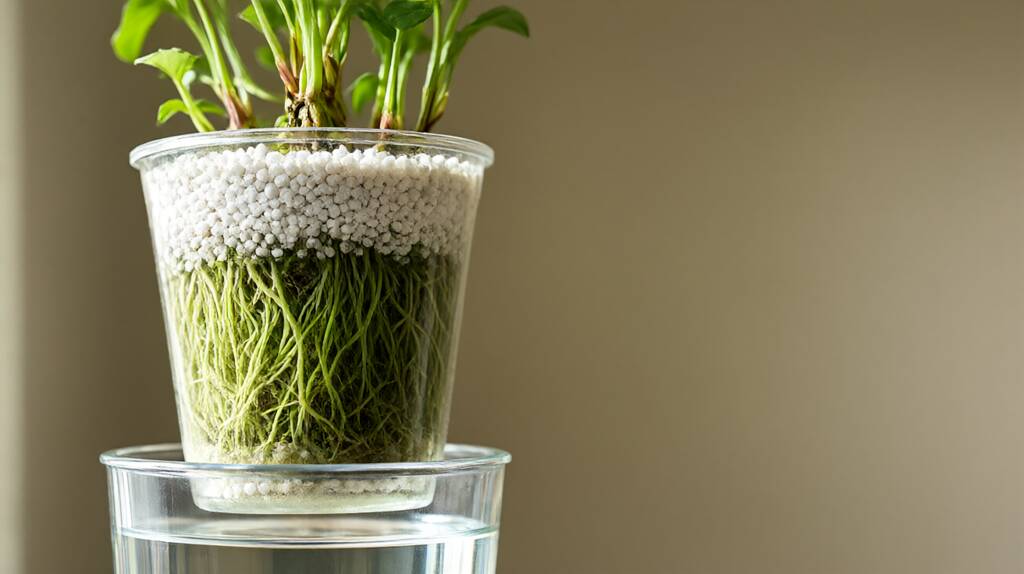
Perlite particles create a network of large air-filled pores. Roots grow through and around these particles, accessing oxygen in the pore space and nutrient solution that drains through the medium. The particle surface holds a thin film of solution, which provides a small buffer between irrigation events, but this buffer is measured in minutes, not hours.
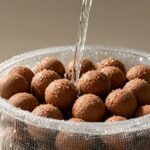
The high porosity also means perlite drains fast. A hydroponic container filled with perlite empties almost completely under gravity within seconds. This is desirable in systems designed for it, but it means the medium cannot sustain a plant through a missed irrigation cycle.
Perlite-Only vs Blended Media
Perlite alone works well in systems with frequent or continuous irrigation, such as drip systems, ebb-and-flow tables, and Dutch buckets. The medium drains completely between cycles, and the next irrigation replenishes the solution film.
Blended media, typically perlite mixed with coco coir or peat, work better in systems with longer intervals between irrigation, such as top-watered containers or wick systems. The organic component holds water and nutrients between cycles, while perlite provides structure and aeration. The trade-off is that blended media retain more water, which can reduce aeration if the ratio is too high.

Suitable Hydroponic Applications
Perlite suits drip irrigation, ebb-and-flow, Dutch bucket systems, and deep-water culture with a perlite collar. It suits tomatoes, cucumbers, peppers, and most fruiting crops that need high oxygen and can tolerate a drying cycle. It is less suitable for leafy greens in passive systems, where the fast drainage can lead to uneven moisture distribution.
For a comparison of hydroponic growing media, see the article on growing medium for NFT hydroponics and the broader growing medium properties guide. The hydroponics glossary covers perlite as a growing medium.
Irrigation and Drainage Requirements
A perlite hydroponic system needs either continuous flow or frequent scheduled irrigation. In a drip system, emitters should run for short periods multiple times per day. In ebb-and-flow, the flood cycle should be frequent enough that the medium never fully dries. The drain should be unobstructed so the medium empties completely between cycles.
Overwatering in perlite hydroponics looks different from overwatering in soil. Because perlite drains so fast, waterlogging usually means the drain is blocked or the irrigation frequency is too high for the system to empty. The fix is drainage design, not less water.
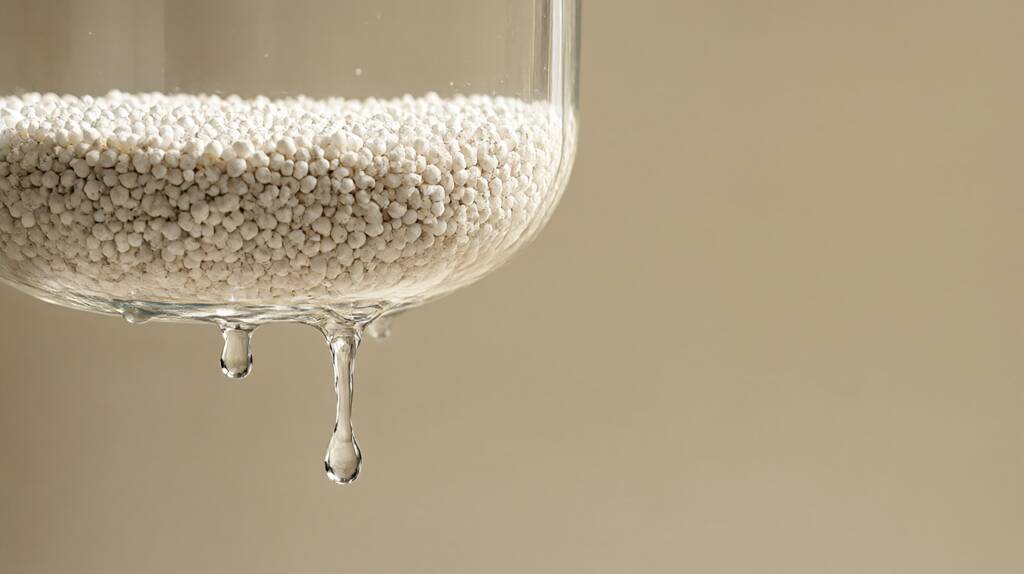
Nutrient Solution Management
Perlite holds almost no nutrient reserve. Every nutrient the plant needs must come from the solution. This means the solution must be complete, balanced, and refreshed regularly. A perlite system with a depleted or imbalanced solution will show deficiency symptoms faster than a soil system, because there is no soil buffer to draw from.
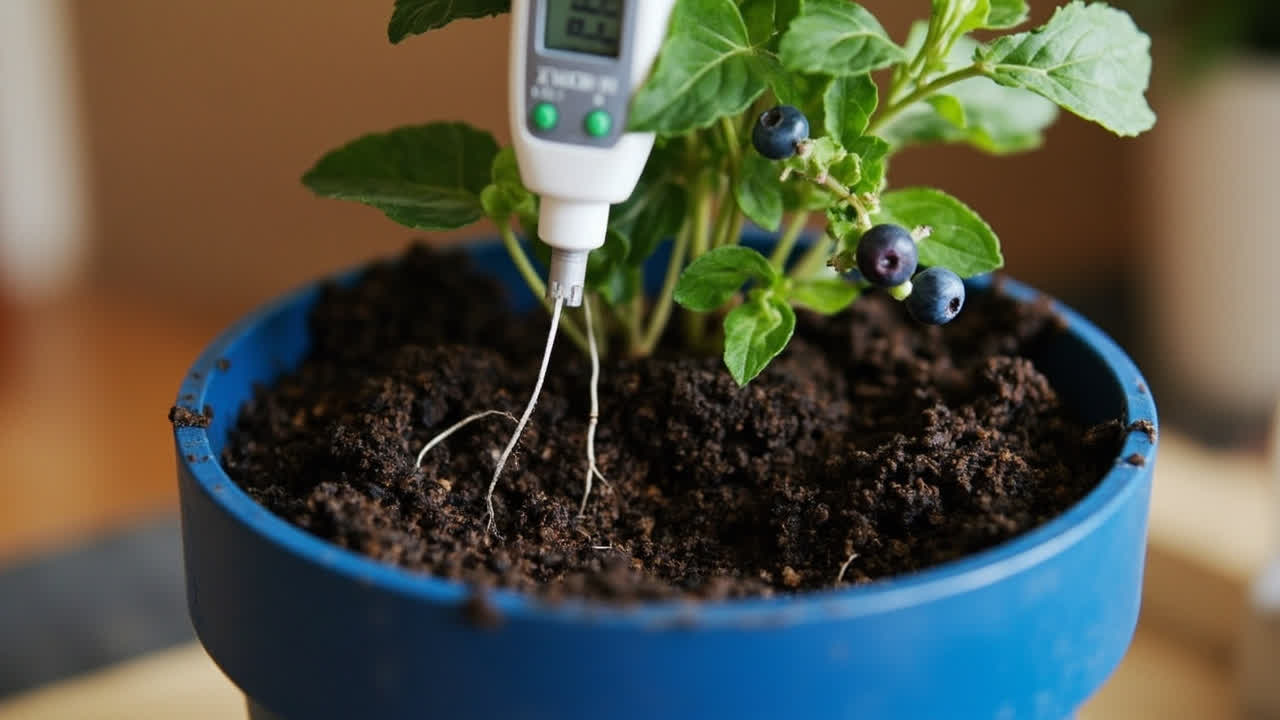
Electrical conductivity and pH must be monitored. Perlite does not buffer pH, so the solution pH directly affects nutrient availability. Runoff should be collected and tested to check whether the system is accumulating salts.
System Compatibility
Perlite is compatible with most hydroponic systems except those that rely on the medium to hold water between long intervals. Wick systems and passive hydroponics generally work better with coco coir or a blend. Active systems with pumps and timers work well with perlite.
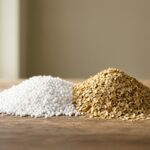
Perlite is also used as a component in blended hydroponic media, where it is mixed with coco coir, peat, or vermiculite. The blend ratio depends on the system and the crop. A common starting blend is 50 percent perlite and 50 percent coco coir by volume.
Reuse and Sanitation Considerations
Perlite can be reused across multiple growing cycles, but it must be sanitized between crops. The standard process is to remove plant debris, rinse thoroughly, and soak in a dilute bleach solution or hydrogen peroxide for 30 minutes, then rinse again. Some growers steam-sterilize large batches.
Reused perlite may have accumulated salts or degraded structure. If the particles have broken down or compacted, replace them. Reused perlite should be tested for pH and EC before replanting.

Advantages and Limitations Compared with Other Media
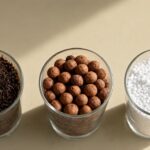
Compared to rockwool, perlite is cheaper, lighter, and easier to dispose of, but it provides less water buffering. Compared to coco coir, perlite drains faster and provides more aeration, but holds less water and fewer nutrients. Compared to clay pebbles, perlite is lighter and cheaper, but less durable and more prone to floating.
The main limitation is the lack of water and nutrient buffering. A perlite system demands more attention to irrigation scheduling and solution management than a coco coir system. For growers who can manage that, perlite is an excellent medium. For growers who want a more forgiving system, a blend or coco coir alone may be better.
For a detailed comparison of hydroponic growing media, see perlite vs vermiculite for hydroponics and perlite vs vermiculite for plants.
Last reviewed on November 9, 2026
Sources and further reading: Perlite Institute, horticultural applications and hydroponics; University of Florida IFAS Extension, commercial crop production in perlite media; Oklahoma State University Extension, soilless growing media.