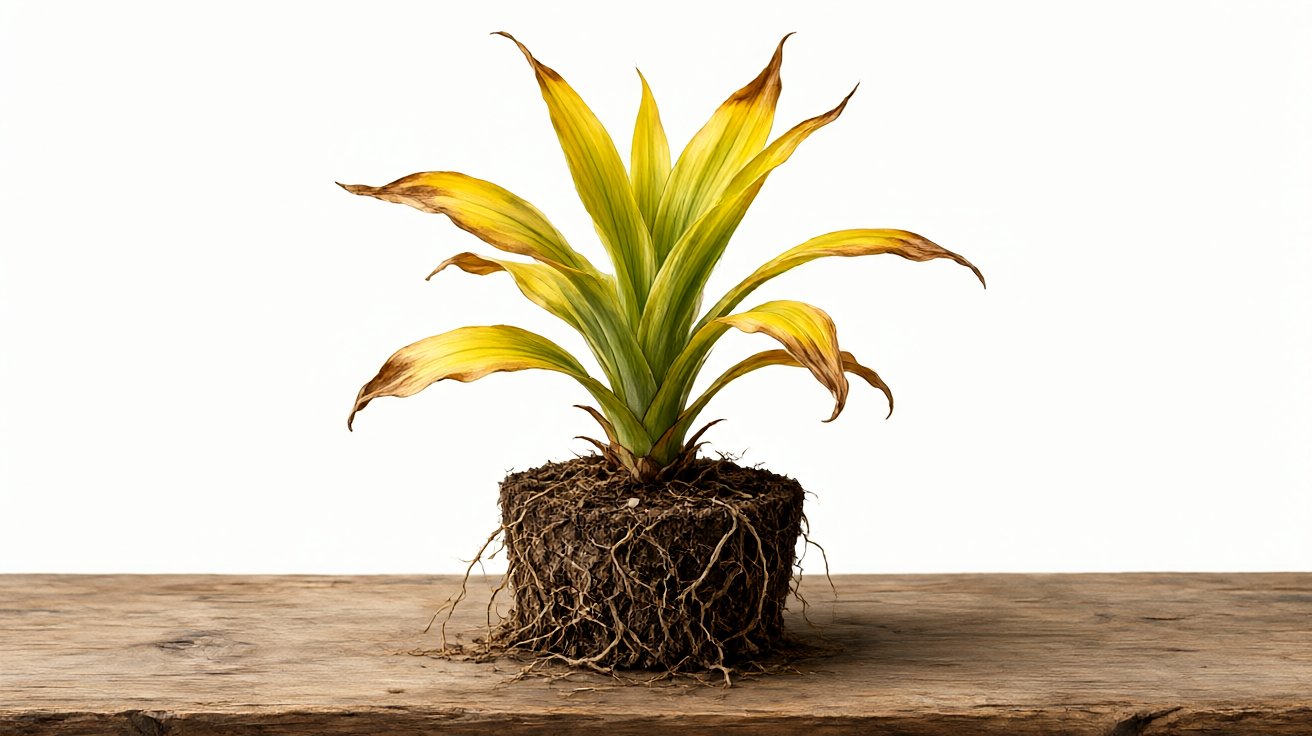

A corn plant that is dying usually tells you which of three things went wrong before it stops telling you anything: the root ball is waterlogged, the light is too low for too long, or the soil has accumulated enough fluoride and salt to burn the leaf tips. Each of those has a different rescue sequence, and the wrong sequence makes the decline faster. The first job is not to water, fertilize, or repot. It is to read the plant.
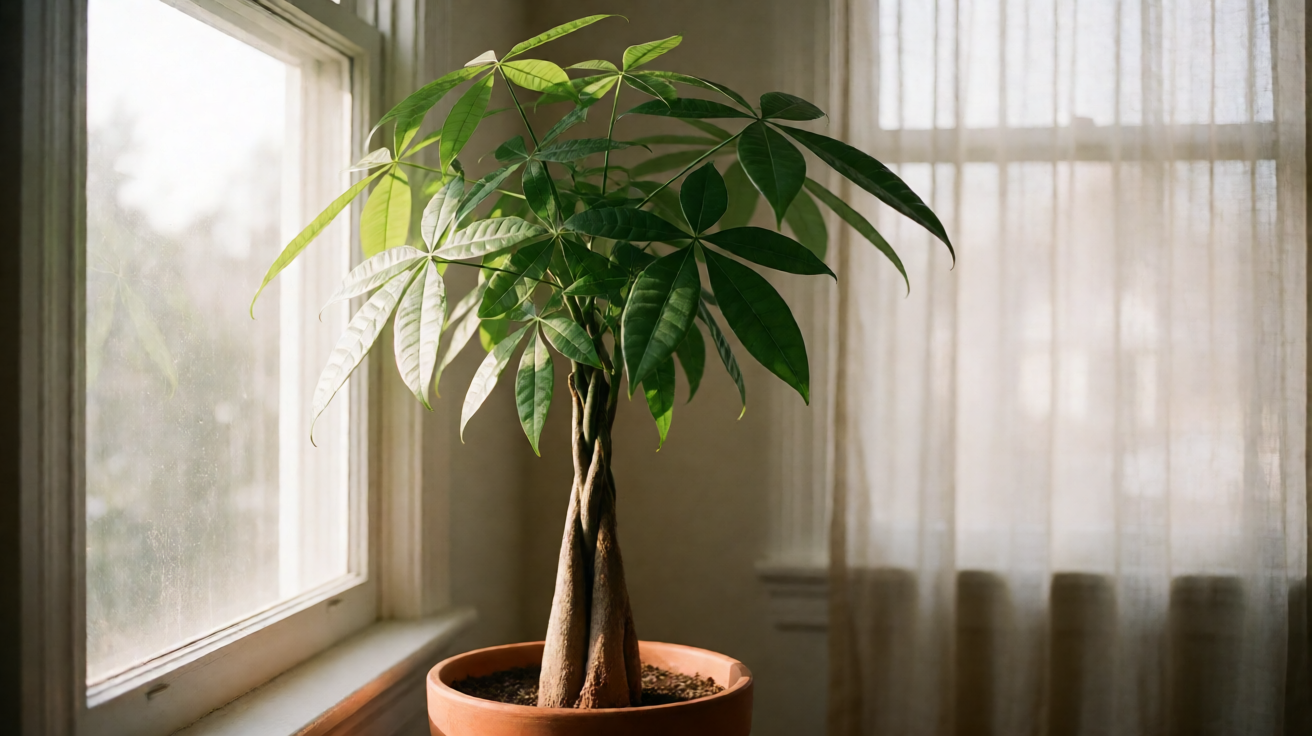
This guide is for Dracaena fragrans, sold as corn plant, mass cane, and occasionally as money tree. It is not for Pachira aquatica, the true money tree, which has a different root system and a different rescue protocol. If your plant has a braided trunk with multiple stems fused at the base, you are in the right place. If it has a single woody trunk with palmate leaves, go to the money tree rescue page instead.
How to Read a Dying Corn Plant
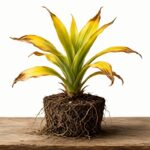
Corn plants decline in a predictable order. The oldest leaves yellow first, starting at the tips and moving inward. New growth slows or stops. The cane softens at the base. The soil stays wet for more than five days after watering. These four signs together point to root rot. If the leaves are pale but the soil dries normally, the problem is light, not water.
The Four Triage Questions
Ask these in order before touching the plant:
- When did you last water, and how long did the soil stay wet after?
- Is the cane firm when you press it with your thumb, or does it give?
- Are the yellow leaves at the bottom of the plant only, or distributed throughout the canopy?
- Has the plant been moved, repotted, or exposed to cold air in the last 30 days?
If the soil stayed wet more than four days and the cane gives under pressure, you are dealing with root rot. If the soil dried in two days and the cane is firm but leaves are pale, you are dealing with light starvation. If the plant was moved recently and leaves are dropping from the middle of the cane, you are dealing with shock.
Root Rot Rescue: The Corn Plant Protocol
Corn plants are sold with a dense root ball that fills the pot completely. That density is the problem. When the roots fill every cubic centimeter of soil, water has nowhere to drain, and the center of the root ball stays saturated for days. The outer roots rot first because they sit in the wettest zone. By the time the leaves yellow, the outer third of the root ball is already dead.
Step 1: Unpot and Inspect
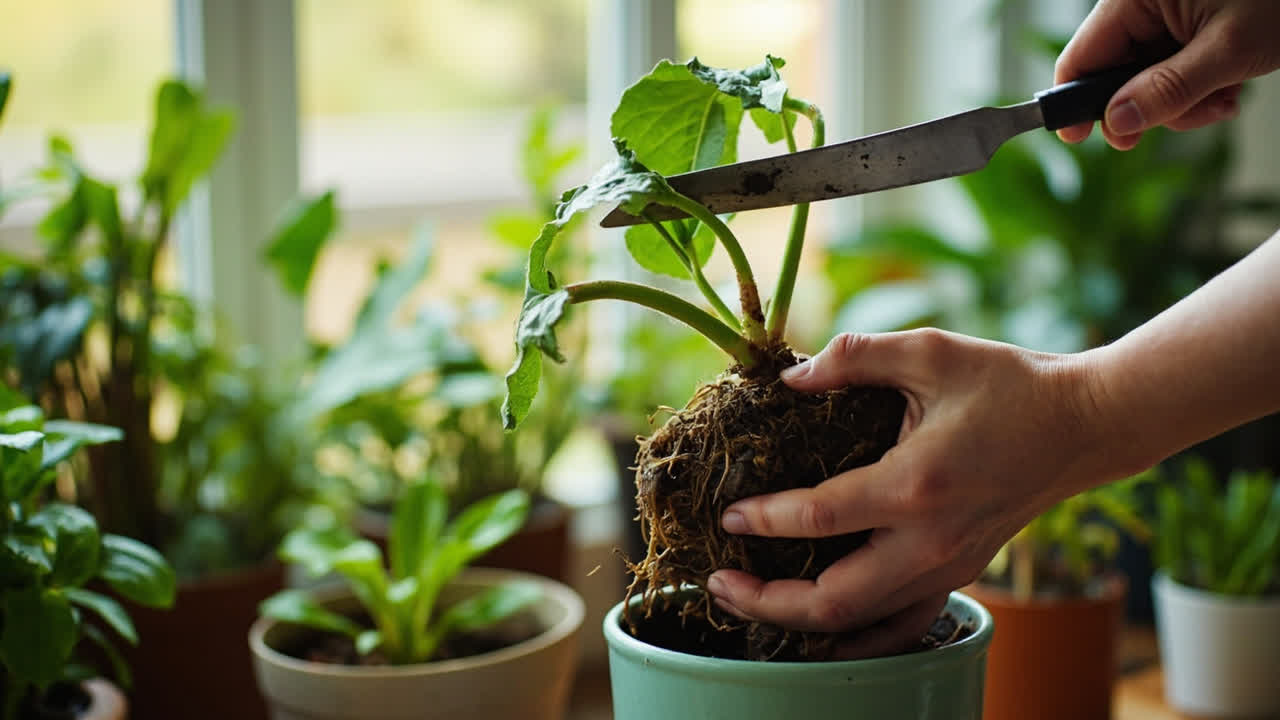
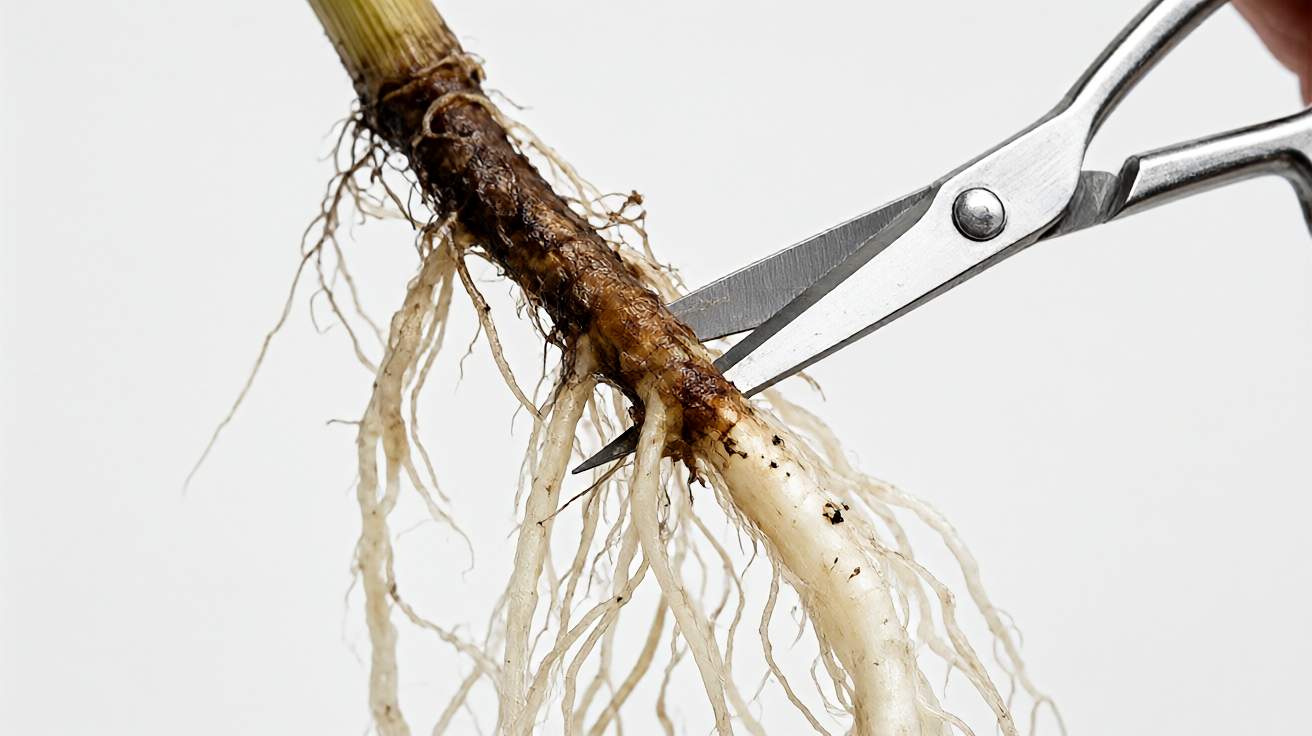
Slide the plant out of its pot. If it resists, squeeze the pot sides or run a knife around the rim. Do not pull by the cane. Once out, examine the root ball from the bottom. Healthy corn plant roots are white to cream, firm, and slightly fuzzy. Rotted roots are brown to black, soft, and may smell sour. The smell is the most reliable indicator: if the root ball smells like compost or sulfur, rot is present even if the roots look white on the surface.
Step 2: Trim to Living Tissue
Use sterilized scissors or a knife. Cut away every root that is brown, soft, or hollow. Cut back to firm white tissue. If more than half the root mass is gone, the plant has a serious recovery ahead. If less than a quarter is gone, recovery is straightforward. The critical rule: do not leave any brown tissue attached. Rot spreads through contact, and a single brown root tip left in the ball will re-infect the trimmed roots within 48 hours.
Step 3: Repot in a Smaller Pot
This is the step most people get wrong. After trimming, the root ball is smaller, but the pot stays the same size. The gap between the trimmed root ball and the pot wall fills with fresh soil, which stays wet because the reduced root mass cannot absorb it. The plant sits in wet soil again, and the rot returns.
Downsize the pot. Match the new pot diameter to the trimmed root ball plus two centimeters of clearance on each side. If the root ball was 15 cm across and you trimmed it to 10 cm, use a pot that is 14 cm in diameter. Fill the bottom third with a fast-draining mix: two parts potting soil, one part perlite, one part orchid bark. Set the plant, fill around the roots, and press firmly but not compacted.
Step 4: The 14-Day Recovery Window
Water once after repotting, until water runs from the drainage hole. Then do not water again for 14 days. The trimmed roots need time to callus and start new growth. During this window, keep the plant in bright indirect light at 20 to 24 degrees Celsius. Avoid direct sun, which stresses a plant with reduced root capacity. Avoid cold drafts, which slow root regeneration.
After 14 days, check the soil at 5 cm depth. If it is dry, water thoroughly. If it is still moist, wait another three days and check again. The recovery timeline is 30 to 60 days before new leaf growth appears. Do not fertilize during recovery. Fertilizer on damaged roots causes salt burn that compounds the problem.
Light Starvation: The Other Common Killer
Corn plants tolerate low light better than most houseplants, but tolerance is not preference. A corn plant in a dim corner will survive for months, then decline suddenly. The mechanism: low light reduces photosynthesis, which reduces carbohydrate production, which reduces root growth, which reduces water uptake, which causes the soil to stay wet longer, which causes root rot. Light starvation and root rot are often the same problem at different stages.
How to Tell Light Starvation from Root Rot
Light-starved corn plants have pale, elongated new growth that leans toward the light source. The older leaves may yellow, but the cane stays firm and the soil dries normally. Root-rotted plants have yellow leaves throughout, a soft cane, and soil that stays wet.
If the diagnosis is light starvation without root rot, move the plant to a spot with bright indirect light. A north-facing window or a spot 1 to 2 meters from an east or west window works. Do not move it to direct sun immediately. The leaves have adapted to low light and will sunburn. Acclimatize over two weeks by increasing exposure gradually.
The Fluoride Factor
Corn plants are sensitive to fluoride in tap water. Fluoride accumulates in the leaf tips and causes brown, crispy margins that look like underwatering but are not. The fix is to switch to rainwater, distilled water, or water that has sat overnight in an open container. If your tap water is fluoridated, this single change can stop tip burn within one growing season. Do not fertilize with superphosphate, which contains fluoride.
Shock Recovery: When the Plant Was Moved
A corn plant that was recently moved, repotted, or exposed to cold air may drop leaves from the middle of the cane. This is shock, not rot. The roots are intact but the plant has reduced its leaf area to match its reduced capacity. The rescue is patience, not intervention.
Do not repot a shocked plant. Do not fertilize. Keep watering on the normal schedule, but reduce the volume by one third. Place the plant in stable conditions: consistent temperature between 18 and 24 degrees Celsius, no drafts, moderate indirect light. New growth should appear at the top of the cane within 30 to 45 days. If no new growth appears after 60 days, check the roots for rot, as shock can mask an underlying rot problem.
When to Cut Your Losses
Sometimes a corn plant is past recovery. The signs that repotting and rescue will not work:
- The cane is soft and hollow for more than half its length.
- More than 75 percent of the root mass is rotted.
- The plant has been in waterlogged soil for more than three weeks.
- There is no firm tissue left at the base of any cane.
If the plant is beyond rescue, you can still propagate. Cut the top 15 to 20 cm of the healthiest cane, strip the lower leaves, and root it in water or moist perlite. Corn plant cuttings root in 3 to 6 weeks. The rooted cutting becomes a new plant. The original cane, if any firm tissue remains, may also produce new shoots from the base if left in dry soil.
Prevention: Keeping Corn Plants Alive
The three rules that prevent most corn plant deaths:
- Water only when the top 5 cm of soil is dry. For most indoor conditions, that means every 10 to 14 days.
- Use a pot with a drainage hole. No exceptions. A pot without drainage turns every watering into a root rot risk.
- Keep the plant within 2 meters of a window. Corn plants survive in low light but thrive in bright indirect light.
Repot every two years, or when roots circle the bottom of the pot. When repotting, go up one pot size, never two. A pot that is too large holds more soil than the roots can process, and the excess soil stays wet.
Last reviewed on 6 November 2026.
Sources and further reading
University of Florida IFAS Extension, “Dracaena fragrans: Corn Plant” (edis.ifas.ufl.edu). Royal Horticultural Society, “Dracaena: houseplant care” (rhs.org.uk). Clemson Cooperative Extension, “Houseplant Care: Dracaena” (hgic.clemson.edu). Missouri Botanical Garden, “Dracaena fragrans” (missouribotanicalgarden.org).
From Bank Statement to QuickBooks-Ready File
That manual cleanup you just read about? This tool skips it. Turn your PDF into QBO for QuickBooks without storing your data anywhere.
Start Converting