Most dying snake plants can be saved if you diagnose the cause within the first 2 weeks of visible decline. The rule that matters: snake plant roots suffocate in consistently wet soil within 5–7 days below 65°F (18°C) because the rhizome stores water — extra moisture has nowhere to go. Once you know what the plant is showing you, the revival path is straightforward. Wrong treatment — like watering a rotting plant — kills in 14 days.
Diagnosis first, always. Yellow, mushy leaves from overwatering demand a completely different response than dry, crispy edges from underwatering. Snake plants send specific signals when something is wrong. The key is matching the symptom to the cause before you do anything with a watering can.
This article walks through symptom-by-symptom diagnosis, the exact revival protocol for each cause, and an honest recovery timeline. If root rot has spread through the rhizome past week 3, or cold damage has split the leaves down the center, propagation from leaf cuttings is the only option — and that works, but it takes 4–6 weeks to see new roots.
What Your Snake Plant Is Telling You (Symptom Diagnosis)
Rhizomatous plants like Sansevieria communicate distress through their leaves before the roots fail completely. A yellowing leaf from root rot looks different from a yellowed leaf caused by cold or age. Check each symptom against the table below, then jump directly to the revival section. Read: snake plant leaves turning yellow.
| Symptom | Cause | Recovery Chance | Action Within |
|---|---|---|---|
| Translucent, mushy lower leaves that pull away easily | Root rot — soil too wet for 7+ days | Good if rhizome firm | 24 hours |
| Soft, brown-black rhizome on squeezing | Advanced root rot — usually fatal | Low — propagate | Immediately |
| Dry, crispy brown leaf tips and edges | Underwatering or low humidity | High | 1 week |
| Leaves drooping and folding inward | Thirst — bone dry soil throughout | Very high | 48 hours |
| Yellow mushy leaves + foul soil smell | Root rot from compacted wet mix | Moderate | 24 hours |
| White cottony patches at leaf bases | Mealybugs — common in dry indoor air | High if caught early | 2–3 days |
| Tiny webbing + stippled pale dots on leaves | Spider mites — thrive below 40% humidity | Moderate | 1 week |
| Vertical splits or soft patches after cold draft | Cold damage below 50°F (10°C) | Low for damaged leaves | Immediately |
If you see multiple symptoms at once, start with the mushy leaves. Root rot kills fastest and demands attention within 24 hours. Pests and cold stress can wait while you fix the water issue.
Overwatering and Root Rot in Snake Plants (The #1 Killer)
Snake plants fail from overwatering more than any other cause because their rhizome — the thick stem running underground — already works like a water reservoir. Adding wet soil on top of that reservoir means the roots cannot breathe. Root rot sets in once soil moisture stays above 40% for 7+ days, especially in temperatures below 65°F (18°C) when the plant cannot transpire fast enough to pull water out of the root zone.
Here is how to assess whether your plant is salvageable. Gently remove the plant from its pot and squeeze the rhizome. A healthy rhizome feels firm and cream-colored inside. A rotting rhizome softens, turns translucent, and often smells musty. If even one section of the rhizome remains firm, you can save it by cutting away everything soft.
If the entire rhizome collapses under light pressure, propagation is the only path forward. Skip to section 5. For plants with at least some firm tissue, follow these steps in order:
- Unpot the snake plant and shake off all wet soil. Rinse the roots under lukewarm water to see clearly what you are working with.
- Trim every mushy root back to healthy white tissue with sterilized scissors. If the rhizome has soft spots, cut them out completely — leave only firm, cream-colored tissue.
- Let the plant air-dry in a warm, shaded spot for 2–3 hours. This forms a callus on the cuts that helps prevent reinfection.
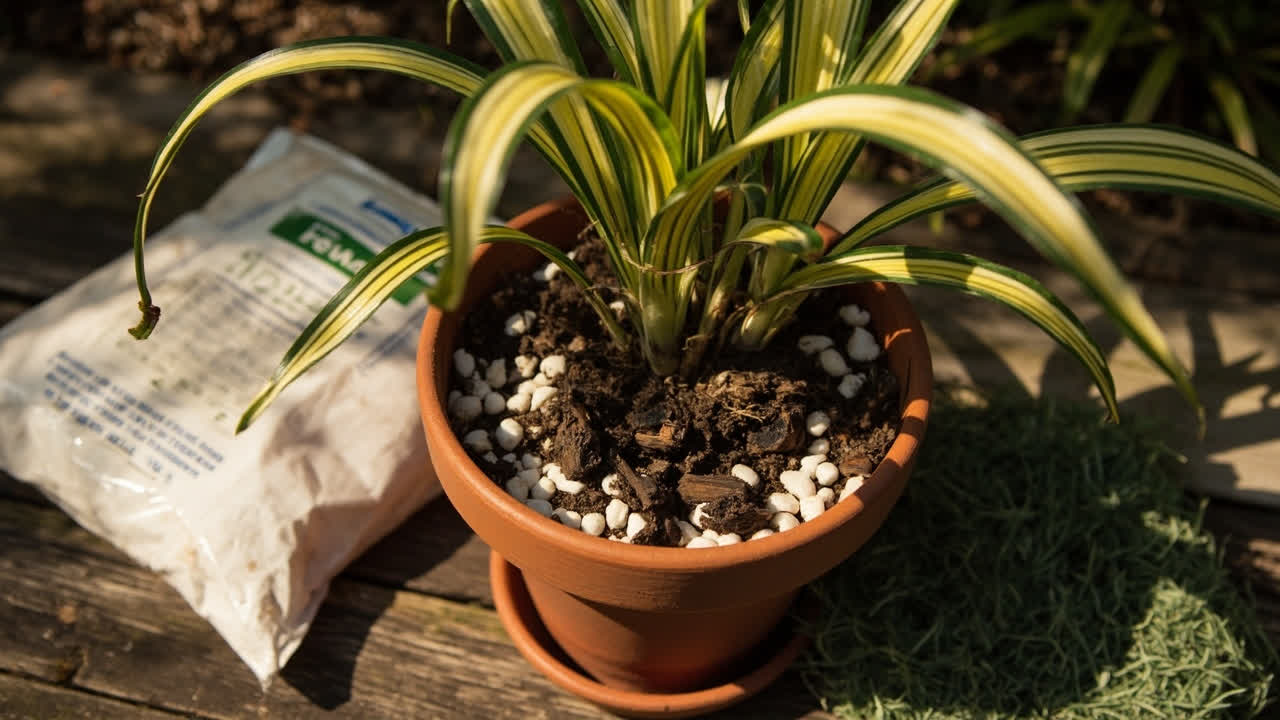
- Repot into fresh, well-draining cactus/succulent mix — never potting soil or compost, which holds too much water for Sansevieria.
- Choose a terracotta pot one size smaller than before if the root mass shrank. Terracotta breathes, pulling moisture from the soil and reducing the chance of rot returning.
- Wait 2–3 days before the first water. This gives damaged roots time to heal. Water lightly on day 3, then wait until the top 2 inches of soil dry completely before the next round.
New roots typically appear in 3–4 weeks. Do not tug the plant to check — wait until you see a new pup or firm leaf pushing up from the base. If the plant is still declining by week 3, it means rot returned. Unpot immediately, reassess the rhizome, and consider propagation.
Repotting a Dying Snake Plant With Root Rot
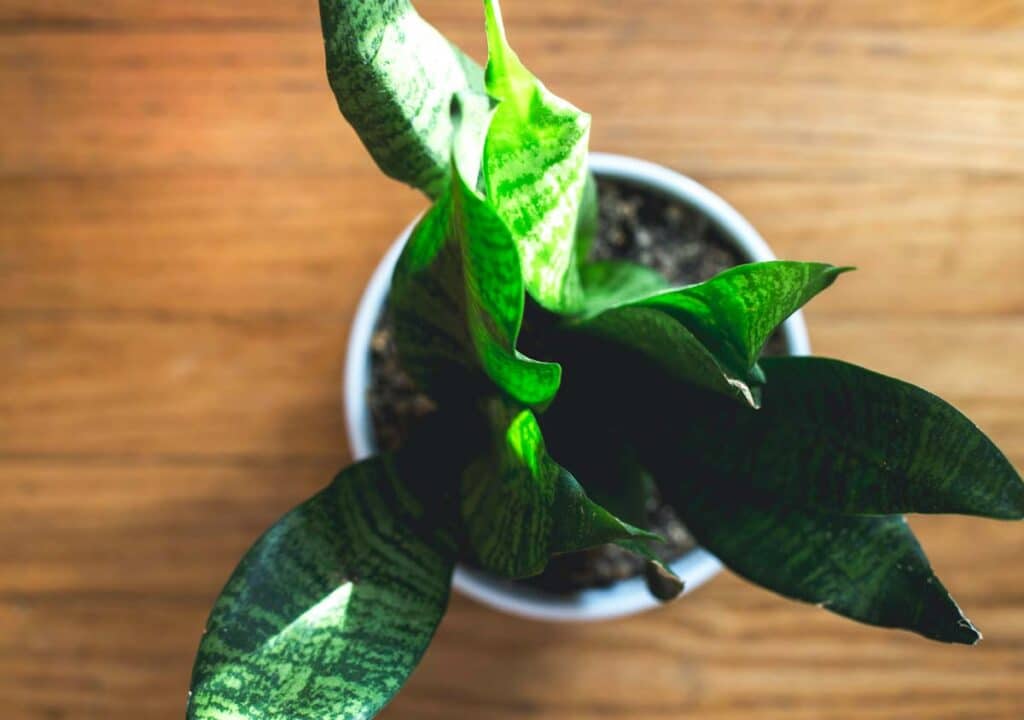
Use this repotting protocol when you have confirmed root rot and want to save the plant in a single focused session. The goal is to remove all sick tissue, replace contaminated soil, and set conditions that prevent reinfection.
- Gather your tools before unpotting: sterilized scissors, fresh cactus mix, a clean terracotta pot with drainage holes, and garden gloves.
- Remove the plant and rinse the entire root system under lukewarm running water. Wash away every trace of old soil — contaminated mix reinfects fresh roots if left behind.
- Trim all brown, mushy roots until you see only white or cream tissue. If the rhizome itself has soft spots, cut them out completely. No soft tissue should remain.
- Soak the remaining healthy roots in diluted hydrogen peroxide (1 part 3% H₂O₂ to 4 parts water) for 10 minutes to kill surface bacteria.
- Air-dry the plant on a paper towel in a warm, shaded spot for 2 hours before potting. This calluses the cuts and prevents transplant shock.
- Layer 1 inch of coarse gravel or perlite at the bottom of the pot, then fill with dry cactus mix. Set the plant at the same depth as before — burying the rhizome too deep invites rot.
- Do not water for 48–72 hours after repotting. When you do water, moisten lightly around the base only — not a full soak. Resume normal dry-out cycles after week 2.
- Place in bright indirect light, away from cold drafts. A north-facing windowsill with consistent 65–80°F (18–27°C) speeds recovery. Within 3–4 weeks, new roots should anchor the plant.
Do not fertilize during recovery. The plant has fewer roots to absorb nutrients — any added fertilizer will burn remaining tissue. Wait until new growth appears before resuming any feeding schedule.
Snake Plant Leaf Damage: Cold Stress, Pests, and Physical Trauma
Not all decline starts in the roots. Snake plants face three common non-watering threats: cold drafts, sap-sucking pests, and physical leaf damage. Each requires a specific fix — and in the case of cold damage, honesty about what will not recover.
Cold damage. Snake plants exposed to temperatures below 50°F (10°C) for more than a few hours develop soft, mushy patches or vertical center splits. Unlike root rot, the damage is permanent — the affected leaves will not regenerate or firm up again. Cut damaged leaves at the base with a clean blade. The plant itself survives if the rhizome is healthy. Prevention: move plants away from drafty windows in winter and never leave them in an unheated room overnight once temperatures drop below 55°F (13°C).
Mealybugs. Small white cottony patches at leaf joints signal mealybugs, which thrive in dry indoor heating. Isolate the plant immediately. Dab each visible insect with a cotton swop dipped in rubbing alcohol. For heavy infestations, spray with neem oil solution (1 tsp neem oil + 1 quart water) every 5 days for 3 weeks. Repeat — eggs hatch after 7 days, so one treatment is never enough.
Spider mites. Tiny webbing and pale stippled dots on leaves mean spider mites, which explode when indoor humidity drops below 40%. Wipe every leaf with a damp cloth, then mist the plant for 3 days straight. If mites persist, treat with neem oil every 4 days. Boost humidity to 45%+ long-term to prevent return.
Physical trauma. Broken or bent leaves happen from pets, tight corners, or moving damage. Unlike rot or cold, trauma rarely kills the plant. Trim leaves that are broken past the midway point. Minor cosmetic damage can stay — new growth will eventually push damaged leaves to the outside.
Snake Plant Propagation: Saving Genetics When the Plant Is Gone
When the entire rhizome has rotted or the crown collapsed, leaf-cutting propagation becomes the rescue plan. You cannot save the parent plant — but its genetics survive in healthy leaves. Read: snake plant benefits.
Pick a healthy upper leaf at least 4 inches tall. Cut it near the base and place the cutting in water or directly into moist cactus mix. Change water every 3–4 days — stagnant water breeds bacteria that kills the cutting. Roots begin forming in 4–6 weeks. Once the root system reaches 2 inches, pot it up in cactus mix and treat exactly like a mature plant.
A limitation worth knowing: variegation does not propagate reliably from leaf cuttings. A golden or banded snake plant may revert to plain green in the next generation. If variegation matters, division of offsets from the parent plant (when healthy) is the only method that preserves the pattern.
If the parent plant still has one firm section, propagation can run alongside recovery attempts. That way you have a backup even if the original fails.
Snake Plant Recovery Timeline: What to Expect
- Week 1: Stabilize. No more yellowing at the base within 3–4 days of fixing the cause. If new yellow leaves appear after day 5, rot likely returned — unpot and reassess the rhizome.
- Week 2–3: Root development. If you repotted, new white roots should be emerging at the base by the end of week 3. Check by gently brushing soil away from one edge — do not tug the plant.
- Week 4–6: First visible sign. A new pup pushes up from the remaining rhizome. This is the earliest reliable signal that the plant is out of danger.
- Month 3–6: Confirmed recovery. Multiple new leaves, firm to the touch, with the plant standing upright on its own. Resume normal care but maintain the dry-top-2-inches rule.
- Month 6: Full recovery — conditional. Full recovery depends on original damage extent. A plant that lost 60% of its leaves may take 9–12 months to return to full size. Patience, not more watering, solves this.
If at any point the plant continues declining despite correct care, the answer is usually that the rhizome failed somewhere you could not see indoors. At that stage, compost the plant and replace it with a healthy Sansevieria. Thick-leaved varieties like ‘Laurentii’ and ‘Zeylanica’ tolerate neglect almost indefinitely when drainage is correct from the start.
Long-Term Snake Plant Care After Revival
Reviving a snake plant is half the work. Keeping it alive long-term means three habits that stop the same failure from repeating.
Water only when the top 2 inches of soil feel dry to the finger. In winter, this typically stretches to every 3–4 weeks — sometimes as rarely as once per month in low light. Underwatering is always safer than overwatering for Sansevieria because the rhizome carries reserves for 3–4 weeks without soil moisture.
Keep the plant in bright indirect light but away from direct southern sun in summer. North or east-facing windowsills with consistent 60–85°F (15–29°C) work best. Cold drafts below 50°F (10°C) cause leaf splitting within 12 hours — move plants away from doors and drafty windows before winter sets in.
Use cactus soil and a terracotta pot permanently. Plastic pots retain moisture that Sansevieria does not need. Repot only when the rhizome pushes against the pot wall — typically every 2–3 years, not annually. Read: snake plant care guide.
Do not fertilize more than once every 6 weeks during the growing season (May through September). Skip feeding entirely in winter. Over-fertilization burns roots that were already stressed, pushing a recovering plant back into decline.