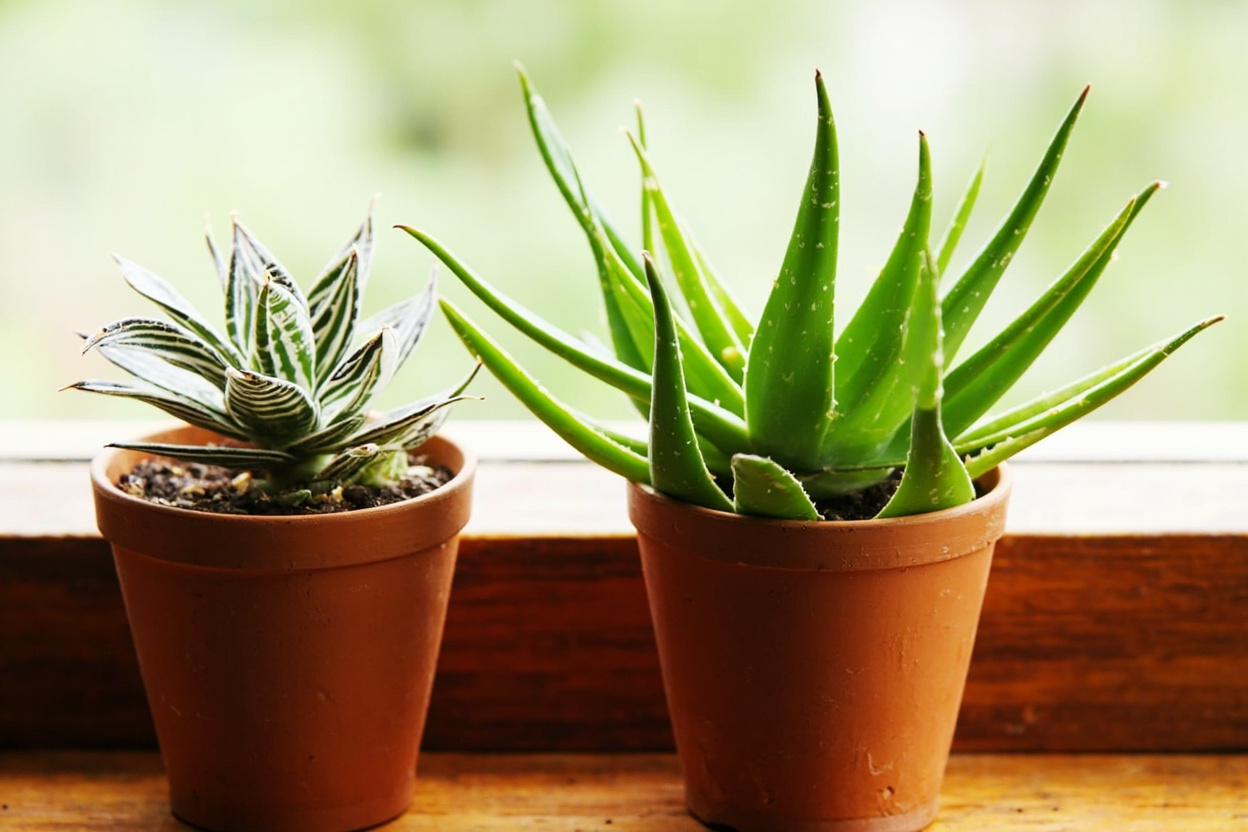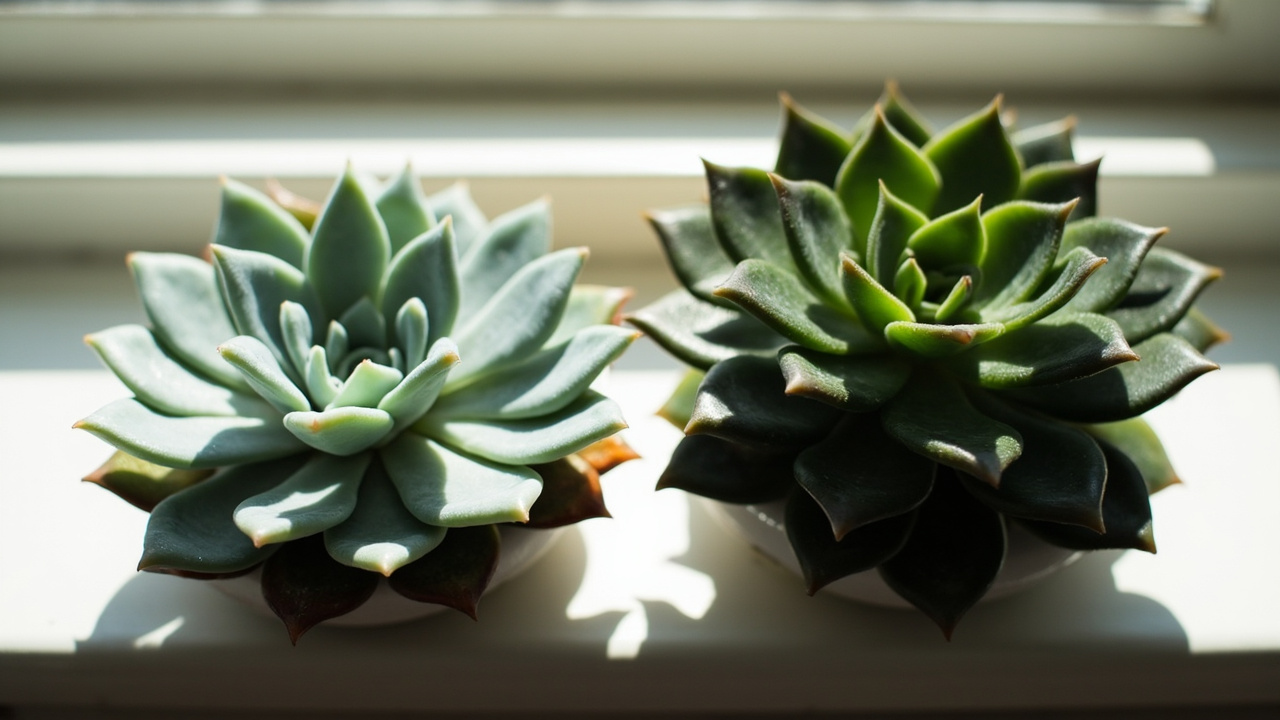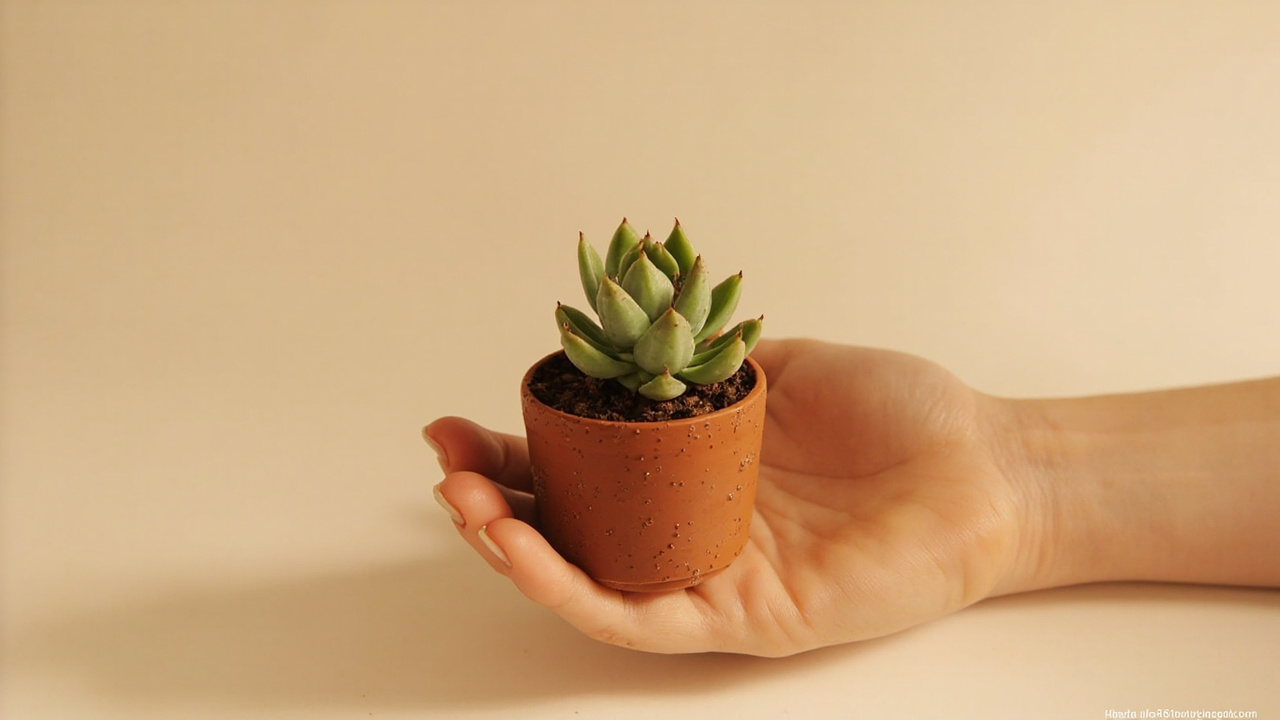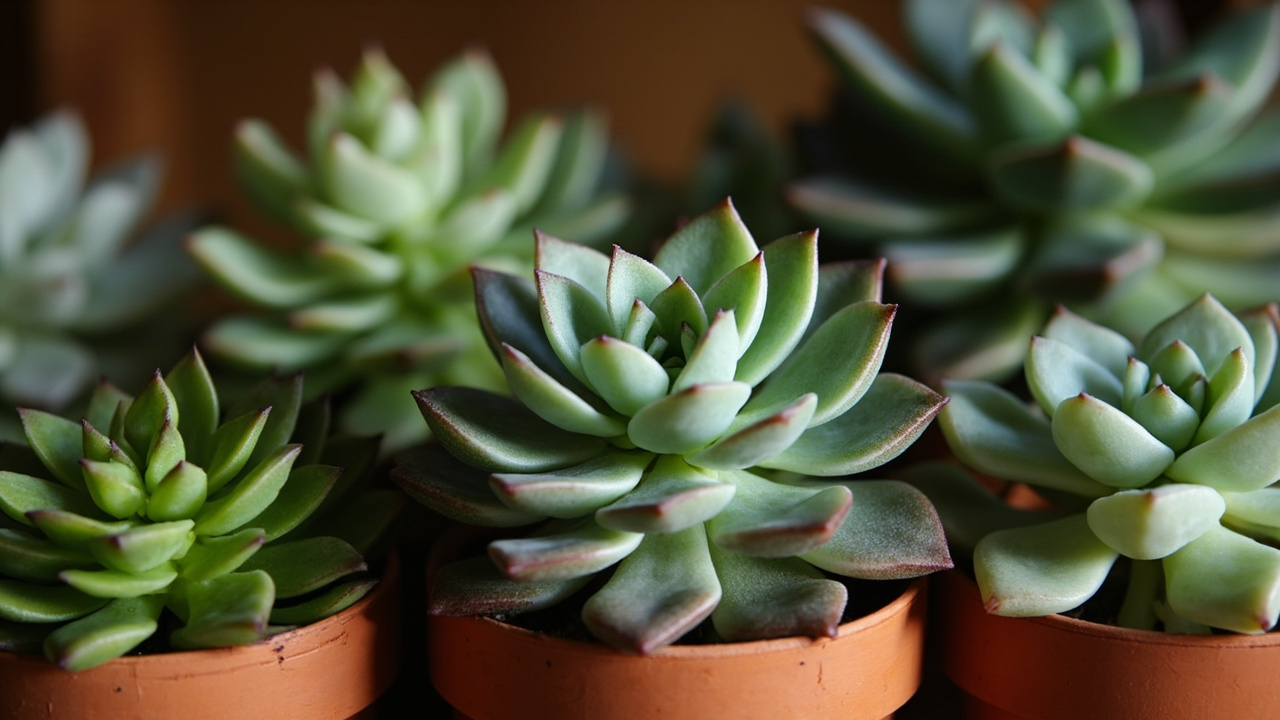

Walk into any succulent nursery and you will see a shelf labelled “Haworthia” with half a dozen plants that look nothing alike. Some have white stripes running across dark green leaves in neat horizontal bands. Others carry flat translucent tips that look like shards of green sea-glass pressed into soft flesh. A few grow in tight spirals that stack upward like a miniature aloe, and one variety keeps its leaves in two tidy rows like a fan folded shut. They are all Haworthias, but each comes from a different corner of South Africa with a different light tolerance, growth speed, and soil preference. Picking the right one for your shelf starts with knowing which shape suits your light and your patience.
The three main groups break down by what you see: stripe-patterned forms including attenuata, fasciata, and reinwardtii; window-leaved forms such as cooperi, cymbiformis, and truncata; and solid green rosettes including limifolia and retusa. Within each group the care shifts noticeably — window varieties scorch faster under direct sun, striped forms tolerate more light without bleaching, and flat-top truncatas need the most consistent watering of all six. This guide walks through the most commonly available varieties by appearance, growth habit, and what each one demands from you as the grower. For a full overview of Haworthia care across light, watering, soil, propagation, and common problems, read the Haworthia plant care complete guide.
Haworthia Attenuata (Zebra Plant): The Classic White-Striped Variety
Haworthia attenuata is the plant most people picture when they hear “Haworthia” — a tight rosette of narrow pointed leaves covered in raised white tubercles that form horizontal stripes across both surfaces. Run your finger across a healthy attenuata leaf and you will feel the rough texture of the tubercles. This texture is the fastest way to tell attenuata apart from its look-alike fasciata: attenuata carries tubercles on both the outer and inner leaf surfaces, while fasciata has a smooth inner surface with stripes only on the underside.
Attenuata is a forgiving grower under standard bright indirect light. It tolerates lower light than most succulents, though the white tubercles fade and the rosette stretches with visible etiolation if the plant is kept too far from a window. Under good light the offsets appear within 6-8 weeks after repotting into a fresh gritty mix, provided the plant is not experiencing overwatering or underwatering during the recovery window. The Royal Horticultural Society lists attenuata as one of the easiest succulents for low-light rooms, making it a reliable first Haworthia for an east-facing windowsill. Place it alongside other compact succulents in a well-draining pot and water only when the growing medium feels completely dry.
Haworthia Fasciata vs Attenuata: The White Stripe Mix-Up
The single most common identification error in the Haworthia world is calling every striped plant “zebra cactus.” Both fasciata and attenuata share the same dark-green-leaves-with-white-bands look, but the stripe placement tells them apart in seconds. On fasciata the white bands appear only on the underside of each leaf — the inner surface is smooth and dark green with no tubercles. On attenuata the white bands cover both surfaces and feel rough to the touch.
Fasciata produces a tighter, more compact rosette than attenuata, with leaves that curve inward rather than spreading outward. Both varieties develop the same fibrous root system — thin, branching roots that spread horizontally through the gritty mix rather than diving deep. Watering needs are nearly identical for the two: soak the soil thoroughly, let it drain completely, and wait until the medium is dry before watering again. If you already own a striped Haworthia and are unsure which you have, lift a lower leaf and check the inner face. A smooth surface means fasciata. A bumpy surface means attenuata. The care is the same either way, so the distinction matters more for collection accuracy than for survival.
Haworthia Cooperi (Window Plant): Why Translucent Leaves Are Different
Haworthia cooperi looks like it belongs in an aquarium. The leaves are soft, fleshy, and translucent at the tips, with the leaf tissue functioning as a biological window that channels light to chlorophyll deeper in the leaf. In its native Eastern Cape habitat the succulent grows partially buried with only the transparent tips exposed — light passes through the leaf window to reach photosynthetic tissue below while the rest of the plant stays underground, protected from heat and grazing animals.
This evolutionary trick means cooperi needs different light management than the striped varieties. Direct morning sun burns the translucent tips within days, turning them opaque white or brown — a clear sign of sun stress. Bright indirect light is the ceiling. If the windows start to cloud or the leaves elongate, the plant is showing early etiolation — it needs more light but not direct sun. Within two weeks of moving to a shadier spot the window transparency improves noticeably. The soil should also be slightly grittier than the standard succulent mix because cooperi’s soft leaves hold moisture longer than the firm leaves of attenuata or fasciata. Read the Haworthia light requirements guide for detailed positioning and grow light recommendations.
Haworthia Truncata: The Flat-Top Collector’s Prize
Haworthia truncata is the oddest of the group and the most sought-after. Instead of pointed or rounded leaves, truncata produces thick flat leaf tips that look as though someone snipped them off with garden shears. The leaves grow in two opposite-facing rows — a distichous arrangement — creating a fan shape rather than a conventional rosette. The flat tops are translucent windows, just like cooperi, serving the same light-capture function in an entirely different form. The translucency of the leaf tips ranges from milky white in young leaves to clear green in mature specimens, and the quality of the window transparency is a reliable indicator of watering health.
Truncata is slower than every other Haworthia on this list. A single mature plant may produce only one or two offsets per year under ideal conditions, and the fan structure means it cannot be divided the same way as a rosette Haworthia. The soil needs to drain faster than the standard succulent mix: San Marcos Growers recommends 60 percent mineral grit — pumice or scoria — to 40 percent organic matter. Truncata also dislikes being repotted; its thick roots bruise easily and the plant sulks for weeks afterward after experiencing transplant shock. Buy a well-rooted specimen in a pot you are happy with and leave it there for two to three years. The Haworthia soil mix guide covers the exact gritty mix ratios and drainage setup truncata needs.
Haworthia Cymbiformis: The Boat-Shaped Rosette
Haworthia cymbiformis produces soft boat-shaped leaves that form a dense clumping rosette. The leaf tips are translucent like cooperi but the leaf shape is distinctly different — cymbiformis leaves are wider and more boat-like (the species name means “boat-shaped” in Latin) while cooperi leaves are narrower and more cylindrical. Cymbiformis is among the most prolific offset producers of the entire genus: a single well-rooted mother plant in a 4-inch terracotta pot can fill the container with pups within one growing season, creating a caespitose cluster that overflows the pot rim.
This offset production makes cymbiformis the best variety for someone who wants a full, lush pot quickly. The pups root readily, and the mother plant tolerates division every 12 months without visible stress. The trade-off: cymbiformis needs more consistent water and higher ambient humidity than the striped varieties. Its soft leaves wilt noticeably within three to four days of drying out, while attenuata can go two weeks without visible stress. If you travel frequently or tend to forget watering, cymbiformis is not the right starting Haworthia. Follow the Haworthia watering guide for a season-by-season schedule that keeps soft-leaved varieties like cymbiformis hydrated without risking root rot.
Haworthia Reinwardtii: The Stacking Variety
Haworthia reinwardtii breaks the rosette mould entirely. Instead of a flat or rounded cluster of leaves, reinwardtii grows as a stacked spiral that reaches six to eight inches tall over several years. The leaves are smaller and more densely packed than attenuata, with the same raised white tubercles that give the plant a rough, almost scaly texture. The spiral growth habit makes it look closer to a Gasteria or a young Aloe than a typical Haworthia rosette.
Reinwardtii tolerates slightly more direct light than other Haworthias because its compact upright leaves experience less surface heat load. A south-facing window with light shade works well, whereas the same spot would bleach a cooperi within a week. The stacking habit also means reinwardtii rarely needs repotting — the plant stays narrow and tall, so a standard 3-inch pot can hold it for three to four years. Fewer repots mean less root disturbance and a longer healthier life. The downside is that offsets are less frequent than with attenuata or cymbiformis, so propagating reinwardtii takes patience. Its distinctive striations and tubercles make it an excellent complement to a flat-growing truncata or a spreading cymbiformis cluster on the same shelf.
Choosing Your Haworthia: Growth Rate, Offset Production, and Light Tolerance
The right Haworthia for your shelf comes down to what you can give it. Attenuata and fasciata are the most forgiving — they tolerate average light, standard succulent soil, and erratic watering better than the window-leaved species. Cooperi and cymbiformis need shade and consistent moisture but reward you with faster offset production and a softer, more sculptural look. Truncata is the slowest in every metric and belongs on a collector’s shelf with controlled conditions and high mineral substrate. Reinwardtii earns its place where space is vertical rather than horizontal, adding a stacked silhouette to the collection.
Variegated forms of most Haworthia varieties exist but come with a warning: variegated offsets grow slower than their solid green counterparts and can revert to all-green within four to six months, especially under low light. A variegated cooperi carries more visual value but less predictability — removing reverted offsets promptly helps preserve the variegation in the remaining pups. The standard green forms remain the smart purchase for anyone building a collection that must survive a watering missed here, a lower-light winter there, and the natural dormancy slowdown that comes with shorter days. The South African National Biodiversity Institute notes that Haworthia diversity in cultivation is the highest it has ever been, with over 150 named varieties now in regular trade. Start with one of the six described above, match it to your light, and let the offsets tell you when it is happy.
From PDF to Excel in one click
Forget retyping line by line. Upload any bank statement, get a spreadsheet you can actually use. Your files are never stored, and you can test the converter with 3 free conversions.
Try it free