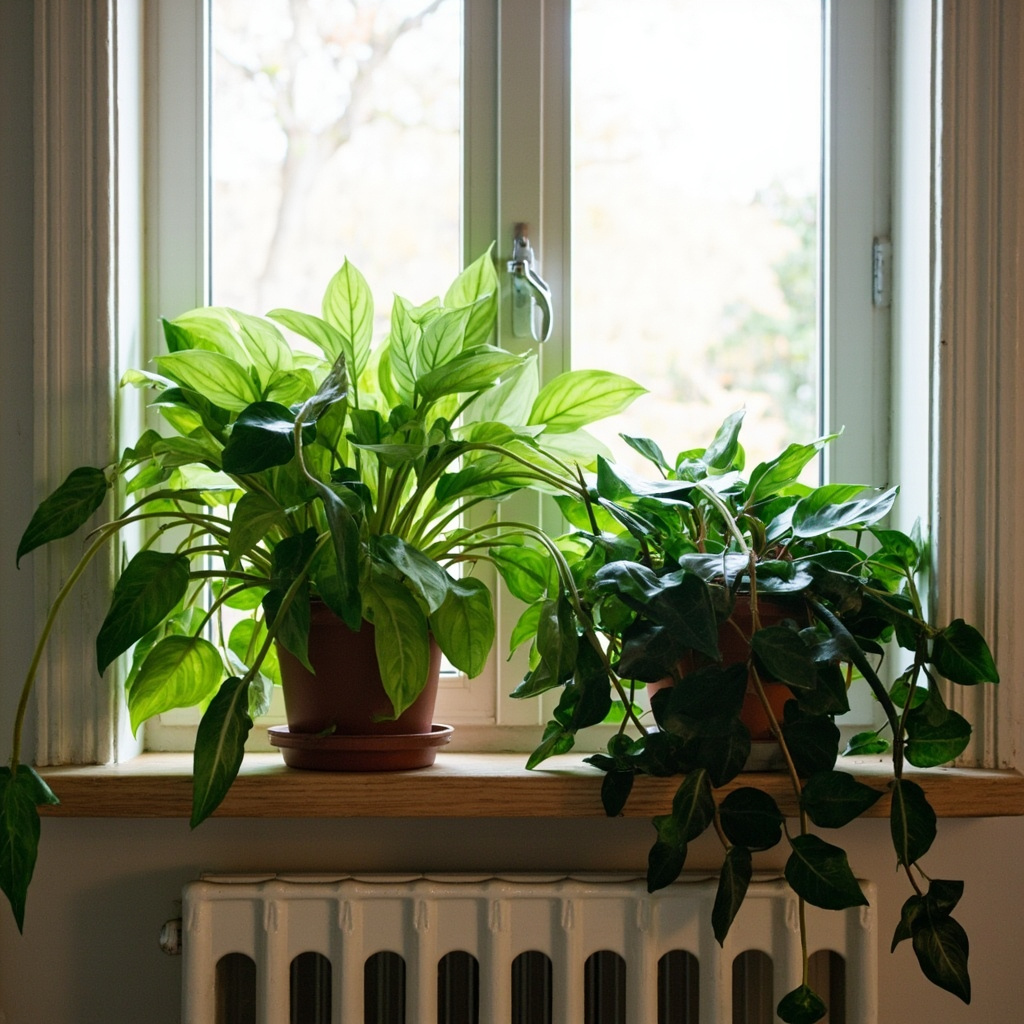
The most popular low-light houseplants are toxic to cats and dogs. Pothos, Philodendron, Peace Lily, and Snake plant — four of the species that show up on almost every low-light plant list — cause oral pain, drooling, or vomiting when chewed. Most online pet-plant guides ignore this. This page does the opposite: 10 species confirmed non-toxic to cats and dogs by ASPCA, ranked by shade tolerance, plus the popular low-light picks that should never be in a pet home.
“Pet-safe” also does not mean “safe to eat.” ASPCA’s non-toxic rating means not expected to cause life-threatening symptoms — any plant eaten in bulk can still cause mild GI upset. The page distinguishes mild symptoms from emergencies because the difference matters, and the cluster’s broader low light plants guide covers non-pet-specific picks if you do not have an animal in the home.
What “Pet Safe” Actually Means for Low-Light Houseplants (And What It Doesn’t)
ASPCA’s toxicity database covers more than 6,000 plant species, and “non-toxic” is the most common rating — but it carries specific meaning that most plant lists soften. ASPCA’s “non-toxic to cats” rating means: not expected to produce life-threatening symptoms if ingested. It does not mean safe to eat, it does not mean the plant will not cause GI upset, and it does not mean the same species carries the same rating for dogs (although for the most common houseplants, ratings track closely between cats and dogs). The honest limitation: no plant is 100% safe when eaten in bulk. Even a non-toxic Spider plant will cause mild vomiting in a cat that eats a leaf or two.
| Rating | What it means | Typical symptom severity | Example species |
|---|---|---|---|
| Non-toxic (ASPCA) | Not expected to cause severe or life-threatening symptoms | Mild GI upset possible in bulk (vomiting, diarrhea) | Spider plant, Boston Fern, Calathea, Parlor Palm, African Violet |
| Mildly toxic | Causes oral irritation, drooling, mild GI upset; usually self-resolving | Oral pain, drooling, vomiting for up to 24 hours | Snake plant (saponins), Pothos (calcium oxalate), Philodendron |
| Severely toxic | Can cause organ damage or death without aggressive vet treatment | Acute kidney failure (true Lilies in cats), severe oral burning (Dieffenbachia) | True Lily family (Lilium, Hemerocallis), Dieffenbachia, Oleander |
Three distinctions matter before picking any plant for a pet home. First, the difference between mildly toxic and severely toxic is the difference between “monitor at home for 24 hours” and “call the vet now.” Snake plant, Pothos, and Philodendron are mildly toxic — they cause oral pain and drooling from calcium oxalate crystals or saponins, and symptoms usually resolve in 12 to 24 hours. The Lily family is severely toxic to cats specifically — even a small amount of pollen can cause acute kidney failure within 24 to 72 hours, and many cats die without aggressive treatment. Second, “non-toxic” and “edible” are different categories entirely — non-toxic means not life-threatening, not safe-for-the-snack-drawer. Third, dogs and cats react to different plants differently in some cases; Lily toxicity is acute in cats but not dogs, while Dieffenbachia is acutely toxic to both. For low-light pet homes, the rule is straightforward: prefer species with an explicit ASPCA non-toxic rating, place plants where pets cannot easily chew, and call the vet or the ASPCA Animal Poison Control Center (888-426-4435) if any pet eats a plant you are uncertain about.
Common Low-Light Plants to Avoid in Pet Homes
The cluster’s most popular picks are not pet-safe, and naming them by name is the page’s honest value. Several species that consistently appear on general low-light lists should be excluded from any home with a cat or dog. The list is short, the risk is real, and the alternatives below cover the same low-light growing conditions.
- Pothos (Epipremnum aureum) — calcium oxalate crystals. One of the most popular low-light houseplants overall, but all parts contain needle-shaped calcium oxalate crystals that cause immediate oral pain, drooling, and vomiting when chewed. Symptoms usually resolve in 12 to 24 hours with no lasting damage, but the experience is unpleasant for the pet and the plant will be chewed. Keep out of pet homes, or place on an inaccessible shelf.
- Peace Lily (Spathiphyllum) — calcium oxalate crystals. Same mechanism as Pothos — calcium oxalate raphides in the leaves cause immediate oral burning. Mildly toxic rather than severely toxic. Note: Peace Lily is not a true Lily (it is in the Araceae family), so it does not share the kidney failure risk of true Lilies. Still mildly toxic and should be excluded.
- Philodendron (multiple species) — calcium oxalate crystals. The whole Philodendron genus contains the same needle-crystal mechanism. Heart-leaf Philodendron, Velvet-leaf Philodendron, and Tree Philodendron all qualify. Mildly toxic, oral pain, drooling, usually self-resolving.
- Dieffenbachia (dumb cane) — severe oral irritation. Higher calcium oxalate concentration than Pothos or Philodendron, so the oral burning is more severe. Pets that chew Dieffenbachia often refuse food and water for 12+ hours due to mouth pain. Mildly toxic in the strict sense but borderline severe for the immediate suffering it causes.
- Lily family (true Lilies, Daylilies) — acute kidney failure in cats. This is the one houseplant category that warrants an emergency vet call. True Lilies (Lilium species like Stargazer, Asiatic, Oriental, Tiger) and Daylilies (Hemerocallis) cause acute kidney failure in cats, often within 24 to 72 hours. Even pollen ingestion has caused documented fatalities. The mechanism is a nephrotoxin cats process uniquely. Any Lily exposure in a cat household warrants an immediate vet call regardless of how little the cat ate.
- Snake plant (Sansevieria / Dracaena trifasciata) — saponins, mild GI upset. Snake plant is mildly toxic, not severely toxic — symptoms are usually vomiting and nausea that resolves within 24 hours. The saponins are the mechanism. Despite appearing on virtually every low-light plant list, Snake plant is not safe for a pet that chews plants. Excluded from the picks below.
The low light plants guide includes these species in its broader list because they are excellent low-light plants. This page excludes them specifically because pets can chew them. For cat households especially, the Lily family exclusion is the single most important rule in the cluster — even a “pet-safe” list that quietly includes Lilies is doing readers a disservice.
The 10 Best Low Light Pet Safe Plants, Ranked
Ten species meet both filters: low-light tolerant (per the cluster’s broader picks) and non-toxic to cats and dogs (per ASPCA’s toxicity database as of late 2025). The ranking favors species that are widely available, well-tested in pet households, and tolerant of the specific challenge of low-light rooms. Each profile below includes the species, a one-line care note tuned for low light, and the pet safety profile. The comparison table at the end summarizes light tolerance, watering frequency in low light, and overall pet-safety confidence.
| Rank | Species | Light tolerance (low-light side) | Watering in low light | Pet-safe (ASPCA)? | Best placement |
|---|---|---|---|---|---|
| 1 | Parlor Palm (Chamaedorea elegans) | Excellent (50-200 fc) | Every 7-10 days in winter | Yes, non-toxic | Floor plant, corner placement |
| 2 | Boston Fern (Nephrolepis exaltata) | Good (100-200 fc, needs humidity) | Every 3-5 days, keep moist | Yes, non-toxic | Hanging basket, bathroom window |
| 3 | Spider plant (Chlorophytum comosum) | Excellent (50-300 fc) | Every 7-14 days | Yes, non-toxic | High shelf, hanging basket |
| 4 | Cast iron plant (Aspidistra elatior) | Exceptional (25-200 fc) | Every 14-21 days | Yes, non-toxic | Darkest corner, hallway |
| 5 | Calathea (multiple species) | Good (75-200 fc, no direct sun) | Every 5-7 days, keep evenly moist | Yes, non-toxic | Bathroom, kitchen, north window |
| 6 | African Violet (Saintpaulia ionantha) | Good (100-200 fc, no direct sun) | Bottom water every 7-10 days | Yes, non-toxic | East or north-facing windowsill |
| 7 | Prayer plant (Maranta leuconeura) | Good (75-200 fc) | Every 5-7 days, keep moist | Yes, non-toxic | Hanging basket, low shelf |
| 8 | Polka dot plant (Hypoestes phyllostachya) | Good (100-200 fc) | Every 3-5 days, keep moist | Yes, non-toxic | Terrarium, small pot on desk |
| 9 | Peperomia (multiple species) | Good (75-200 fc) | Every 10-14 days | Yes, non-toxic | Desk plant, shelf |
| 10 | Areca Palm (Dypsis lutescens) | Good (100-300 fc) | Every 7-10 days | Yes, non-toxic | Floor plant, large corner |
1. Parlor Palm (Chamaedorea elegans) : the top pick
Parlor Palm is the top pick because it tolerates the lowest light of any pet-safe palm and has the longest track record in low-light homes. It survives at 50 to 200 foot-candles, handles dry indoor air, and grows slowly enough that watering is forgiving — once a week in summer, every 10 to 14 days in winter. Pet-safe per ASPCA. The trade-off: it is a slow grower, so do not expect rapid fullness. Repot only every 2 to 3 years. Best placement: a floor corner where the fronds can spread without being chewed.
2. Boston Fern (Nephrolepis exaltata) : for hanging baskets
Boston Fern is the hanging-basket pick because it cascades naturally and can be hung where a curious cat cannot easily reach. Pet-safe per ASPCA. The trade-off is humidity: Boston Fern needs 50%+ humidity, which excludes dry winter bedrooms unless the reader is committed to misting or running a humidifier. North-facing window or bathroom window placement works. Water every 3 to 5 days; soil should stay moist but not soggy. Read more about humidity-based care in the cluster’s etiolation explainer for the lower-light causes.
3. Spider plant (Chlorophytum comosum) : for the safest possible pick
Spider plant is the safety default because it is non-toxic, cheap, available everywhere, and forgiving of low light (50 to 300 foot-candles). Cats sometimes chew the strappy leaves (likely attracted to the mild hallucinogenic compounds in the leaves, similar to catnip), but the plant does not suffer and the cat does not either — symptoms are at most mild GI upset that self-resolves. ASP CA note: Spider plant is one of the most thoroughly documented non-toxic species in the database. The mechanism: cats appear to dislike the strappy leaf texture after the first chew; dogs less often chew it. Water every 7 to 14 days in low light. The broader pet-safe picks page covers mid-light and bright-light pet-safe options if Spider plant alone is not enough variety.
4. Cast iron plant (Aspidistra elatior) : for the darkest rooms
Cast iron plant is the pick for the genuinely dim room. It tolerates 25 to 200 foot-candles — lower than any other species on this list — and is named for the plant it most resembles in resilience. Pet-safe per ASPCA. The trade-off: the leaves are plain dark green (not variegated or colorful), so it is not a focal-point plant. Water every 14 to 21 days. Read more about low-light tolerance limits in the cluster’s main low light plants guide.
5. Calathea (multiple species) : for the patterned-leaf pick
Calathea is the visual pick because of its patterned foliage (stripes, dots, pink undersides depending on species). All Calathea species are non-toxic to cats and dogs per ASPCA. The trade-off: Calathea needs consistent moisture (water every 5 to 7 days, never let soil fully dry) and dislikes cold drafts. Pet-safe but demanding — not the pick for owners who forget to water. Best placement: a bathroom or kitchen where humidity is naturally higher.
6. African Violet (Saintpaulia ionantha) : for the flowering option
African Violet is the only flowering option on this list. Pet-safe per ASPCA, blooms in low to medium light (100 to 200 foot-candles), and stays compact enough for a windowsill. The trade-off: African Violet is fussy about water temperature (use room-temperature water, never cold) and method (bottom watering preferred; water on leaves causes spotting). It is also one of the more difficult species on this list for beginners — but the bloom is worth it.
7. Prayer plant (Maranta leuconeura) : for a low-traffic spot
Prayer plant gets its name from the way leaves fold up at night (nyctinasty), making it one of the most visually interesting low-light pet-safe options. Non-toxic per ASPCA. Tolerates 75 to 200 foot-candles and prefers consistent moisture. The trade-off: it is a slow grower and does not like being moved — pick a spot and leave it.
8. Polka dot plant (Hypoestes phyllostachya) : for the smallest spaces
Polka dot plant is the small-space pick because it stays compact and shows off pink or white speckled foliage. Non-toxic per ASPCA. Tolerates 100 to 200 foot-candles and prefers consistently moist soil. The trade-off: it is short-lived (1 to 2 years typically) and needs frequent water — every 3 to 5 days in low light. Best placement: terrarium, small pot on a desk where the reader can see the polka-dot pattern up close.
9. Peperomia (multiple species) : for the desk plant
Peperomia is the desk-plant pick because of its small size and variety of leaf shapes (over 1,000 species, but the common Watermelon Peperomia and Ripple Peperomia are the easiest in low light). All Peperomia species are non-toxic per ASPCA. Tolerates 75 to 200 foot-candles. Water every 10 to 14 days. The trade-off: Peperomia is sensitive to overwatering — let the top inch dry between waterings.
10. Areca Palm (Dypsis lutescens) : for a statement floor plant
Areca Palm is the floor-plant statement pick for a corner that needs a larger specimen. Non-toxic per ASPCA. Tolerates 100 to 300 foot-candles — the upper end of low light. Water every 7 to 10 days. The trade-off: Areca Palm needs room (mature size is 6 to 10 feet) and humidity above 40% to keep leaf tips from browning. Not for tight corners; pick this if the room has at least a few square feet of floor space.
Where to Place Pet-Safe Plants (And How to Keep Pets From Chewing)
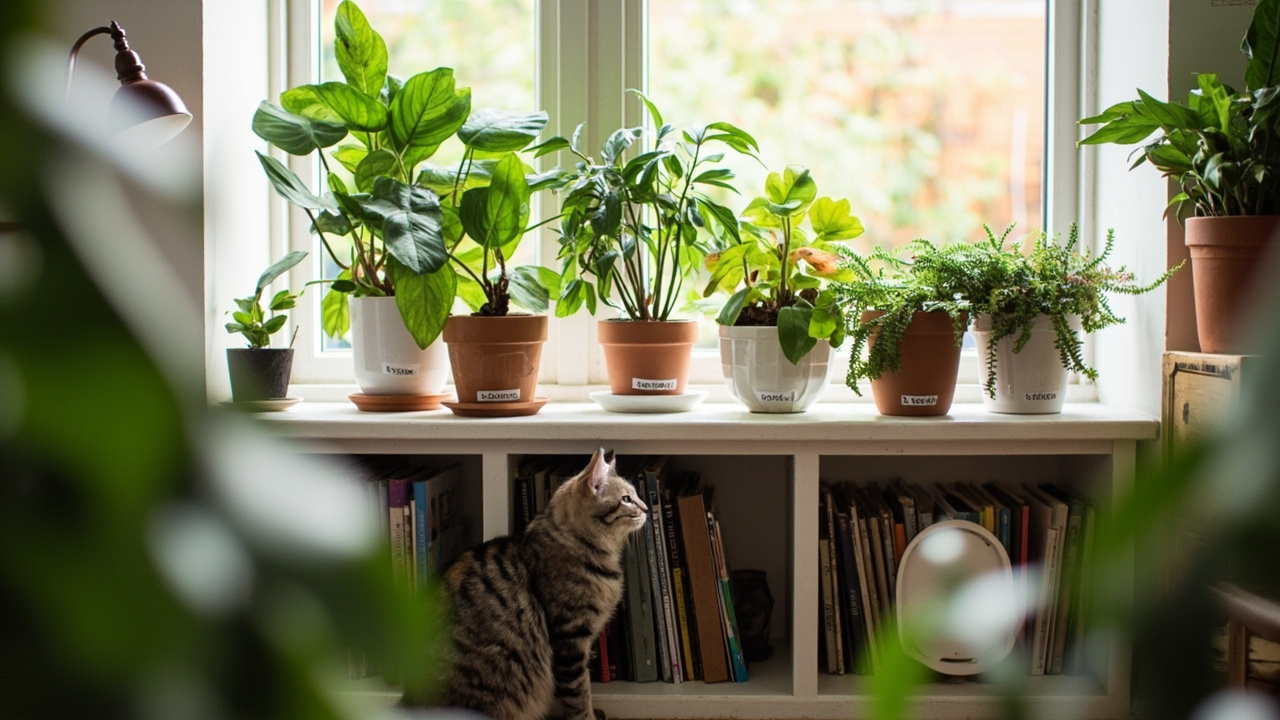
The best placement strategy accepts one truth: a determined chewer will reach a low plant. The goal is to make chewing inconvenient rather than impossible, and to keep any actual ingestion small enough that the non-toxic rating holds. Strategies vary by pet type.
- Hanging baskets at 6+ feet are usually out of reach for adult cats but not for dogs that stand on hind legs, so this works primarily for cat-only homes. Use a ceiling hook rated for the basket’s weight plus a margin.
- High shelves (5+ feet) with no climbable furniture below work for cats that do not jump that high. If a chair or table sits next to the shelf, the cat will use it as a ladder.
- Closed glass terrariums are the only foolproof physical barrier for a determined chewer. Even an enthusiastic cat cannot chew through glass. Terrariums also fit nicely into low-light conditions because they trap humidity. Read more about low-light terrarium species in the cluster’s broader pet-safe picks page.
- Plant-room door policy for the most determined chewers (puppies, adolescent cats, dogs with separation anxiety) — keep a designated room behind a closed door, and use the species on this list there. Trade-off: the room needs to be reasonable for the plant (still has some light) and the door must actually stay closed. For the combined bedroom + pet-safe scenario (the most common case in cat-owner apartments), the cluster’s bedroom low light picks page narrows the species list further to the species that survive both constraints at once.
- Bitter spray deterrent on leaves — the most common brand is “Bitter Apple” spray — deters some cats and dogs from chewing without harming the plant. Reapply every 1 to 2 weeks. Honest limitation: not all pets are deterred, and some learn to chew around the spray.
Signs a Pet Has Eaten Something They Shouldn’t
Even with a non-toxic plant list and good placement, accidents happen. The distinction between mild and severe symptoms determines whether monitoring at home is enough or a vet call is needed.
Mild symptoms (usually OK to monitor)
- Single vomiting episode after chewing a non-toxic plant leaf (Spider plant, Calathea, etc.) — monitor for 24 hours. If the pet returns to normal behavior, eats, and drinks normally, no vet call needed.
- Single episode of soft stool or mild diarrhea after chewing plant material — same as above, monitor for 24 hours.
- Mild drooling that resolves within 30 minutes, with no oral pawing — usually indicates minor oral irritation from the plant’s texture rather than a toxic reaction.
Severe symptoms (call vet immediately)
- Repeated vomiting past 6 hours or vomiting that contains blood — warrants a vet call.
- Refusal to eat or drink for more than 12 hours — warrants a vet call. The oral pain from calcium oxalate plants (Pothos, Philodendron, Dieffenbachia) can be severe enough that the pet refuses to drink, which compounds the dehydration risk.
- Severe lethargy — pet is not responsive, hiding, not engaging — call vet immediately.
- Any Lily exposure in a cat — even pollen — is a vet emergency. True Lily ingestion can cause acute kidney failure within 24 to 72 hours. Many cats that receive treatment within 12 hours survive; many that wait past 24 hours do not. The mechanism is a nephrotoxin cats process uniquely.
- Seizures, tremors, or loss of coordination — call vet or animal ER immediately, regardless of suspected plant.
What to bring to the vet
Bring a sample or photo of the plant the pet chewed, the ASPCA plant name (Latin binomial if known), and the time of ingestion. Many toxic species look similar to non-toxic ones — a photo of the chewed leaf or the whole plant helps the vet identify it. ASPCA Animal Poison Control Center is also reachable 24/7 at 888-426-4435 (fee may apply) for triage before driving to the vet.
The etiolation explainer covers a related low-light symptom (stretching toward light) and is the cluster’s main reference for that diagnostic. For plant problems rather than pet problems, the next section routes to the cluster’s yellow-leaves troubleshooting page.
When Your Pet-Safe Plant Starts Struggling : Quick Triage
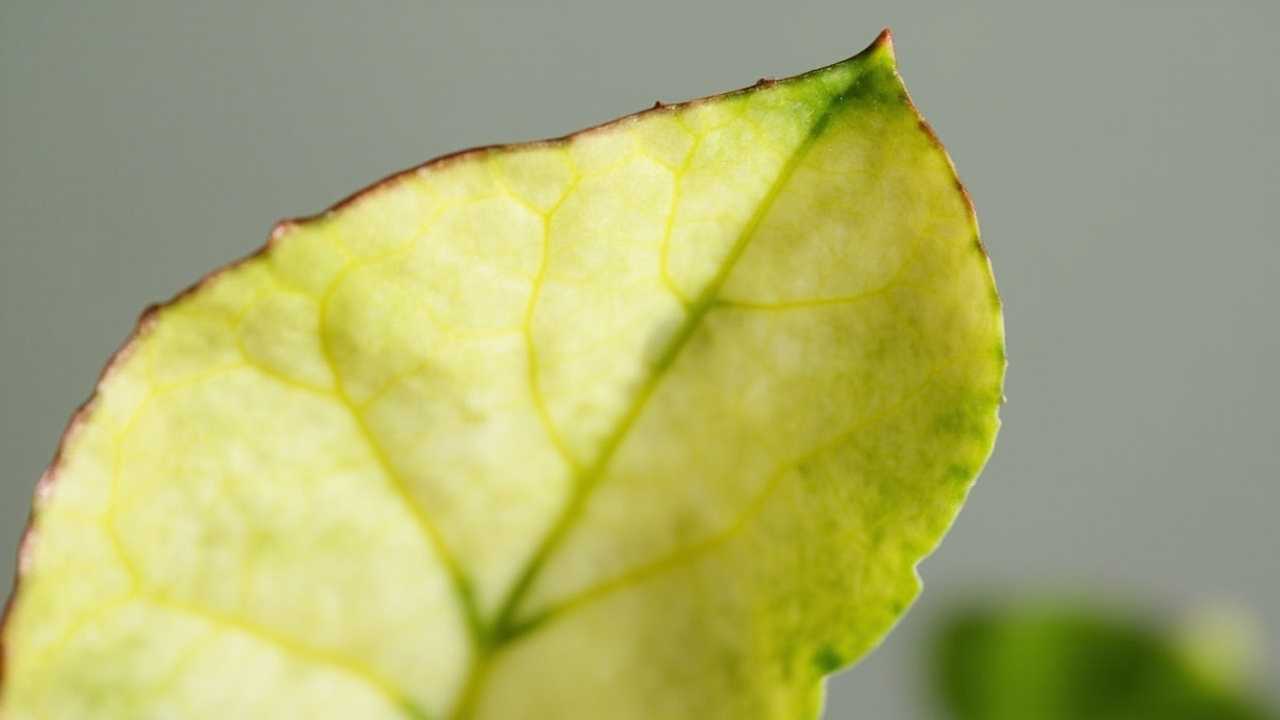
The pet-safe plant list does not protect the reader from the cluster’s other major issue: yellow leaves. A non-toxic plant that gets overwatered in low light will still develop yellow lower leaves from the same overwatering mechanism covered in the cluster’s yellow leaves troubleshooting page. Two questions help triage pet-plant problems versus pure plant problems.
- Did the pet recently chew the plant? If yes and yellowing started within 2 weeks of the chewing, this could be pet-induced stress (root damage, soil compaction from being repeatedly knocked off the shelf) rather than overwatering. Repot into fresh soil after inspecting the roots, and place the plant where the pet cannot reach it again. Read about the overwatering mechanism in the yellow leaves page.
- Soil wet more than 7 days after the last watering? If yes and the pet has not chewed the plant, this is overwatering — the cluster’s #1 cause of yellow leaves. Apply the overwatering fix from the yellow leaves page (stop watering, let top 2 inches dry, unpot if soggy below 1 inch).
Honest limitation: we cannot diagnose a plant problem from pet behavior alone — use the cluster’s yellow leaves page as the primary troubleshooting reference, treat pet chewing as one possible contributing cause among several, and address the placement problem (higher shelf, hanging basket, closed terrarium) once the plant recovers so the recurrence does not happen. We are not vets; the symptoms-vs-emergencies section above is a triage aid, not a diagnosis tool. For any pet acting abnormally after eating any plant, call a vet or the ASPCA Animal Poison Control Center (888-426-4435).
From PDF to Excel in one click
Forget retyping line by line. Upload any bank statement, get a spreadsheet you can actually use. Your files are never stored, and you can test the converter with 3 free conversions.
Try it free