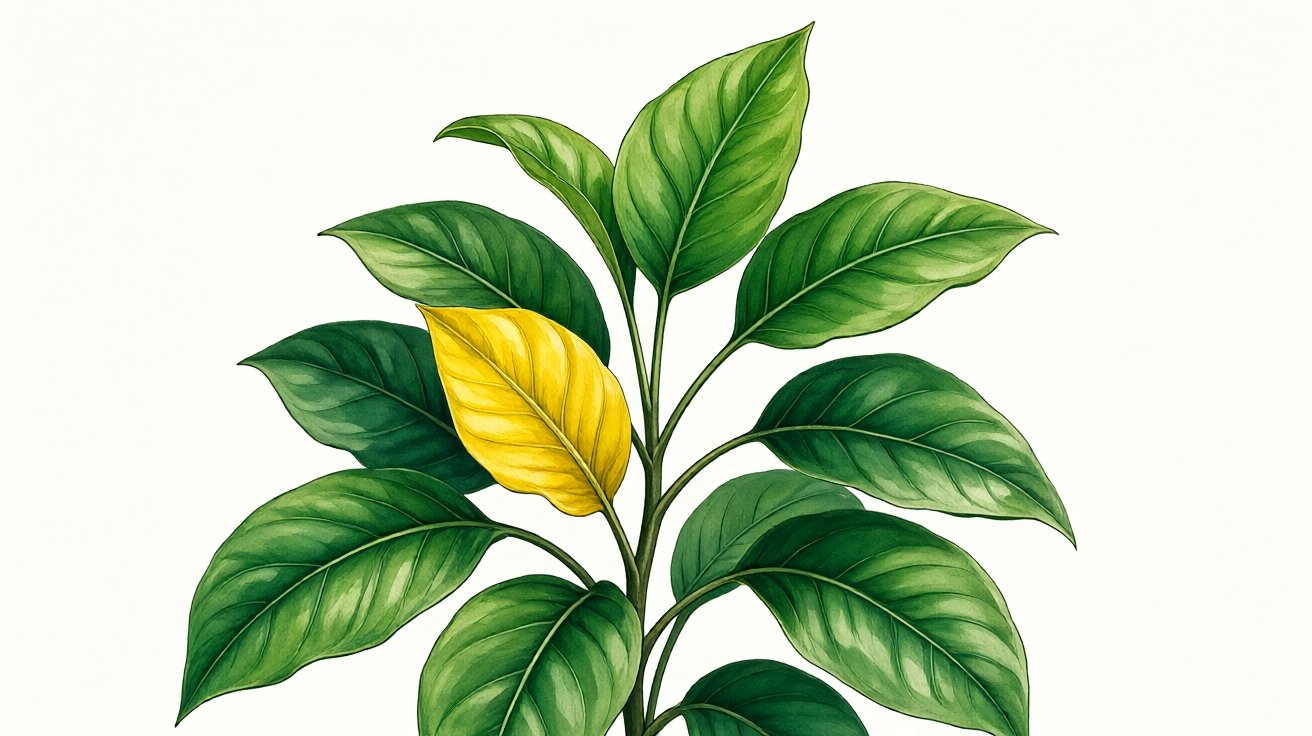
Yellow leaves on plants usually mean one of five things: overwatering, underwatering, nutrient deficiency, light stress, or natural aging. The pattern of yellowing, where it starts on the plant, and how fast it spreads tells you which cause is active. Match the symptom to the cause below, then apply the fix that matches, not a generic “water more” or “water less” guess.
This guide walks through a five-cause diagnostic matrix, a 10-minute check you can do with your hands and a moisture meter, and a fix protocol for each cause. Yellow leaves are reversible in most cases if you catch them within 7 to 14 days of first yellowing. After that, the leaf itself will not green up again, but the plant can still recover if you fix the root cause.
What Yellow Leaves Actually Mean
Leaves turn yellow when the plant stops producing or maintaining chlorophyll in that leaf. Chlorophyll gives leaves their green color. When a plant is stressed, it reallocates resources away from older or less productive leaves to protect new growth and the root system. The yellowing leaf is the plant sacrificing a limb to save the trunk.
This is why yellow leaves are not a disease by themselves. They are a signal, not the problem. The problem is whatever triggered the resource reallocation: too much water drowning roots, too little water collapsing cells, nitrogen running out, light too low for photosynthesis, or simply age. Your job is to read the signal correctly. If the plant looks beyond saving, start with the generic rescue protocol and work back to the specific cause.
Yellow vs Brown vs Drooping
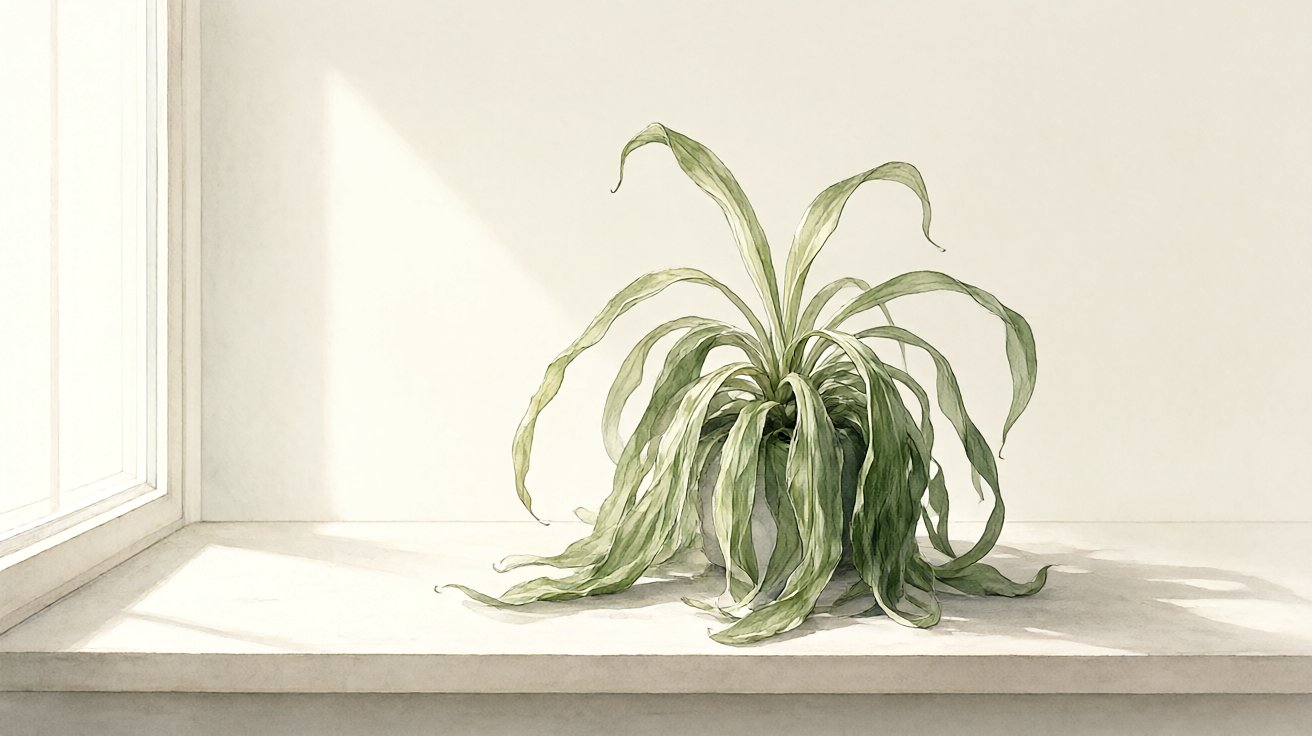
Yellow leaves that are still turgid (firm, not limp) usually point to nutrient deficiency or natural aging. Yellow leaves that are soft and mushy point to overwatering and root rot. Yellow leaves that are crispy and dry point to underwatering or low humidity. If the whole plant is drooping along with yellowing, the cause is likely water-related, either too much or too little. If only lower leaves yellow while the top stays green, suspect nitrogen deficiency or natural aging.
The Five-Cause Diagnostic Matrix
Use this matrix to match your plant’s yellowing pattern to a cause. Check the symptom column first, then confirm with the test column before applying a fix.
| Cause | Symptom pattern | Where it starts | Speed | Confirming test |
|---|---|---|---|---|
| Overwatering | Yellow + soft, mushy leaves | Lower leaves first, then upward | Days to 1 week | Soil wet 5cm deep after 3+ days without watering; pot feels heavy |
| Underwatering | Yellow + crispy, dry, curling | Lower leaves first, tips brown | 1-2 weeks | Soil dry 5cm deep; pot feels light; leaves perk up within 2 hours of watering |
| Nitrogen deficiency | Uniform pale yellow, oldest leaves first | Bottom leaves, moving up slowly | 2-4 weeks | Recently repotted in depleted soil; no fertilizer in 3+ months; plant is actively growing |
| Light stress | Pale yellow, leggy growth, smaller new leaves | New growth and upper leaves | 2-6 weeks | Plant is more than 2m from a window; no direct light; growth is stretched toward light source |
| Natural aging | One or two older leaves yellow at a time | Lowest, oldest leaves only | Weeks to months | Plant is otherwise healthy; new growth is green and vigorous; only 1-2 leaves affected at a time |
The most common mistake is treating yellow leaves as a watering problem. If the plant is also wilting, the cause may be water-related rather than nutrient-related. In that case, the wilting plant rescue guide covers the triage decision tree for underwatering vs overwatering vs heat stress. when the actual cause is nutrients or light. Watering more on a nutrient-deficient plant does not help and can cause root rot. Watering less on a light-stressed plant also does not help. Match the symptom to the cause first.
10-Minute Diagnosis: Three Checks
Before you water, fertilize, or move anything, run these three checks. They take about 10 minutes total and will narrow the cause to one or two possibilities.
Check 1: Soil Moisture (2 minutes)
Push your finger 5cm into the soil. If it comes out wet and muddy, the soil is waterlogged. If it comes out dry and dusty, the soil is bone dry. If it comes out slightly damp with soil clinging to it, moisture is adequate. For a more precise reading, use a moisture meter: readings below 2 mean dry, 3 to 6 mean adequate, 7 to 10 mean wet.
Soil moisture tells you immediately whether overwatering or underwatering is the likely cause. If moisture is adequate (3-6 on a meter) and leaves are still yellowing, the cause is probably nutrients, light, or aging, not water.
Check 2: Pot Weight (3 minutes)
Lift the pot. A pot that feels heavy for its size is holding excess water. A pot that feels light is dry. Compare the weight to how it felt right after you last watered it. If it is still heavy 5 days after watering, drainage is poor or you are overwatering. If it is light after 3 days, you are underwatering or the pot is too small for the root mass.
Pot weight is a useful cross-check because finger tests can be misleading in compacted or hydrophobic soil. A pot that feels heavy but has dry topsoil means water is trapped at the bottom, which is the worst combination: root rot at the base, drought at the top.
Check 3: Root Inspection (5 minutes)
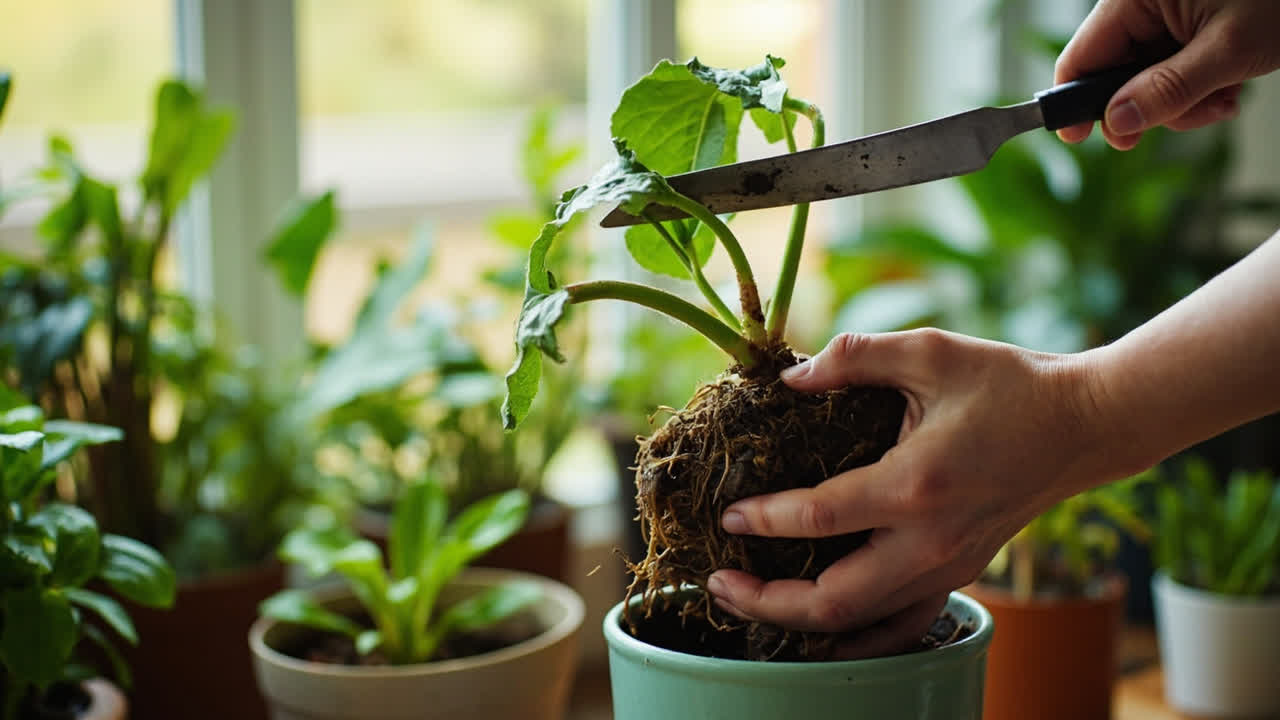
Unpot the plant gently. Shake off loose soil and examine the roots. Healthy roots are firm, white or light tan, and smell earthy. Rotted roots are brown, black, mushy, and smell sour or sulfurous. If more than 30 percent of the root mass is rotted, the plant has root rot and yellowing is a symptom of that, not of a watering or nutrient issue.
If roots are healthy and white but tightly circling the pot, the plant is root-bound. Root-bound plants cannot take up water or nutrients efficiently, which causes yellowing even when soil moisture and fertilizer are adequate. Repot into a container 2 to 3cm larger in diameter.
Fix Protocols by Cause
Apply the fix that matches your diagnosis. Do not apply multiple fixes at once. If you are unsure between two causes, fix the more likely one and wait 7 days before reassessing.
Overwatering Fix
Stop watering immediately. Move the plant to a spot with brighter indirect light and better air circulation. If the soil is waterlogged, unpot the plant, remove wet soil from the root ball, and repot into fresh, well-draining mix. Add 20 to 30 percent perlite to the mix to improve drainage. Water only when the top 5cm of soil is dry. Recovery timeline: 2 to 4 weeks for new green growth if root rot has not set in. If root rot is present, see the root rot section below.
The counterintuitive point about overwatering is that the plant looks thirsty. Yellow, drooping leaves look like a plant that needs water. But the roots are suffocating in saturated soil and cannot absorb water even when it is present. Adding more water makes it worse. This is why the soil moisture check is essential before any watering decision.
Underwatering Fix
Water thoroughly until water drains from the bottom of the pot. Let the pot sit in a tray of water for 20 minutes to rehydrate dry, hydrophobic soil. If the soil repels water (water pools on the surface instead of soaking in), add a drop of dish soap to the watering can to break surface tension. Move the plant away from heat sources and direct sun for 3 to 5 days while it recovers. Recovery timeline: leaves that are still yellow will not green up, but new growth should appear within 1 to 2 weeks.
Nitrogen Deficiency Fix
Apply a balanced liquid fertilizer at half the recommended strength. For most houseplants, a 10-10-10 or 20-20-20 NPK ratio works. Feed every 2 weeks during the growing season (spring through early fall). If the plant is in depleted soil that has not been refreshed in over a year, repot into fresh potting mix rather than relying on fertilizer alone. Recovery timeline: 2 to 3 weeks for new leaves to emerge green. Existing yellow leaves will not recover.
Nitrogen is the most mobile nutrient in a plant. When nitrogen runs short, the plant pulls it from older leaves to feed new growth. This is why nitrogen deficiency always shows on the oldest, lowest leaves first while new growth stays green. If yellowing starts at the top, the cause is not nitrogen.
Light Stress Fix
Move the plant closer to a window. South- or east-facing windows provide the most consistent light for indoor plants. If natural light is insufficient, add a grow light 30 to 45cm above the plant for 12 to 14 hours per day. Rotate the plant 90 degrees every week so all sides receive equal light. Recovery timeline: new growth should appear within 2 to 3 weeks. Leggy stems will not shorten, but new leaves will be larger and greener.
Natural Aging
No fix needed. Remove yellowed leaves by snipping them at the base with clean scissors. This redirects energy to healthy growth and improves appearance. If more than 3 leaves yellow per week on a plant that was previously healthy, the cause is not natural aging. Re-run the diagnostic checks.
When Yellow Leaves Mean Root Rot
Root rot is the most dangerous cause of yellow leaves. For a deeper look at what root rot is and how it spreads, see root rot explained. because it can kill a plant within 2 to 3 weeks if untreated. The telltale signs: yellow leaves that are soft and mushy, soil that smells sour, and roots that are brown and slimy when unpotted. Root rot is caused by fungi (Pythium, Phytophthora, Rhizoctonia) that thrive in waterlogged, oxygen-poor soil.
If you catch root rot early, with less than 30 percent of roots affected, you can save the plant. Unpot it, trim all brown and mushy roots with sterilized scissors, dust the remaining roots with cinnamon (a natural antifungal), and repot into fresh, well-draining soil in a pot with drainage holes. Do not water for 5 to 7 days after repotting. Move to bright indirect light. Recovery timeline: 3 to 6 weeks. If more than 50 percent of roots are rotted, the plant is unlikely to survive. Take cuttings from healthy stems and propagate as a backup.
Prevention: Five Habits That Stop Yellow Leaves
Most yellow-leaf cases are preventable with consistent care habits. These five rules address the top five causes.
- Water by soil moisture, not by schedule. Check the top 5cm of soil before every watering. Water only when it is dry. This single habit prevents both overwatering and underwatering.
- Use pots with drainage holes. No exceptions. A pot without drainage is a bathtub. If you love a decorative pot without holes, use it as a cachepot: keep the plant in a plastic nursery pot with holes inside the decorative one, and remove it to water and drain.
- Fertilize during active growth only. Feed every 2 weeks from spring through early fall with a balanced liquid fertilizer at half strength. Stop fertilizing in winter when growth slows. Over-fertilizing causes salt buildup, which burns roots and causes yellowing.
- Match light to plant needs. A plant that needs bright light will yellow in a dark corner. A plant that tolerates low light will yellow in direct sun. Check the plant’s light requirements and place it accordingly. Most indoor plants need 2 to 4 hours of indirect light per day minimum.
- Repot every 12 to 18 months. Fresh soil restores nutrient levels and prevents root-bound conditions. Repot in spring, moving up one pot size (2 to 3cm larger in diameter). Use fresh potting mix, not garden soil.
Yellow Leaves by Plant Type
Some plants are more prone to yellowing than others, and the cause varies by species. Here are the most common yellow-leaf scenarios for popular houseplants.
Money Tree (Pachira aquatica)
Yellow leaves on a money tree are most often caused by overwatering. Money trees are sensitive to soggy soil and will drop yellow leaves within days of excess water. They also yellow in response to cold drafts and sudden temperature changes. Keep the soil slightly moist but never wet, and keep the plant away from air conditioning vents and cold windows. If yellowing is accompanied by soft, mushy stems, check for root rot. Money trees are especially prone to root rot in money trees, which follows the same diagnostic and rescue path.
Corn Plant (Dracaena fragrans)
Corn plants yellow from fluoride toxicity in tap water, low humidity, and overwatering. Brown tips with yellow halos are the classic fluoride symptom. Use filtered or distilled water if your tap water is high in fluoride. Corn plants also yellow when placed in direct sun, which scorches the leaves. They prefer bright indirect light and humidity above 40 percent.
Peace Lily (Spathiphyllum)
Peace lilies yellow from overwatering, underwatering, and low light. They are dramatic about water: they droop visibly when dry and recover within hours of watering. Yellow leaves on a peace lily that is not drooping usually mean overwatering or low light. Peace lilies also yellow as they age, with older outer leaves yellowing first while new growth stays green.
Snake Plant (Sansevieria trifasciata)
Snake plants are drought-tolerant and yellow almost exclusively from overwatering. Yellow, mushy leaves on a snake plant mean root rot. Water only every 2 to 4 weeks in summer and every 4 to 6 weeks in winter. If you see yellowing, stop watering immediately and check the roots.
Last reviewed on November 8, 2026.
Sources and further reading: University of Minnesota Extension, “Diagnosing Plant Problems” (extension.umn.edu); Royal Horticultural Society, “Yellow Leaves on Houseplants” (rhs.org.uk); Penn State Extension, “Houseplant Care” (extension.psu.edu).
Turn PDF Bank Statements Into Workable Spreadsheets
Your bank statement is a mess of numbers, but your books shouldn't be. Use our converter to get Excel, CSV, or QBO files — ready for QuickBooks.
Try It Free Now