A prayer plant with brown leaf tips is not dying. The brown tips are the prayer plant reading your tap water — and the fluoride in it. Switch to distilled water and the prayer plant stops accumulating within 2 weeks.
Tap water carries 0.7–2.0 ppm fluoride in most North American supplies. The prayer plant drinks the fluoride, the fluoride pools at the leaf tips because it is heavier than water, and the bound fluoride stays in the leaf tip permanently. Missouri Botanical Garden lists fluoride toxicity as the leading cause of indoor prayer plant decline.
This article gives the four facts the prayer plant reader needs: which water the prayer plant accepts, how often to water the prayer plant, what the prayer plant rejects, and how to recover a waterlogged prayer plant. The cluster prayer plant care guide covers the full Maranta routine; the cluster prayer plant light requirements covers the brightness side. Once the water is right, the prayer plant is forgiving.
The Fluoride Trap: Why Tap Water Is the #1 Prayer Plant Killer
The fluoride in tap water is the most-discussed and least-addressed cause of indoor prayer plant decline. The mechanism is mechanical.
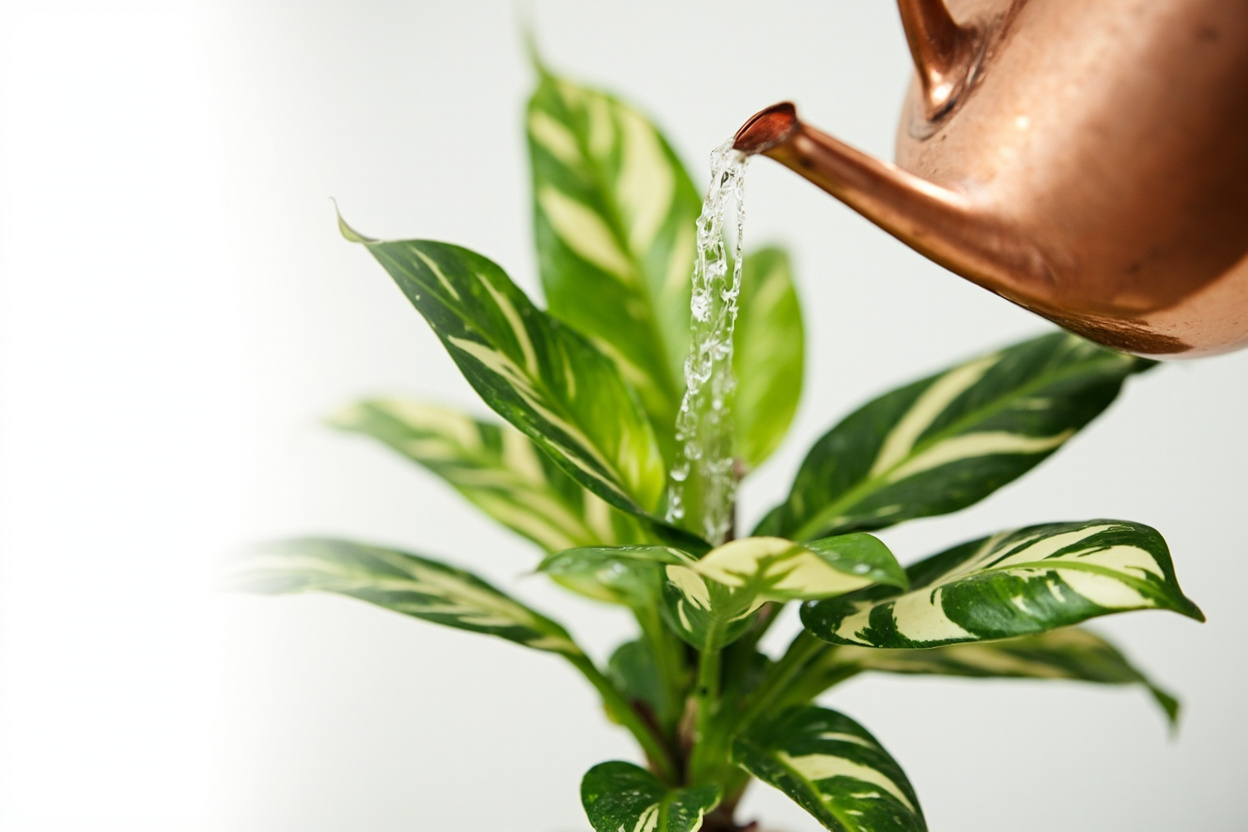
The prayer plant drinks the water. The fluoride moves through the xylem to the leaf tips because fluoride is heavier than water and pools at the end of the transpiration stream. The fluoride binds to calcium. No fluoride leaves the leaf once bound.
The visual signal is named. The prayer plant reader sees dry, brown, crispy leaf tips that progress inward over 6–10 weeks. The progression is irregular — some leaves hold their tips, others lose theirs.
The rest of the leaf stays green. The prayer plant is signaling, not in crisis. The progression only stops when the water source changes.
The speed of the signal is predictable. The first brown tips appear within 4–6 weeks of bringing a prayer plant home on tap water. Some readers see them within 14 days.
Missouri Botanical Garden lists 6 weeks as the typical first-symptom window. The Cornell horticulture extension notes that the Marantaceae family is more fluoride-sensitive than other tropical foliage genera.
The trap is the time lag. The reader sees a healthy prayer plant on day 1, waters with tap water on day 7, and the first brown tip appears on day 35. By then the prayer plant has been accumulating for a month.
Chlorine is a smaller problem. Municipal chlorine at 0.5–2.0 ppm is gentler than fluoride but still accumulates at the leaf tips. The fix is the same: use water without either.
The Right Water: Distilled, Rainwater, or Filtered (Not Tap)
Three water sources work for the prayer plant. All three are fluoride-free and chlorine-free.
Distilled water is the most reliable option. Distilled water has 0 ppm TDS, 0 ppm fluoride, 0 ppm chlorine. Cost: $1–$3 per gallon at the grocery store.
A 5-gallon jug lasts a single prayer plant 6–10 weeks in summer, 12–16 weeks in winter.
Rainwater is the cleanest option if the reader can collect it. Rainwater TDS runs 5–20 ppm depending on local air quality. Collection costs nothing — a clean bucket, a screen to keep out debris, a covered container to store for a week before use.
The trade-off: rainwater is seasonal in most climates and needs storage.
Filtered water works only with a reverse-osmosis filter or an activated-carbon + ion-exchange filter. Brita filters and similar pitcher filters do NOT remove fluoride. A reader who buys a pitcher filter expecting fluoride to disappear will see the brown tips continue.
Reverse-osmosis under-sink units run $150–$400 installed and produce fluoride-free water for $0.05–$0.10 per gallon — cheaper than distilled long-term. The trade-off: installation cost and the cartridges ($50–$100 per year).
Water that does NOT work for the prayer plant, even if labeled “spring” or “mineral”: tap water, well water in fluoride-bearing regions, most bottled waters (some have 0.1–0.5 ppm fluoride as natural mineral content), and softened water (which substitutes sodium for calcium). The prayer plant reader’s safest move: distilled until the household is set up with RO.
The Right Cadence: Top 1–2 cm Dry, Then Water Thoroughly
The prayer plant’s cadence is not a calendar. It is a soil-moisture reading taken by finger or by pot weight. The rule: water the prayer plant when the top 1–2 cm of soil feels dry to the touch.
In a 4-to-6-inch pot in a typical indoor environment, that is every 5–7 days in summer and every 7–10 days in winter. In hot dry rooms the cadence tightens to every 4 days. In cool humid rooms the cadence stretches to every 12 days. The prayer plant reader adjusts to the conditions, not the calendar.
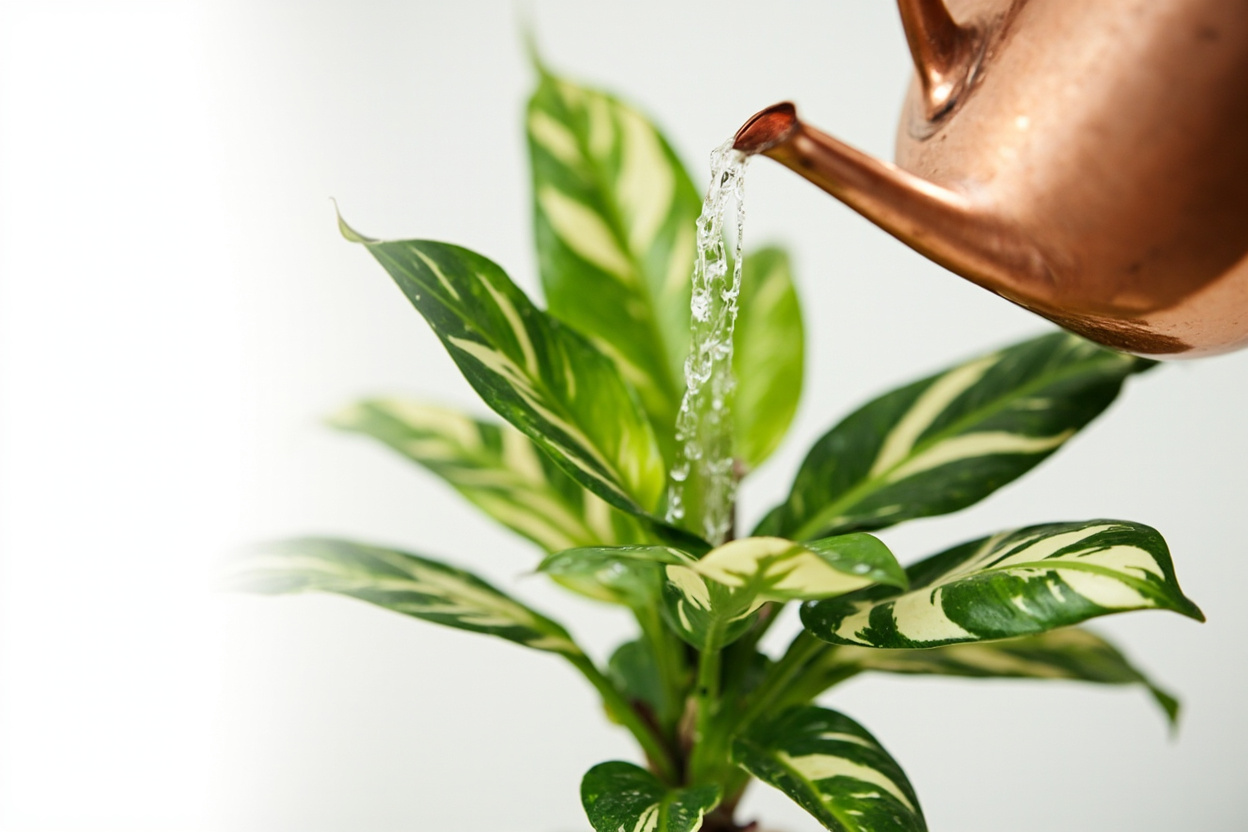
The watering itself is generous. The prayer plant wants water until it flows out the drainage hole — never a sip, never a spray. A thorough drench resets the soil moisture throughout the root mass.
A prayer plant watered lightly at the surface stays wet at the top and dry at the bottom, which causes the lower roots to dry out and the upper roots to rot. The reader’s habit: water, count to 30, water again to be sure, let the prayer plant drain for 5 minutes, then return to the saucer.
Water temperature is non-negotiable. The prayer plant’s roots are sensitive below 15°C (59°F). Cold water at 5–10°C browns the leaf edges the same day.
Room-temperature water at 18–22°C is the operating range. The prayer plant reader’s habit: fill the watering can after the last watering so the water sits at room temperature for the next round.
The finger-test is a real skill. The reader presses a finger into the top 1 cm of soil near the prayer plant’s edge, not into the root ball. If the soil feels dry, the prayer plant is ready for water. If it feels damp, wait 24 hours.
The lift-the-pot test is faster for experienced prayer plant owners: a dry prayer plant in a 5-inch pot weighs noticeably less than a watered one. After 4–6 weeks of finger-testing, the reader knows the weight by feel alone.
The IFAS Extension rule for the prayer plant is the simplest framing: the soil should feel like a wrung-out sponge — never bone dry, never dripping. Erring slightly toward the dry side is safer than erring wet. Slight underwatering browns the leaf tips and slows growth; overwatering kills the prayer plant’s roots.
The Drainage Hole: Why No Prayer Plant Survives a Pot Without One
The single most common craft mistake with the prayer plant is decorative pots without drainage. A prayer plant in a sealed pot is in a 10–14 day race to root rot.
The mechanism is mechanical. Water enters the soil, the soil becomes saturated, the air gaps between soil particles fill with water, the prayer plant’s roots cannot get oxygen.
The roots die in order from youngest to oldest. The dead roots rot. The rot spreads upward to the rhizome, and the prayer plant wilts irreversibly.
The signal is named: lower leaves on the prayer plant yellow in unison. The reader sees two yellow lower leaves one morning, four the next, eight by the end of the week. The prayer plant wilts despite being wet.
That is overwatering, and the only fix is to lift, trim, and repot. The cluster prayer plant care guide covers the prayer plant recovery sequence in detail.
The two acceptable workarounds for a sealed decorative pot. Cache-pot: the prayer plant lives in a cheap plastic nursery pot with drainage holes, and that pot sits inside the decorative pot. The reader removes the inner pot to water, lets it drain for 5 minutes, then returns it.
Gritty mix: a custom mix of pine bark, perlite, and coarse sand at 4:3:3 creates air gaps that hold oxygen even when the soil is wet. A gritty mix buys the prayer plant reader time on a sealed pot but does not fully replace drainage.
The honest limit: a sealed pot with no gritty mix and no drainage lift will eventually kill the prayer plant. Period. The Cornell extension classifies Marantaceae as “intolerant of anoxic root conditions.” The prayer plant reader’s safest move: a 4-to-6-inch plastic pot with multiple drainage holes, placed inside any decorative pot the reader likes.
How to Recover a Prayer Plant That’s Been Overwatered
The recovery sequence for a waterlogged prayer plant is mechanical and faster than most readers expect. The 5-step sequence: stop watering for 7 days, lift the plant, trim dark roots, repot in dry mix with drainage holes, resume watering on finger-test cadence.
The prayer plant reader can skip the trim if the roots are firm and white-tipped. A prayer plant with wet soil and yellow leaves but firm roots is in early waterlogging — the 7-day dry and a repot is enough.
The reader can skip the repot if the roots are mushy but the rhizome (the horizontal stem at the soil line) is firm. The rhizome carries the new shoots and the prayer plant can regrow from healthy rhizome tissue.
The recovery signal is named. The prayer plant reader sees new growth 4–6 weeks after the rescue. The new leaves come in smaller than before the overwatering.
The second flush, 6–10 weeks after, comes in full size. By week 12 the prayer plant looks the same as before the overwatering. The reader’s confidence test: if the prayer plant pushes two new leaves in succession, the root system has recovered.
The fluoride trap remains even after recovery. A prayer plant reader who rescues from overwatering and then returns to tap water sees brown tips within 6 weeks. The rescue sequence and the water source have to change together. The reader’s habit: fix the water first, fix the cadence second, fix the drainage third.