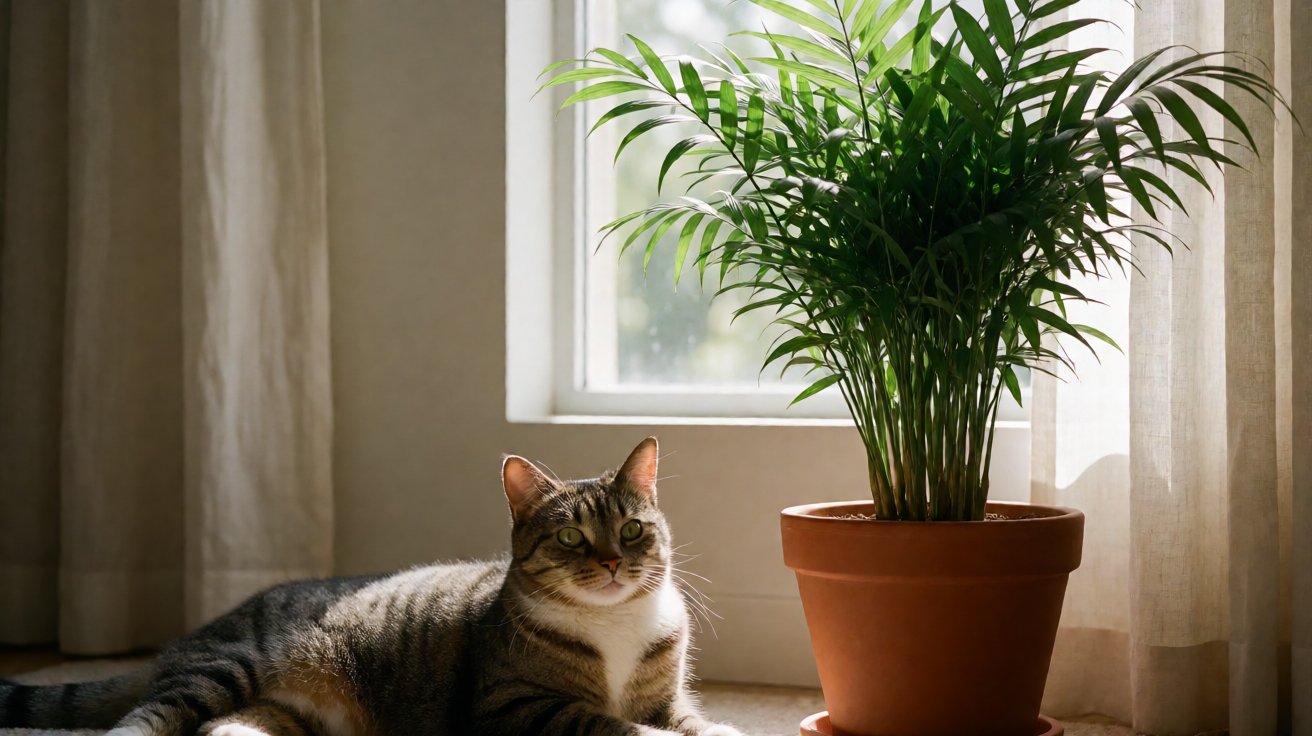

Most “pet-safe plant” lists are wrong about cats in two directions at once. They put peace lily on the safe list (it is not: calcium oxalate raphides cut the mouth). They put true lilies on the same generic “toxic” list as pothos (it is not: the mechanism is different and the outcome is different). The cat that chewed a peace lily ends the night with a sore mouth. The cat that brushed pollen off a true lily’s anther inside living in the same room ends the week in acute renal failure. The vet visit is not the same. The houseplant list is short because the chemistry is honest, not because the options ran out.
If your cat has chewed any plant, call your vet or ASPCA Animal Poison Control at 888-426-4435. The list below names what is genuinely safe; it does not replace triage. True lilies require a vet the same day, before symptoms appear. Pollen alone is nephrotoxic. Vase water counts.
The honest version of the question is two questions in one. Which plants are non-toxic to cats at the chemistry level? Which species tolerate the dim apartment your cat actually lives in? Most “low light pet safe plant” lists answer the second question with species that pass the ASPCA database for dogs and assume cats are the same. They are not. Cats are uniquely vulnerable to Lilium and Hemerocallis (true lilies and daylilies), and the same plants that walk the clinic as a calcium-oxalate mouth-pain event for a dog become an emergency for a cat. The dog branch of the same logic is mapped in our low-light houseplants safe for dogs guide; the cat branch owns this page.
The Emergency: True Lilies and Daylilies
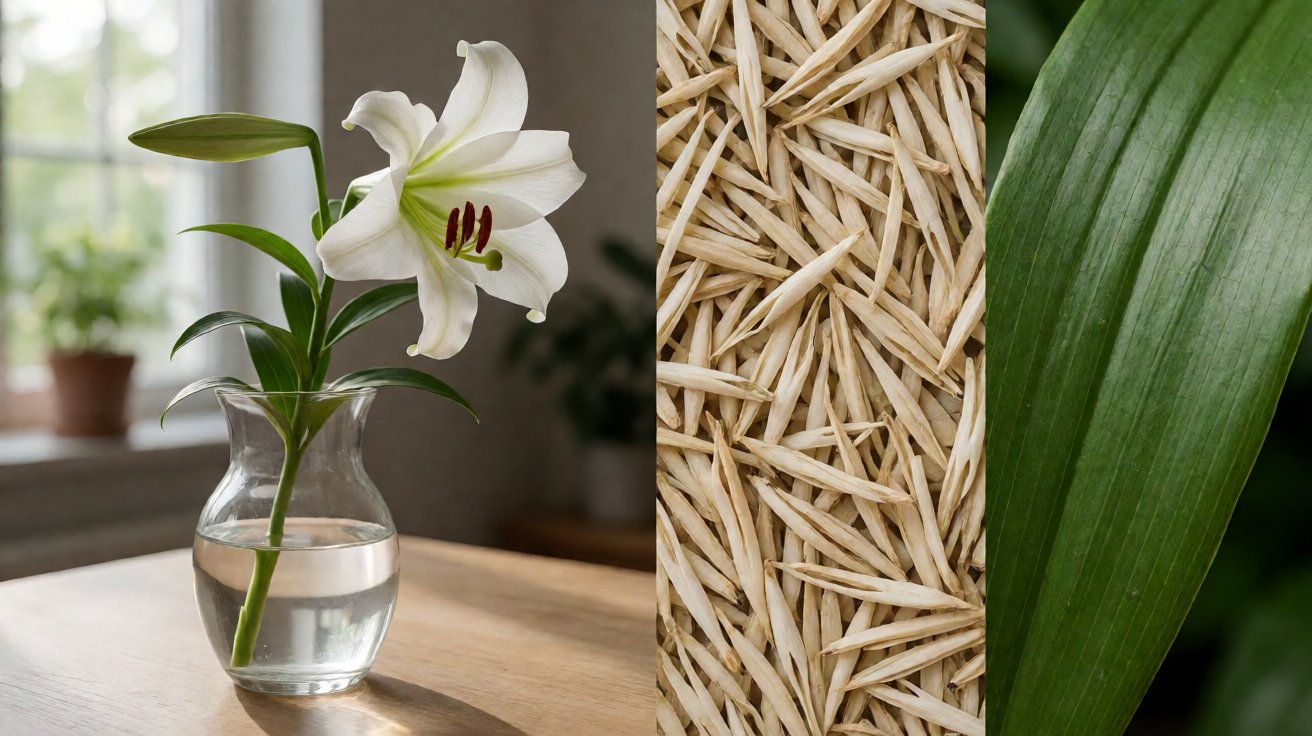
The first honest rule is the only one that matters. True lilies (Lilium longiflorum, Lilium spp., Asiatic, tiger, oriental, stargazer) and daylilies (Hemerocallis) do not enter the house, ever, if a cat lives in it. The whole plant is nephrotoxic. The pollen is nephrotoxic. The vase water is nephrotoxic. A cat that brushes against an anther and grooms the pollen off the fur is enough. Acute kidney failure begins within 24-72 hours, often before the owner notices the cat is quieter than usual.
The mechanism is not calcium oxalate raphides (the plant defense that cuts the mouth in Dieffenbachia or Epipremnum aureum). It is a water-soluble fraction that survives digestion and concentrates in the proximal tubule of the cat’s kidney. Dogs and humans process and excrete it without injury. Cats do not. The mechanism is documented in the veterinary literature and is the single most common cause of fatal feline intoxication from a plant. The peace lily (Spathiphyllum) is not in this category. It hurts the mouth and the throat but it does not touch the kidneys. Species-level disambiguation matters here: the bird of paradise toxicity breakdown covers a different calcium oxalate case that walks the same risk category without the nephrotoxic complication.
What this means in practice. If the bouquet label says “lilies” and a cat lives in the home, the bouquet goes back outside the door before the cat walks past it. If a cat has chewed or brushed pollen from any lily and the cat has eaten or groomed within the last hour, the vet visit is today, not tomorrow. The ASPCA Animal Poison Control hotline (888-426-4435) takes the call 24/7 and a $75 consultation fee covers the species ID, the dose estimate, and the symptom-watch schedule. Most vet schools run a similar hotline through their small animal clinic. The point is to call before the cat has stopped vomiting, not after.
Four Mechanisms of “Toxic” (and What Each Actually Does to a Cat)
Four plant defense chemistries come up over and over on feline-toxicity lists. They sound the same (“toxic to cats”) but they do very different things inside the cat.
Calcium oxalate raphides. Needle-shaped crystals bundled in specialized cells called idioblasts. When the leaf is chewed, the cells rupture and the needles fire into the mouth and tongue. The cat drools, paws at the mouth, and stops eating for a few hours. The crystals do not absorb into the bloodstream at meaningful doses. Symptoms fade within 24 hours with no permanent injury. Plants: Dieffenbachia (dumb cane), Epipremnum aureum (pothos), Philodendron spp., Monstera deliciosa, Spathiphyllum (peace lily), Zamioculcas zamiifolia (ZZ), Caladium. The mouth-pain severity varies. Dumb cane can swell the tongue enough to block the airway briefly; pothos is milder. None cause kidney injury.
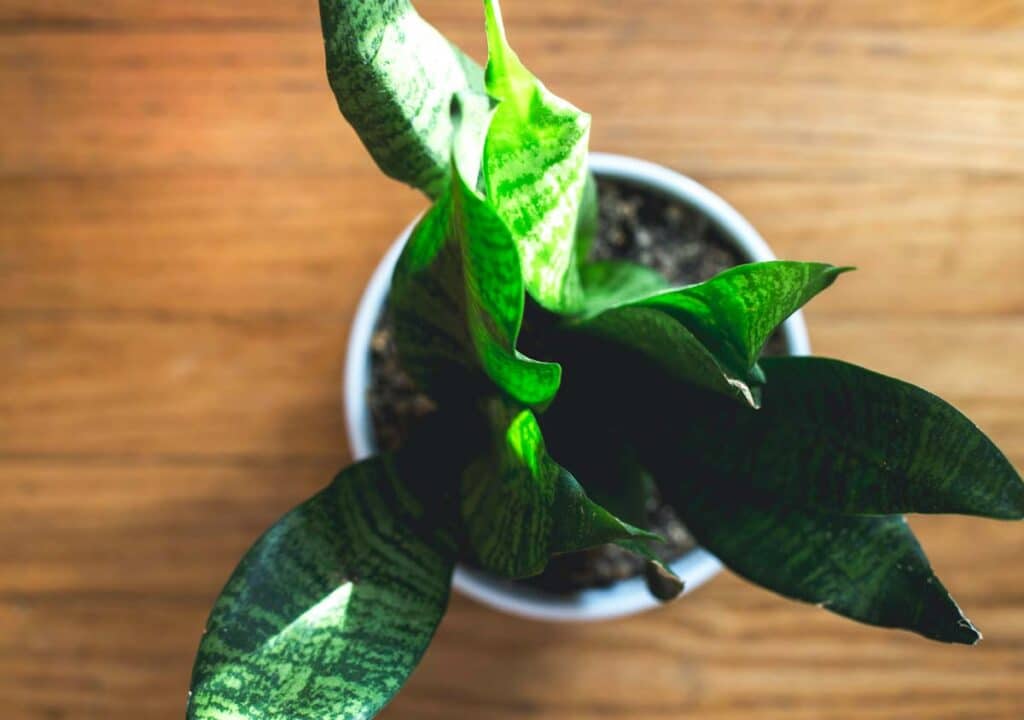
Saponins. Soap-like glycosides that foam in the gut and irritate the stomach lining. Vomiting, drooling, and a few hours of GI upset, similar to a cat that ate too much grass. No organ damage. Plants: Dracaena trifasciata (snake plant, formerly Sansevieria trifasciata), Hedera helix (English ivy), Chlorophytum comosum in high doses (mild, not on most lists).
Lilium / Hemerocallis nephrotoxin. The true-lily emergency. Mechanism is still under active research but the proximal tubule is the target and the window is narrow. A cat that ingests any part of a true lily needs veterinary care the same day. Not tomorrow.
Cardiac glycosides and alkaloids. The rare but serious category. Nerium oleander (oleander), Digitalis (foxglove), Convallaria majalis (lily of the valley). Outdoors, not houseplants. If a bouquet contains any of these, the cat goes to the vet.
The reason the dual-axis list below grades each plant on chemistry is not academic. A cat that chewed a pothos vine and a cat that groomed lily pollen off its whiskers are not the same urgency. The mechanism decides the urgency.
The Cat-Safe, Low-Light List: Twelve Species, Graded on Both Axes
Twelve species meet both criteria at the chemistry level (no calcium oxalate raphides, no saponins, no cardiac glycosides, no Lilium/Hemerocallis family, no documented feline injury at any reported dose) AND tolerate the light level a dim apartment actually provides. The light rating follows the foot-candle scale used by the horticultural industry and graded against the species’ natural understory niche. A foot-candle is the light a single candle casts at one foot, and “low light” indoors means 25-50 foot-candles at the leaf surface, roughly 2-3 meters back from an unobstructed north-facing window. The indoor plant light levels guide goes deeper on foot-candle measurement and the difference between indirect, filtered, and direct sun for species that need more light than this list tolerates.
Calathea spp. Prayer-leaves. Family Marantaceae. The whole genus is genuinely cat-safe per the ASPCA toxic plant database, with no documented feline toxicity at any reported exposure. Calathea orbifolia, Calathea roseopicta (medallion), Calathea rufibarba (furry feather), and Calathea lancifolia (rattlesnake plant) all share the same mid-low light tolerance and the same humidity preference (above 50%). The leaves fold up at night, which is the mechanism that gives Marantaceae their common name. Light rating: tolerates 50-100 foot-candles. Survives at 25 foot-candles for months but slows growth significantly.
Maranta leuconeura (prayer plant). The original “prayer plant.” Cat-safe per ASPCA. Same family as Calathea and tolerates the same light range. Slightly more demanding on humidity than Calathea but compensates with a faster growth rate. The leaf variegation fades to solid green at very low light, which is the visual signal that the plant is at the edge of its tolerance. Light rating: 50-100 foot-candles ideal.
Pilea peperomioides (Chinese money plant, UFO plant, missionary plant). Cat-safe per ASPCA, no documented feline toxicity. Tolerant of dim conditions and famous for producing pups (offsets) that root easily in water. Light rating: 75-150 foot-candles ideal but tolerates 50 foot-candles for long stretches. The petioles stretch (etiolate) below 50 foot-candles.
Peperomia obtusifolia (baby rubber plant). Cat-safe per ASPCA. The thick, fleshy leaves tolerate indoor humidity below 50% better than Calathea or Maranta. Light rating: 75-150 foot-candles ideal. Tolerates 50 foot-candles.
Chlorophytum comosum (spider plant). Cat-safe per ASPCA. Often cited as mildly hallucinogenic for cats (a claim that traces to a 1970s veterinary paper that did not replicate), but no documented toxicity at any reported exposure. Forms plantlets on long stolons that the cat can reach, which is half the appeal. Light rating: 100-200 foot-candles ideal but tolerates 50 foot-candles.
Nephrolepis exaltata (Boston fern). Cat-safe per ASPCA. The classic “fern that does not need bright light.” Fronds reach 60-90 cm in the right humidity; in dry apartments the fronds brown at the tips but the plant survives. Light rating: 50-100 foot-candles. Humidity is the bigger constraint than light.
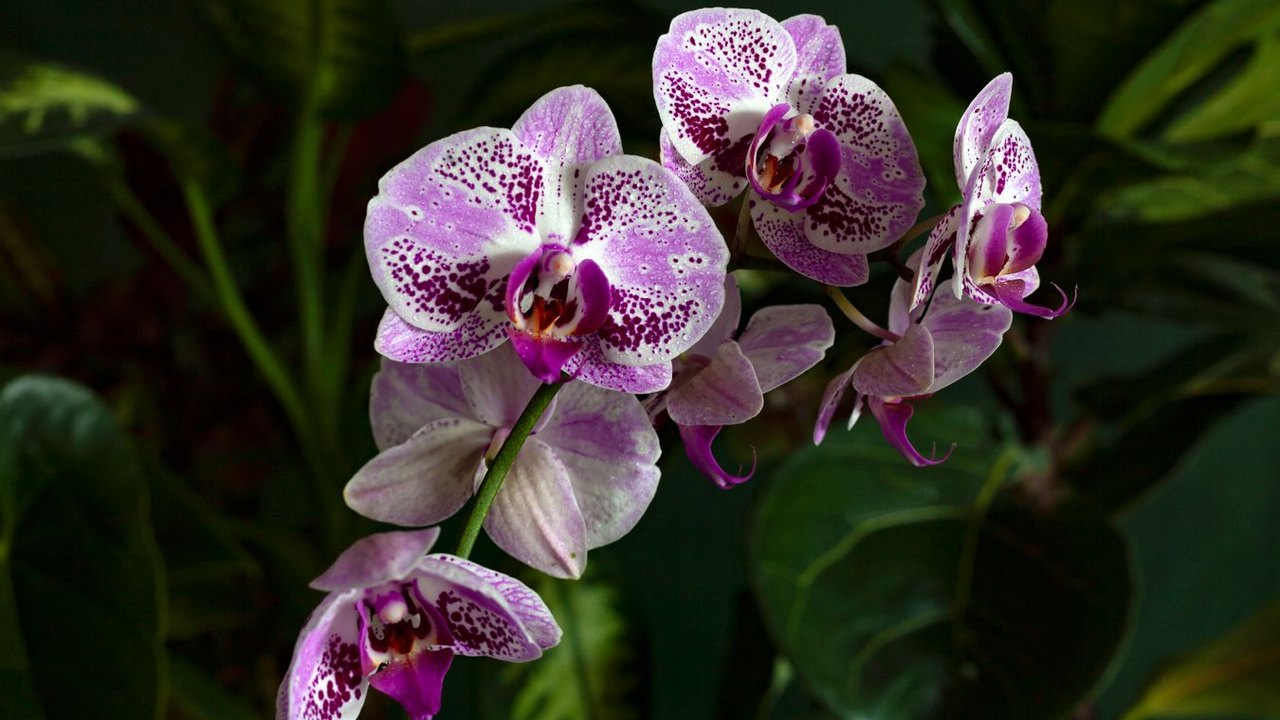
Phalaenopsis (moth orchid). Cat-safe per ASPCA. Tolerates the dimmest apartment light of any flowering houseplant. The bloom cycle is triggered by a 10-15°F nighttime drop, not by light. Light rating: 75-150 foot-candles ideal, survives at 50 foot-candles for years without blooming. A moth orchid in low light is a green-plant with a slow-bloom surprise; a moth orchid in medium indirect light blooms twice a year.
Chamaedorea elegans (parlor palm). Cat-safe per ASPCA. The most shade-tolerant palm in indoor horticulture. Native to the understory of Mexican cloud forest, which is the natural biome explanation for the light rating. Light rating: 50-100 foot-candles. Survives at 25 foot-candles but barely grows.
Aspidistra elatior (cast iron plant). Cat-safe per ASPCA. Famous for tolerating the deepest shade of any foliage plant in commerce. The name is the brand: cast iron survives what other plants do not. Light rating: 25-50 foot-candles, which is the only foliage plant on this list that genuinely thrives in the dim corner by the door. Slow growth is the trade-off.
Bromeliaceae (bromeliads, genus-level). Cat-safe per ASPCA. The family is large; the commonly sold genera (Guzmania, Tillandsia, Aechmea, Vriesea, Neoregelia) are all graded non-toxic to cats. The center cup holds water, which the cat may drink from, which is harmless. Light rating varies by genus (Tillandsia tolerates bright indirect; Aechmea tolerates low light). The bloom is once-per-lifetime; the mother plant dies after the pup offsets establish.
Pteris cretica (table fern, Cretan brake fern). Cat-safe per ASPCA. Smaller than Boston fern, less humidity-demanding. Tolerates the indoor humidity of a typical apartment better than Nephrolepis. Light rating: 50-100 foot-candles.
Beaucarnea recurvata (ponytail palm, elephant foot). Cat-safe per ASPCA. Stores water in the swollen caudex, which is the natural adaptation that makes it the most drought-tolerant plant on this list. Tolerates dim light because in its native Mexican semi-desert it grows as an understory plant beneath taller succulents. Light rating: 100-200 foot-candles ideal but tolerates 50 foot-candles.
Twelve species is the honest count. Anything longer than this list either loosens the ASPCA criterion (introduces species that have caused mild GI upset in cats at high doses, like Tradescantia zebrina) or the light criterion (introduces species like African violet that need bright indirect light and dim rooms kill them within a season).
The Plants Your Cat Will Tell You About
Cats chew plants for three reasons. They are cats. The leaf moves when the air moves. Or the leaf tastes bitter and that is information. Houseplants on the safe list above are graded safe because no oral dose reported to ASPCA produced documented injury. That does not mean the cat will leave them alone. Chlorophytum comosum is famous for being chewed because the plantlets look like prey dangling from a stolon. Calathea leaves are large enough to bat. Pilea peperomioides has round leaves the size of a cat paw.
The mechanism that keeps a safe-list plant safe is dose. A cat that chews one leaf of a safe plant once a quarter ingests a dose below the threshold for any of the four documented chemistries. A cat that eats the whole plant in one night is a different event and warrants a vet call regardless of species, not because the plant is toxic, but because the volume of fibrous leaf material can obstruct the gut. Vomiting, lethargy, and refusal to eat for more than 12 hours after a cat has eaten any plant warrants the same call.
What the Bouquet Industry Does Not Tell You
Cut-flower arrangements are the most common route for the true-lily emergency in indoor cats. Florists sell Lilium longiflorum (Easter lily), Lilium hybrids (Asiatic, oriental, stargazer, tiger), and Hemerocallis (daylily) as filler in mixed bouquets without always labelling the species. The pollen falls off the anthers within two days of the bouquet entering the home. The pollen lands on the table. The cat walks on the table. The cat grooms the pollen off the paw. The cat develops acute renal failure within 72 hours.
The prevention rule is simple: when a cat lives in the home, the bouquet is rejected at the door if any stem in the arrangement is a true lily or a daylily. The florist should be able to confirm the species by name. If the florist says “these are lilies” without the Latin name, the bouquet goes back. The ASPCA database lists Lilium and Hemerocallis explicitly as nephrotoxic to cats and the warning is in the source data, not in marketing copy.
The same rule applies to outdoor gardens if the cat has access. Lilium and Hemerocallis planted in a backyard that a cat can reach are a kidney-injury event waiting to happen. Pollen drifts indoors through open windows in summer. The safest indoor-only cat household treats true lilies the way a peanut-free classroom treats peanuts: zero tolerance, no exceptions.
Honest Limits of This List
Three limits are honest to name.
The ASPCA database is the floor, not the ceiling. The species above are graded against the ASPCA toxic plant database and cross-referenced with the Pet Poison Helpline toxic plant list. Both are diagnostic databases, not research papers. A species not on the list is not the same as a species studied and cleared; it may simply not have been reported. If a cat exhibits any symptom after chewing a plant on this list, the vet still gets a call.
Soil and fertilizer matter. A cat-safe species in potting soil treated with systemic insecticide (imidacloprid, neonicotinoids) is a cat-safe plant in contaminated soil. Cats that dig or chew potting soil ingest the soil. The fix is sterile soilless mix or a top dressing of pebbles large enough to deter digging.
The light rating assumes the apartment is not dark. A room with no window and only electric light is below 25 foot-candles everywhere except directly under a fixture. Plants in that room survive for months but do not grow. If the room is genuinely windowless, the honest answer is grow lights, not “low light” plant recommendations. Twelve species tolerate dim conditions; none tolerate no light at all.
A lily in a vase is a kidney in a cat. The list of safe plants is short because the chemistry is honest, not because the options ran out. Pick two or three species from the list above. Keep the true lilies out of the house. The cat will sleep on the Calathea leaves either way, and the leaves will recover in the morning. The parent hub best indoor plants for low light covers the broader foliage roster; the sister satellite low light houseplants that bloom maps the flowering branch; the cousin indoor plant care complete guide covers watering and humidity across the same species; and the watering schedule by species table pins down the cadence.
From PDF to Excel in one click
Forget retyping line by line. Upload any bank statement, get a spreadsheet you can actually use. Your files are never stored, and you can test the converter with 3 free conversions.
Try it free