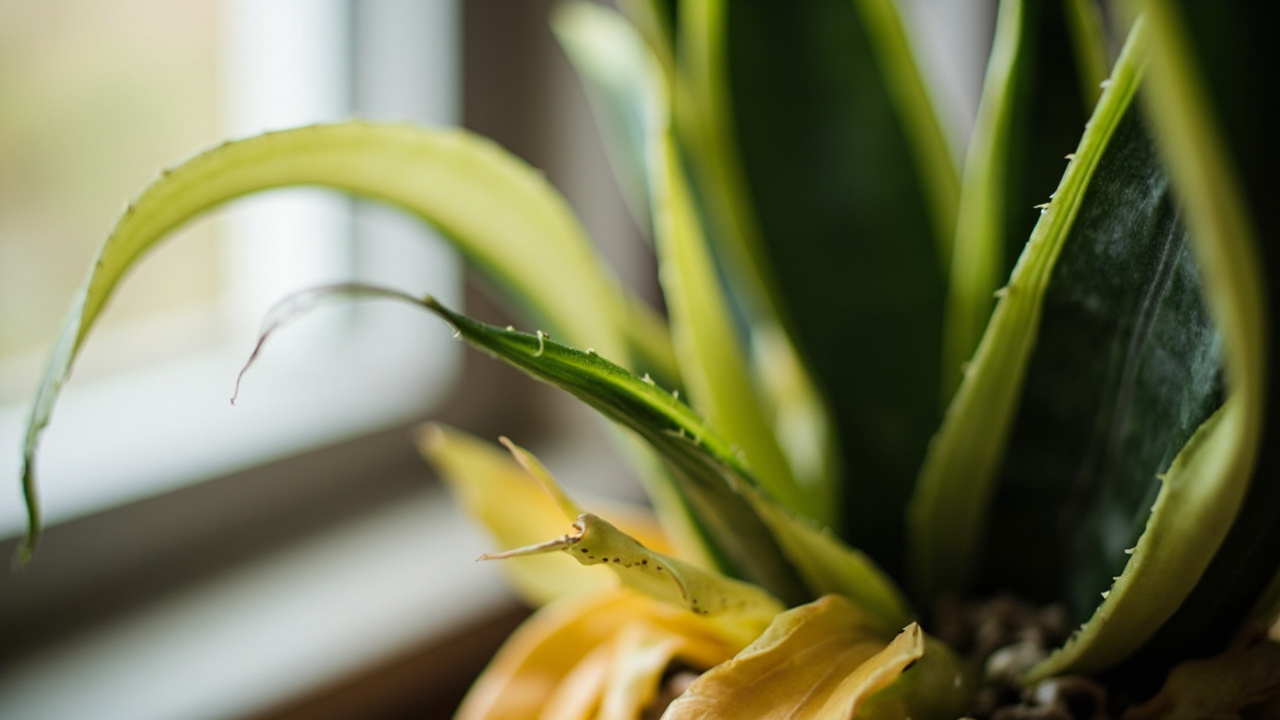
Yellow leaves on a low light plant usually mean overwatering, not underwatering. The reason this surprises owners is the light-water coupling: most low-light species lose roughly half the water through transpiration that the same species loses in bright indirect light, because the stomata open less when photosynthesis is not driving hard. Soil that would dry out in 5 to 7 days at 800 foot-candles takes 14 to 21 days to dry at 100 foot-candles. The single most common yellow-leaf story on a low light plant is an owner watering on a generic weekly schedule while the soil is still wet.
This page ranks the five causes of yellow leaves on low-light houseplants from most to least likely, runs a four-question diagnostic that takes about five minutes, gives the corrective action for each cause, and ends with the prevention routine. The five causes are (1) overwatering, (2) natural shedding, (3) nutrient deficiency, (4) repotting shock, and (5) root rot. By the end of the page, the reader can identify the cause, take action within the next watering cycle, and prevent recurrence.
The 5 Causes of Yellow Leaves on Low-Light Houseplants (Ranked by Likelihood)
The five causes of yellow leaves on a low-light houseplant are not equally likely. The distribution in low light differs from bright light because the light-water coupling shifts the probability weights. Overwatering accounts for roughly 50% of low-light yellowing cases versus roughly 25% in bright-light plants, because the slower transpiration keeps soil wet 2 to 3 times longer. Underwatering is rare in low light. Nutrient deficiency ranks higher than in bright light because slow growth masks the need to fertilize for 18 to 24 months. Each cause has a recognizable pattern, and the diagnostic below uses these patterns to distinguish them.
| Rank | Cause | Frequency in low light | Pattern | Speed |
|---|---|---|---|---|
| 1 | Overwatering (excess soil moisture) | ~50% of low-light yellowing cases | Lower/outer leaves yellow first; soil wet 1+ inch below surface; stem sometimes mushy at soil line | Gradual (1 to 4 weeks) |
| 2 | Natural shedding (senescence) | Very common, normal | One leaf or one stem turns yellow at a time, oldest first; rest of plant looks healthy; no other symptoms | Slow (1+ month between leaves) |
| 3 | Nutrient deficiency (esp. nitrogen) | Moderately common (slow growth masks it) | Older leaves yellow uniformly; new leaves smaller or paler; soil old (>18 months since repot) | Slow (weeks to months) |
| 4 | Repotting shock | Occasional (within 4 weeks of repotting) | Yellowing starts after repotting; sometimes accompanied by leaf drop; usually resolves in 6 to 8 weeks | Sudden onset after repot, gradual recovery |
| 5 | Root rot (severe overwatering) | Least common but most serious | Lower leaves yellow and soften; stem mushy and brown at base; soil smells sour; roots dark and mushy when unpotted | Rapid (1 to 2 weeks once rot is advanced) |
Three points matter more than the table itself. First, overwatering alone explains about half of all low-light yellowing cases, because the light-water coupling makes a generic weekly watering routine overwater almost every species. Second, natural shedding is normal — losing one leaf per month is not a problem to fix; treating it as a problem usually causes real problems (overwatering in response to perceived distress). Third, root rot is the only cause that requires immediate action; the other four allow a day or two of diagnosis time without losing the plant. The honest limitation: by the time a low-light plant shows clear root-rot signs (mushy stem, sour soil smell, dark mushy roots), the recovery rate drops to roughly 30%. The earlier the diagnosis, the better the outcome.
Quick Triage: Is the Yellowing Normal or a Problem?
The first triage question separates natural shedding from a real problem, and running it before anything else prevents the most common over-correction: a reader sees one yellow leaf, decides the plant is thirsty or nutrient-starved, and applies a treatment that makes the actual cause worse.
- How many leaves have turned yellow in the last week? One leaf = normal shedding, no fix needed. Three or more leaves = real problem, run the diagnostic below. Two leaves is borderline — usually still shedding if the plant otherwise looks healthy.
- Are the affected leaves the oldest leaves (lowest on the stem, or outermost on a rosette)? Yes = normal shedding pattern. Older leaves are the first to be shed because the plant reabsorbs mobile nutrients from them back into the stem. No — newer leaves or middle-of-the-plant leaves yellowing = real problem.
- Does the rest of the plant look healthy? Firm leaves, upright stems, normal green color on the rest of the foliage = shedding. Drooping leaves, soft stems, multiple yellow areas = real problem.
- Has anything changed in the last 6 weeks? A move to a darker spot, a repot, a change in watering routine, a recent fertilizing = could be repotting shock or overwatering response. No change and sudden yellowing = could be root rot, especially if the stem base feels soft. Note that “nothing changed” is a clue for root rot, not the absence of a problem.
Predicted result: if the answer to question 1 is “one leaf,” and to question 2 is “yes, the lowest or oldest leaf,” and to question 3 is “yes, the rest looks healthy,” the yellowing is normal — do nothing. The plant is doing what plants do. Treat normal shedding as a feature, not a bug, and resist the temptation to add fertilizer or extra water in response. Older Pothos vines commonly lose their lowest leaf as they push new growth from the tip. The honest limitation: a Snake plant in low light naturally sheds 1 to 2 outer leaves per year as it grows, and treating that as a problem is the most common way owners overwater a Snake plant into root rot. If the triage says shedding, stop there.
The 5-Minute Diagnostic: 4 Yes/No Questions
If the triage above says “real problem,” run this four-question diagnostic before changing anything. The questions narrow the most likely cause from five options down to one with high confidence, and the next section gives the corrective action for that one. The mechanism behind leggy growth covers a related symptom (stretching toward light) which is a different diagnosis path — yellow leaves plus leggy growth together usually point to chronic low-light stress, which is a separate problem.
- How many leaves are yellow? Multiple leaves (3+) anywhere on the plant, especially on lower or outer growth = cause #1 (overwatering) or #3 (nutrient deficiency) most likely. Just the oldest or outermost leaves and the plant otherwise looks healthy = cause #2 (natural shedding — back to triage, not here). Yellow all over the plant simultaneously = severe overwatering or root rot, both urgent.
- Stick a finger 1 inch (about 2.5 cm) into the soil. Wet below the surface = cause #1 (overwatering) is the most likely. Dry below the surface and the plant is in a small pot = cause #3 (nutrient deficiency) is possible, but check question 3 first. Wet AND sour smell = cause #5 (root rot) is likely, immediate action needed.
- When did you last repot or fertilize? Over 18 months ago for either = cause #3 (nutrient deficiency) possible. Within the last 6 weeks for either = cause #4 (repotting shock) if the timing matches. The trade-off disclosure: low-light plants grow slowly so they need less fertilizer than bright-light plants, but they still need some — half-strength balanced fertilizer once or twice during the spring and summer growing season. Skipping fertilization entirely for 2+ years in low light is a real cause of yellowing.
- Are the yellow leaves mushy or firm? Mushy = cause #1 (overwatering) or #5 (root rot); both indicate wet-soil damage. Firm and dry = cause #2 (shedding) or #3 (nutrient deficiency); neither is an emergency. Mushy stems at the soil line = cause #5 (root rot) — unpot the plant, inspect the roots, and trim any dark, black, or mushy sections before repotting into fresh dry soil.
Conditional guidance after the four questions: if Q1 says multiple leaves + Q2 says soil wet → cause #1 (overwatering). Apply the overwatering fix below. If Q1 says multiple leaves + Q2 says soil dry + Q3 says over 18 months since repot or fertilize → cause #3 (nutrient deficiency). Apply the nutrient fix below. If Q2 says wet and sour + Q4 says mushy stems → cause #5 (root rot). Apply the root rot fix below immediately. The mechanism behind these couplings: in low light, transpiration drops, soil stays wet 2 to 3 times longer than expected, and roots sitting in wet soil for more than 5 days start to suffocate from lack of oxygen — that suffocation is what overwatered-root damage looks like, and it is the single most common cause of yellow leaves across all low-light houseplants. Predictive guidance: if the reader acts within 24 hours of first noticing the yellowing, recovery time is 4 to 6 weeks for overwatering; if they wait 2+ weeks, recovery time stretches to 6 to 12 weeks and the recovery rate drops noticeably.
Fixes for Each Cause on Low-Light Houseplants
Fix for overwatering (cause #1)
Stop watering immediately. Do not water again until the top 2 inches of soil are dry to the touch. For most low-light plants, that means waiting 14 to 21 days between waterings in winter and 10 to 14 days in summer. If the soil is soggy more than 1 inch below the surface after 7 days of no watering, unpot the plant, inspect the roots, and trim any that are dark, mushy, or smell sour — then repot in fresh, dry, well-draining potting mix (one with perlite or orchid bark to keep airflow around the roots). Move the plant to a spot with slightly more air circulation (still low light, but not in a stagnant corner) for 4 to 6 weeks while it recovers. Expect new growth within 6 to 8 weeks after fixing the watering; the yellow leaves will not turn green again but new leaves will come in healthy.
Fix for natural shedding (cause #2 : usually no fix needed)
Do nothing. The plant is reabsorbing nutrients from the oldest leaves as part of normal growth. Removing the yellow leaf is optional for cosmetic reasons; leaving it until it is fully yellow and pulls off easily is fine for the plant. The honest limitation: a single yellow leaf once a month on a Snake plant or once every two months on a Pothos is normal; treat it as a feature, not a problem.
Fix for nutrient deficiency (cause #3)
Either dilute a balanced liquid fertilizer (such as NPK 2-1-1 or 3-1-2) to half the label strength and apply once, then again in 6 to 8 weeks during the spring or summer growing season — OR repot with fresh potting mix. Do not fertilize more than twice a year on a low-light plant; over-fertilizing causes salt buildup in the soil, which itself causes leaf-tip burn and yellowing. The trade-off disclosure: nutrient deficiency and overwatering look similar from above (yellow leaves on a low-light plant), but the fixes are opposite — overwatering fix is stop watering, nutrient deficiency fix is fertilizer or fresh soil. Question 2 of the diagnostic (wet or dry soil) distinguishes the two reliably. The bedroom picks page covers species-specific fertilizing schedules for the most common low-light houseplants.
Fix for repotting shock (cause #4)
Leave the plant alone. Water normally (when the top 1 inch is dry; not the full 2-inch rule during recovery because the root system is reduced). Do not fertilize for 8 to 12 weeks after repotting — fresh potting mix has nutrients. Repotting shock usually resolves in 6 to 8 weeks; yellow leaves during that window are normal and the plant will push new growth from the stem tips once the roots re-establish. The honest limitation: if the yellowing continues past 12 weeks after repotting, it is no longer shock — return to the four-question diagnostic and re-run.
Fix for root rot (cause #5 : urgent)
Unpot the plant immediately. Inspect the roots: healthy roots are white or light tan and firm; rotted roots are dark brown or black, mushy, and may smell sour. Trim every dark or mushy root with clean scissors, cutting back to firm white root tissue. If the stem base is mushy and brown, the rot has reached the vascular system — recovery chances drop below 30% for Snake plant and ZZ plant at this stage, and below 15% for Pothos and Peace lily. Repot in fresh, dry, well-draining potting mix. Do not water for 7 to 14 days after repotting to let the trimmed roots callus over. The failure mode to watch for: if the lower leaves continue to yellow and the stem stays soft within 2 weeks of the root trim, the rot is still present in the stem and the plant is likely not recoverable.
Should You Cut Off Yellow Leaves on Low-Light Houseplants?
The answer is not always yes, and the “always cut them off” advice from generic houseplant guides is wrong for low-light plants specifically. Three rules distinguish the cases.
- Leave partially yellow leaves alone (cut from the bottom third upward). The plant is reabsorbing mobile nutrients — primarily nitrogen, but also phosphorus, potassium, and magnesium — back into the stem from the yellowing leaf. Cutting it off prematurely sacrifices those nutrients. Wait until the leaf is more than 75% yellow and pulls off easily with a gentle tug; only then is it safe to remove.
- Remove fully yellow leaves or fully brown leaves for cosmetic reasons. Removing them does not harm a healthy plant but does not help it either. If the leaf bothers the reader visually, pull it once it is mostly yellow and loose. Never cut a still-firm leaf that is more than half green.
- Remove mushy or slimy yellow leaves immediately. These can harbor fungi (Pythium, Phytophthora, Rhizoctonia species, all common in waterlogged soil). Cut them off with clean scissors at the base of the leaf, and consider whether the cause is overwatering or root rot before assuming the leaf is just cosmetic. Mushy yellow leaves on a Snake plant should always trigger a root inspection.
The pet-safe species list covers an additional consideration: if the reader has a cat or dog that chews plants, cut off yellow leaves sooner rather than later, because dying tissue can sometimes be more attractive to pets than healthy tissue. This is a small but real practical consideration for pet households reading this page.
Preventing Yellow Leaves on Low-Light Houseplants : The Long-Term Play
The single most effective prevention is fixing the water-light coupling up front, because that one rule eliminates overwatering, which eliminates the most common cause. Four rules together catch most of what is left.
- Water only when the top 2 inches of soil are dry. In low light that means every 14 to 21 days for most species (10 to 14 in summer). The cluster hub page on low light plants covers the full watering rule including how to test soil moisture with a finger or chopstick.
- Rotate the pot a quarter turn every 4 to 6 weeks. Low-light plants lean toward whatever light source they have; rotation keeps growth balanced.
- Repot every 18 to 24 months with fresh potting mix. Even if the pot size is fine, fresh soil restores nutrient availability. Do not increase pot size unless roots are filling the current container.
- Fertilize once or twice during the spring and summer growing season with half-strength balanced fertilizer. Skip entirely between October and March. The trade-off disclosure that catches most owners: more fertilizer in low light leads to salt buildup, which itself causes leaf-tip burn that looks like underwatering. When in doubt, fertilize less.
Predictive guidance: a healthy low-light plant will show 1 yellow leaf per month to 1 per quarter, depending on the species — Snake plant being the slowest (1 to 2 per year), Pothos being the fastest (1 to 2 per month during growth season). Anything beyond that rate, especially with the four-question diagnostic returning “multiple leaves + wet soil,” is the early warning sign for overwatering before the plant becomes a recovery case. The honest limitation: a Snake plant or Pothos that has been overwatered once is slightly more prone to overwatering damage in the future, because damaged root tissue is replaced by slower-growing scarred tissue. Prevention matters more for these species than for less-prone ones like ZZ plant.
From PDF to Excel in one click
Forget retyping line by line. Upload any bank statement, get a spreadsheet you can actually use. Your files are never stored, and you can test the converter with 3 free conversions.
Try it free